Three Wars and the Figure Walking Out of Edom
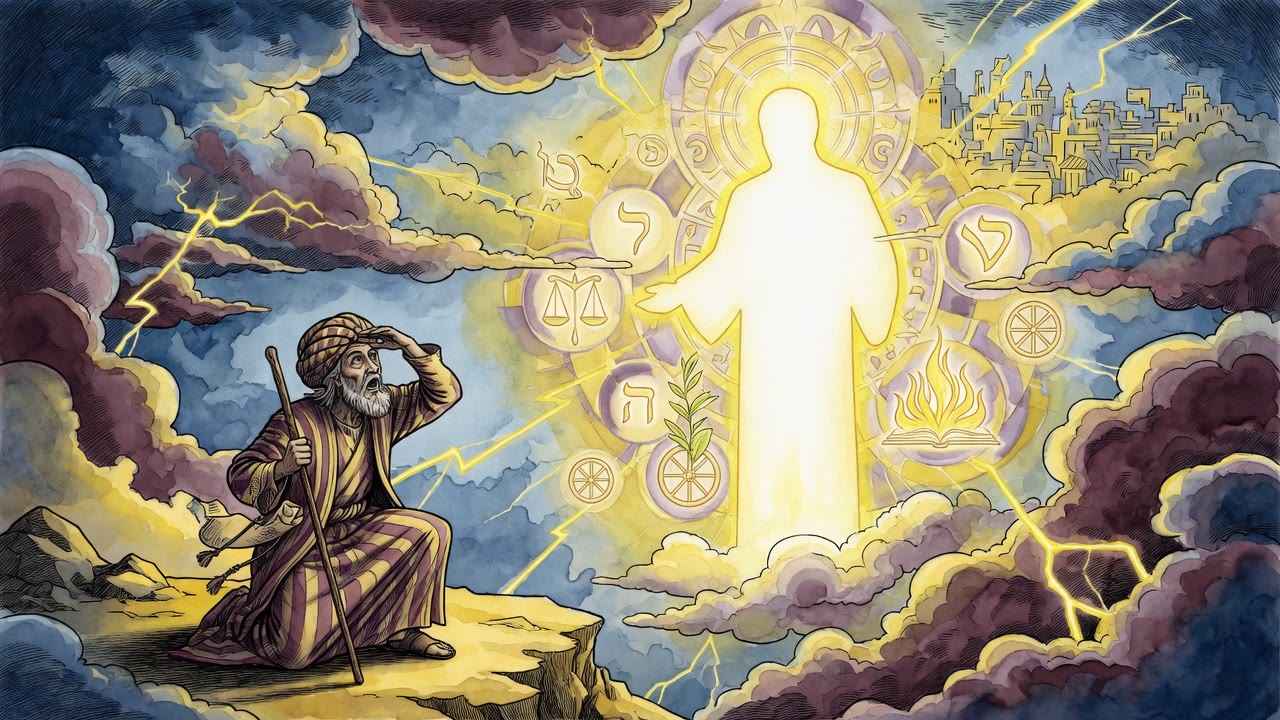
He sat the Sanhedrin at the Temple's third door. Fire hung in webs between them. He spoke of a walk out of Edom in red.
Table of Contents
Rabbi Ishmael rose and sent for the whole court. Great and small, he said. All of them. The summons went to the third entrance of the house of God, and they came.
 Click for full size
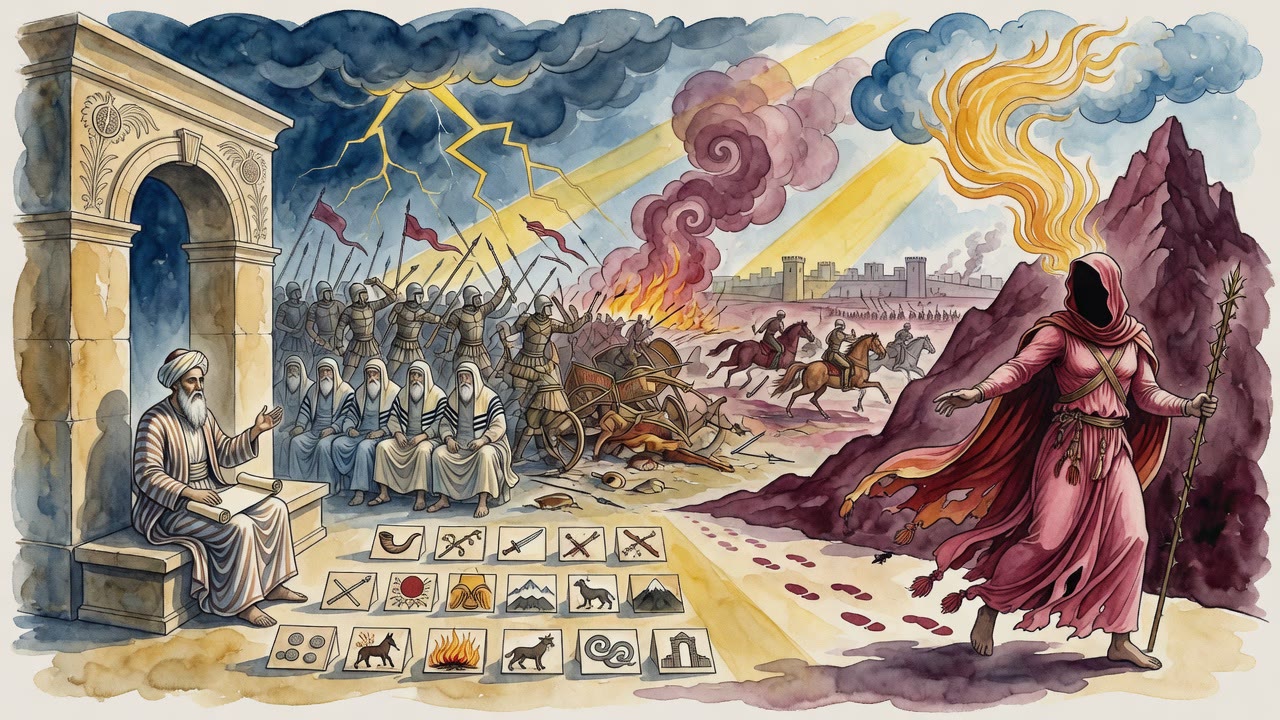
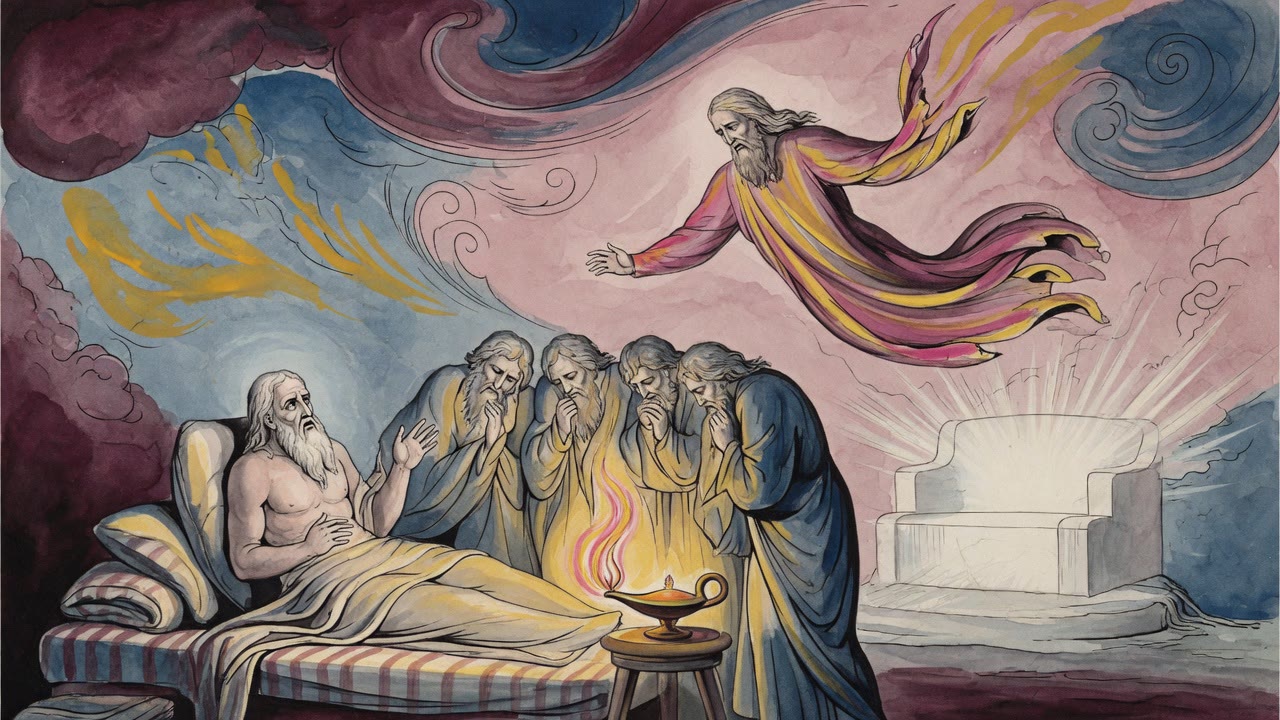
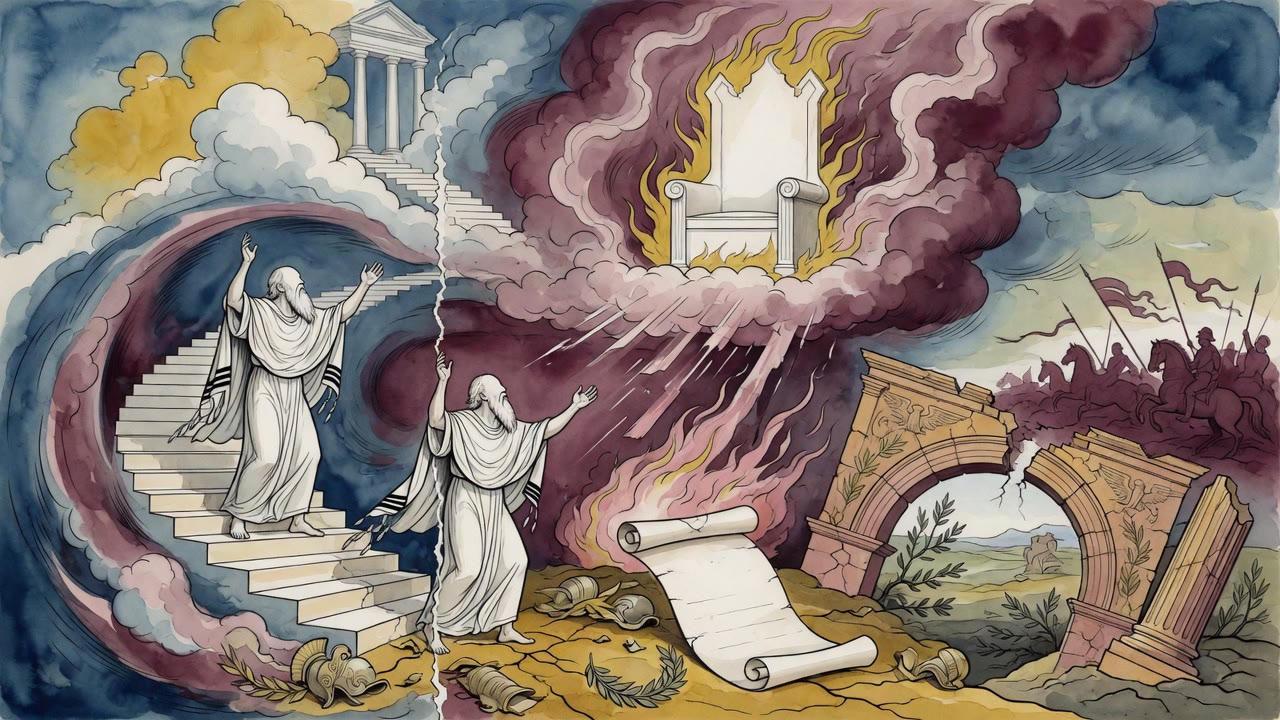
He sat on a chair of pure marble. His father Elisha had given it to him from his mother's dowry, cold stone worn smooth by family hands. Around him the assembly filled the gate: Rabban Simon ben Gamliel, Rabbi Eliezer the Great, Rabbi Elazar ben Dama, Rabbi Akiva, Rabbi Judah ben Babba, and the rest whose names filled the study halls. They took their places.
Between the seated sages and the companies standing behind them, torches of light appeared, and spiderwebs of fire, a partition neither side could cross. The teacher Rabbi Nehunya ben Hakkanah sat and began to set in order the teachings of the Merkavah (מרכבה), the descent and the ascent, how a man goes down and how he rises.
Inside that gate, with fire between the court and the crowd, Rabbi Ishmael brought forward what he had learned about the end.
Balaam Cried Over a Shadow Name
Balaam had been hired to curse Israel. He looked at the nations God had made and found a fact that stopped him. Only one people carried God's name inside its own. Israel. Then he looked again and saw the name of Ishmael, Abraham's eldest, close enough to echo it, close enough to throw a shadow.
Balaam did not finish the curse he had been paid for. He cried instead. "Alas, who shall live when God establishes him?" (Numbers 24:23).
The cry had sat in scripture for generations. Rabbi Ishmael pulled it into the marble hall and made it a question the court had to hear. Who survives the days when the children of Ishmael rise in the land?
No one answered him. The fire-web made a sound like cloth in a draft. Rabbi Ishmael did not wait for a ruling. He had more to give than a lament.
Fifteen Signs in the Land
He named them in the order he had received them. They will measure the land with ropes. They will turn a cemetery into a resting place for sheep, a dunghill. They will measure from the tops of the mountains. Falsehood will multiply. Truth will hide. Statutes will be pushed far from Israel. Sins will increase. Worm-crimson will show in the wool, and insects will cover paper and pen.
A rock of the kingdom will be hewn down. The ruined cities will be rebuilt and the roads swept. Gardens and parks will be planted. The broken walls of the Temple will be fenced. A building will rise in the holy place. Two brothers will rule as princes at the end.
After the two princes, a branch. The Son of David (Daniel 2:44).
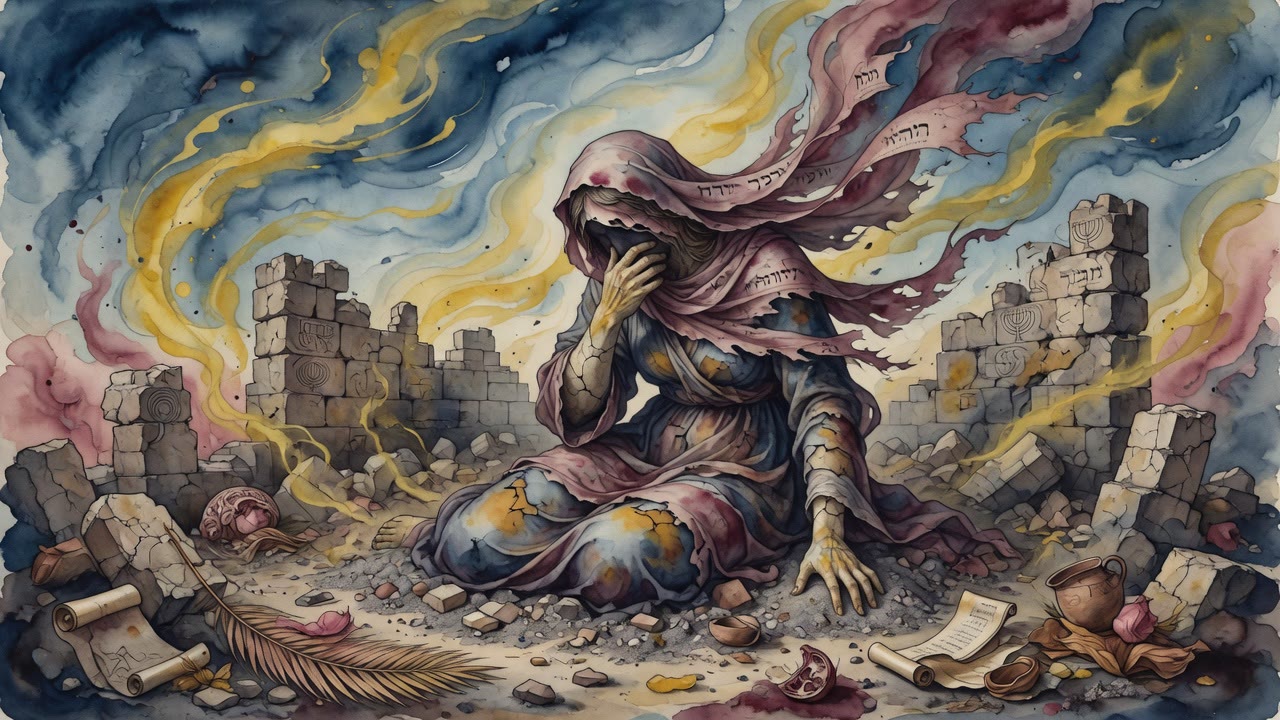
The court did not interrupt. Some of the signs were not ruin. Roads swept. Cities rebuilt. Gardens planted. The building in the holy place sat in the list like a stone no one wanted to pick up. Construction and wreckage had been braided until a man could not say which strand he was holding.
Rabbi Akiva's mouth stayed shut. Rabban Simon kept his hands on his knees. The marble under Rabbi Ishmael stayed cold.
Three Wars on Three Fronts
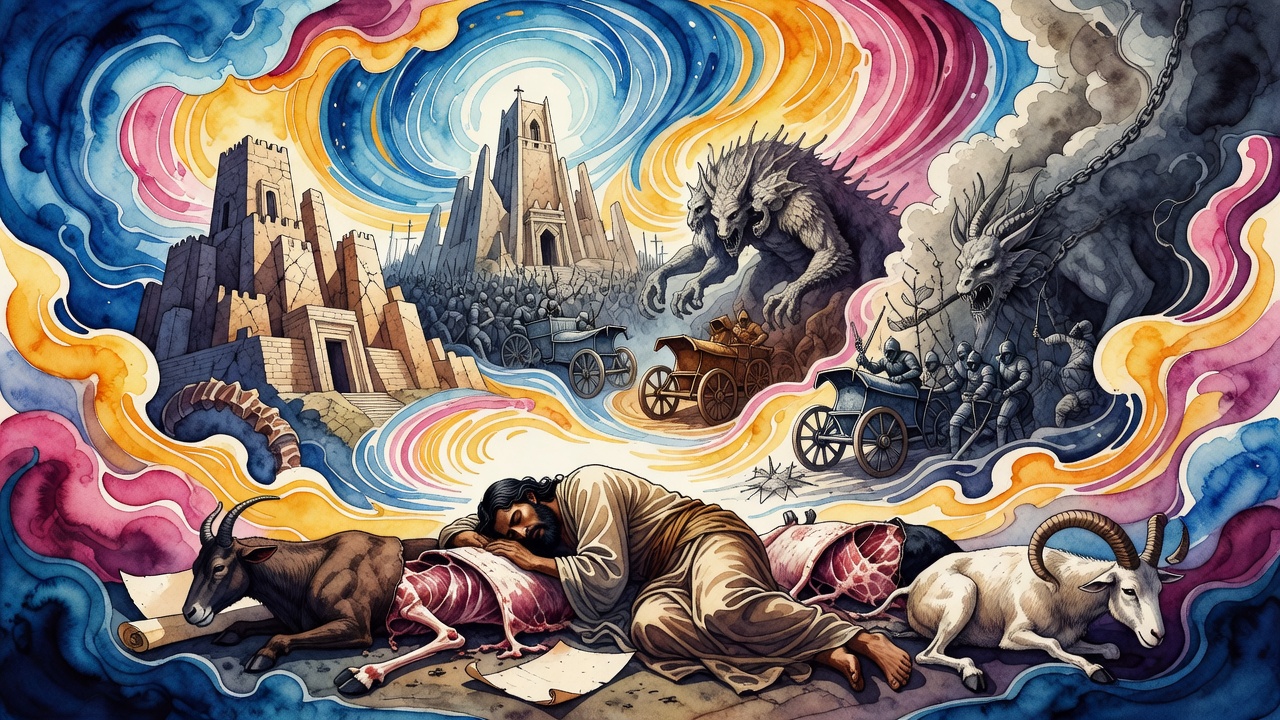
From the signs he moved to the last convulsions. He took Isaiah's line (Isaiah 21:15): "For they fled away from the swords." The Hebrew was cherev, sword, but the verse used the plural. Rabbi Ishmael read three swords as three wars, each with its own ground.
The first war in the forest of Arabia. "From the drawn sword." A desert war already in motion, the blade out, the chance of turning back already spent.
The second on the sea. "From the bent bow." Fleets and coasts. The bow drawn, the arrow not yet gone, everything held above the water.
The third in the great city, which is Rome. "From the grievousness of the war." Worse than the first two together. The city that had burned the Temple and held Israel's exiles in its belly sat at the end of the sequence. The third war was the weight that would crack that city open.
He did not raise his voice for the third war. He did not have to. Every man in the gate knew which city had torn the sanctuary down. The fire between the court and the crowd burned the same color as a roof that will not go out.
A Man Walked Out of Edom in Red
From that cracked city, from the smoke of the third war, a figure would walk toward the land of Israel.
Isaiah had seen him (Isaiah 63:1): "Who is this that comes from Edom, with crimsoned garments from Bozrah? This that is glorious in his apparel, marching in the greatness of his strength? I that speak in righteousness, mighty to save."
In the court they used Edom as the name for Rome. Bozrah was its heartland. The crimson on the garments was what a man carries when he walks out of the last battle. He would see the armies fall, first and second and third, and then he would come into the land.
The Son of David, coming not from the east, not from the sky, not from the sea. Coming from Edom. Walking out of Rome's wreckage in red.
Rabbi Ishmael gave no consolation speech. He did not tell them when. He did not tell them how to endure the fifteen signs. He named the walk. The torches still stood. The marble chair still held its cold. The Sanhedrin at the house of God did what a court does with testimony. It received it. The companies behind the fire did not cross the web.
← All myths