5 min read

Tobit's Mother Waited on the Road for an Angel

Hannah sat on the highway until she saw Tobiyah and a stranger. Raphael carried gall for blind eyes while Tobit taught his son to pay wages before nightfall.

Curated by Arthur · Told by Maggid ·
Table of Contents
  1. Gall for Eyes That Had Gone Dark
  2. What the Father Had Already Taught
  3. Angel and Ethic on the Same Road
  4. Now Will I Die

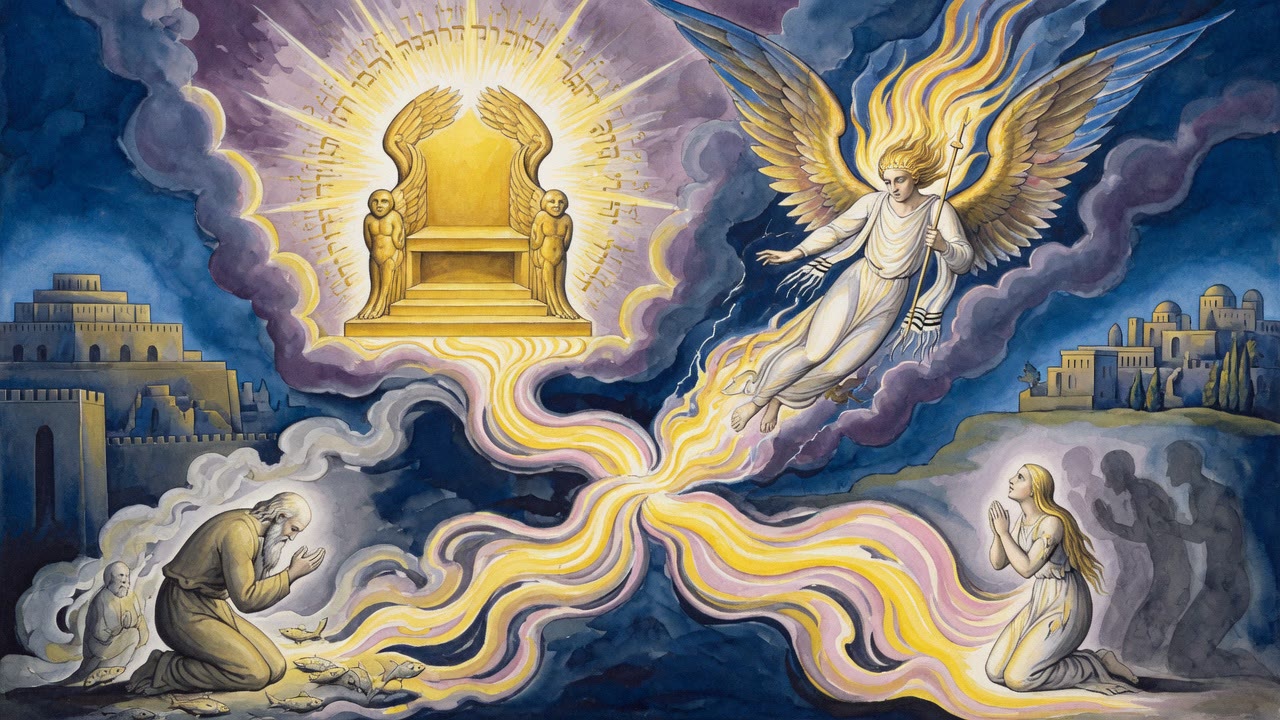
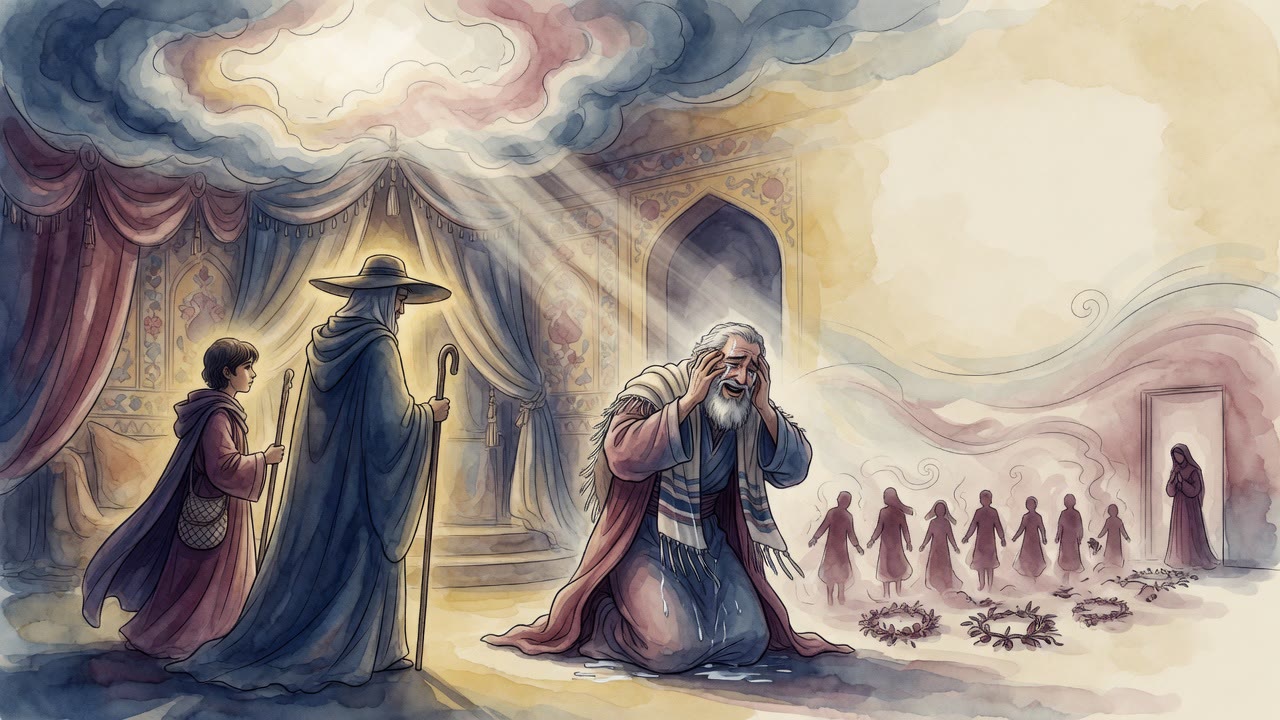
Hannah was not waiting in a doorway like a quiet painting. She sat on the highway to see whether her son would come. The road was the only honest place for hope that thick. When she saw him afar off she knew him, and she said to Tobi her husband, "Behold, my son Tobiyah cometh, and the man that went with him."
Tobit's Mother Waited on the Road for an Angel Click for full size

Dust stuck to her dress. Travelers passed and learned not to ask why a woman kept the highway like a post. She was a lighthouse with no tower, only a body and a road.

Gall for Eyes That Had Gone Dark

"I know that thy father is blind," Raphael said to Tobiyah before the embrace finished its work, "but with this gall shall his eyes be opened, and he shall be healed." The stranger who had walked the dangerous miles carried medicine that looked like the waste of a fish and behaved like light.

"Now will I die, now that I have seen thy face," Hannah said, falling on her son's neck. She wept on his neck yet more. Joy can sound like a death wish when it has been stretched across too many empty evenings. The highway released her. The house would have to learn how to hold a miracle without breaking.

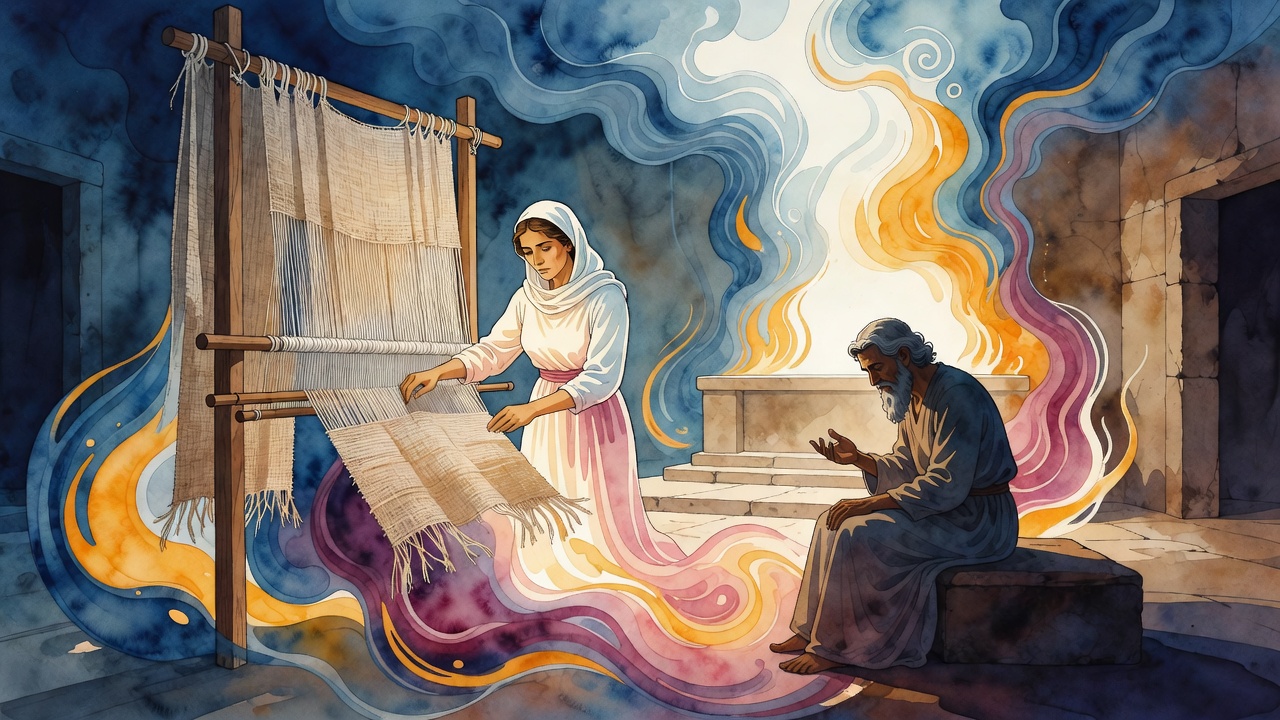
Tobi waited inside a darkness that had learned every floorboard. The gall would meet that darkness soon. First the mother had to finish crying the miles she had sat.

What the Father Had Already Taught

Before the road home, Tobit had poured law into his son the way a man pours oil into a lamp he will not see again. Withdraw from all uncleanness and whoredom. Take a wife of thy family, not of a stranger outside the seed of the fathers, for we are of the sons of the prophets. Remember Abraham, Isaac, and Jacob, who took wives of their own family and were blessed with sons and daughters.

"Give thine heart to all thy work," he said, "and that which thou hatest to be done to thee, do not thou to others." Let not the wages of him that is hired abide with thee all night on the day when thou dost agree with him. God will repay the work. Withdraw from drunkenness and no evil will meet thee. Give bread to the hungry, cover the naked with garments, and of all that remains give alms, and let it not be hard in thine eyes.

These are not soft maxims for a quiet village. They are survival rules for a family living among nations that do not share their calendar. Tobit wanted his son solid before any angel showed a wing tip of glory.

Angel and Ethic on the Same Road

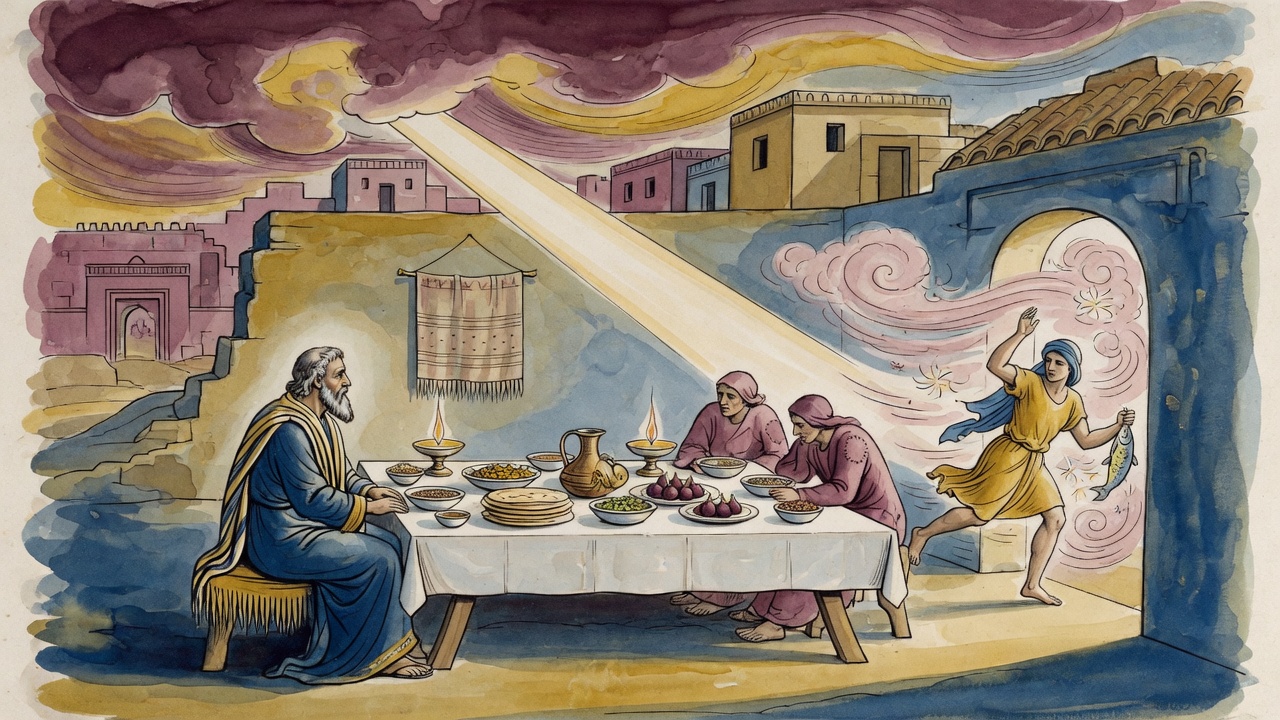
Raphael's gall and Tobit's wage-law belong to one household. Healing without justice would be a magic trick. Justice without healing would leave a blind father listening to good advice in the dark. The book refuses to separate them. The son who paid attention to marriage, wages, and alms also carried the fish's gift that would open eyes.

Exile makes both needs sharp. A family scattered among nations can lose its seed through soft marriages. A laborer unpaid overnight is a small theft that teaches heaven how the house keeps books.

The stranger walked as if roads were his ordinary work. Tobiyah walked as if every lesson had been a map. Together they brought the highway's news to a door that had waited too long.

Now Will I Die

Hannah's cry on the neck is the hinge. She had sat on the highway like a watchman without a wall. The man walking beside her son was more than a guide, though she did not yet know the name Raphael. She knew only the face she had feared she would never see again.

When the eyes opened, the ethics were already in place. A healed man who cheats a hired worker is only a seeing thief. Tobit's house aimed higher. Bread, garments, wages by nightfall, and a wife from the family's own line. Then, and only then, the gall.

Night fell on a home that had recovered a son, a guide, and soon a father's sight. The highway outside went back to being only a road. Hannah would not need to sit there again. That was the quiet victory under the miracle.

A hired man in Nineveh would sleep better that night if Tobit's teaching held. A blind man would see if the gall held. A mother would stand up from the highway if her legs remembered how. The book stacks those hopes on one return, because exile does not grant the luxury of single blessings. Families take what arrives on the same pair of feet.


← All myths
From the tradition

Sources

2 sources

The texts behind this telling. Some cards carry a translation of the source; others are our own retelling of it, and each card says which. Every card links out to the original.

Book of Tobit 11:3Book of Tobit

Retold in our words. Read the original at the link below.Sefaria-hosted English translation · CC-BY

Book of Tobit turns to Tobiyyah and the Angels.

She's not just pacing the floor; she's literally sitting on the highway, her eyes fixed on the horizon. For years, she and her husband, Tobi, have been praying for their son’s safe return. And Tobi, remember, is blind. He can only rely on Hannah's sight and her unwavering faith.

Then, it happens.

"Behold, my son Tobiyyah cometh, and the man that went with him," she cries out to Tobi. Relief washes over her. She recognizes him from afar – a mother's intuition, perhaps? Or maybe it's simply the answer to years of heartfelt prayers finally being answered.

Now, this "man who went with him" is no ordinary travel companion. It's actually the angel Raphael in disguise, but they don't know that yet. Raphael, ever the helpful celestial being, has a crucial instruction for Tobiyyah: "I know that thy father is blind, but with this gall shall his eyes be opened, and he shall be healed." He's referring to the gall of the fish that Tobiyyah caught earlier in their journey – an event that seems almost ordinary until you realize its miraculous potential.

Think about the power of that moment. Hope is turning into reality.

But the real heart-tugger comes next. Hannah, overcome with emotion, doesn't just greet her son; she runs to meet him. "Now will I die, now that I have seen thy face," she exclaims, embracing him. And she wept on his neck yet more. It's raw, it’s real, and it’s the kind of pure, unadulterated joy that makes your chest ache. This wasn't just a reunion; it was the end to a long, dark night of worry and uncertainty.

What does it all mean? And sometimes, just sometimes, the miracles we've been waiting for are closer than we think. Sometimes, they're sitting right there on the highway, coming home.

Full source
Book of Tobit 4:5Book of Tobit

Retold in our words. Read the original at the link below.Sefaria-hosted English translation · CC-BY

The Book of Tobit, part of the Apocrypha, gives us just that, a deeply personal glimpse into the values and concerns of a father as he prepares his son for life's uncertainties. Let's eavesdrop

Tobit, a righteous man living in exile, knows his time is drawing near. He calls his son, Tobiah, to his side, not for a simple goodbye, but for a final, crucial download of life lessons. What does he emphasize? Where does he focus his waning energy?

First, family. Tobit urges his son to "withdraw thyself from all uncleanness and from all whoredom, and take thee a wife of thy family, and not of any stranger." This isn’t just about lineage, is it? It’s about shared values, a common history, and the strength found in familiar roots. He reminds Tobiah of their patriarchs, Abraham, Isaac, and Jacob, who "took wives of their own family, and would not make marriages with the strangers, and they were blessed with sons and daughters." It’s a powerful image: a family tree nourished by connection, not diluted by difference. This idea of marrying within the tribe, so to speak, reflects a deep-seated desire to preserve cultural and religious identity, something incredibly important in a time of exile and assimilation.

Tobit’s advice isn’t just about marriage. It’s about how to live a righteous life, a life pleasing to God. "And thou, my son, give thine heart to all thy work, and that which thou hatest to be done to thee, do not thou to others." Sound familiar? It's the Golden Rule! Before Hillel the Elder famously summarized the entire Torah as "That which is hateful to you, do not do to your fellow. That is the whole Torah; the rest is the explanation; go and learn," (as we learn in the Talmud, Shabbat 31a), Tobit was passing down a similar ethical framework to his son. A simple yet profound guide for navigating human relationships with empathy and integrity.

He continues, "And let not the wages of him that is hired abide with thee all night on the day when thou dost agree with him, and thy work God will repay thee." Prompt payment of wages is a recurring theme in Jewish ethics. It’s about fairness, about recognizing the inherent dignity of labor. Delaying payment is seen as a form of oppression, a denial of someone's basic right to sustenance. Tobit reminds his son that God sees all, and ultimately, justice will prevail.

And then, a warning: "And withdraw thyself from drunkenness, and there shall no evil happen unto thee." Self-control, moderation, these are key to avoiding pitfalls. It's easy to see why Tobit, concerned for his son's well-being on a dangerous journey, would emphasize this.

Finally, Tobit gets to the heart of what it means to be a compassionate human being: "And give of thy bread to the hungry, and with thy garments cover the naked, and of all which remaineth over give alms, and let it not be hard in thine eyes." Tzedakah, the act of giving to those in need, is not just charity; it’s an obligation. It’s about recognizing our shared humanity, our interconnectedness. "Let it not be hard in thine eyes" – don't give grudgingly, but with a generous heart.

Tobit’s words are more than just a father's advice. They're a distillation of Jewish wisdom, a guide to living a meaningful and ethical life. As we listen to these ancient words, we can't help but reflect on what values we would pass on to our own children, or what principles guide our own actions in the world. What, truly, matters most?

Full source