Twelve Thousand Priests Wept Over Shushan
When Haman's decree fell, Shushan dressed the Torah in sackcloth, and twelve thousand young priests raised trumpets and scrolls until heaven wept.
Table of Contents
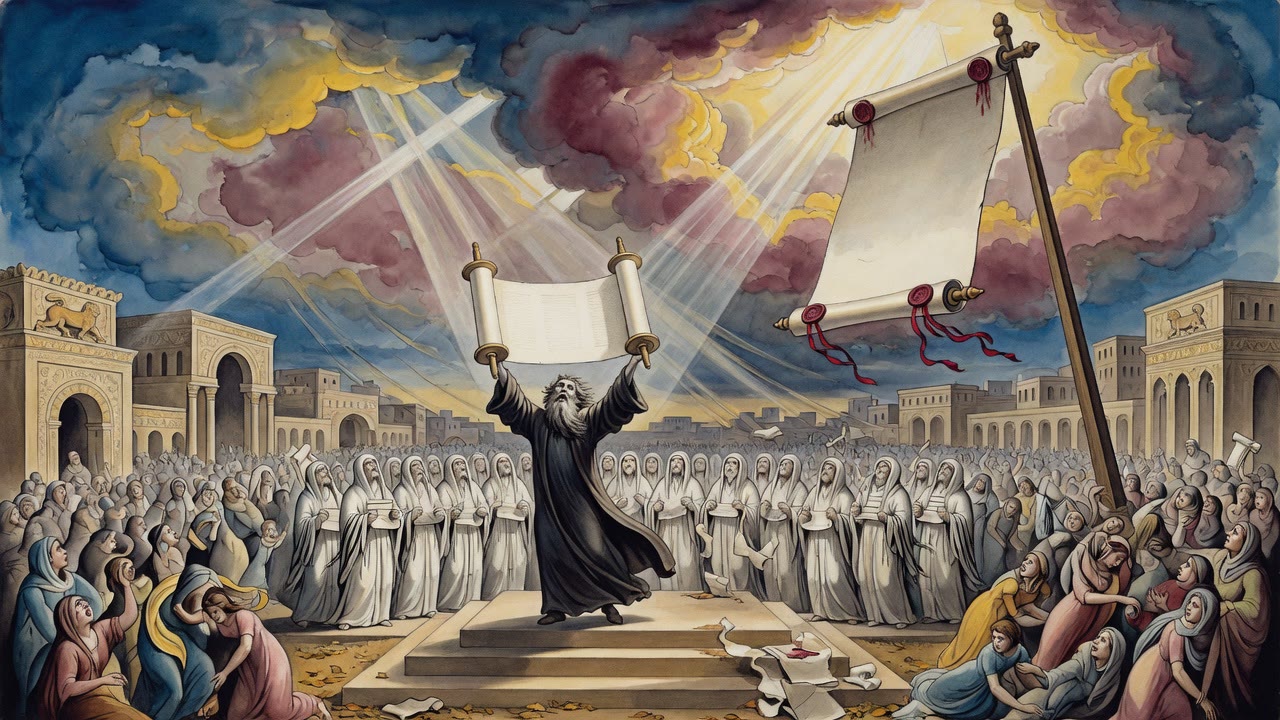
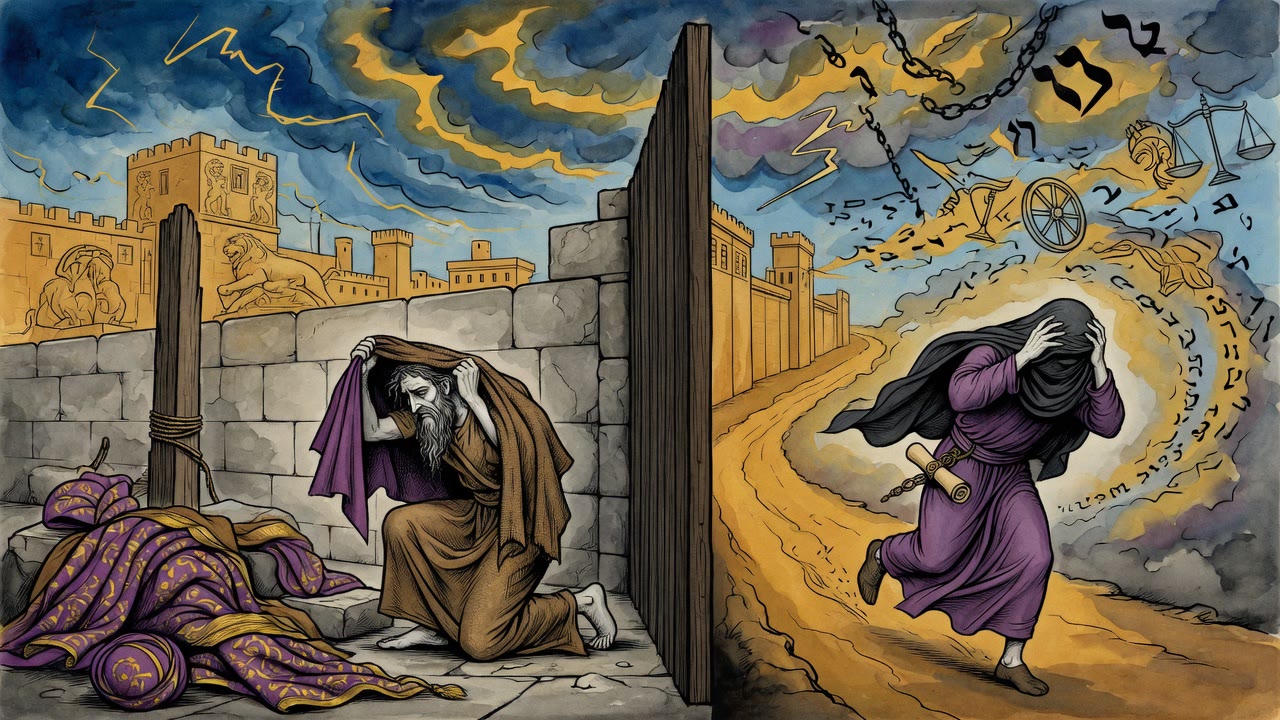
At the gate of Shushan they brought out the holy ark. They took the book of the Law from it and dressed the scroll itself in sackcloth and ashes, as if the covenant could put on mourning clothes.
 Click for full size
People read aloud the old promise: when Israel is in distress and turns back, God is merciful. The Torah stood at the gate like a mourner, not a museum object.
Mordecai Points at Nineveh
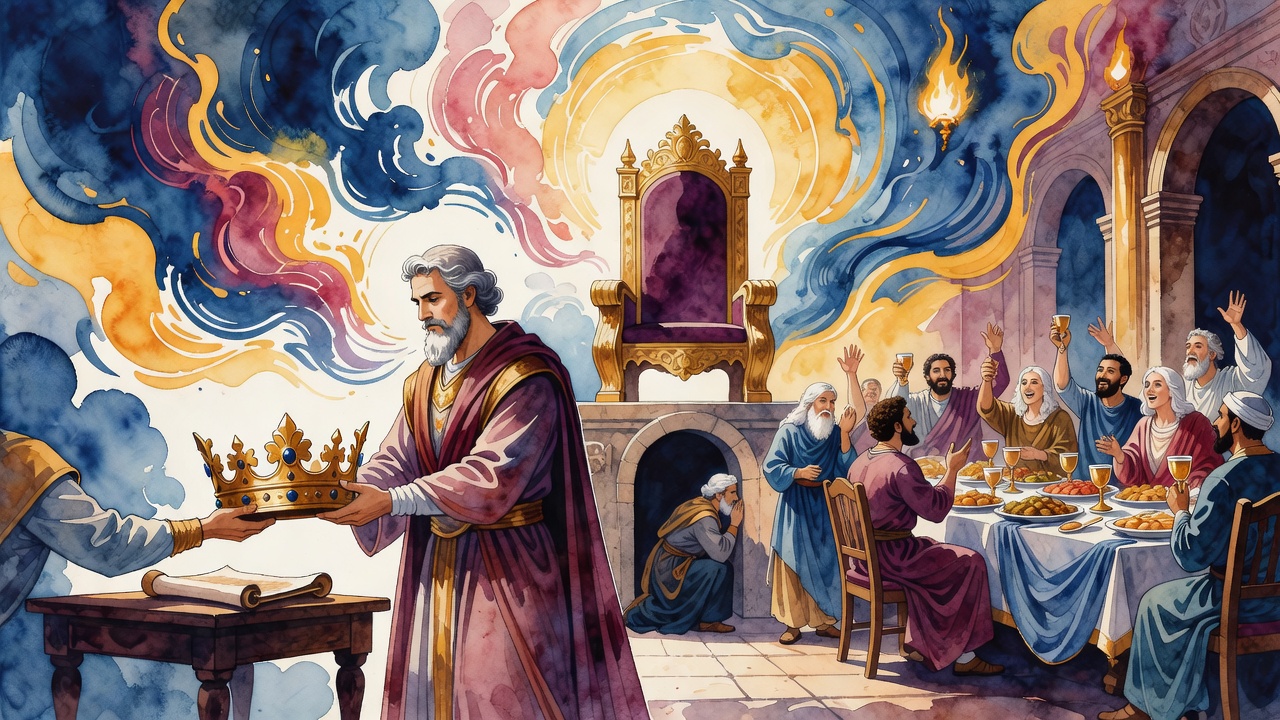
Mordecai rose in the assembly and made them look sideways at an old enemy city. Jonah had warned Nineveh. Its king left his throne, stripped his crown, put on sackcloth, covered himself in ash, and ordered man and beast to fast. God turned back from the evil planned against them.
If Nineveh could be spared by fasting and turning from violence, then Jews in exile had no license to despair under a Persian seal. The scroll in sackcloth was a public order: answer the decree with return, not only with fear.
Esther's Three Days Open
Esther sent word to gather the Jews of Shushan for three days and nights without food. The city changed costume. Bridegrooms left their chambers bound in sackcloth. Brides covered their heads with ash. Men, cattle, and sheep tasted nothing. Infants were pulled from the breast.
Private romance and ordinary hunger both yielded to the alarm. The fast was not a quiet diet in a corner. It was a ritual that made the whole settlement feel the edge of extinction.
Twelve Thousand With Trumpet and Torah
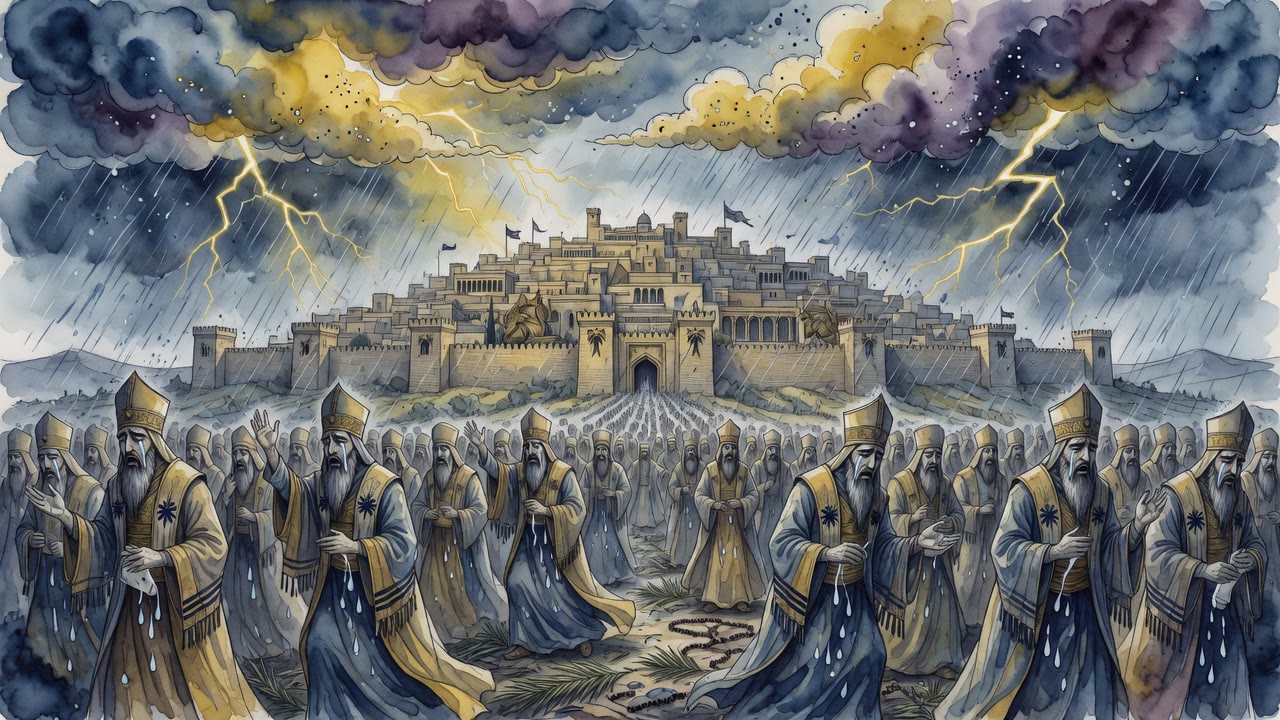
They inspected the assembly and found twelve thousand young priests. Each took a trumpet in the right hand and a book of Torah in the left. They wept upward and asked what would become of God's name if the beloved people ceased from the world. Who would stand and read? Who would speak the Name?
In their cry the sun and moon were imagined darkened, because those lights were created for Israel's sake. The people fell on their faces. Trumpets sounded. The camp answered. The cry climbed until the hosts of heaven wept and the patriarchs stirred in their graves.
A Fast That Shook More Than One City
This was not Esther alone in a palace corridor. Priests, children, animals, ancestors, and the scroll itself were pulled into one pressure. Heaven was treated as a court that could still be moved by noise made in truth.
The decree still sat on the books. The queen still had to walk toward a throne room uninvited. But the ground under the story had already shifted. Sackcloth on the Torah. Ash on brides. Twelve thousand left hands holding law, twelve thousand right hands lifting brass. Shushan learned how a people screams toward mercy without putting the scroll down.
In a side street a baker left dough unbaked and sat in ash until his knees ached. A girl who had been braiding festival hair now braided nothing and listened to trumpets she did not know could sound so much like sobbing. Merchants who had planned to sell under bright awnings closed their stalls because buying and selling felt indecent under a decree of erasure.
Mordecai's voice still carried from the gate where the Torah wore sackcloth. Esther's messengers moved through alleys with the three-day order. The twelve thousand did not stop for breath often. Each time a trumpet rested, another rose, so the cry never quite fell to silence. Heaven, the Targum insists, answered with its own wet eyes, and the patriarchs shifted as if the exile had finally made a noise loud enough to reach the grave.
When the third night ended, mouths were dry and the decree still black on parchment. Courage still had to walk into a throne room. But the city had already spent its softness on heaven, and that spending is itself a kind of armor worn under silk and under priestly linen alike.
A young priest lowered his trumpet and tasted salt on his lip that was not the sea's. He looked at the Torah in his other hand and understood the double grip: sound to wake heaven, text to remind heaven what it already swore. Without both, the fast would have been only hunger. With both, hunger became argument. Nineveh's old king had risen from a throne to put on ash. Shushan's Jews rose from ordinary life to put ash on a scroll, and the scroll stood at the gate until even passersby had to decide whether to look away.
By the second dawn of the fast, even animals staggered in the streets as if they understood the decree. Esther's three days did not feel like a strategy from the outside. They felt like a city holding its breath until heaven blinked. The Torah in sackcloth still stood at the gate, and no one dared dress it for joy yet.
← All myths