6 min read

Mordecai Bared the Torah in the Open Square of Shushan

Haman's decree of death hung over the Jews, so Mordecai led twelve thousand priests and a weeping city out into the open, the Torah bared to the sky.

Curated by Arthur · Told by Maggid ·
Table of Contents
  1. The Decree Came Down on the Festival
  2. Twelve Thousand Priests Walked the Streets
  3. The Ark Stood Wrapped in Sackcloth
  4. Heaven Could Not Hold Its Silence

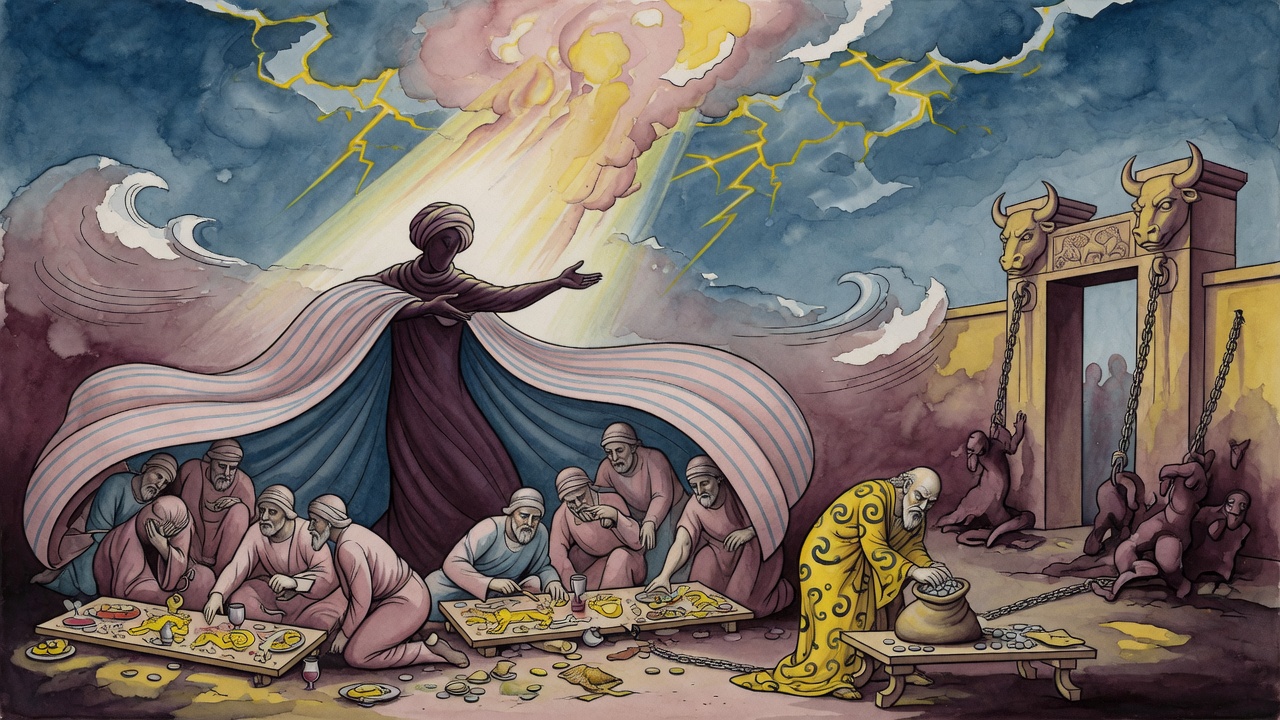
The night Vashti refused to come, the world cracked. Ahasuerus had filled his halls with wine and pride, and when his queen would not parade her body before drunken men, he had her killed. He thought that was the end of it. It was the first domino. Within months the provinces caught fire. The empire that called itself the known world rose against him, and the king who had refused to let the Holy Temple in Jerusalem be rebuilt lost one hundred and twenty-seven provinces, half his kingdom, in a single season of revolt.
He clawed it back slowly. A new queen named Esther, a woman whose strength he could not see and whose people he did not know. A vizier named Haman, raised to the second seat. And on the day the lots fell, Haman bought from the king the right to destroy every Jew, young and old, in a single day, and to plunder them.

The Decree Came Down on the Festival

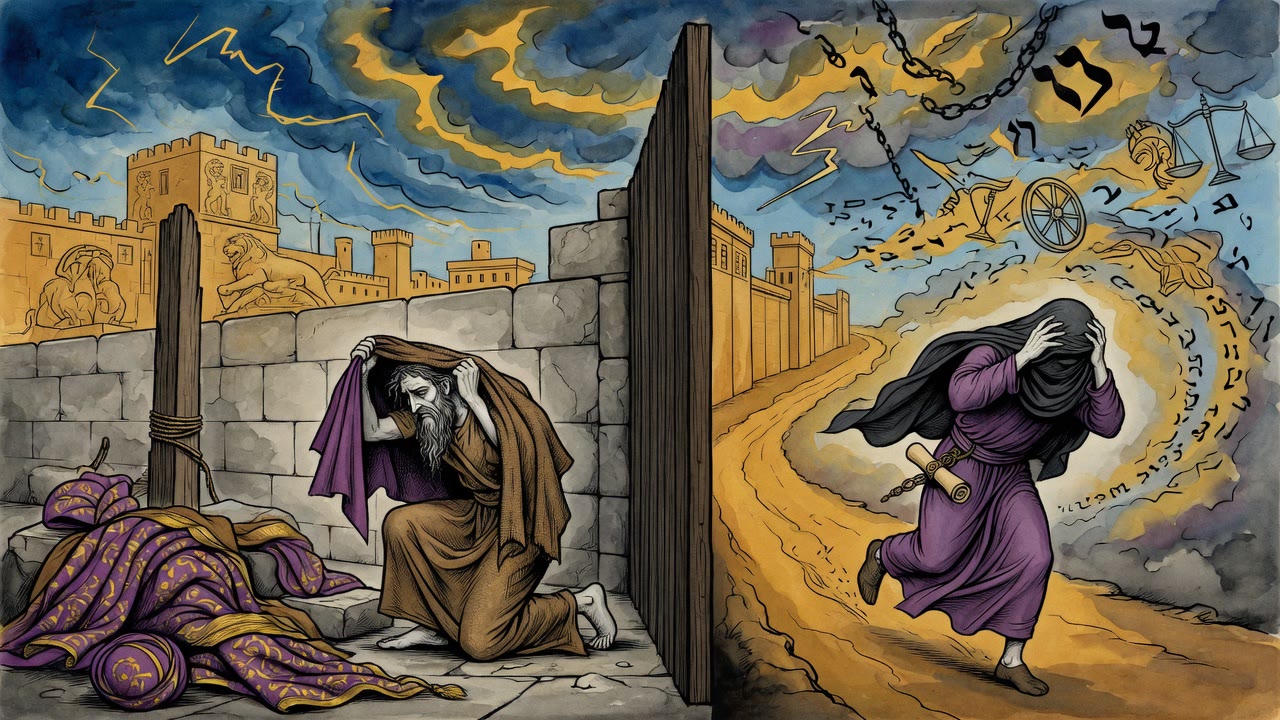
The letters went out in every script of every province. Kill them all. Mordecai read the copy and tore his clothes. He put on sackcloth and ash and went into the middle of the city and cried out, a bitter cry, and he did not stop at the king's gate, because no one wearing sackcloth could pass through it.

The Jews of Shushan had a sin to answer for. When the king threw his great feast, they had gone. They had eaten at his table and drunk his wine and reclined among the Persians as though they belonged there, as though the covenant were a coat they could leave at the door. So the fast that Mordecai called fell heaviest on them. He had himself carried to the far side of Shushan on the festival day so that every Jew in the city, on both banks, could mourn together at the same hour.

Twelve Thousand Priests Walked the Streets

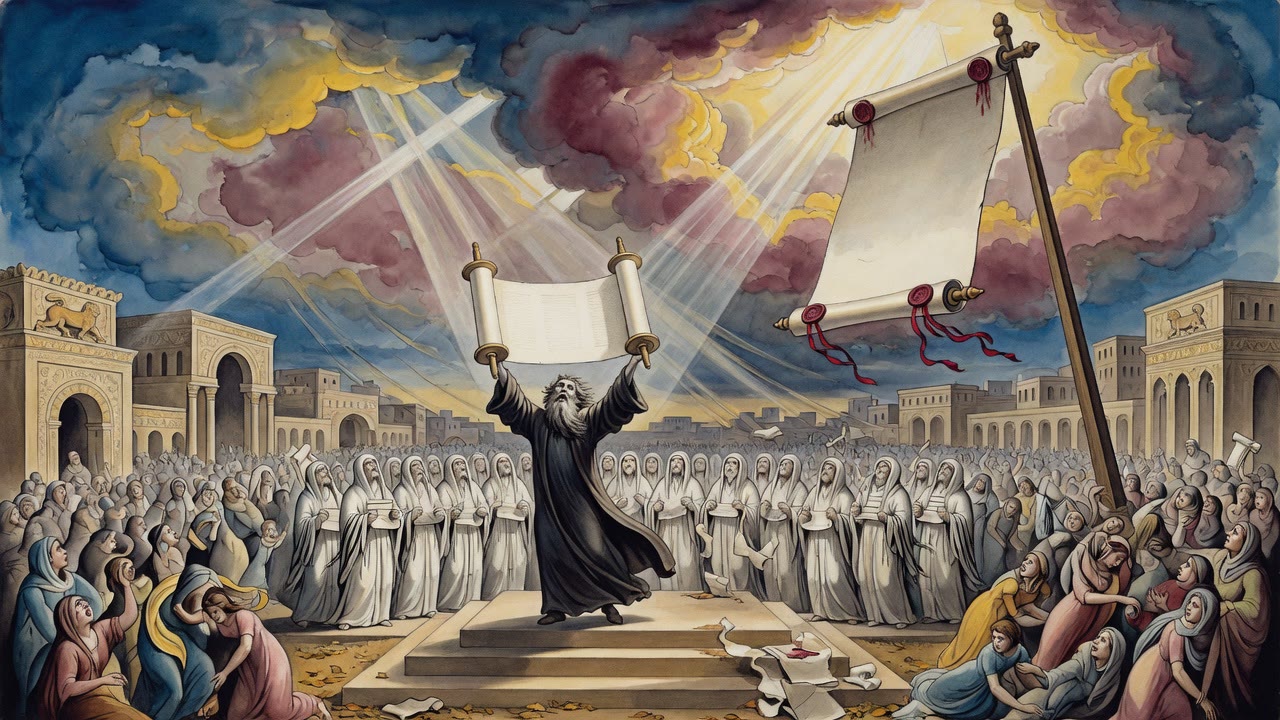
They did not hide. Not in the synagogue, not behind their doors. Mordecai brought them out into the open square, exposed under the Persian sky, where any soldier could count them and any informer could name them.

Twelve thousand priests marched through the streets of Shushan. Trumpets in their right hands. The scrolls of the Torah cradled in their left. They wept as they walked, and the weeping was not soft. It rose against heaven like an accusation.

"Here is the Torah You gave us," they cried. "Your beloved people is about to be destroyed. When that comes to pass, who is left to read it and to speak Your name? The sun and the moon will refuse to give their light, for they were made only for the sake of Israel."

Then twelve thousand men fell on their faces in the dust of the square. One voice now, breaking and rising. "Answer us, our Father. Answer us, our King."

The Ark Stood Wrapped in Sackcloth

They had carried the Ark out with them. The Aron Kodesh, the holy chest that held the scroll of the Law, set down in the middle of the open square. But it wore no gold that day. They had draped it in sackcloth and heaped ashes on it, the Ark itself in mourning, as if the covenant had put on the clothes of the bereaved.

Someone stepped forward and unrolled the scroll. Mordecai, perhaps, or an elder with a steady voice in a shaking crowd. He read aloud, and the words he chose were not curses and not lament. They were an old promise, spoken to a people who had not yet been born when it was first given.

"When you are in tribulation, and all these things have come upon you, in the latter days you will return to the Lord your God and listen to His voice. For He is a merciful God. He will not fail you, nor destroy you, nor forget the covenant of your fathers which He swore to them."

The promise hung in the square over the sackcloth and the ash. Not a comfort whispered, but a contract read back to the One who signed it.

Heaven Could Not Hold Its Silence

The cry did not stay in Shushan. The whole people took it up across the hundred and twenty-seven provinces, the same words rising from city after city until the air itself seemed to carry them upward.

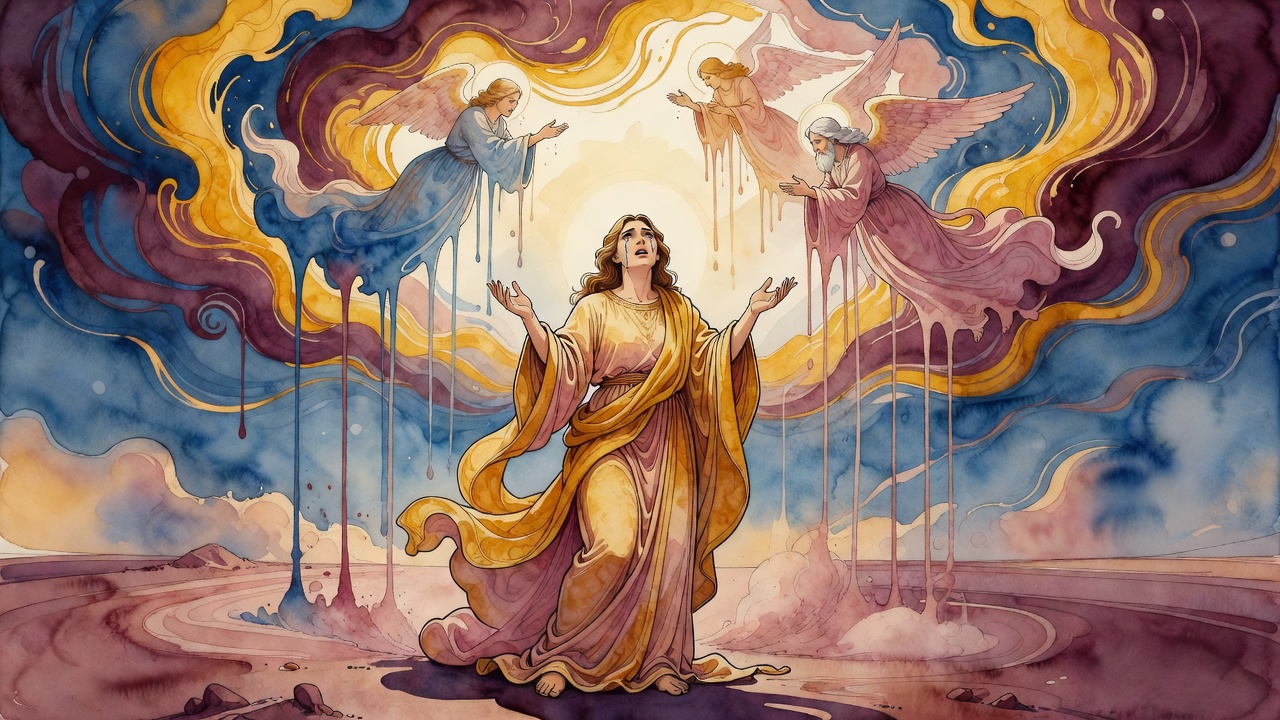
And the heavens answered with weeping of their own. The celestial beings wept above the dust. And the dead stirred. The Fathers came up out of their graves, the patriarchs roused from their long rest by the sound of their children pleading in a foreign square, drawn back toward the living by a grief they could not sleep through.

The dominoes that had begun to fall the night a drunken king destroyed his queen had not stopped falling. Vashti gone. The Temple refused. Half an empire in flames. A decree of death. And now a nation flat on its face in the open, the Ark in ashes, the Torah bared to the sky, and the patriarchs themselves rising to listen. The empire would not be subdued again until Haman hung and Mordecai sat in his seat. But that reckoning was still ahead. For now there was only the square, the weeping, and the long pause before an answer.


← All myths
From the tradition

Sources

3 sources

The texts this telling draws on, in full. Open a card to read inline, or expand it for a wider, quieter read.

Legends of the Jews 12:173Legends of the Jews

A shadow loomed large over the Jewish community. Haman, the king's wicked advisor, had plotted their annihilation. Mordecai, a righteous leader, knew that only divine intervention could save them.

So, Mordecai orchestrated a profound act of collective repentance. He organized a fast and a prayer meeting, a gathering of souls united in their plea for mercy. As we read in Legends of the Jews, Mordecai made sure that on that very festival day, he was ferried to the other side of Shushan. This allowed all the Jews of the city to observe the fast together.

Why was it so important for the Jews of Shushan to do penance more than any other Jewish community? Because, according to the legend, they had committed a significant sin: partaking in Ahasuerus's banquet. This wasn’t just a social gathering; it was seen as a betrayal of their faith and a sign of assimilation into Persian culture.

The scene: twelve thousand priests marched in procession, trumpets blaring from their right hands, while their left hands held the sacred scrolls of the Torah. Can you picture the weight of those scrolls, the weight of tradition, the weight of impending doom? They wept and mourned, their voices rising in anguish against God, a raw and desperate cry from the heart.

"Here is the Torah Thou gavest us," they cried. "Thy beloved people is about to be destroyed. When that comes to pass, who will be left to read the Torah and make mention of Thy name? The sun and the moon will refuse to shed their light abroad, for they were created only for the sake of Israel."

Think about the magnitude of that statement. It wasn't just about physical survival; it was about the survival of their spiritual legacy, their connection to the divine. It was about the very purpose of creation.

Then, they fell upon their faces, their voices united in a single, fervent prayer: "Answer us, our Father, answer us, our King." (As we find echoed in the Amidah prayer).

The legend doesn't stop there. It tells us that the entire people joined in this desperate cry, their voices echoing through the city. And it wasn't just the earthly inhabitants who wept. The celestials, the heavenly beings, joined in their sorrow. And, incredibly, the Fathers – the patriarchs, the ancestors – came forth from their graves, moved by the plight of their descendants.

The Midrash Rabbah and other sources are filled with similar stories of communal prayer and repentance reaching the heavens.

What can we take away from this powerful image? It’s a reminder of the power of collective action, the importance of repentance, and the enduring strength of faith in the face of adversity. It reminds us that even in the darkest of times, the connection to our tradition and to each other can be a source of hope and resilience. And perhaps, that even the heavens are listening.

Full source
Legends of the Jews 12:159Legends of the Jews

Not inside a synagogue, not in the comfort of their homes, but out in the open, exposed and vulnerable. They brought the Aron Kodesh, the Ark, containing the very scroll of the law. But this wasn't a moment of celebration. No, this Ark was draped in sackcloth, covered in ashes – symbols of mourning, of deep sorrow and repentance.

Can you feel the weight of that moment? The silence, broken only by sobs and whispered prayers?

Then, someone – perhaps Mordecai himself, or maybe a respected elder – unrolled the scroll. And from it, words of hope, ancient promises, were read aloud. Which words offered comfort? "When thou art in tribulation, and all these things are come upon thee, in the latter days thou shalt return to the Lord thy God, and hearken unto His voice."

These weren't just words; they were a lifeline. A reminder that even in the darkest of times, there’s a covenant, a sacred agreement, between God and His people. A promise that He is a merciful God, who will not fail them, neither destroy them, nor forget the covenant of their fathers which He swore unto them.

These verses, taken from the Torah (Deuteronomy 4:30-31), spoke directly to their predicament. As Ginzberg retells it in Legends of the Jews, this wasn't just about reciting scripture; it was about actively returning to God, hearkening to His voice, and clinging to the hope that He would remember His promise.

It makes you wonder, doesn't it? What are the "sackcloth and ashes" moments in our own lives? What scriptures, what promises, do we need to unroll and read aloud when we feel lost and afraid? Perhaps the power lies not just in the words themselves, but in the act of turning back, of remembering the covenant, and trusting that we are not forgotten.

Full source
Legends of the Jews 12:40Legends of the Jews

In the Book of Esther, we see how the actions of King Ahasuerus had rippling, unexpected consequences, almost like a cosmic domino effect.

We all remember the story. Ahasuerus throws a lavish party, then demands his queen, Vashti, parade her beauty before his drunken guests. She refuses. And bam! She’s out.

In some fascinating traditions found in, Legends of the Jews, that's not the end of the story; it’s really just the beginning. Ginzberg, in his retelling, paints a picture of a world thrown into chaos. Vashti's execution, as harsh as it was, sparked something far more significant than just a royal divorce.

Apparently, Ahasuerus's entire empire – and when we say “empire” here, we're essentially talking about the known world – erupted in rebellion! Can you imagine? One moment you're a king, the next you're facing uprisings on every front.

Why all the anger? Well, it wasn't just about Vashti. According to the legend, it was also because Ahasuerus had refused to allow the rebuilding of the Beit Hamikdash, the Holy Temple in Jerusalem. This refusal was the last straw for many, igniting widespread discontent.

The rebellion raged, and Ahasuerus lost a staggering one hundred and twenty-seven provinces – half of his kingdom! Talk about a reality check. It’s a harsh punishment, the tradition tells us, for his stubborn refusal to let the Temple be rebuilt.

So, how did he manage to pull it all back together? Not through military might alone, it seems. Only after his marriage to Esther, a woman of hidden strength and courage, did things begin to turn around. But even then, the situation remained precarious.

It wasn't until the downfall of the wicked Haman, and the rise of Mordecai to the position of chancellor, that Ahasuerus finally managed to subdue the rebellious provinces and restore order to his fractured empire. What a wild ride.

The story of Ahasuerus and Vashti is a reminder that our choices, no matter how small they may seem, can have far-reaching and unpredictable consequences. It speaks to the importance of humility, justice, and listening to the needs of others. And perhaps, it suggests that sometimes, even kings need a good advisor – or two – to help them work through the complexities of power.

Full source