Hillel Opened the Door and Rabbi Yochanan Broke His Own Student
A man who wanted the High Priest's garments became a Torah scholar under Hillel. A robber who became a sage was destroyed by one sentence from his teacher.
Table of Contents
 Click for full size
The Man Who Wanted the Crown
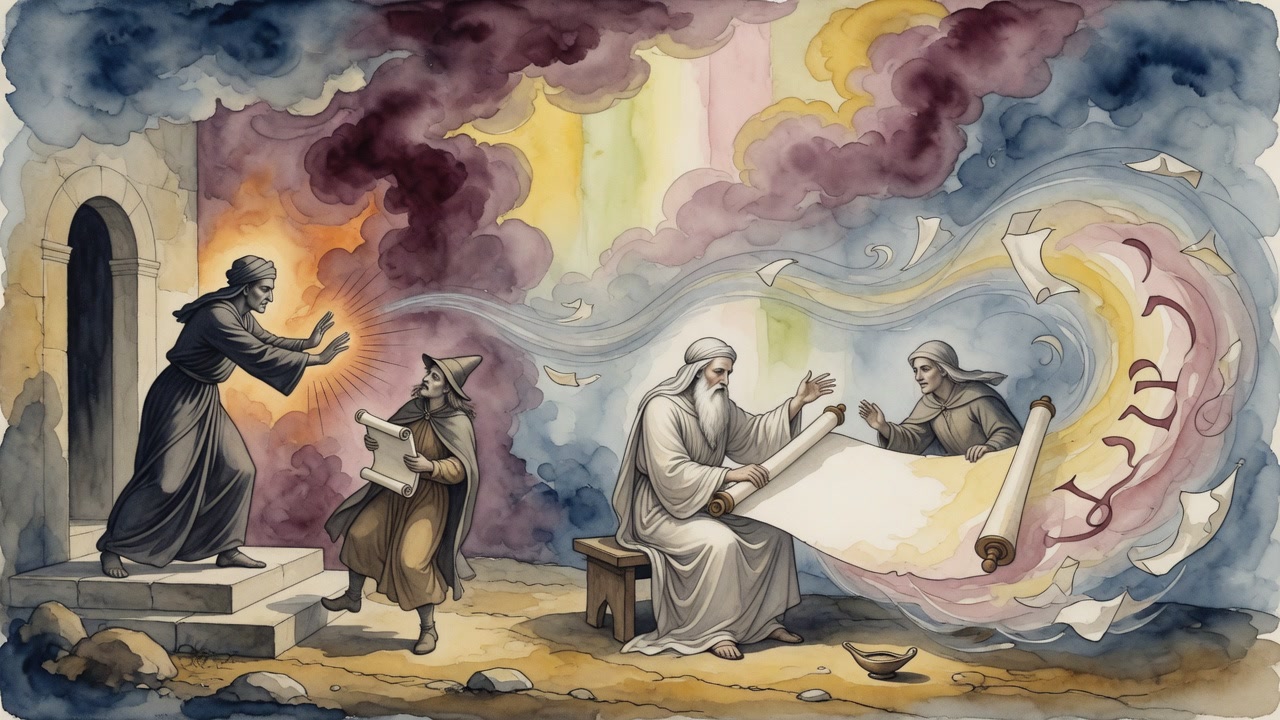
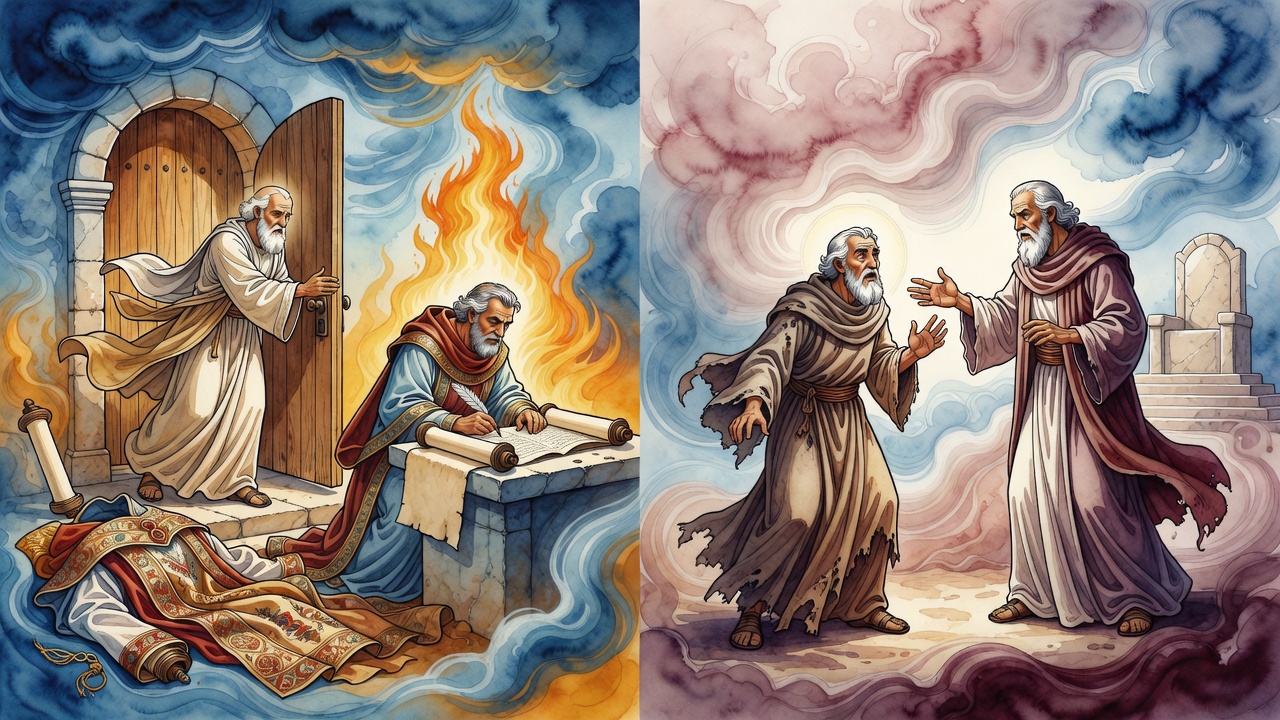
The man had heard how the High Priest was honored in Jerusalem and decided he wanted the office. This was not a spiritual awakening. It was an ambition in the wrong direction. He came first to Shammai and stated his condition: he would convert if they made him High Priest.
Shammai drove him out. He had a builder's measuring rod in his hand and he used it. The demand was absurd, and Shammai's patience for absurdity was short.
The man went to Hillel. Hillel welcomed him as a student without confirming the fantasy. He gave the man a path: learn everything a Jew is required to know, then the Torah itself will teach you what is possible. The man began studying.
The Verse That Answered Him
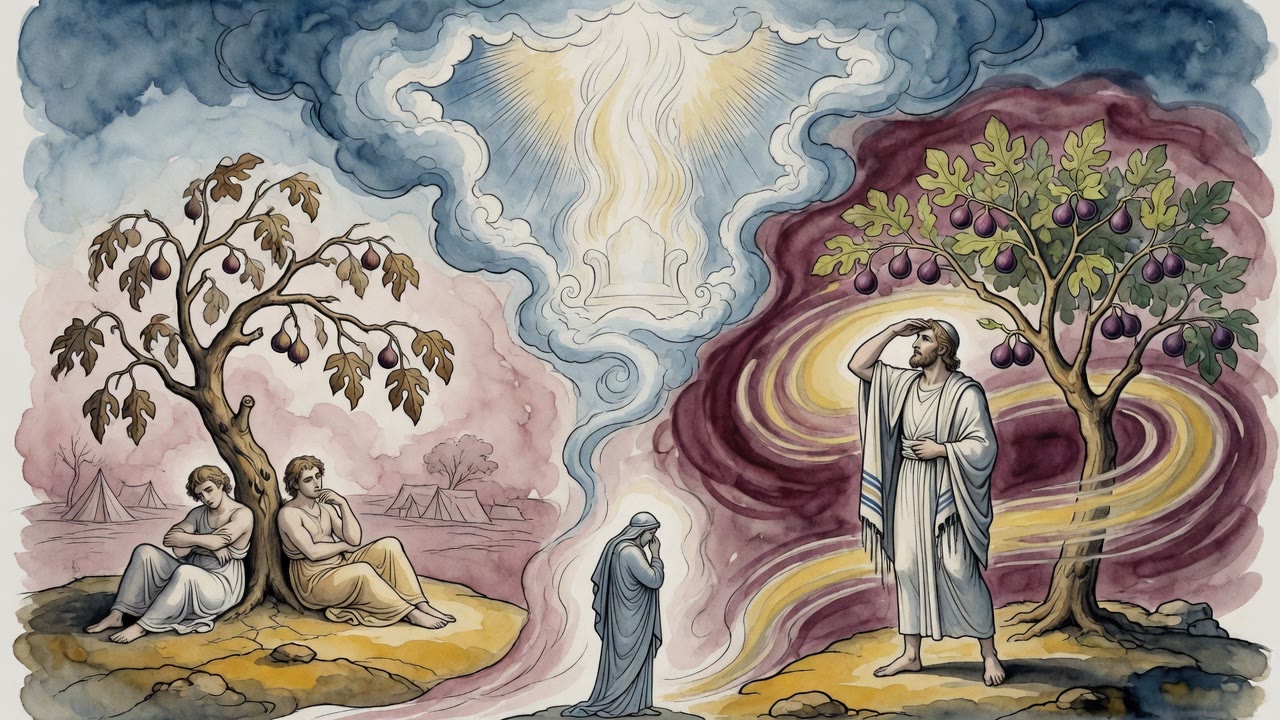
He worked through the priestly laws in Leviticus and Numbers, and somewhere in the reading he reached the verse: the stranger who draws near shall be put to death. He stopped.
The stranger who draws near, that was himself, he understood, if he were to approach the altar in priestly vestments. The Torah had answered his question without Hillel's help. He went back to his teacher and said that if a king's own son was warned away from the inner chamber, how much more should an ordinary man tremble. The High Priesthood was no longer his ambition. Torah had replaced it. He left a different man from the one who had come in.
The Robber Who Became a Sage
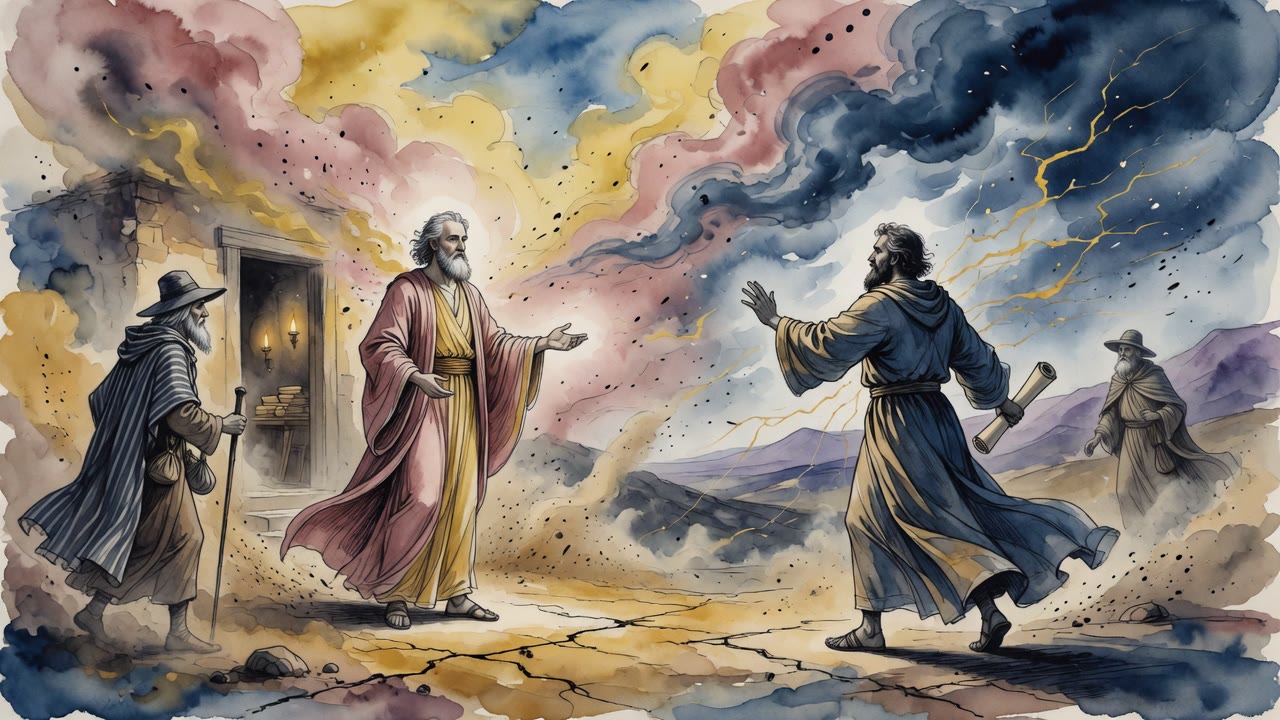
Rabbi Yochanan bar Nafcha was so beautiful that men traveled simply to see him. He was bathing in the Jordan when a bandit named Shimon ben Lakish leaped across the river toward him, thinking he was a woman worth pursuing. When Resh Lakish landed and saw a man, and what kind of man, he stopped.
Yochanan looked at him. "Your strength belongs in the study house," he said. Resh Lakish looked back. "Your beauty belongs to a woman," he answered. Yochanan made him an offer: he had a sister more beautiful than himself. Come to Torah and she would marry him. Resh Lakish agreed. He became a scholar, married Yochanan's sister, and eventually rose to become one of the great legal minds of his generation.
For years the two men argued together across the tables of the academy. Resh Lakish never let his teacher have an easy opinion. Every position Yochanan advanced, Resh Lakish pressed until it was either stronger or abandoned. The partnership was productive precisely because Resh Lakish had not come to Torah to agree.
The Sentence That Broke Him
Then came the day they argued about whether certain objects could receive ritual impurity from the point at which they were made usable, and one of the examples was a knife. Yochanan said that a robber would know, since it was robbers who sharpened blades. He meant it as a reference to Resh Lakish's former life. Resh Lakish heard the teacher who had rescued him from the riverbank calling him, in front of everyone, the robber he used to be.
He stopped eating. He became sick. He died. Rabbi Yochanan, left alone without the partner who had sharpened him, spent his last years in an academy where no one challenged him, surrounded by students who only agreed. He mourned what he had broken until the day he died.
← All myths