Two Funerals Met and Simeon Cleared Ashkelon
Enemies scattered both processions in the same street. The town buried the tax collector in the sage's tomb. The disciple stayed by the wrong bier.
Table of Contents
Two processions met in a narrow street and could not pass. One bier carried a sage. The other carried a tax collector who had died the same morning.
 Click for full size
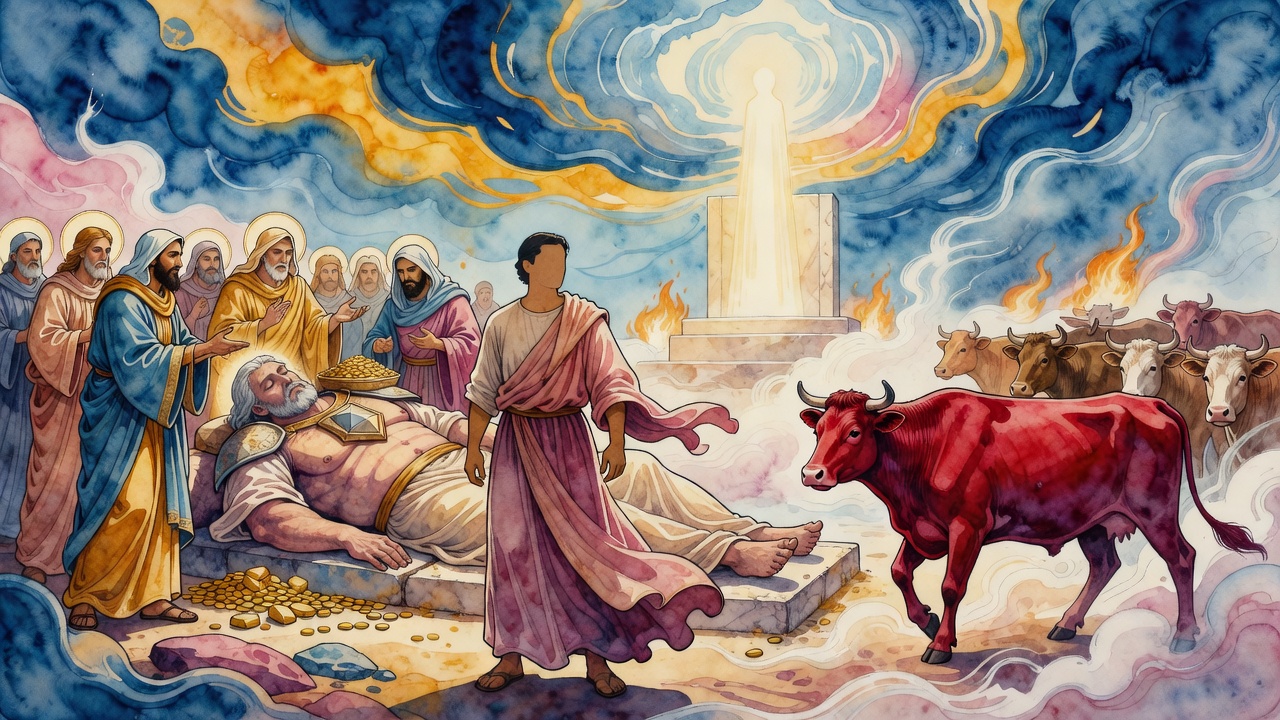
The town honored the sage's bier. Enemies attacked and scattered the crowds. One loyal disciple stayed beside his master's body. When the townspeople returned to finish the burial, they took the wrong bier in the confusion and laid the publican in the sage's tomb with full honors. The sage went into the tax collector's plot without a song.
The disciple shouted. No one listened. The street had already chosen its ranking.
A Dream That Reordered Honor
The disciple was broken. For what sin did my teacher deserve this, he asked, and for what merit did a sinner get the funeral of a righteous person?
His rabbi came to him in a dream.
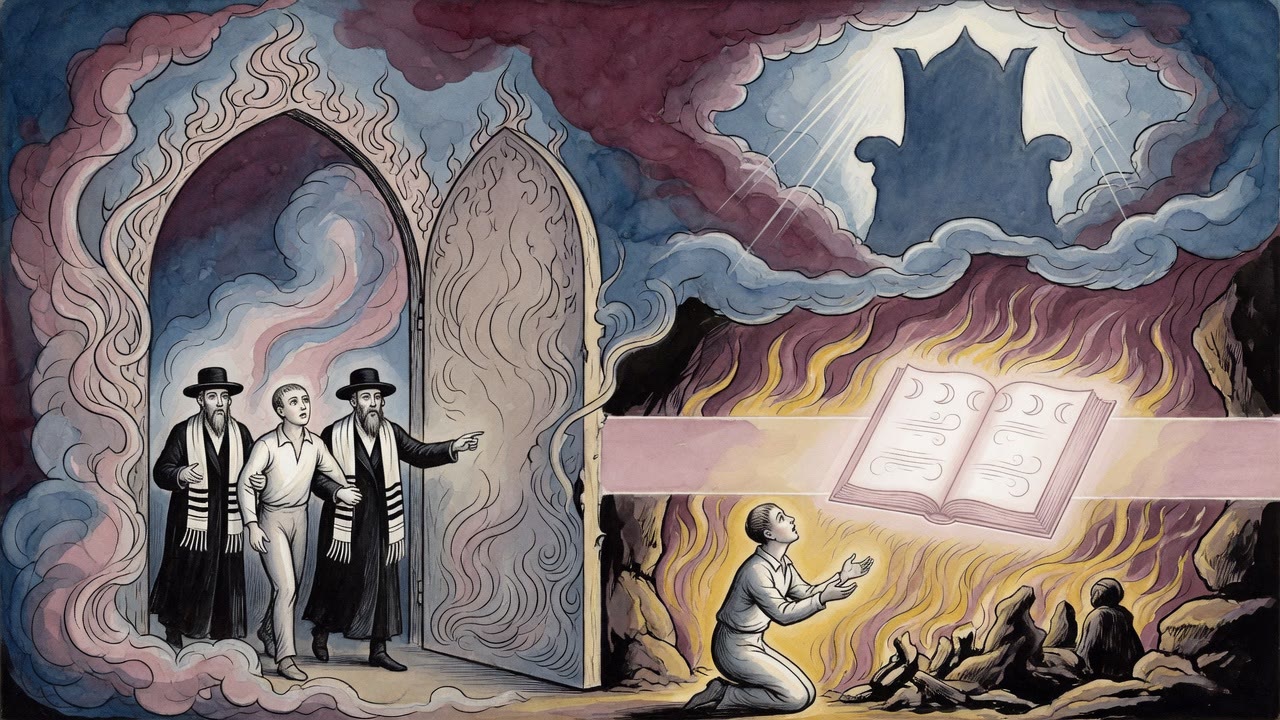
"Take comfort," the dead teacher said. "Come. I will show you my honored place in paradise, and I will also show you the man in Gehinnom, the realm of judgment after death, the door of which even now creaks in his ears."
The hinge creaked. The publican stood where the fire could find him.
"I once listened to contemptuous talk against the rabbis and did not rebuke it. For that I was buried without honor. The publican once prepared a banquet for the Roman governor. The governor did not come. The food went to the poor. For that act of unintended charity, he received the honor meant for me."
Silence in a clever room had cost a grave. A banquet abandoned by a patron of flesh had bought a funeral. The rankings of the living had been a lie for one afternoon. The rankings of the dead were already otherwise.
Until Simeon Dies
The disciple pressed further. How long will the publican burn?
The rabbi answered, "Until Simeon ben Shetach dies. Simeon knows that several witches practice their trade in Ashkelon, and he idly allows it. When he dies, he will take the publican's place in Gehinnom until the witches are removed."
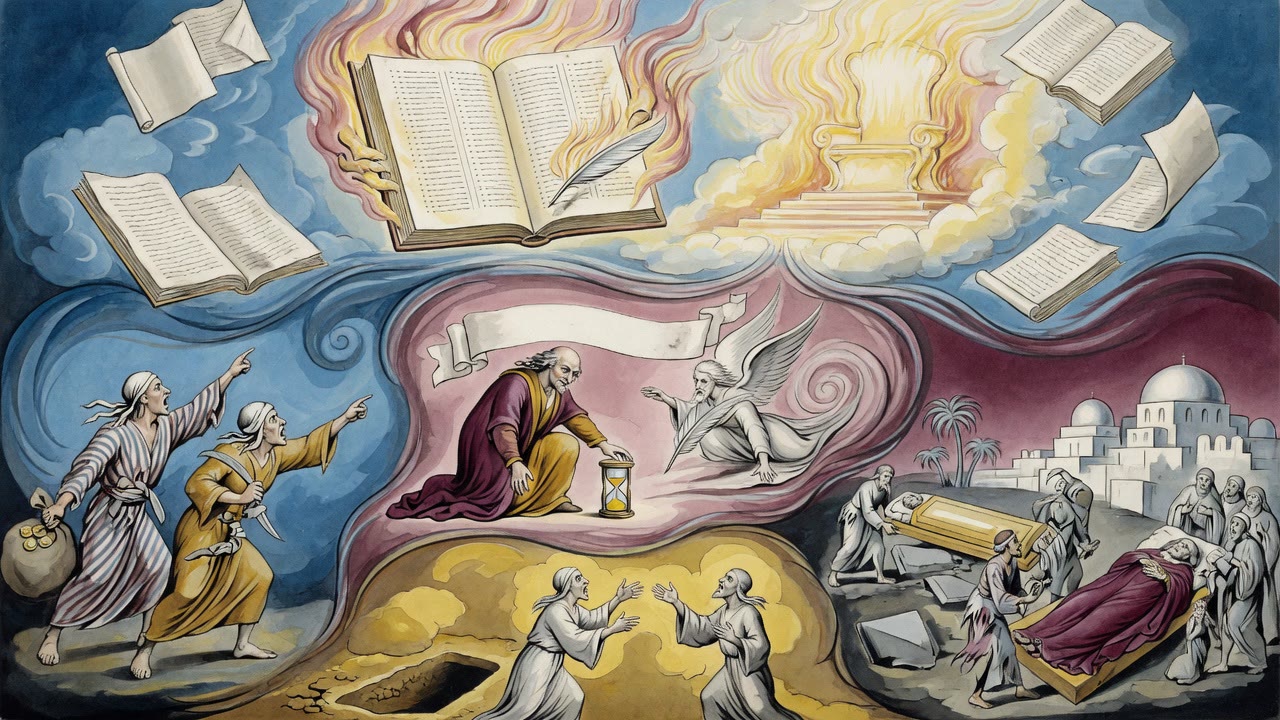
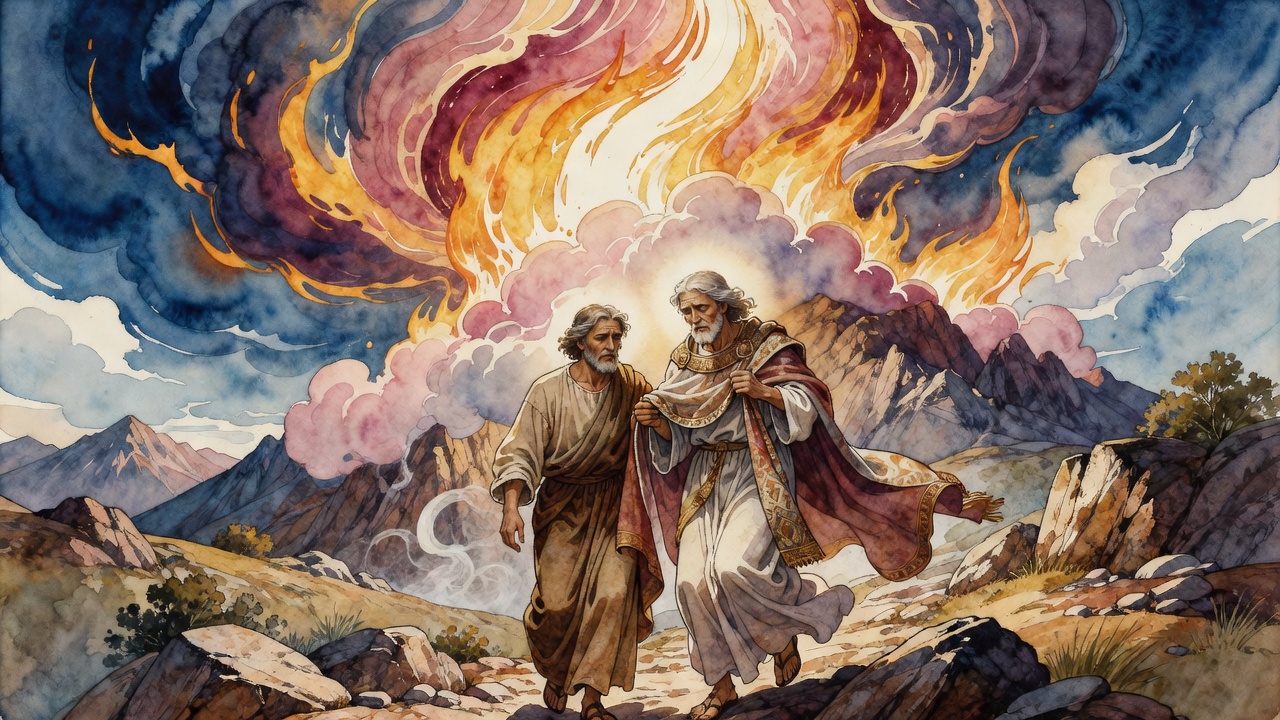
In the morning the disciple hurried to Simeon and reported the dream. Simeon did not wait for a cleaner day. He assembled eighty strong young men. He chose rain. He marched on Ashkelon.
Delay had already been priced. The sage who failed to rebuke contemptuous talk paid with a wrong burial. The publican who fed the poor by accident paid with a moment of honor and then with fire. Simeon, still alive, still able to walk, refused to inherit the publican's sentence by leaving Ashkelon alone.
Three Curses on the Road
On the wet road a verse walked with him, the kind a preacher sets against three figures. First the inciter. The serpent whispered to the woman in the garden, "For God knows that on the day you eat of it your eyes will be opened" (Genesis 3:5). Because he incited, Scripture fixed his name to the deed.
Second, the one who tramples the words of the sages. Jeremiah declared, "Cursed is the man who does not heed" (Jeremiah 11:3). Third, the one who takes a patron of flesh and blood and leans his whole weight upon a mortal arm. Jeremiah again: "Cursed is the man who trusts in a human being and makes flesh his strength" (Jeremiah 17:5).
The sage had let contempt of the wise pass. The publican had cooked for a governor who never arrived. The witches of Ashkelon incited in a city Simeon governed by not governing. Three curses, one wet march. Simeon put his weight on the work while breath remained.
Rain on the Road to Ashkelon
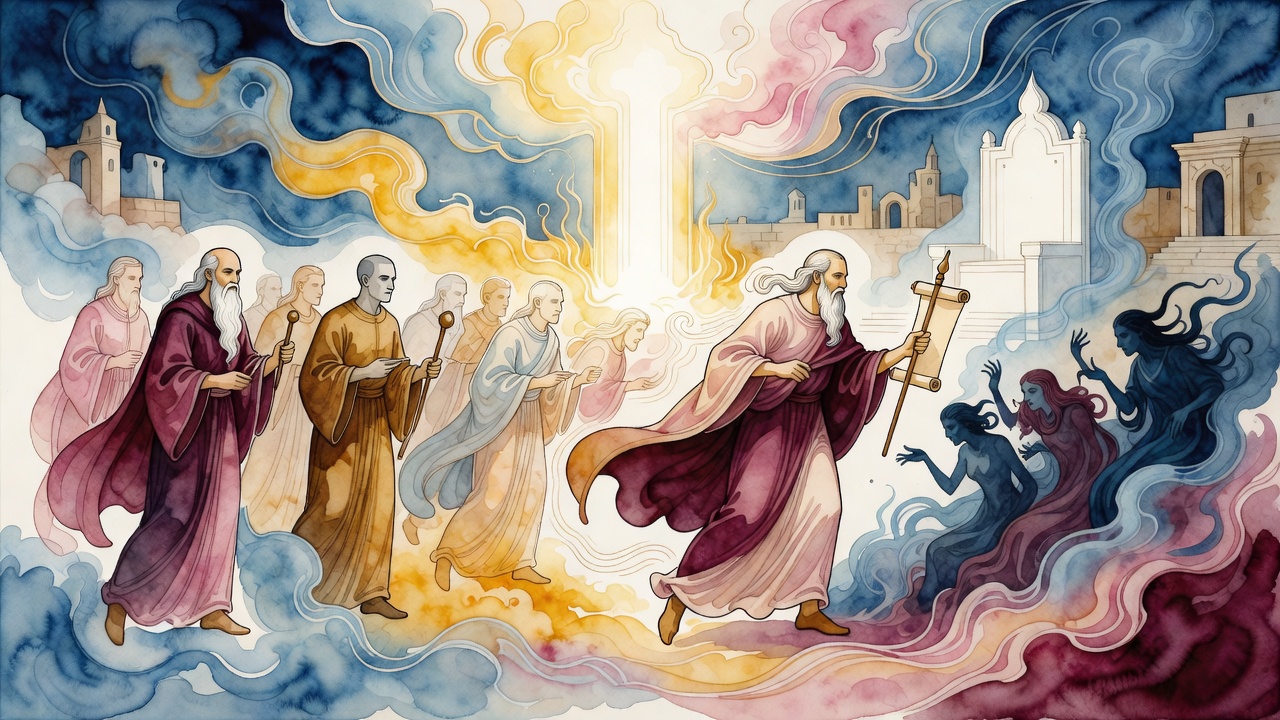
He chose rain so that excuses would stick to the ground. Wings fail in weather. The eighty men followed him into Ashkelon with water in their collars and iron in their hands.
They took the women who had been a file on a desk and never an order. Eighty of them. The town that had ranked two corpses in a narrow street now watched a living court finish a job that dreams had billed to Gehinnom.
Honor at a funeral can lie. Gehinnom does not. The hinge that creaked in the publican's ears would not become Simeon's hinge. He hung the work in the rain and walked home wet.
The disciple who had stayed by the wrong bier slept that night without the dream. The sage kept his place in paradise. The publican's fire had a different clock. Simeon had spent eighty men and a rainy day rather than spend the rest of his death in another man's sentence.
← All myths