Joseph Lost Ten Years for Silence About His Father
Ten times the brothers called Jacob a servant. Joseph did not correct them. Heaven took ten years. Then he rode to the border.
Table of Contents
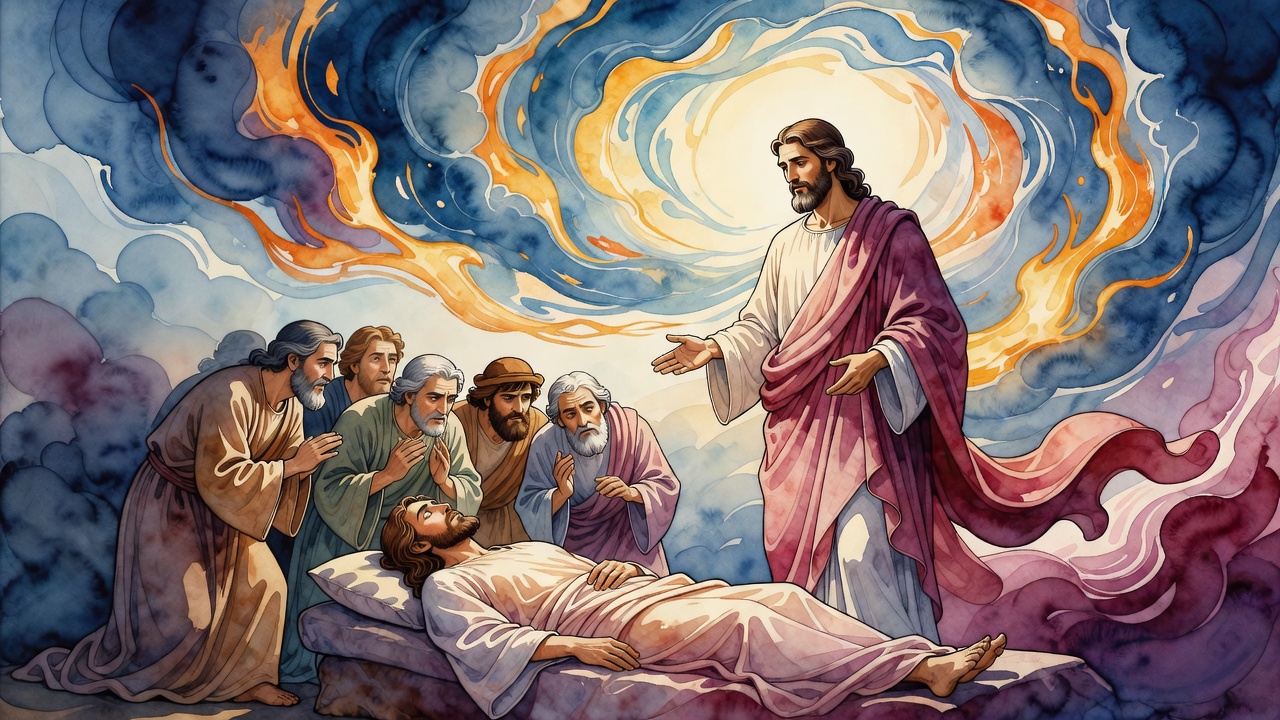
In the Egyptian court the brothers stood in a line and spoke of the old man they had left behind. "Thy servant, our father," they said. Joseph heard Jacob named a servant in a court formula. He did not correct them.
 Click for full size
They said it again. Grain was on the table. Famine was at the door. Joseph's mouth stayed shut.
Ten Times They Called Him Servant
Ten times the phrase crossed the floor. Ten times Joseph let it pass. He was the man they did not know. He was also the son who knew the name they were using. Keep the mask, he told himself. Do not startle them into flight before Benjamin is safe. Do not startle them before the whole house is in Egypt.
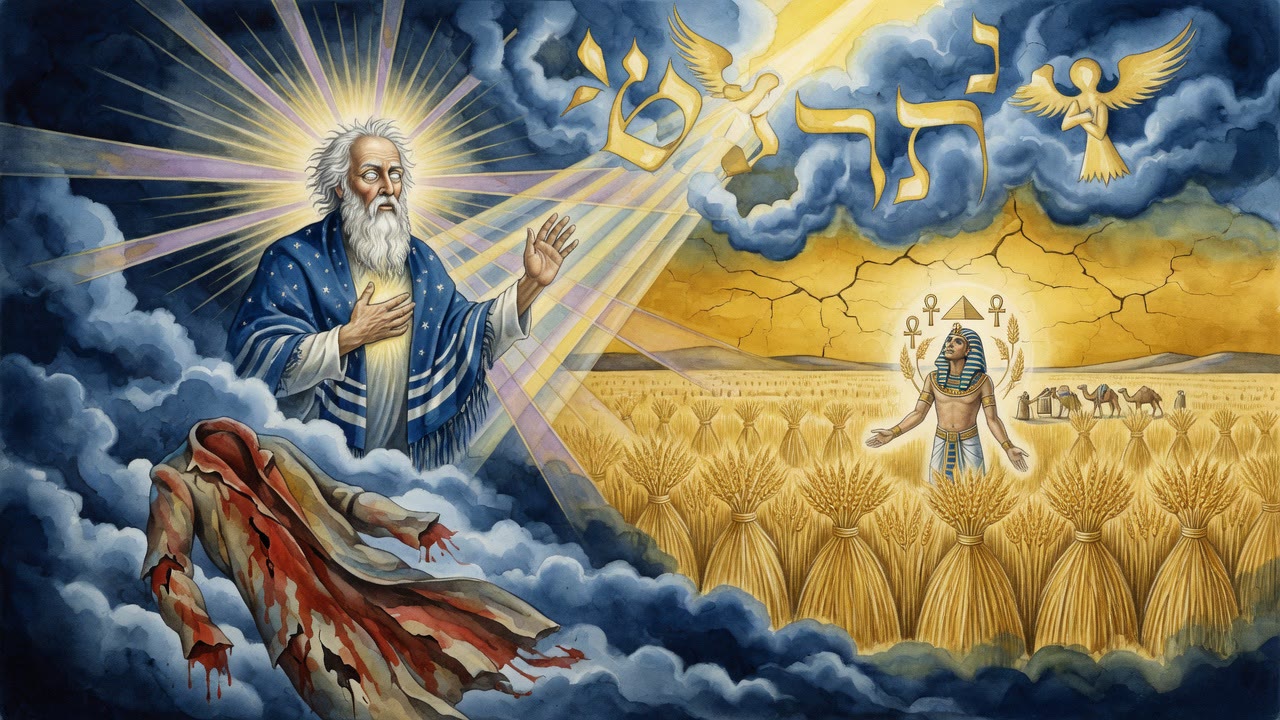
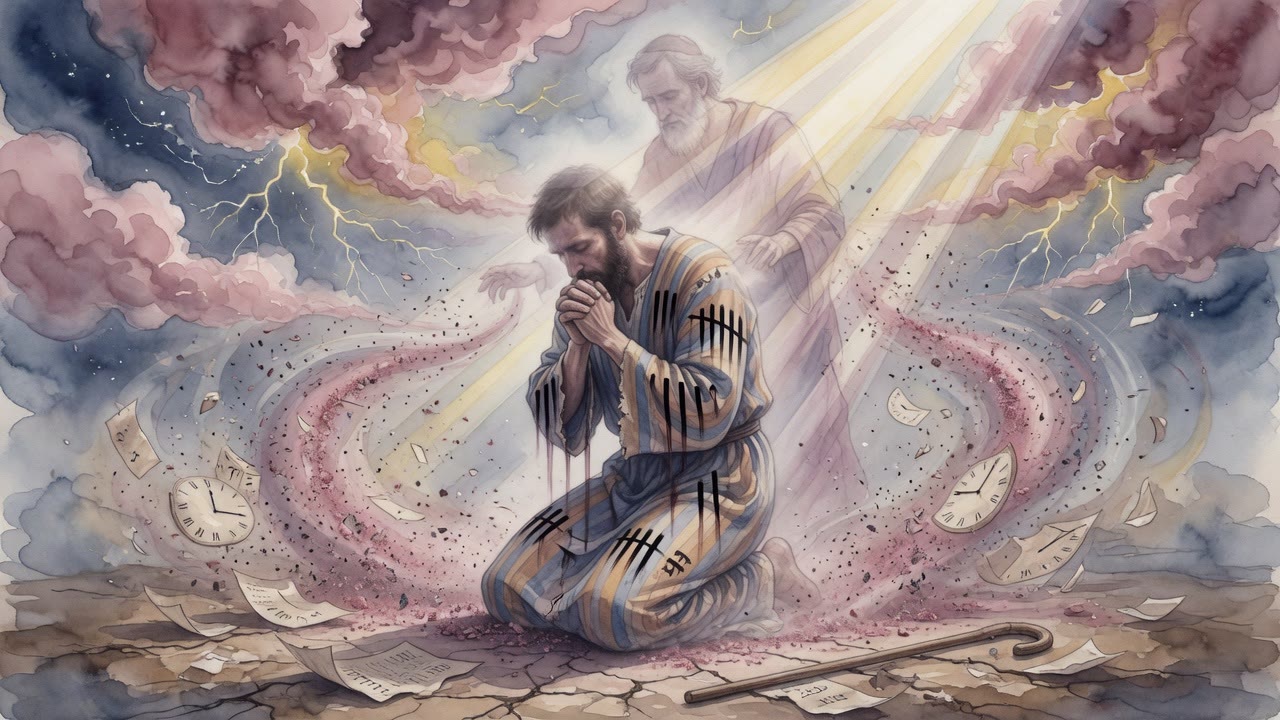
He chose the mask. God counted anyway. Silence was taken as a yes. Ten years came off Joseph's life, one for each time he heard his father reduced and did not interrupt. Pharaoh's ring sat on his hand while the years came off.
The brothers were buying grain. Joseph was buying time. Jacob needed his name defended in a son's mouth. Joseph gave grain. He withheld the defense.
He Rode Out Like a Subject
When Jacob reached Egypt's border, Joseph did not wait on a throne for the old man to bow into the room. He went out with all his men to meet him. Wagons. Dust. A viceroy running like a junior officer toward an old shepherd.
In Egypt a king does not go forth to meet any man. The people go forth to meet the king. Joseph put his body on the road anyway, as if his father were the king and he were the subject.
He fell on Jacob's neck and wept. The ten years did not come back when he wept. The father received a subject's escort. That was the repair the silence had required.
Brothers who once sold him watched him honor the man they had also wronged. Egypt watched a Hebrew official leave the palace to meet a traveler. The ledger had already marked ten years. The ride still counted as partial payment.
The Face in the House of Potiphar
He had needed that face before. In a house in Egypt a woman reached for him, and he almost went. Then he saw the image of his father. He pulled his arm back. He ran. The Holy Spirit, the Ruach HaKodesh (רוח הקודש), had rested on him from youth, leading him like a flock. The Spirit's presence did not excuse the closed mouth in the audience hall.
The same eyes that saved him from that room failed him when a title was the danger. He could see Jacob when desire stood in the doorway. He could not open his mouth when a formula named his father a servant. Both tests used the same father.
Before Haran the Flocks Thinned
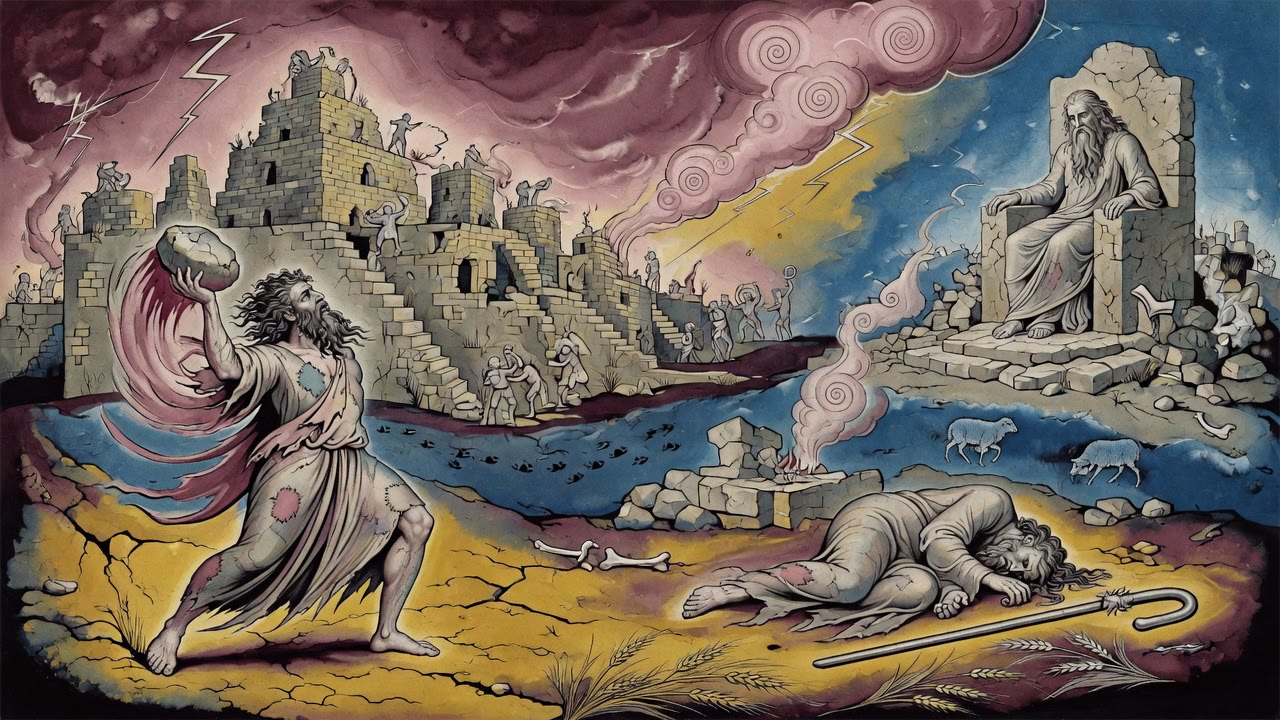
Long before the brothers' ten phrases, a plague struck Laban's sheep until few remained. Rachel kept what was left. Jacob arrived in Haran to feed the rest and multiply them. Sometimes a man's foot destroys, and sometimes it repairs. The path was set before the traveler knew the map.
The same God who thinned flocks for a future son-in-law later thinned Joseph's years for a present silence. Arrangement is not a pardon. The household built by that plague still answered for a closed mouth.
Jacob's years with Laban produced the sons who would one day stand in Egypt and misname him. Joseph's years in Egypt produced the silence that misnamed him back. When the wagons rolled toward Goshen, the escort was public. A father like a king deserves a king's reception. Joseph wrote that reception with horses and dust after failing to write it with ten interruptions.
← All myths