Parshat Vayeshev6 min read

Joseph's Brothers Put God Under a Ban So He Could Not Tell Jacob

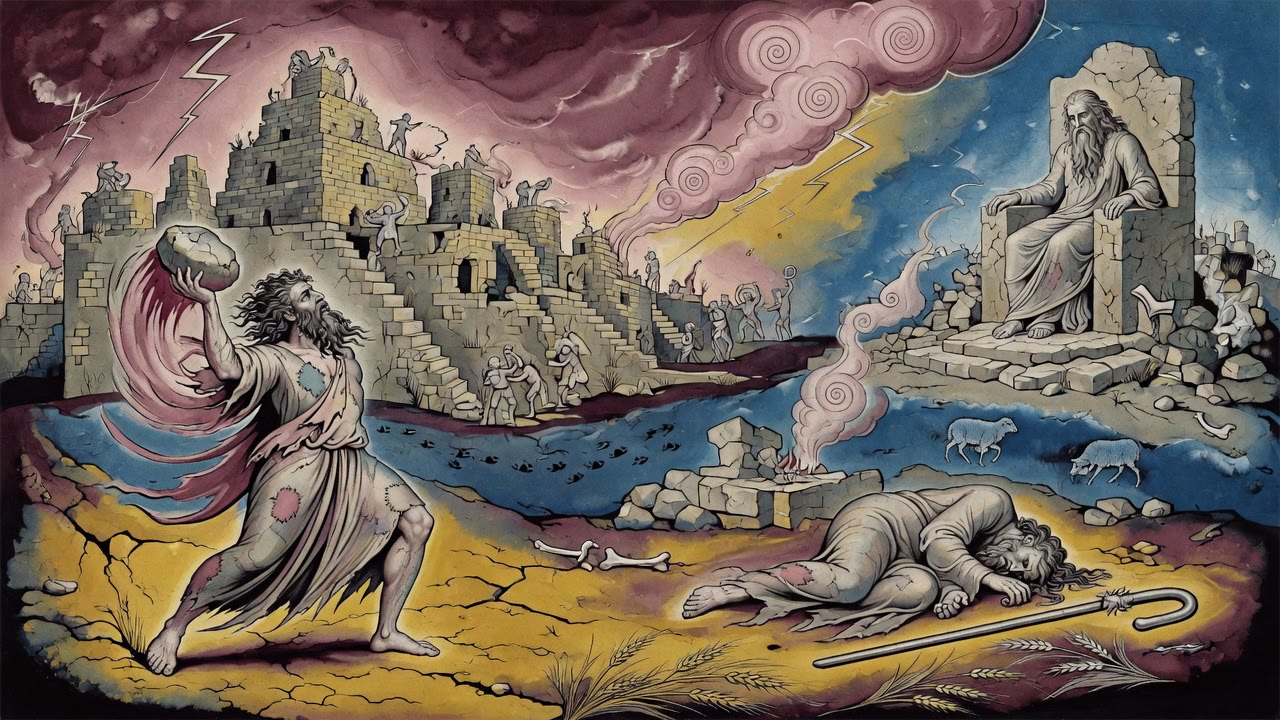
They needed ten men to swear the ban and there were only nine of them left at the pit. So they made the Holy One the tenth.

Curated by Arthur · Told by Maggid ·
Table of Contents
  1. The Boy Who Wore His Father's Face
  2. A Man in the Field Sent Him On
  3. A Pit With No Water In It
  4. They Needed a Tenth Man
  5. Identify, Please
Joseph's Brothers Put God Under a Ban So He Could Not Tell Jacob Click for full size

The Boy Who Wore His Father's Face

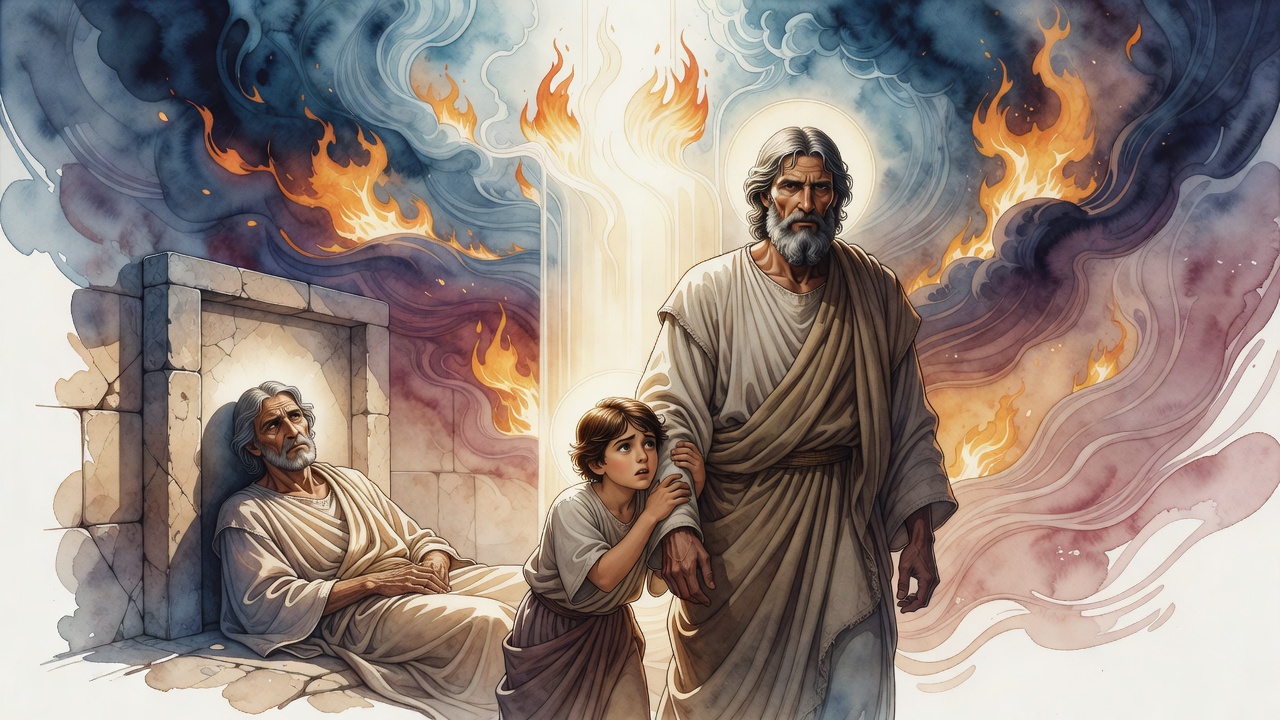
The reason Jacob loved Joseph more than the rest was not that he came late. It was the face. The boy had his father's features, exactly, the way a copy has an original, and an old man looking at him was looking at himself.

Joseph used his access. He came back from the flocks with reports, and one of them was that his brothers tore limbs off living animals and ate them.

Heaven answered him on the spot. "Be assured, you will be suspected of committing the very act you accused them of committing." Years later, in a hall in Egypt, servants would set his bread apart at his own table because the men eating with him could not sit at a table with someone like him.

Then came the dreams, and he told those out loud too, and after that his brothers could not speak a civil word to him.

A Man in the Field Sent Him On

"Go now, see whether it is well with thy brethren."

Joseph went, and the road ran to Shechem, which was already spoken for. Dinah was ruined at Shechem. Joseph was sold near Shechem. Generations later the kingdom of David came apart at Shechem, in the same hill country, over another man's ambition. Some ground gets used for one purpose.

He could not find them and went wandering in the fields, and a certain man found him there and pointed him toward Dothan. The man was Gabriel.

The archangel of the visions, in a Canaanite pasture, giving a seventeen year old accurate directions to the worst day of his life.

They saw him coming from a long way off. Distance did not help him. It only gave them time to agree.

A Pit With No Water In It

They took him and threw him into the pit. The pit was empty. There was no water in it.

There were snakes in it. Scorpions too, in the dry cracks along the sides, and a boy at the bottom in the dark who could hear them moving and could not see where.

Reuben went off and sat on a hill within sight of the place, waiting for dark, planning to come back down alone and get him out. The other nine sat somewhere else and agreed that he should die.

Then a caravan came past on the desert road.

"Come, and let us sell him to the Ishmaelites."

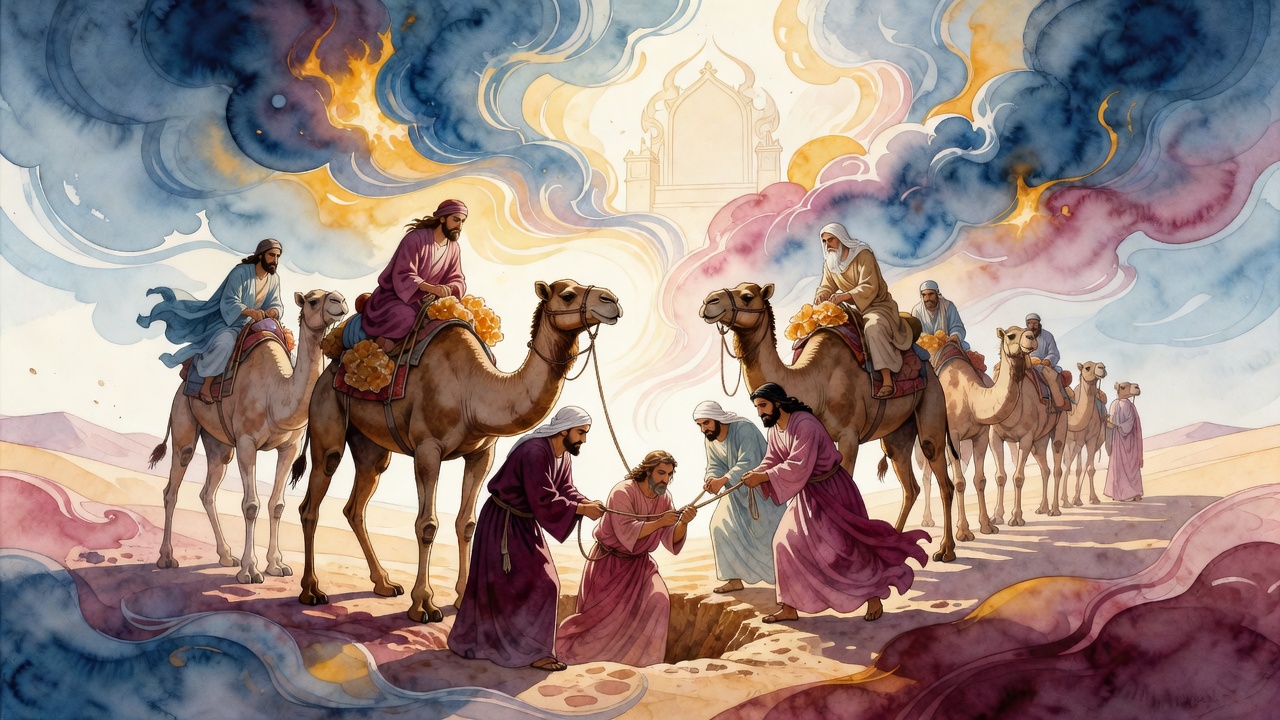
They pulled him up and walked him to the edge of the desert and sold him for twenty pieces of silver, two pieces to a man. Two pieces of silver buys one pair of shoes. That is what the money went on, and they walked home in it.

The price was wrong for a boy that striking, and the reason was down in the pit. His features had altered in there. The blood had run out of his face and left it white, and the men who did the buying never saw the face Jacob loved. They saw a pale stranger who had stopped being worth an argument.

They Needed a Tenth Man

Somebody said what they were all thinking.

"Let us make a vow of excommunication among ourselves, lest one of us be tempted to tell our father, Jacob."

Then Judah raised the technical problem, in the flat voice of a man who knows the law. Reuben is not here. A vow of excommunication cannot be executed unless ten are present.

They counted heads in the dust. Nine.

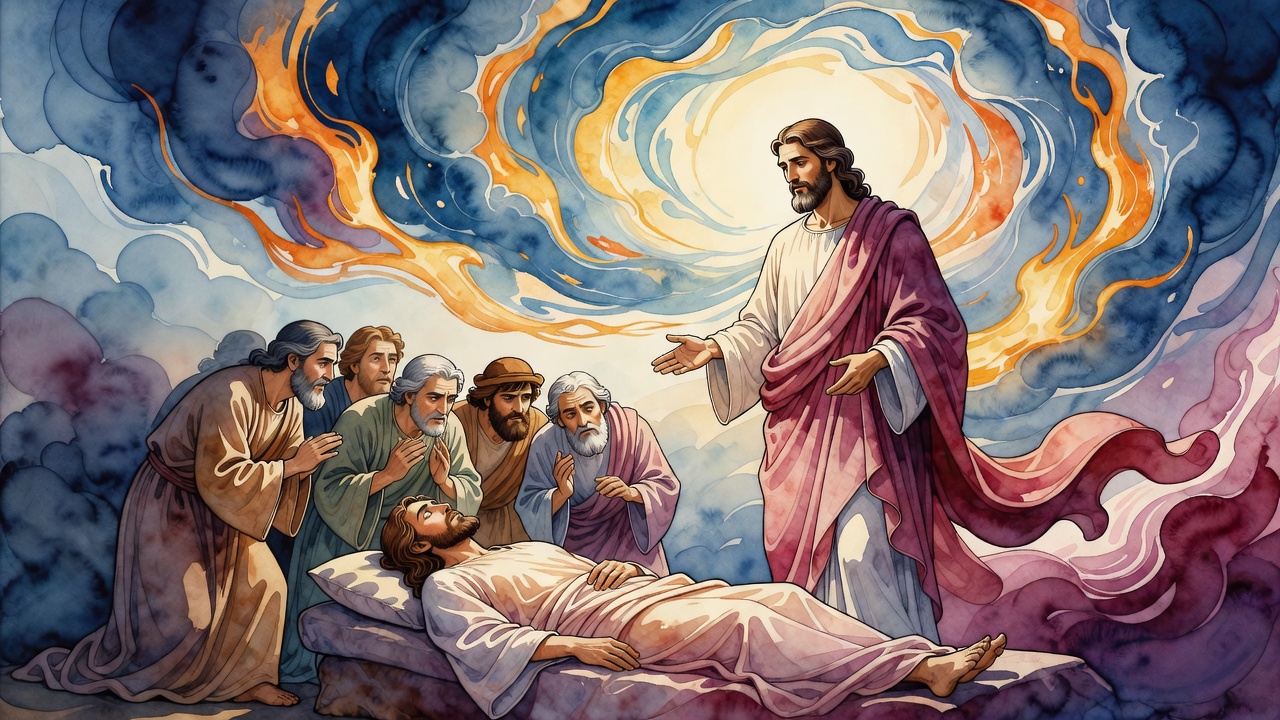
So they brought in the Holy One, blessed be He, as the tenth party to the oath, and swore the ban with God standing inside it, bound by it, on their side of it.

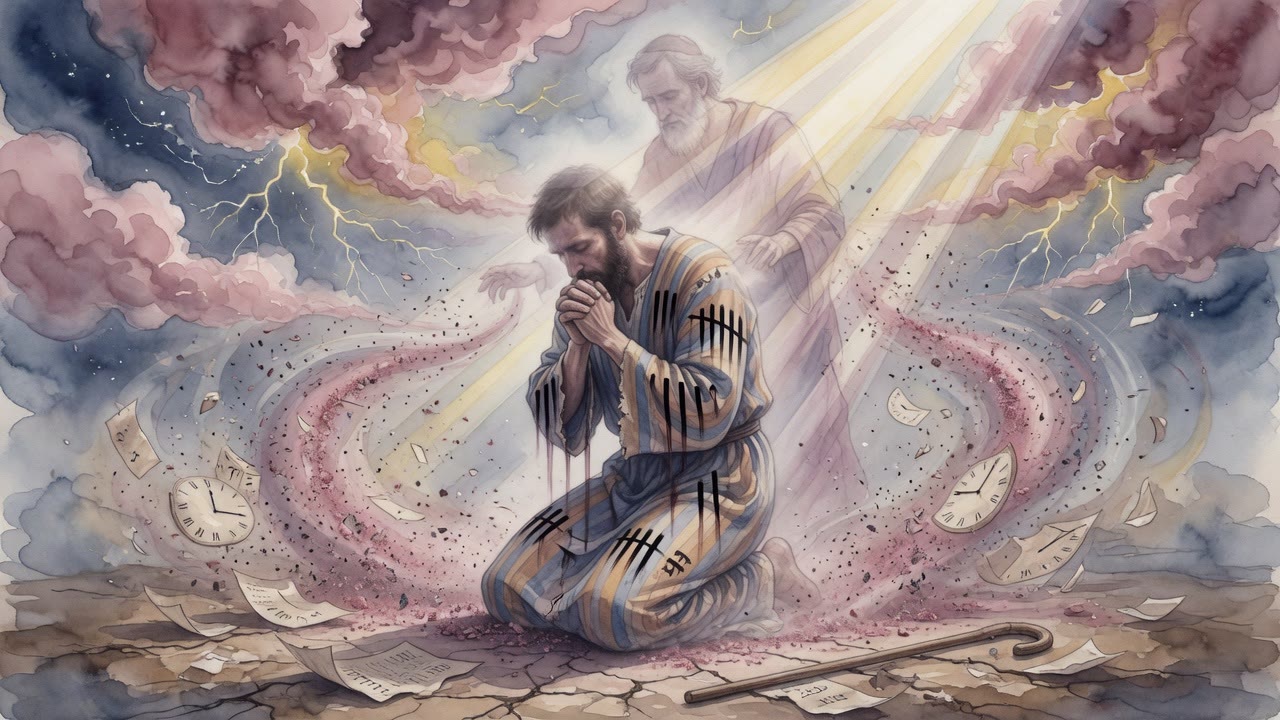
Reuben came down to the pit that night. He had been away in sackcloth and fasting, the first man in the world ever to begin repentance on his own account, over what he had done with Bilhah, and the first free hour he had he went to get his brother out.

The pit was empty. He tore his clothes.

"The child is not. And as for me, whither shall I go?"

They told him what they had done and what they had sworn and who was in it with them. And he remained silent.

Heaven tells Jacob things. That is the arrangement, that is what he is, a man who is told. And from that night on, about this one matter, heaven said nothing to him at all.

Identify, Please

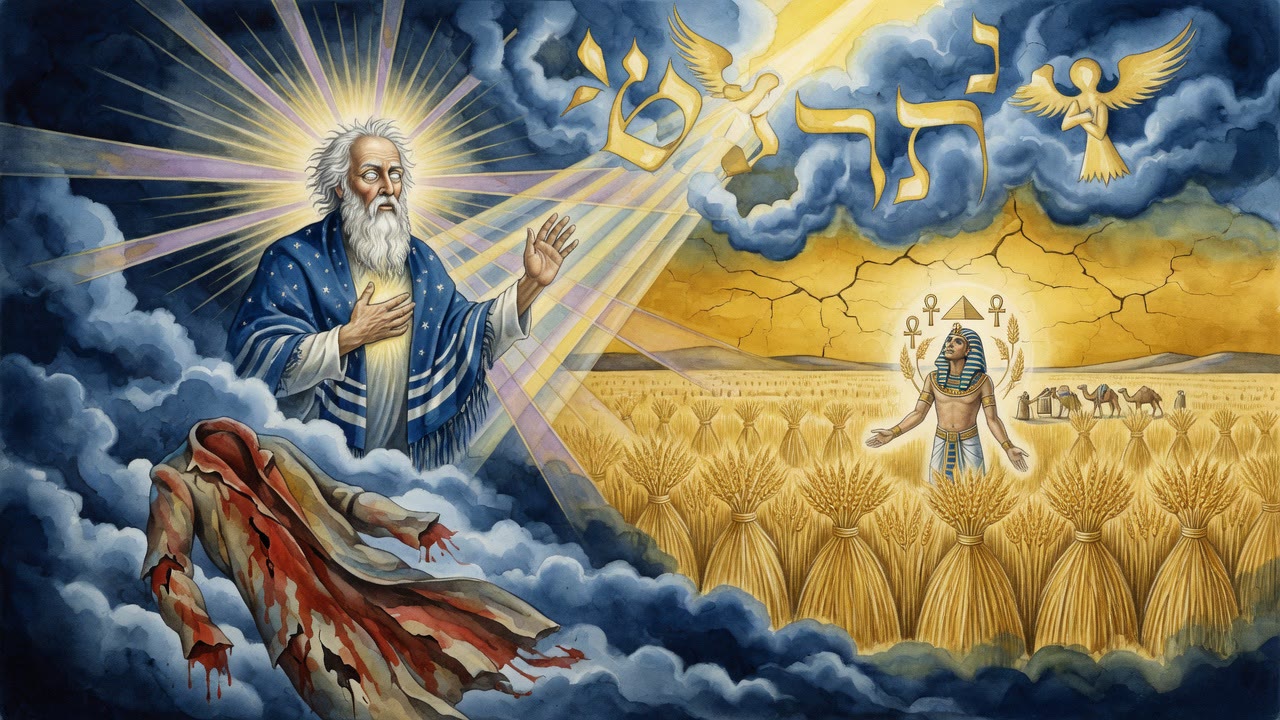
They killed a goat, because goat blood passes for a man's, and soaked the coat in it and sent it up to their father with a message that has no verbs of ownership in it anywhere.

We found this. Identify, please. Is it your son's tunic or not.

Those two words went into the ledger. Judah would hear them again in his own life, from Tamar, holding a staff and a seal and asking him to identify, please, whose they were.

Jacob took the coat. "My son's tunic. A savage beast devoured him."

He was right, and he did not know it, and he did not know anything else either. What he said to himself, looking at the cloth in his hands, was that he could not tell what he was seeing. The clear sight he had lived his whole life inside had gone out. The beast that devoured Joseph was waiting for him in a house in Egypt and had a husband and a name.

His sons stood around him and offered comfort, having brought the thing themselves, and he would not take it. He mourned in a house where every adult person knew, and the one who could have told him had been sworn to silence in a field near Dothan by nine men who needed a tenth.


← All myths

From the tradition

Sources

4 sources

The texts behind this telling. Some cards carry a translation of the source; others are our own retelling of it, and each card says which. Every card links out to the original.

Midrash Tanchuma, Vayeshev 2Midrash Tanchuma

Retold in our words. Read the original at the link below.Townsend 1989 translation of Midrash Tanhuma, S. Buber Recension · CC-BY

37:3). The “son of his features” (ikunim, playing on zikunim, “old age”), for he resembled his father very closely. R. Ishmael said: He was called the son of his old age because Joseph sustained his father and his brethren (ibid. 47:12). That is, he fulfilled a son’s obligation to his aged father. Because Joseph foresaw in his dream that he was destined to rule, and related this fact to his father, his brothers were incensed at him.

And Joseph brought an evil report of them to his father (ibid. 37:2). He told his father: “My brothers eat the limbs of living animals.” The Holy One, blessed be He, declared: Be assured, you will be suspected of committing the very act you accused them of committing: And they set on for him by himself, and for them by themselves, and for the Egyptians that did eat with him (ibid. 43:32). Because he spoke slander against them, his brothers became embittered, and set in motion the chain of events that resulted in the descent of our ancestors to their bondage in Egypt for four hundred years.

And Jacob said to him: “Go now, see whether it is well with thy brethren … and he came to Shechem (ibid. 37:14). This place had previously been designated for punishment. Dinah was dishonored in Shechem, Joseph was sold in Shechem, and David’s kingdom was divided at Shechem: Jeroboam built Shechem in the hill country of Ephraim (I (Kings 12:2)5). And a certain man found him (Gen. 37:15). The man referred to is none other than (the angel) Gabriel, as it is said: The man Gabriel (Dan. 9:21). And they saw him from afar … and they took him, and cast him into the pit (Gen. 37:18, 24). The pit was empty of water, but it contained snakes and scorpions. What did Reuben do? He remained upon one of the hills nearby in order to rescue Joseph during the night. However, the nine other brothers stayed together in another place, all in agreement that he should die.

When a group of Ishmaelites passed by, they said to each other: Come, and let us sell him to the Ishmaelites (ibid. v. 27). They took him to the edge of the desert, where they sold him for twenty pieces of silver. Each one obtained, thereby, two pieces of silver with which to purchase a pair of shoes. If you are surprised that a youth as handsome as he was sold for merely twenty pieces of silver, remember that when he was hurled into the pit, he was so fearful of the snakes and scorpions within it that his features were altered. The blood rushed from him, and his countenance turned pale. Therefore, they were forced to sell him for twenty pieces of silver, the value of a pair of shoes for each of them.

Then they decided: “Let us make a vow of excommunication among ourselves, lest one of us be tempted to tell our father, Jacob.” Whereupon Judah said: “Reuben is not here, and a vow of excommunication cannot be executed unless ten witnesses are present.” What did they do? They included the Holy One, blessed be He, in their pact of excommunication (by which they agreed) not to tell their father what had transpired.

When Reuben descended to the pit during the night to rescue his brother, and found that Joseph was no longer there, he tore his clothing and wept. He returned to his brothers and told them: The child is not; and as for me, whither shall I go? (ibid. v. 30). They related to him what had transpired and told him about the pact they had entered into. And he remained silent. Though it is written about the Holy One, blessed be He: He declareth His word to Jacob (Ps. 147:19), He did not disclose this matter to him because of the pact of excommunication. That is why Jacob said: Joseph is without doubt torn in pieces (Gen. 37:33). R. Mana maintained: The tribes were punished because they sold Joseph, and their sin was not forgiven until they died. Hence Scripture says of them: Surely, this iniquity shall not be expiated by you until you die (Isa. 22:17).

It was because of this episode that a famine befell Canaan, compelling Joseph’s ten brothers to descend to Egypt to buy grain, where they discovered that Joseph was still alive. (Only then) did they abrogate the pact of excommunication and Jacob learned that Joseph was alive. It is written about him: The spirit of Jacob their father revived (Gen. 45:27). Had his spirit actually died? No! His spirit was revived from the despair that resulted from the vow of excommunication they had entered into, and the Holy Spirit had departed from him because of it, but now it hovered over him once again.

R. Akiba declared: A pact of excommunication and an oath are actually one and the same. You learn this from Joshua, who placed Jericho under a ban. Achan was burned to death when he violated the ban by taking things from Jericho and hiding them in his tents. These (things) were the cloaks and the golden tongues from inside the mouths of the idols at Jericho, upon which an unclean (i.e. idolatrous) name had been engraved. Because he violated the pact of excommunication, thirty-six Israelites perished, and Joshua rent his clothes and prostrated himself upon the ground before the ark. And the Lord said unto Joshua: “Get thee up; wherefore, now, art thou fallen upon thy face? Israel hath sinned; yea, they have even transgressed My covenant which I commanded them; yea, they have even taken of the devoted thing; and have also stolen, etc. (Josh. 7:10). Why is the word gam (variously translated “yea” and “also” in the preceding passage) repeated five times in this verse? To teach us that whosoever violates a vow of excommunication is considered to be transgressing against the Five Books of Moses. For all other sins, the guilty one is punished, but for the violation of an oath of excommunication the transgressor and all mankind are punished, as it is said: Therefore doth the land mourn, and everyone that dwelleth therein doth languish (Hos. 4:3), and elsewhere it states: Therefore, hath a curse devoured the land, and they that dwell therein are found guilty (Isa. 24:6). Similarly, you find that it is said about Achan: Did not Achan the son of Zerah commit a trespass against the banned things, and wrath fell upon all the congregation of Israel? And that man perished not alone in his iniquity (Josh. 22:20).

When the Holy One, blessed be He, told Joshua that Israel had sinned, he asked: “Who is the culprit? Am I an informer? He replied. Draw lots to discover the guilty one. Whereupon he drew lots and the lot fell up Achan. Achan cried out: “You decided that I was guilty simply by drawing lots, but if you had drawn lots between yourself and Elazar the priest, then one of you would have been proven guilty.” Then Joshua glanced at the twelve stones on the ephod that was suspended over the heart of the high priest, and observed that the stone of the tribe of Judah had grown dim. The stones always rendered their verdict in this way. When a tribe performed a meritorious deed, its stone would sparkle and glow brightly, but if a tribe transgressed, its stone grew dim. When Joshua saw this, he said to Achan: My son, give, I pray thee, glory to the Lord, the God of Israel, and make confession unto him (Josh. 7:19). Immediately Achan answered and said: “Of a truth I have sinned.” And Joshua said: “Why hast thou troubled us? The Lord shall trouble thee this day” (Josh. 7:25); that is to say, on this day you will be troubled, but you will have a share in the world-to-come.

A proof of the power of excommunication is indicated by what occurred to the tribes that became incensed over what had happened to a single concubine at Gibeah but were not aroused by the idols made by Micah. Many thousands of the tribe of Benjamin were slain on three different occasions but after they repented and prostrated themselves before the Ark, the Holy One, blessed be He, become reconciled with them? Thereupon they made a pact of excommunication, that every Israelite from the youngest to the oldest should come to the Lord (by doing good deeds), as it is said: For they made a great oath concerning him that came not unto the Lord to do good deeds, saying: He shall surely be put to death (Judg. 21:5). Though an oath was taken there, it was called a pact of excommunication to teach us that an oath and a ban of excommunication are identical. Because the men of Jabesh-Gilead did not come unto the Lord, they were sentenced to death.

You may learn this as well from Saul the son of Kish, who said: Cursed be the man that eateth any food until it be evening, and I be avenged on my enemies (I Sam. 14:24). No one was to taste any food, but Jonathan heard not when his father charged the people with the oath; and he put forth the end of the rod that was in his hand, and dipped it into the honeycomb (ibid. v. 27). When Saul realized that the Philistines were overpowering the Israelites, he understood that someone had violated the oath. He examined the ephod and discovered that the stone of the tribe of Benjamin had grown dim. He cast lots between himself and his son Jonathan, and the lot indicated that Jonathan was responsible. He grasped his sword to slay him, as it is said: (Saul said:) “God do so and more also; thou shalt surely die, Jonathan.” And the people said unto Saul: “Shall Jonathan die, who hath wrought this great salvation in Israel?” (ibid. vv. 44–45).

The Cuthites are not counted among the seventy nations of the world, for they are considered to be a remnant of one of the five nations that the king of Asshur had settled upon the land, as it is said: And the king of Assyria brought men from Babylon, and from Cuthah, and from Avva, and from Hamath and Sepharvaim, and placed them in the cities of Samaria (II (Kings 17:2)4). R. Yosé stated: He added four additional peoples to them, thus making nine nations in all: The Dinites, and the Apharsattechites, the Tarpelites, the Apharesites, the Archevites, the Babylonians, the Shushanchites … who were brought over (Ezra 4:9).

After the Israelites were expelled from Samaria, Sennacherib stationed his officers there to collect taxes for his government from those he had settled there. The Holy One, blessed be He, sent lions among them, as it is said: Therefore the Lord hath sent lions among them, which killed some of them (II (Kings 17:2)5). The tax collectors sent a message to him, saying: The nations which thou hast carried away and placed in the cities of Samaria, know not the manner of the God of the land; therefore He hath sent lions among them, and behold, they slay them (ibid. vv. 26–27). Whereupon he summoned all the elders of Israel and said to them: “During the years in which you dwelt in your land, wild beasts never devoured you; why is this happening now?” They whispered to each other: “Let us all give the same answer and perhaps he will permit us to return.” They told him: “That land welcomes no one who does not occupy himself with the Torah and is uncircumcised.” “Then select two men from among you,” he replied, “to go there and instruct them.” Since a king’s command may not be rescinded, they sent R. Dostai the son of Yannai and R. Sabaya there. They taught them the written Torah in abbreviated form.

Even though the inhabitants of Samaria feared God, they also worshipped their own gods. They did so until Ezra returned from Babylon with Zerubbabel and Jeshua the son of Jozadak and his officers to build the Temple, as it is said: Then rose up Zerubbabel the son of Sheatiel, and Jeshua the son of Jozadak, and began to build (Ezra 5:2). Soon thereafter, one hundred and eighty thousand Samaritans attacked them. Were they actually Samaritans? Indeed not. They were, in fact, Cuthites, who were called Samaritans only because they lived in Samaria. They conspired to kill Nehemiah, as it is said: Come, let us meet together in one of the villages in the plain of One (Neh. 6:2). They halted the work of rebuilding the Temple of the Holy One, blessed be He, for two years, as is said: Then ceased the work of the House of God that was in Jerusalem; and it ceased until the second year of the reign of Darius, king of Persia (Ezra 4:24).

What did Ezra, Zerubbabel, and Jeshua do? First, they summoned the entire community to the House of the Lord. They brought there three hundred priests, three hundred books of the law, three hundred shofars, and three hundred children. The children blew the shofars, and the Levites chanted and sang. After that, they proclaimed the ban, the curse, and the excommunication against the Samaritans with the secret of the ineffable Name and the writing used on the tablets (of the Decalogue), and the excommunication of the heavenly and earthly courts, so that no Israelite would henceforth eat the bread of a Cuthite. As a result of this episode, our sages said that anyone who ate the bread of a Cuthite would be considered as eating the meat of a pig, and that no Cuthite could be admitted into the ranks of Israel, nor could they participate in the resurrection of the dead, as it is said: It is not for you, but for us, to build the house of God (Ezra 4:3), And ye have no portion, no right, no memorial in Jerusalem (Neh. 2:20). They wrote out the ban, sealed it, and sent it to the Israelites who were in Babylon, and these added other decrees against them. King Cyrus also established an everlasting ban against them, as it is said: May the God who has caused His name to dwell there overthrow all kings and peoples that shall put forth their hand to alter the same (Ezra 6:12).

Full source
Midrash Tanchuma, Vayeshev 3Midrash Tanchuma

Retold in our words. Read the original at the link below.Townsend 1989 translation of Midrash Tanhuma, S. Buber Recension · CC-BY

And Joseph was brought down into Egypt (Gen. 39:1). May it please our master to teach us whether one may recite the Havdalah (the ceremony marking the end of Shabbat (the Sabbath)) prayer at the expiration of the Sabbath with a light used by an idolater? Thus did our masters teach us: It is forbidden to recite the Havdalah prayer with a light used by an idolater. Why? Because it (the light) does not rest from its work. If you did recite the Havdalah prayer with a light used by an idolater, you would be treating the idolater as though he deserved to be highly regarded, and Scripture states: All the nations are as nothing before Him (Isa. 40:17).

It is related that when Antoninus came to Caesarea he summoned our saintly Rabbi. His son, R. Simeon, and the illustrious R. Hiyya accompanied him. R. Simeon noticed the handsome, distinguished-looking legionary, whose head reached the capitals of the columns, and he said to R. Hiyya: “See how fat the calves of Esau are.” Whereupon R. Hiyya took him to the marketplace and pointed out baskets of grapes and figs covered with flies, and said to him: “These flies and these legionaries are one and the same.” When R. Simeon returned to his father he told him: “This is what I said to R. Hiyya, and this is how he answered me.” “R. Hiyya,” he replied, “was only substantially correct in comparing the legionaries to the flies, for the legionaries are considered as nothing (before God), while the Holy One, blessed be He, used flies as His emissaries,” as it is said: And it shall come to pass in that day, that the Lord shall hiss for the fly that is in the uppermost parts of the river of Egypt (Isa. 7:18), and also: And I will send the hornet before thee (Exod. 23;28). Proof of this is that at the time when the Holy One, blessed be He, desired to fulfill the decree: Know of a surety that thy seed shall be a stranger (Gen. 15:13), He selected as his emissary one from the smallest tribe. And so Joseph was sold into Egypt, and later Jacob and his sons went there to fulfill the decree. Therefore it is written: And Joseph was brought down into Egypt (Gen. 39:1).

And Joseph was brought down into Egypt. Scripture states elsewhere: How great are Thy works, O Lord! Thy thoughts are very deep (Ps. 92:6). R. Simeon the son of Yohai said: There are certain creatures that thrive in water but cannot thrive on land, while other creatures thrive on land but cannot thrive in water. If those creatures that dwell in the sea ascend onto dry land, they cannot survive, and if those that live on dry land descend into the sea, they cannot survive. Nevertheless Jonah descended into the sea and lived, as it is said: So they took up Jonah and cast him into the sea (Jonah 1:15). And the fish that swallowed him ascended to dry land and survived, as is said: And God spoke to the fish, and he threw up Jonah onto dry land (ibid. 2:11). Thus we learn that a place which results in death to one may give life to another, and a place which gives life to one may result in death to another. Hence Scripture states: How great are Thy words, O Lord! (Ps. 92:6).

There are creatures that thrive in the air but do not thrive in fire, and conversely there are creatures that thrive in fire but do not thrive in the air. If one that lives in the air enters a fire, he cannot survive, and if one that lives in fire ascends into the air, he cannot survive. But Hananiah, Mishael, and Azariah were hurled into the fire and went forth unscathed, as it is said: Then Shadrach, Meshach, and Abed-nego came forth (Dan. 3:26). The creature that thrives in fire but does not thrive in the air is the salamander. How do we know this? When glass blowers are about to fashion glass objects, they stoke their furnace for seven days and seven nights. When the fire becomes extremely hot, a creature similar to a lizard that is called a salamander comes out. If a man should smear his hand or any part of his body with its blood, fire will not affect that place, for the animal is created in fire. From this fact our sages taught that the fire of Gehenna does not affect the scholar, (deriving this) a fortiori from a salamander. For if the blood of a salamander, which is merely created in fire, can make a man’s body immune to fire, how much more so would the scholar, who observes the law, which is a fiery law, given by One who is a consuming fire, and of whose teacher (is said): The house of Jacob shall be a fire (Obad. 18), be immune from the fire of Gehenna. Hence it is said: How great are Thy works, O Lord! Thy thoughts are very deep (Ps. 92:6).

What is meant by Thy thoughts are very deep? R. Yohanan said: This alludes to the deep thoughts You shared with Abraham (at the covenant) between the pieces (of the covenanat offering) when You said to him: Know of a surety that thy seed shall be a stranger (Gen. 15:13). However, R. Judah the son of Shalum said: Deep thoughts indicates that though they were to become strangers and an alien people, dwellers in a land not their own, where they would be kept in bondage for four hundred years, and would be forced to descend from the prisoner’s block with bands about their neck, He did not do that. He contrived a way for them to descend in dignity. He accomplished this through subterfuge. He made Jacob love Joseph so much that his brothers hated him. As a consequence they sold him to the Ishmaelites, who brought him to Egypt. Then Jacob and his sons descended because of him, as it is said: And Joseph was brought down into Egypt.

Full source
Midrash Tanchuma, Vayeshev 4Midrash Tanchuma

Retold in our words. Read the original at the link below.Townsend 1989 translation of Midrash Tanhuma, S. Buber Recension · CC-BY

And Joseph was brought down into Egypt (Gen. 39:1). Scripture states elsewhere in reference to this verse: Come and see the works of God; he acts circuitously in His doings toward the children of man (Ps. 66:5). R. Joshua the son of Karha declared: Even the fearful experiences You inflicted upon us, You brought about circuitously. For example, when the Holy One, blessed be He, created His world, He fashioned the angel of death on the first day. Whence do we know that? R. Berechiah said: We know it from the verse And darkness was on the face of the deep (Gen. 1:2). Darkness refers to the angel of death, for he darkens the face of man.

Adam was created on the sixth day, and He informed him in a roundabout way that He had brought death into the world, as it is said: For in the day that thou eatest thereof, thou shalt surely die (Gen. 2:12). To what may this be compared? It may be compared to a man who wished to divorce his wife. Before he enters his home, he writes out the divorce document and then enters the house with the divorce document in his hand. He then seeks a circuitous way to hand it to her. He says to her: “Give me some water that I may drink.” She does so, and when he takes the glass from her hand, he tells her: “Here is your divorce.” She asks: “What sin have I committed?” “Leave my house,” he retorts, “you have served me a warm drink.” “Apparently you already knew,” she replies, “that I would serve you a warm drink when you prepared the bill of divorce you brought with you.” And that is what Adam told the Holy One, blessed be He: Master of the Universe, two thousand years before You created the world, You had the Torah as an artisan, as it is written: Then was I by Him, as an artisan; and I was day by day all delight (Prov. 8:30). (The repetition of the word day indicates) that two thousand years (had passed since He wrote the Torah). Within it is written: This is the law; that a man dieth in his tent (Num. 19:14). If You had not previously decreed death for mankind, You would not have so stated in it (the Torah). The fact is, You introduced the threat of death against me in a roundabout way. Hence He acts circuitously in His doings toward the children of men (Ps. 66:5).

You find the Holy One, blessed be He, likewise said to Moses: Surely there shall not one of these men, even this evil generation, see the good land (Deut. 1:35). The word man alludes to Moses, as it is written: The man Moses was very meek (Num. 12:13). He was the man who was set apart from the other men (because he alone saw the Promised Land from afar). Similarly You said: And the man was an old man in the days of Saul, stricken in years among men (I Sam 17:12). And elsewhere it is stated: Now thou shalt see what I will do to Pharaoh (Exod. 6:1); that is, you will see the war that will be waged against Pharaoh, but you will not witness the wars against the thirty-one kings (after Israel enters the land). After Moses rebuked the people, saying: Hear now, ye rebels (Num. 20:10), the Holy One, blessed be He, informed him: Therefore ye shall not bring this assembly into the land (ibid., v. 12). Hence He acts circuitously in His doings toward the son of man (Ps. 66:5).

Similarly, Scripture states with reference to Joseph: And when his brethren saw that his father loved him … they hated him (Gen. 37:4). It was because of the cloak of many colors he had made for him out of (royal) purple wool. Four misfortunes are mentioned as befalling him. They are indicated by the letters of the word passim (“cloak”). The peh alludes to his sale to Potiphar; the samekh to his sale to the merchants (sohrim); the yod to his sale to the Ishmaelites (yishma’elim); and the mem to his sale to the Midianites. Because of the cloak of many colors, all the tribes were compelled to descend to Egypt. R. Yudan declared: The Holy One, blessed be He, desired to fulfill the decree Ye shall surely know that thy seed shall be a stranger (Gen. 15:13), but He resorted to subterfuge in every instance to accomplish it. He made Jacob love Joseph, so that his brothers hated him, and as a result they sold him to the Ishmaelites, who brought him to Egypt. When Jacob heard that Joseph was alive in Egypt, he descended there with his descendants. Later they were enslaved there. Though it says: And Joseph was brought down to Egypt, the word should not be read as hurad (“brought down”) but as horid (“he caused”) his father and the tribes to descend to Egypt.

R. Tanhuma said: To what may this be compared? To a cow upon whose neck they wish to place a yoke which she does not want and which she constantly casts off. What do they do? They move one of her calves to the place they wish the cow to plow. The calf starts to low, and the cow, upon hearing the lowing of her calf, goes to that place, though against her will, for the sake of her offspring. In the same way, when the Holy One, blessed be He, wanted to fulfill the decree Ye shall surely know, He acted in a roundabout way in the entire matter. And they descended to Egypt to pay off the bill of debt (i.e., to fulfill the decree). Thus it is said: And Joseph was brought down to Egypt. Hence, He acts circuitously in His doing toward the children of man (Ps. 66:5).

Full source
Bereshit Rabbah 84:19Bereshit Rabbah

Retold in our words. Read the original at the link below.The Sefaria Midrash Rabbah, 2022 · CC-BY

Bereshit Rabbah turns to How Much the Ishmaelites Paid for Joseph.

The verse in (Genesis 37:29) tells us, "Reuben returned to the pit, and behold, Joseph was not in the pit, and he rent his garments." But the Rabbis of the Midrash (rabbinic interpretive commentary) ask a crucial question: where had Reuben been all this time?

Rabbi Eliezer and Rabbi Yehoshua offer an explanation. Rabbi Eliezer suggests that Reuben was preoccupied with repentance, wearing sackcloth and fasting. He was atoning for his transgression involving Bilha (Genesis 35:22). Only when he felt he had sufficiently repented did he return to the pit. This simple act of returning, of seeking to right a wrong, becomes incredibly significant.

The Midrash goes on to say that God recognized Reuben’s initiative in repentance. "A person has never sinned before Me and repented, and you are the first to initiate repentance," God says. "As you live, your descendant will arise and be the first to initiate repentance." Reuben's lineage will produce someone who teaches the world about the transformative power of teshuvah (repentance).

And who is this descendant? According to Yefe To’ar, it's Hosea! The prophet who famously calls out to Israel, “Return, Israel, to the Lord your God” (Hosea 14:2). Imagine that: Reuben’s personal struggle, his remorse and return, sets the stage for a prophet who will call an entire nation back to God. The Midrash even suggests that Reuben's actions paved the way for understanding that repentance, when motivated by love, can transform sins into merits.

Now, let's turn our attention to another part of the story: the brothers' deception. (Genesis 37:31) tells us, "They took Joseph’s tunic, and slaughtered a goat, and dipped the tunic in the blood." Why a goat? The Midrash points out a chilling detail: because its blood resembles human blood. This adds another layer of calculated cruelty to their act.

Then comes the moment when they present the tunic to Jacob: "They sent the fine tunic, and they brought it to their father and said: We found this. Identify, please: Is it your son’s tunic or not?” (Genesis 37:32).

Rabbi Yoḥanan, in the Midrash, sees a divine echo in this moment. God says to Judah, "You said: 'Identify, please'; as you live, Tamar will say to you: 'Identify, please'” (Genesis 38:25). This is a direct reference to the story where Judah unknowingly fathers children with his daughter-in-law Tamar, who later challenges him to identify his own signet and staff. It’s a fascinating example of middah k’neged middah – measure for measure – where actions have consequences that mirror the original deed.

Finally, we have Jacob's reaction: "He identified it and said: My son’s tunic! A savage beast devoured him; Joseph has been mauled" (Genesis 37:33). But the Midrash suggests there's more to it than meets the eye. "He identified it and said: My son’s tunic" – he said: I do not know what I am seeing." According to the Maharzu, Jacob, who was usually blessed with a high level of perception through the Divine Spirit, was clouded, unsure of what he was truly seeing. The clarity he once possessed had vanished.

Rav Huna adds another layer of interpretation. "A savage beast devoured him" – this is Potifar's wife. Even though Jacob himself may not have fully understood what was happening, the Divine Spirit flashed within him, hinting at the future temptation Joseph would face in Egypt. This is a powerful reminder that even in moments of confusion and despair, there can be glimpses of truth and future events.

So what do we take away from this deep dive into Bereshit Rabbah? The story of Joseph isn't just a straightforward narrative. it weaves layers of meaning, divine echoes, and hidden connections. The actions of individuals reverberate through generations, and even in the darkest of times, the potential for repentance and redemption remains. It makes you wonder what seemingly small actions we take today might ripple outwards into the future.

Full source