Joseph's Caravan Carried Spice Instead of Tar
The camels on that road usually carried tar. Joseph rode south in balsam. Years later Jacob saw him and learned he would die only once.
Table of Contents
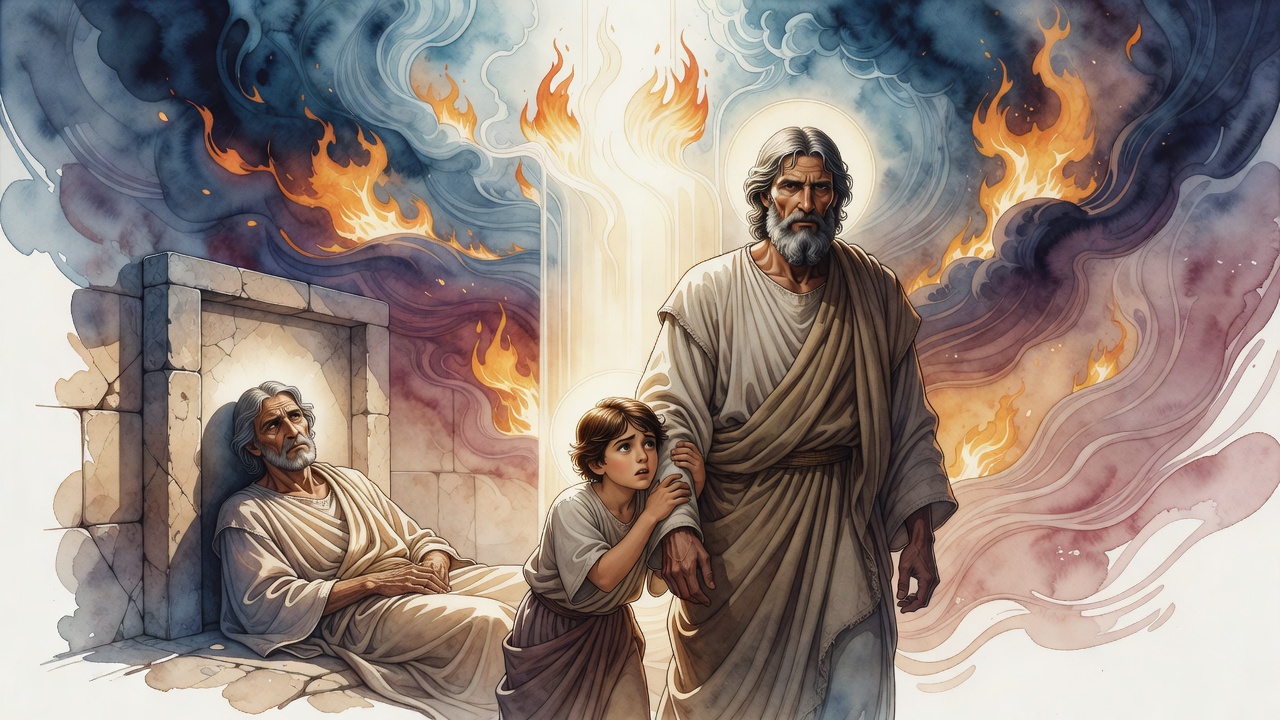
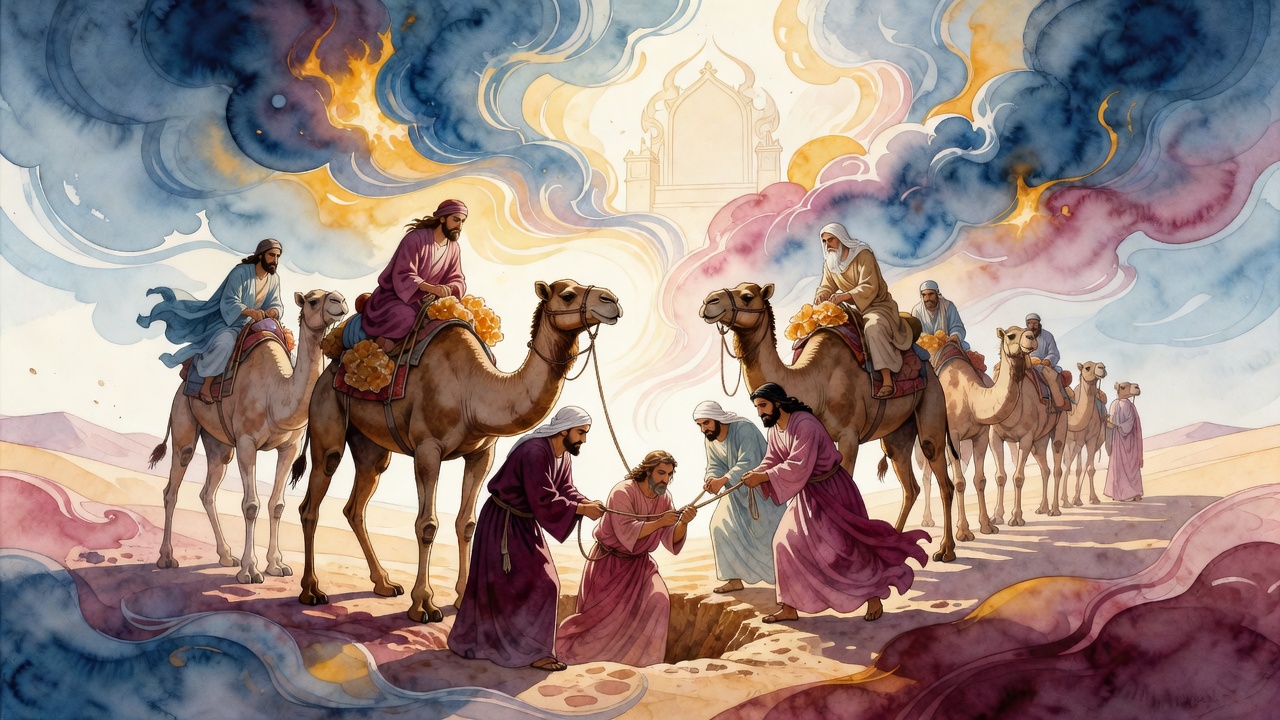
The rope burned Joseph's palms on the way up from the pit. His brothers counted silver. The caravan waiting for him should have smelled of tar and pitch. Camels on those roads hauled foul cargo. These loads smelled of spice, balsam, and labdanum.
 Click for full size
Spice Where Tar Belonged
The Holy One would not let a righteous man ride into exile inside a cloud of rot. Shall this pious one be set down in the midst of a stench? No. Arrange a good fragrance, that the very air around him testify he is not abandoned. The merchants thought they carried goods. They carried tenderness arranged for a servant Heaven had not released.
Joseph walked between spice bales with wrists still sore from rope. The road south smelled like a kindness he had not asked for and could not yet understand. Spice dust stuck to his hair and turned the first nights of slavery into something almost sweet. He hated the sweetness and needed it. The pit had been only earth and brother-breath. This was Heaven's strange courtesy in transit.
Meanwhile Potiphar, who bought him for a baser purpose, was cut off. Scripture names him a eunuch of Pharaoh. The seed of the wicked is cut off, the psalm says. Schemes against the pious do not keep their future. The house that meant to use Joseph as a toy finds its own line broken.
A Coat and a Double Death
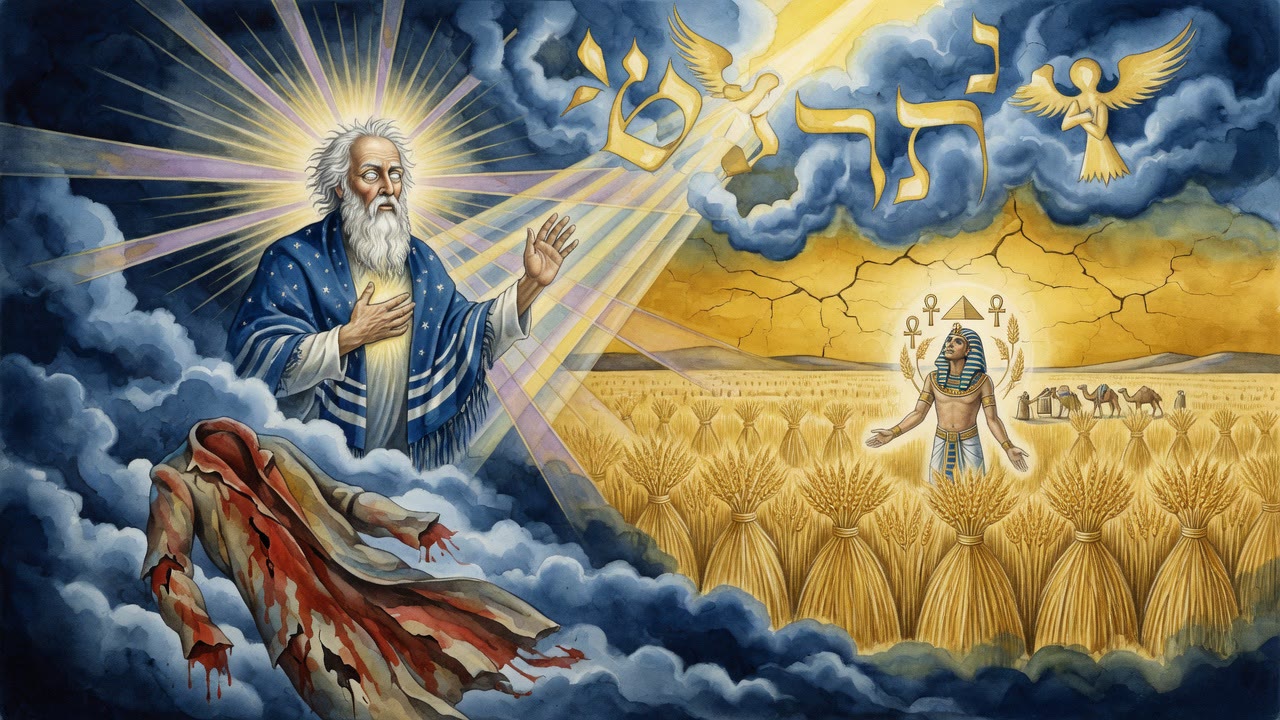
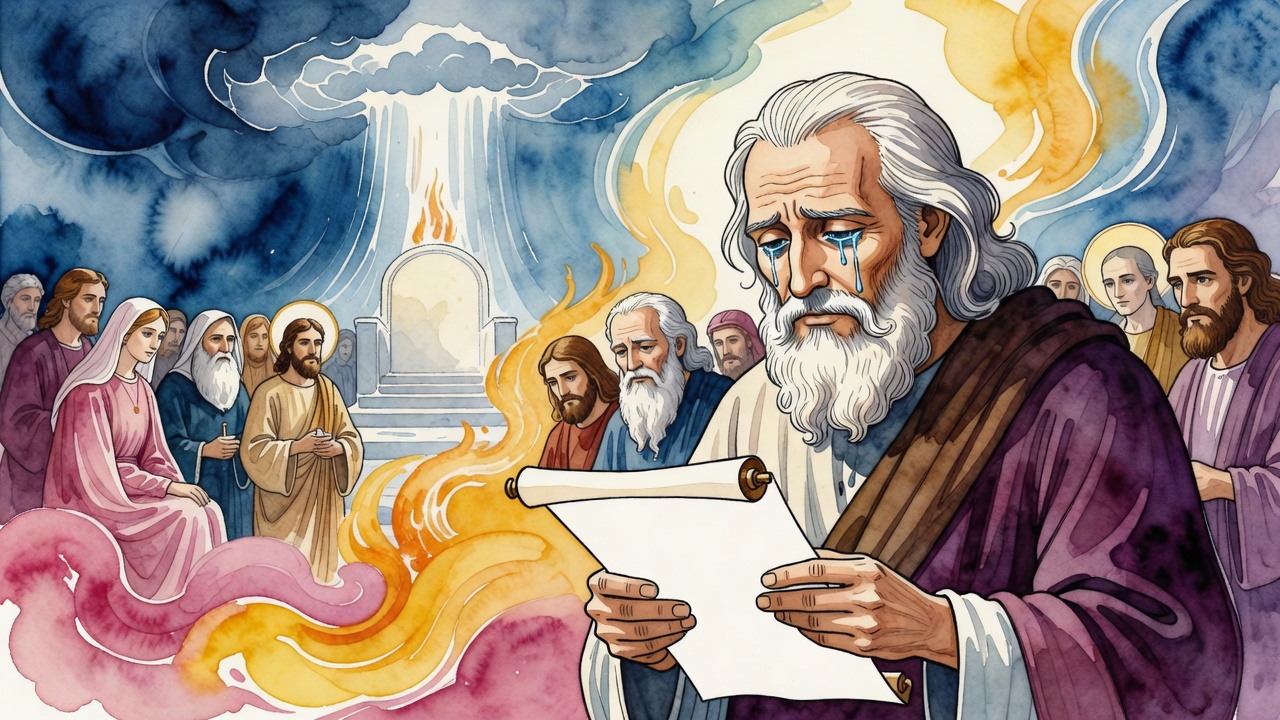
Far north, Jacob held a bloodied coat and would not be comforted. "I will go down mourning to my son, to Sheol," he cried (Genesis 37:35). Sheol (שאול) is the underworld of the dead. Under the grief sat a second terror. He feared dying twice: the death of the wicked in this world, and again in the world to come.
God had promised him twelve tribes. One seemed gone. Perhaps he had never merited them. Perhaps he had, and still the arithmetic failed. Either way he saw a double death. So he refused every soft word his other sons offered. Mourning was already a living descent.
Neighbors brought food. Wives of sons spoke comfort. Jacob sat as if the floor had opened. The promise of a full household had become a hole with one boy's name on it, and the hole threatened to swallow the father in both worlds at once. He would not eat the comfort. He would not let the hole close with a lie. The bloodied coat stayed folded where he could not stop touching it. Servants stopped offering bread. The house learned the sound of a father who would not be comforted, a low refusal that outlasted every polite visit.
Judah Lowered the Rope
Years later Joseph sat as viceroy, counsel sunk deep as a cistern no one could climb. He tested his brothers with masks and measures, silver cups and hard seats. Force could not reach the bottom of him. Royal clothing is a kind of depth. Dreams remembered are another. The brothers bowed and did not know whom they feared.
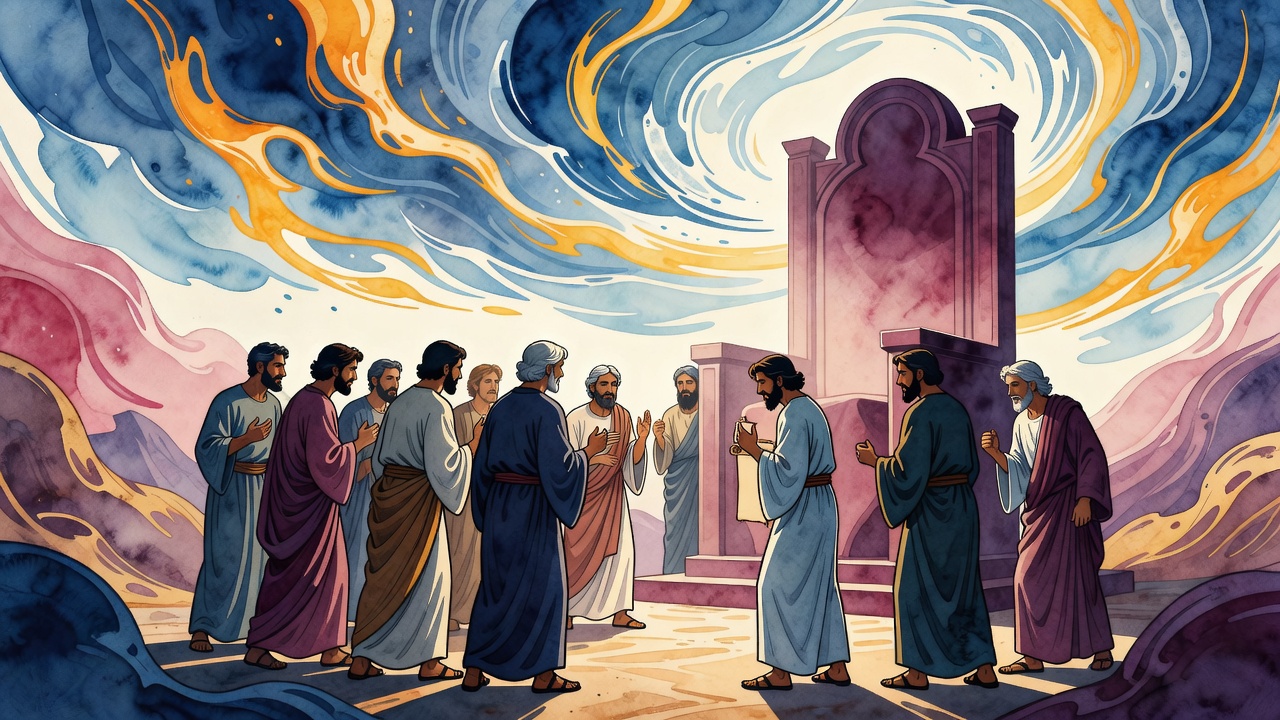
Then Judah drew near. A man of understanding draws counsel out of deep water. Judah did not leap into the well. He lowered a long rope of words, plea after plea for Benjamin, until they touched the hidden place and pulled Joseph's secret into the light. The royal mask cracked. The brother who sold and the brother who ruled met in the open at last.
Deep water does not yield to shouting. It yields to the one patient enough to keep lowering the rope. Judah became that man in a single long speech that risked his own life for a younger brother's return. The court chamber felt smaller than the pit had been. Two brothers stood inside a secret that spice and silver and famine had all been preparing without asking either man's leave.
One Death Only
When Jacob finally saw Joseph alive in Egypt, Israel said a strange thing: "Now let me die." Not despair. Relief. When they told him Joseph was dead, he believed he would die in two worlds. Seeing the son living, he received good news that he would die only once.
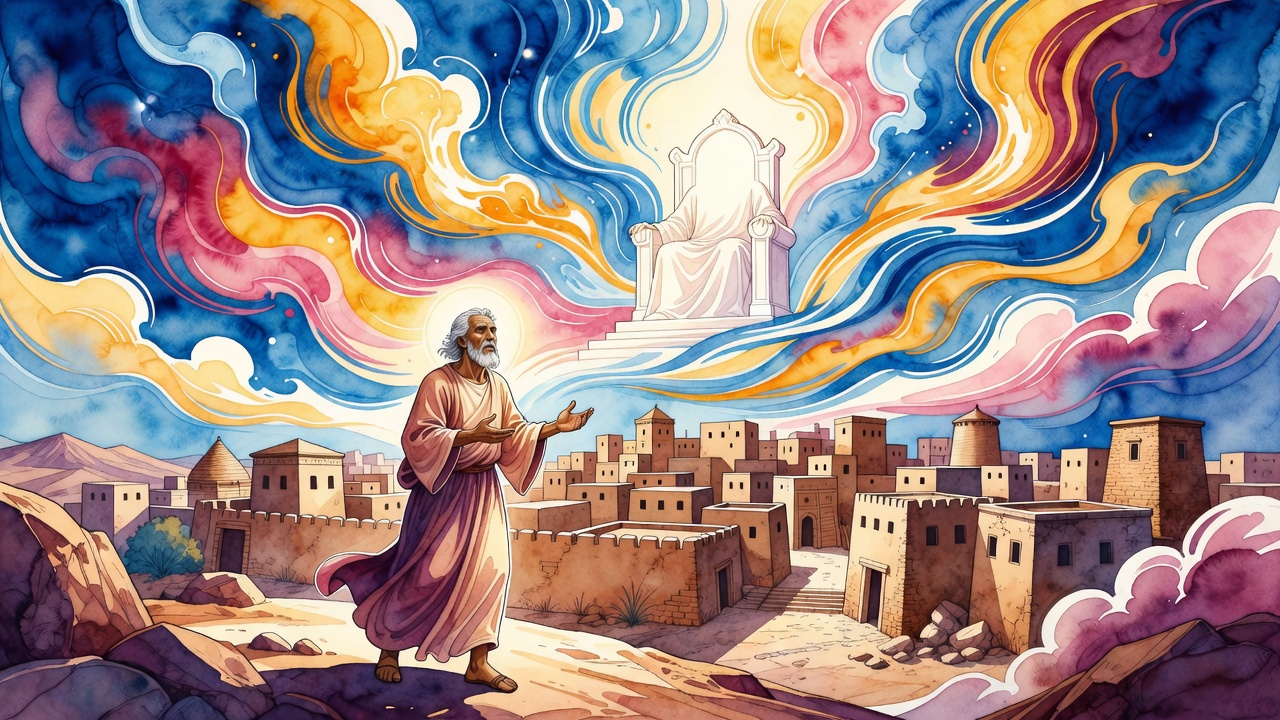
The spices on the caravan, the severed schemes of Potiphar, Judah's rope of speech, and a father's unclenched terror all answer the same claim: the Lord loves justice and does not abandon His pious ones. They are guarded forever. The road to Egypt reeked of balsam because Heaven was already riding with the slave.
Joseph, who once smelled only the pit, would one day open storehouses and feed a world. The boy sold for silver became the hand that kept mouths alive. Jacob, who once planned a double funeral for himself, walked into Egypt and found that mercy had been planning a different count all along. One death. One reunion. One long road that began with spice where tar should have been.
← All myths