The Heavenly Court Reopens the Ledger of the Dead
Two robbers cry favoritism, a wicked man buys eternity with one hour, and in Ashkelon two funerals carry the wrong men to the wrong graves.
Table of Contents
 Click for full size
Two Robbers Storm the Throne
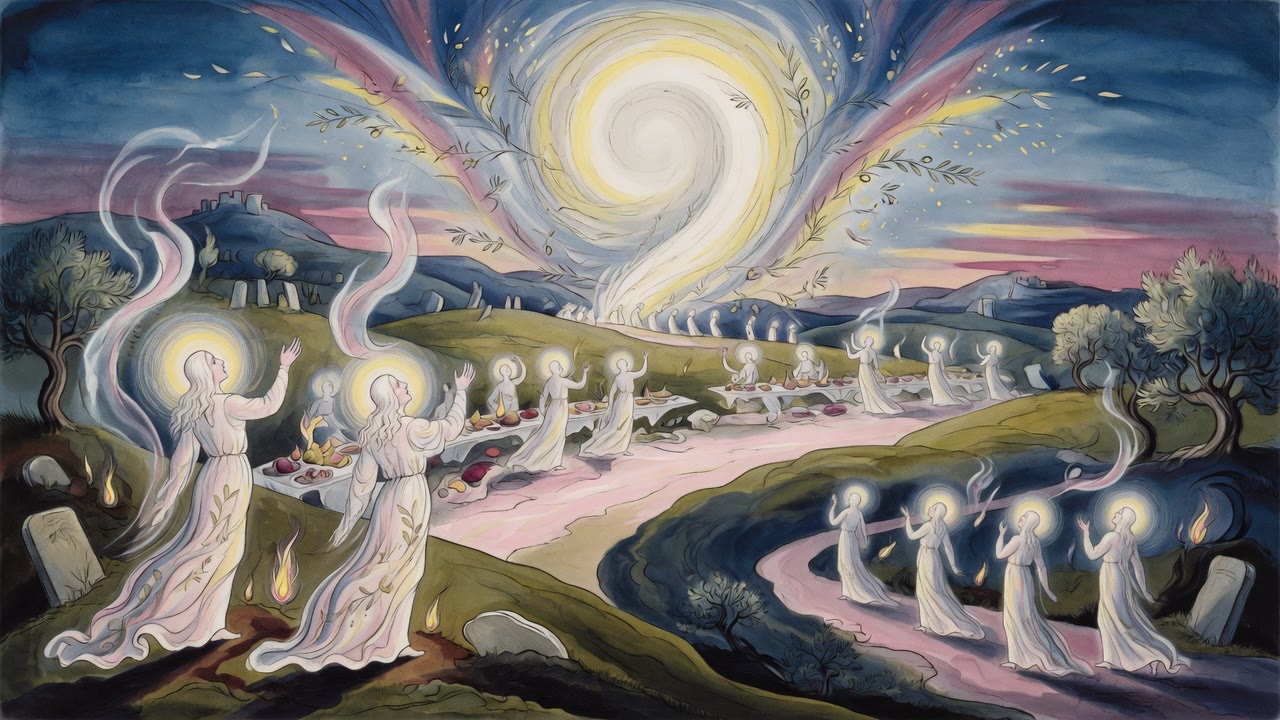
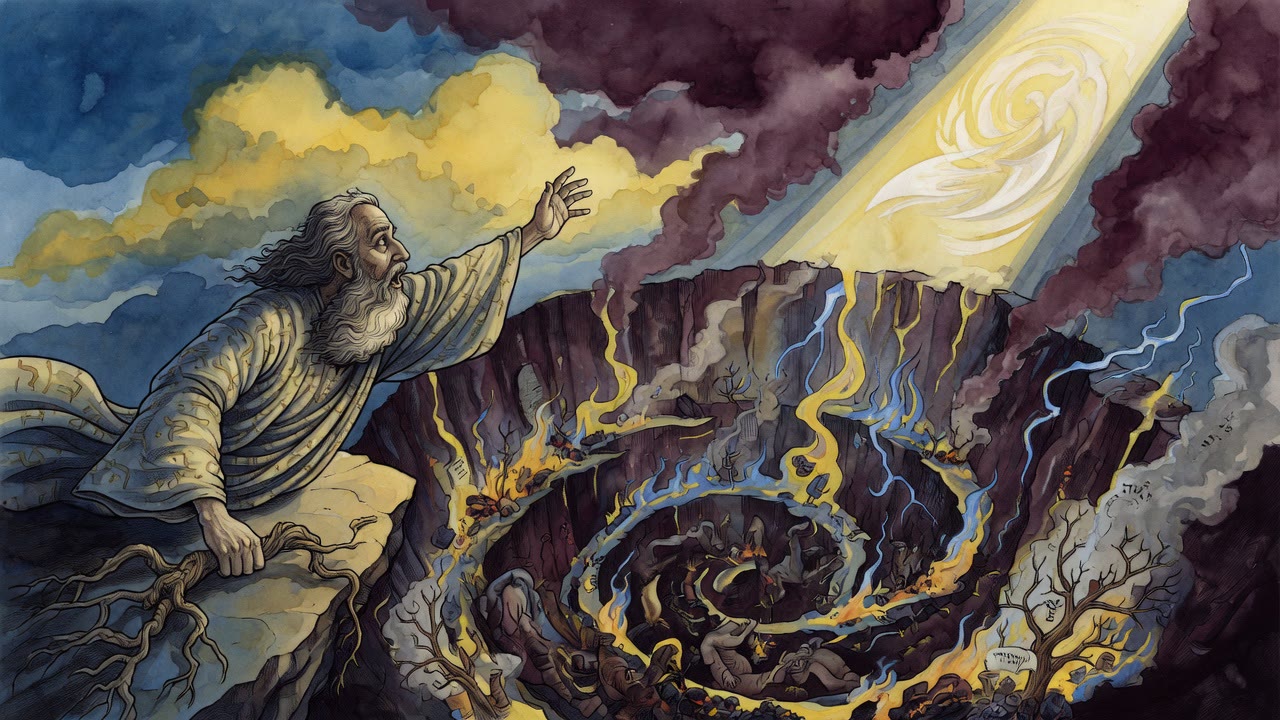
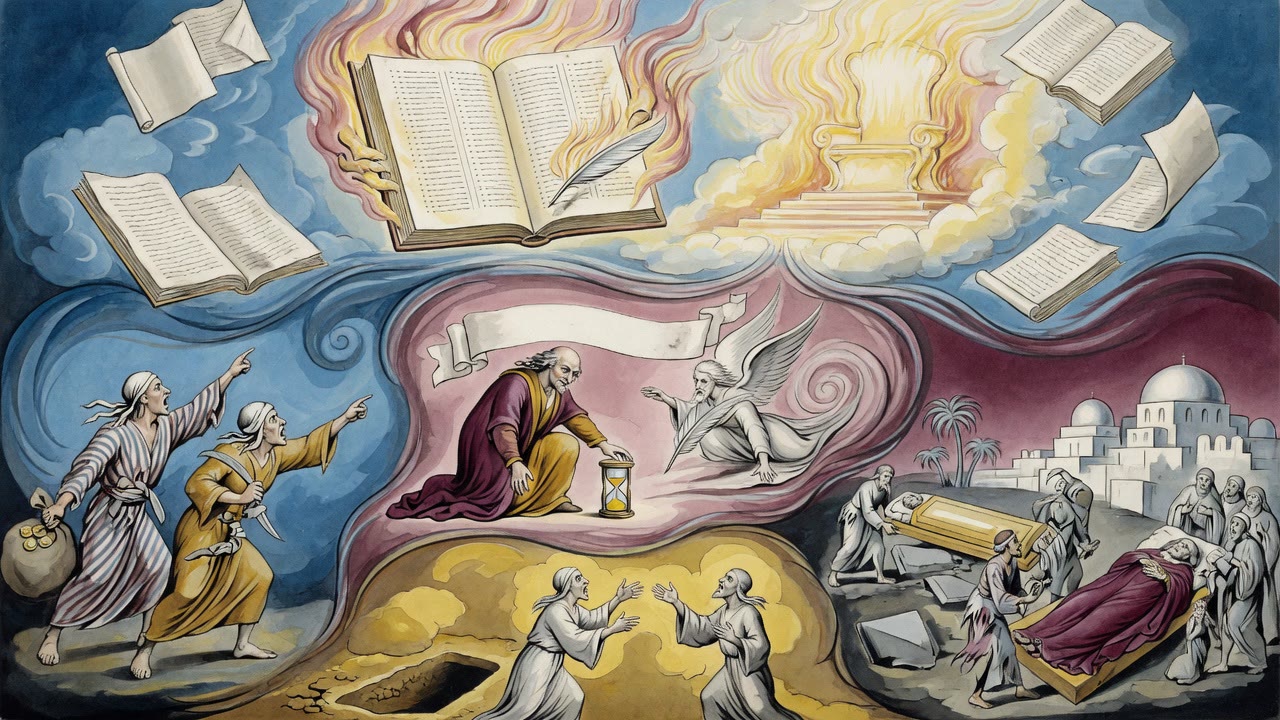
They had died on the same mountain road they once terrorized, two dead men who had robbed in partnership and rotted in the same grave. They had expected to share whatever came next, the way they had shared every stolen purse. Instead one of their old companions was nowhere among them. He had been lifted up into the treasury of the living, into light, while the two of them burned in the lowest pit of Sheol.
The injustice of it pulled them upward out of the fire, shouting. "Sovereign of the universe, there is favoritism here," they cried. "This man plundered the mountains at our very side. The same roads, the same blood, the same loot. And now he walks in the treasury of the living while we are sunk in the lowest Sheol (the underworld of the dead)." They pointed, and their burned fingers trembled.
The voice that answered them did not rise. "This one repented during his lifetime," the Holy One said. "You did not."
The Gate That Closes Behind the Living
The robbers were not finished. Men who had argued past every magistrate in the province were not about to lose the last case of all. "Then give us the chance now," they begged. "Let us repent here, before You, and we will mean it down to the marrow. We swear it."
"Repentance," came the answer, "is possible only until a man dies." There was no anger in it, which made it worse. A traveler stocks his pack while he stands in the inhabited place; he does not gather water once the wilderness has already swallowed him. The two robbers had crossed into that wilderness with an empty satchel, and there was no road back to the town where bread was sold. They sank, still arguing, into the dark.
The Hour Bought at the Doorway
Elsewhere in the same court a different case was being read, and this one had no business ending well. The man before the throne had been wicked, and the decrees against him filled the page. He had died once and begged for life to repent, been granted it, and come back worse. He had died a second time, begged again, returned, and grown worse still. A third time the same. Three lives handed to him like loaves, three lives flung into the gutter. The court had every reason to seal the book on him for good.
But one ordinary afternoon, before that final death, he had wandered through his town and passed a doorway where nine men stood frustrated, unable to begin. They needed a tenth to make the quorum. The wicked man, thinking nothing of it, stepped into the doorway and stood there, and they counted him, and the prayer rose, and the holy words were spoken because of his idle body in the frame of the door. He died soon after.
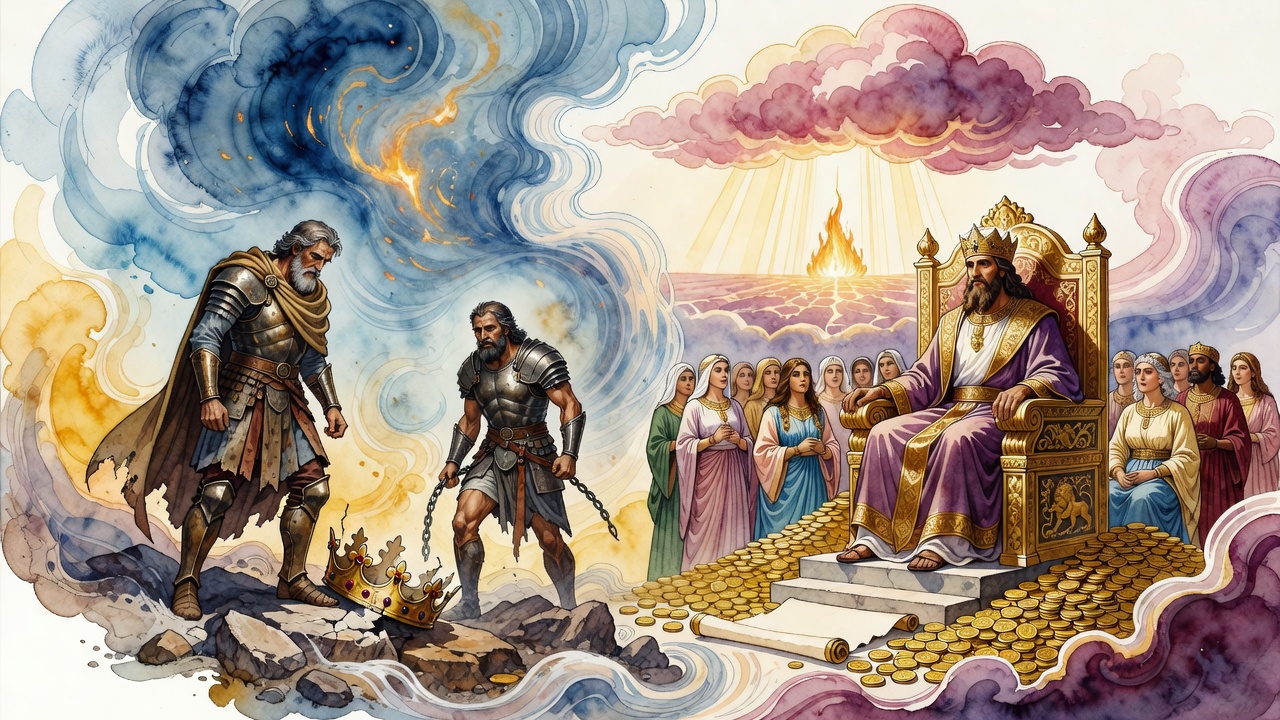
He was brought up for judgment beside a genuinely pious man who had died that same day. For some trivial lapse the pious man was sentenced to a single hour in Gehinnom (the fire where the wicked are punished) before his reward. For the quorum he had completed, the wicked man was granted a single hour in Gan Eden (paradise, the Garden of Eden) before his descent into fire. Then the wicked man, who had been miserly with everything his whole life, gave the only gift he ever offered. "Let me trade," he said to the Holy One. "Let me serve his hour of fire in his place, and give him my hour of the Garden." The court fell silent at a generosity it had never once seen from him. Mercy moved, and both men walked into the Garden together and stayed.
Two Funerals on the Roads of Ashkelon
In the coastal city of Ashkelon two men died on a single day. One was Baya, the tax collector, whom the whole town loathed. The other was a gentle Torah scholar whom they loved. Both biers set out for the graveyard, and halfway there bandits fell upon the road. The mourners scattered into the fields. Only one disciple stayed beside the body of his teacher.
When the bandits had gone the people drifted back, and in the confusion they buried the hated tax collector with weeping and honor, certain he was the scholar. The disciple shouted that they had the wrong man in the rich grave. The elders would not hear him. The scholar was lowered into the ground almost in secret, with almost no one watching.
The Dream That Re-Sorted the Accounts
That night the teacher came to his disciple in a dream, and behind him stood the Garden of Eden in full glory, and the teacher was crowned within it. The young man wept and asked why a man so rewarded above had been shamed below. "Once, scholars were insulted in my presence and I held my tongue," the teacher said. "That single silence bought me the poor funeral."
"And the tax collector?" the disciple asked.
"He had his whole reward in the world you left. Once a feast was prepared for a king who never came, and Baya gave the spoiled banquet to the poor. His golden burial was the wage for that one meal. But I saw him below, an iron bar driven through his skull for the cruelty of his trade." Then the teacher told a stranger thing. His own delayed reward would be released only when Shimon ben Shetach died and took his place in the punishment, because Shimon, head of the Sanhedrin, had tolerated a nest of witches in Ashkelon and never torn it out.
The disciple carried the dream to Shimon, and Shimon did not laugh. On a rainy day, when sorcery sleeps, he led sixty students into the witches' house by a ruse. Each student seized one woman and lifted her clear off the earth, for a witch cut from the ground loses her power, and the whole coven hanged in a single hour. But the ledger above kept its own count. When false witnesses out of revenge accused Shimon's son of a capital crime, and the lie was exposed too late, Shimon let the law he had taught run its course and lost the boy. The accounts had balanced, below and above, exactly as the dream had promised.
← All myths