Moshe From the Worms of Gehinnom to the Couch Where the Messiah Waits
Two thousand scorpions crossed the backs of the sinners, each sting matched to a different sin. Higher up, angels bathed in a river of fire and came out new.
Table of Contents
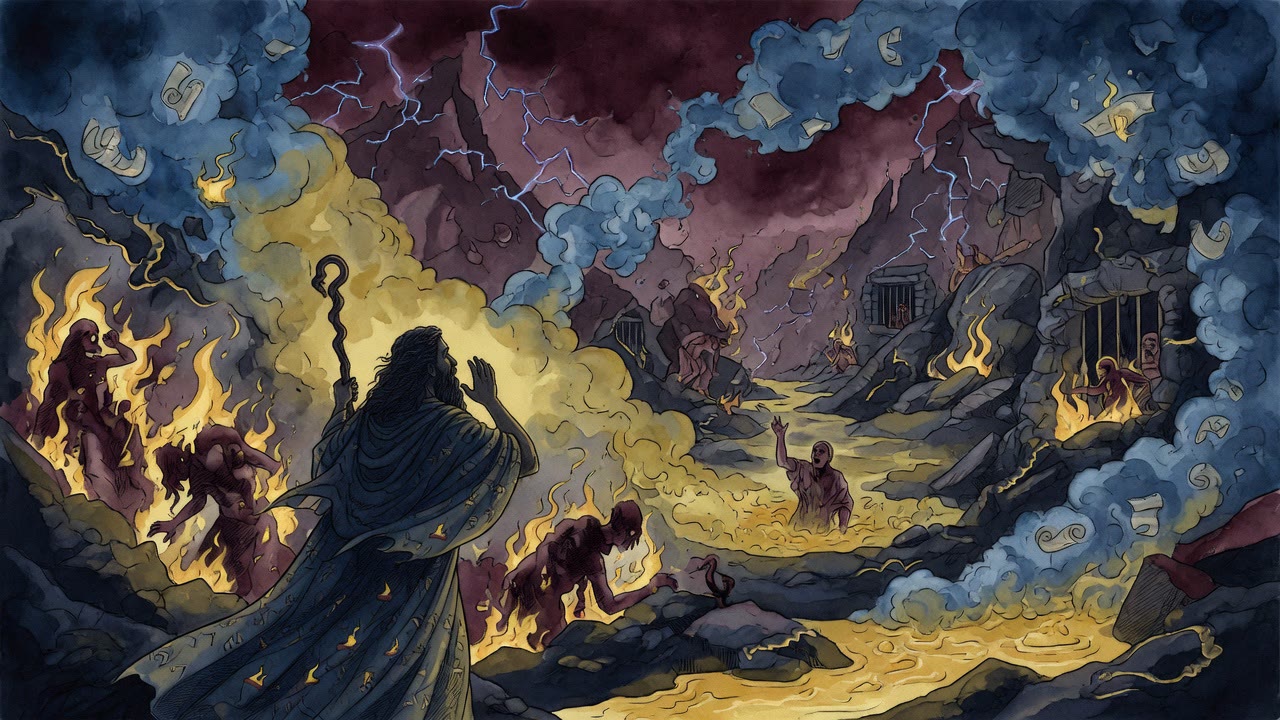
The two figures hung upside down by their feet, and Moshe could not see their faces for the worms. Black bodies blanketed them, each worm so long it stretched five hundred parasangs, a single creature reaching farther than a man could walk in fifty days. The hanged men opened their mouths and what came out was not a scream but a request. They begged to die. They could not. Gehinnom (the place of punishment after death) withholds the one mercy a body in agony wants most, and here even ending is forbidden.
 Click for full size
An angel walked at Moshe's side and named the crime that bought this. These had sworn falsely. They had profaned the Sabbath. They had trampled on the learned and crushed the orphan, and now the worms answered for it, one length of horror for each thing they had broken.
The Stings Were Counted
Further down, the guilty lay face to the ground, and two thousand scorpions moved across their backs. These were not the scorpions of any desert. Every sting carried its own measured punishment, and the mouths and stingers and sacs of venom multiplied past any number a living mind could hold. One creature became a thousand torments, each fitted to a separate sin.
The angel named these too. Here lay the ones who had eaten the wealth of others. Here the ones who had taken bribes, who had shamed a neighbor in the open street, who had handed a fellow Jew over to harm. Nothing was vague. The accounting never grew tired, never rounded off, never lost the thread of who had done what.
Beyond the scorpions stretched a field of clay the color of old iron, the miry place called Tit hayaven. Sinners stood sunk to the knees in it while angels bound them with iron and broke their teeth with stones drawn burning from a fire, from the first light of dawn until dusk, and at dusk began again. Moshe walked the whole descending order and found no chaos in it anywhere. Every wrong met an answer cut precisely to its shape.
The River That Judges and Renews
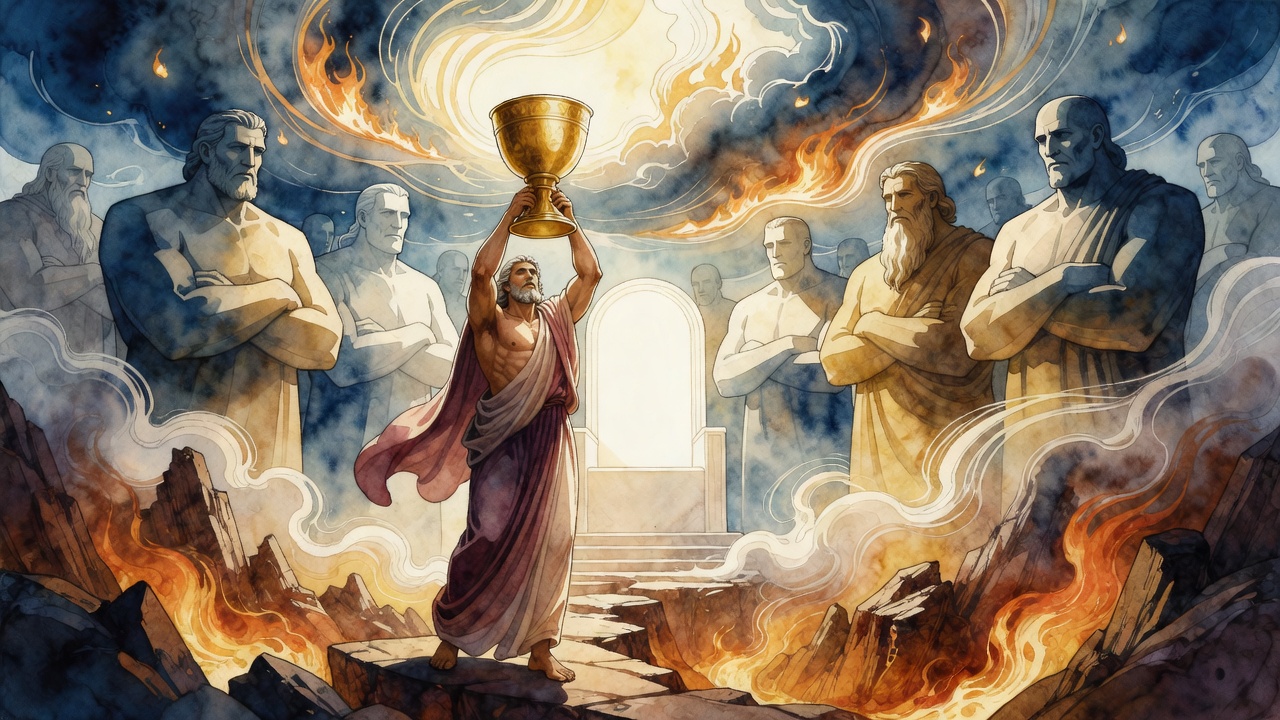
Then the vision lifted him, and Moshe stood in a place where fire ran like water. A river poured out from beneath the Throne of Glory, a stream of pure flame, and the angel told him its name was Rigyon. It was fed by the sweat of the holy Creatures who carry the Throne, who tremble so hard at the nearness of the Holy One that their awe itself thickens into fire and runs down into the river.
This was the river the prophet Daniel had seen issuing before the Ancient of Days, while thousands upon thousands stood in attendance and the books of judgment lay open on their stands. Moshe learned now what the fire was for. The Holy One sits in judgment even over the ministering angels, weighs even them, and when their accounting is finished they go down into the burning river and bathe in it and come up made new. The same flame that condemned them washed them clean.
The river did not stop at the Throne. Carrying glowing coals along its current, it ran on and broke at last on the heads of the guilty far below in Gehinnom, the storm Jeremiah had named the fury of the Holy One bursting upon the wicked. Moshe understood that the worms and the scorpions and the clay he had just walked through were the lowest end of this one current. A single river of fire bound the highest court in heaven to the deepest pit beneath the earth.
The Gates of Carbuncle
Following the river upward, Moshe came to a different threshold, and Rabbi Yehoshua ben Levi described what stood there. Two gates carved from carbuncle, red and burning with their own light, and before them six hundred thousand ministering angels, each one shining with the brightness of the heavens. No soul slipped through unseen. No soul passed through unchanged.
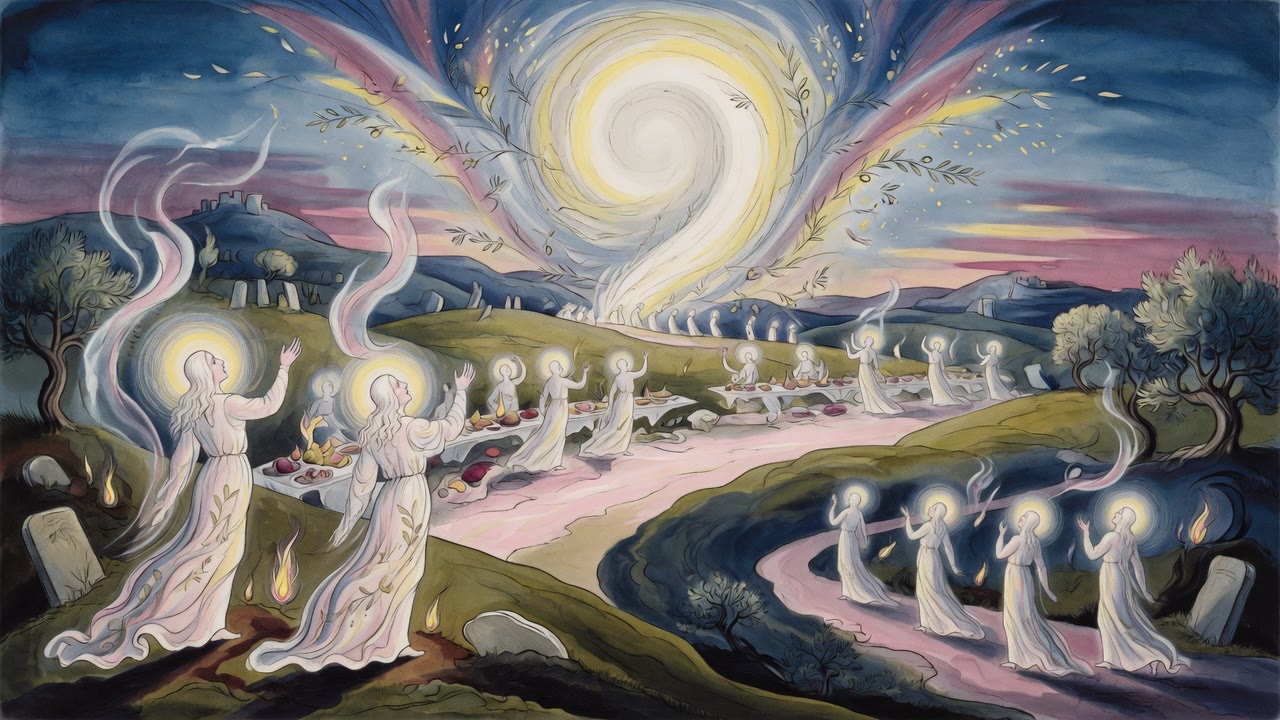
When an upright person arrived, the angels stripped away the burial garments and dressed the soul in eight robes woven out of the clouds of glory. They set two crowns on its head, one heavy with gems and pearls, the other of pure gold. The dead were not merely admitted. They were crowned at the door like kings walking into their own coronation.
What waited inside was gentler than the gate. The soul passed through three wards, and in each it was changed. In the first it became a child again and tasted every small delight of childhood. In the second it became a youth and felt the whole vigor of young life return to it. In the third it became an old man and savored the contentment of a ripened age. Gan Eden (the Garden of Eden, paradise of the righteous) did not freeze a person at the hour of death. It gave back every season the person had ever lived, and let each one be lived again in full.
The Couch in the Fifth Chamber
Of all the chambers, the fifth was the most tender. Its walls shone with silver, gold, crystal, and bdellium. The river Gihon ran through the middle of it, and over beds dressed in violet and purple hung a fragrance sweeter than all the cedars of Lebanon.
At the heart of the chamber stood a couch of Lebanon wood, its pillars silver, its base gold, its seat draped in purple. On it lay the Mashiach, son of David, and he was waiting. He was not alone. Eliyahu held the head of the Mashiach against his own chest, and bent close, and whispered to him that the end was near. He told him to be still. He told him to wait.
Three times in every week, and on every festival, the great ones of Israel came into that silver room. The patriarchs came, and the heads of the tribes, Moshe and Aharon, David and Shlomo and all the righteous kings of Judah. They gathered around the waiting Mashiach and wept with him, and pressed him to lean on his Creator, because the hour of deliverance stood closer than it looked. The same river that ran burning past the worms five hundred parasangs long ran clean and quiet here, through the chamber where redemption lay on a couch with its head on a prophet's chest, waiting to be told that it was time.
← All myths