Moses Toured Gehinnom and Asked Who Was There
Moses saw the place of divine judgment on the same tour that showed him heaven. What he saw was not chaos. It was an exact inventory of social failures.
Table of Contents
 Click for full size
The Gates That Cried Out
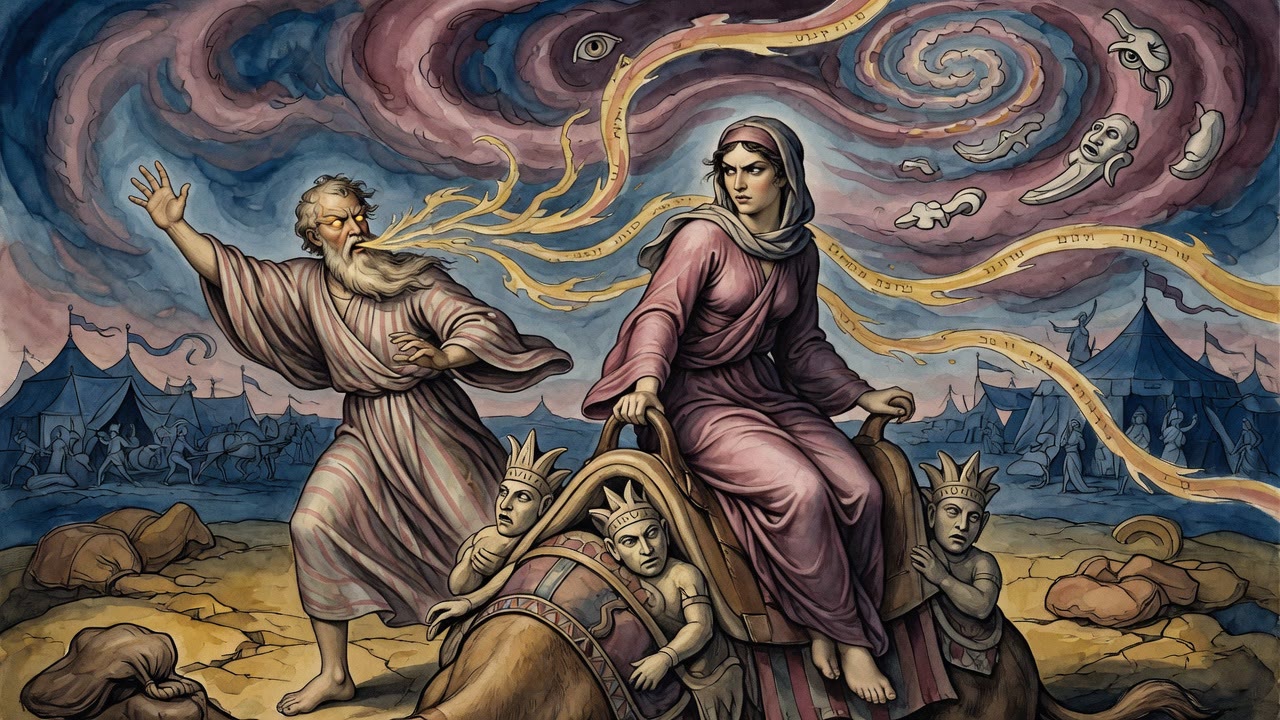
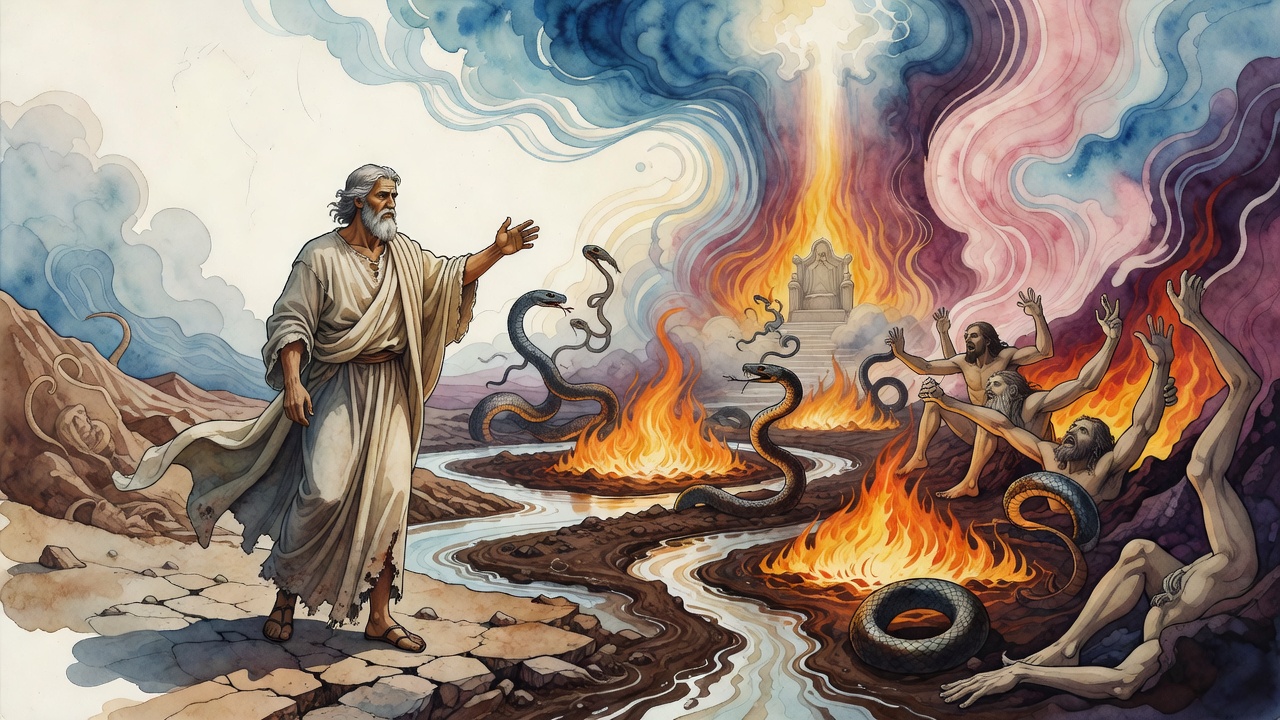
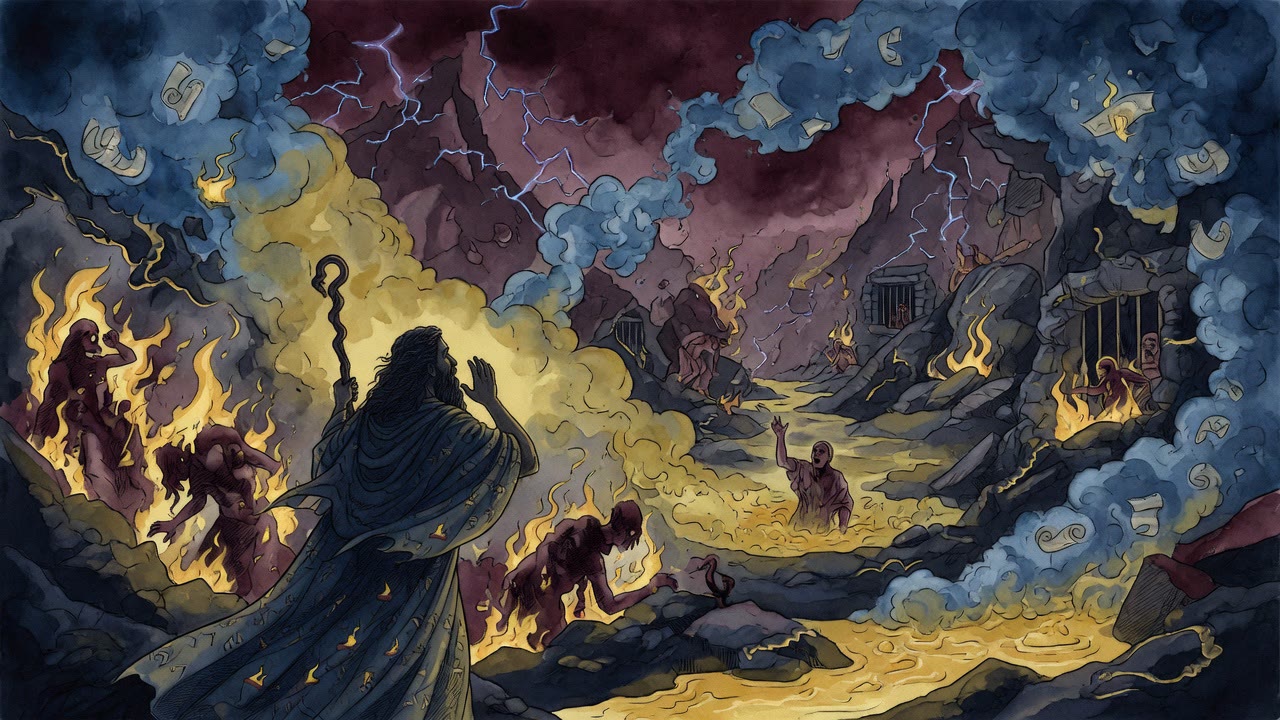
Moses heard Gehinnom (the place of punishment after death) before he saw it. The gates called out to be fed, a sound the tradition describes as a bitter cry, echoing through the spaces between the heavens, wanting something. God told Moses that Gehinnom (the realm of judgment after death) was hungry for the wicked of the world, that it consumed what was sent into it and asked for more. Moses stood at the entrance and looked in.
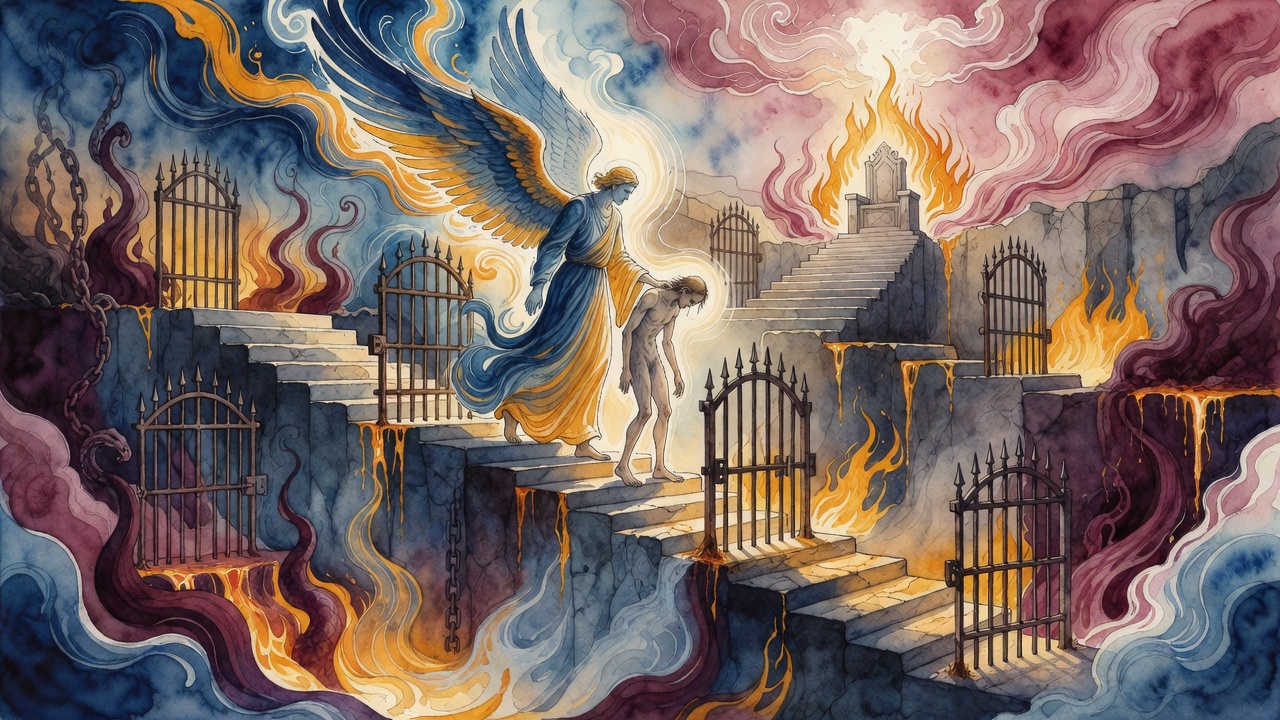
The angel who accompanied him through the place was named Nasargiel. He was not the angel of death. He was the angel of Gehinnom itself, assigned specifically to that domain, and he moved through it with the ease of a bureaucrat walking through his own office. He knew where everything was. He explained what Moses saw. Moses looked and asked questions.
The Catalog of What Was There
What Moses found was not undifferentiated suffering. It was organized. Each category of the condemned was there for a specific failure, and the failure was named. Men who had defied their fathers were there. Men who had pursued the wives of their neighbors were there. Men who had lent money at interest to their brothers were there. Men who had risen early on the sabbath to pursue their own business, who had used false weights in the market, who had taken bribes, who had shamed the poor in front of their communities, each category had its place and its punishment, and Nasargiel could account for every one of them.
The judges who had perverted justice were there. The community leaders who had acquired their positions through flattery and manipulation rather than merit were there. The scholars who had studied Torah only to acquire the prestige of learning, without intending to live by what they learned, were there alongside the hypocrites who gave charity in public so that others would admire them.
Zipporah Waiting at the Well
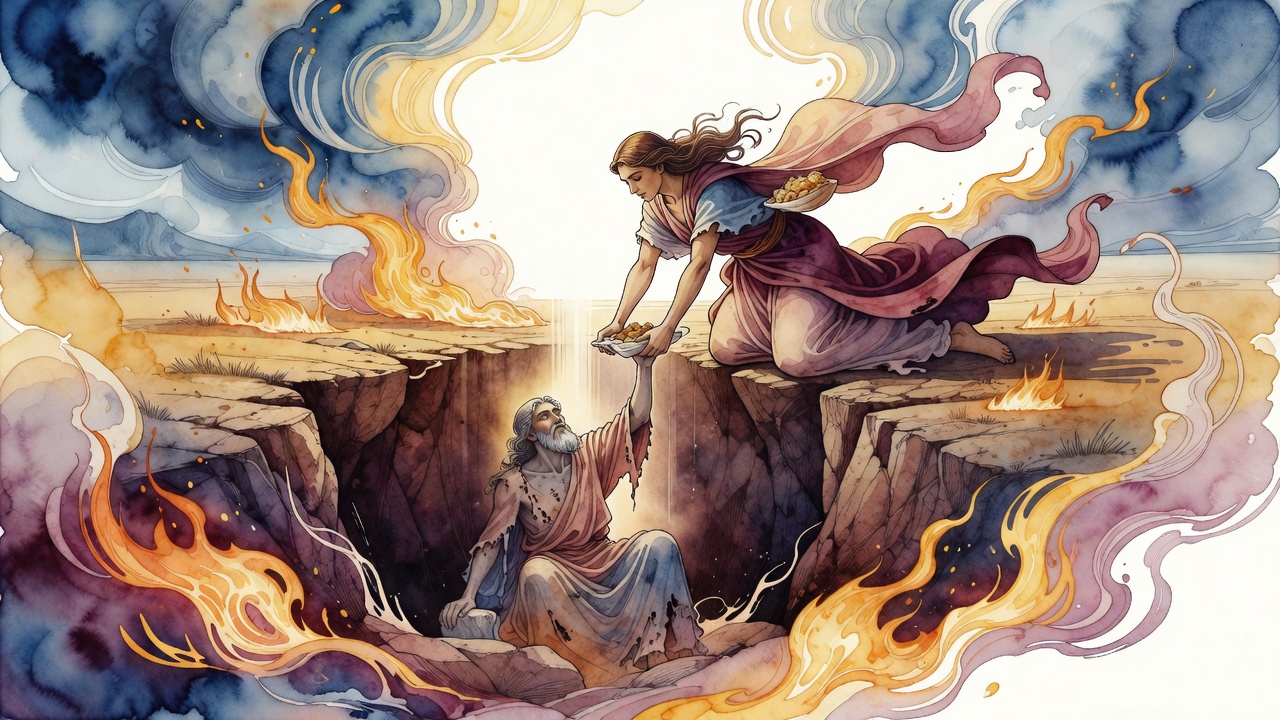
Moses's path to that heavenly tour had not been direct. The tradition preserved a story the Torah almost entirely passes over: Moses, traveling through Midian years before the exodus, had been thrown into a pit by Jethro and had spent ten years there, imprisoned, largely forgotten, waiting. Zipporah, Jethro's daughter, had fed him in secret every day for those ten years. She had carried food to the pit and passed it down and said nothing to her father about why she was doing it. When Jethro finally asked whether Moses was alive after all that time, it was because Zipporah had been keeping him alive without authorization, because she had seen something in him that her father had not looked closely enough to notice.
The man who would eventually tour heaven and Gehinnom and return with a catalog of divine justice had survived to do it because a woman with a bowl of food was more reliable than the plans of either of their fathers.
What the Tour Was For
The tradition did not preserve Moses's tour of Gehinnom as a warning story, a display of hellfire intended to frighten the living into compliance. It preserved it as information. Moses had seen both sides of the divine architecture: the heavens with their angels and their treasuries, and the place of judgment with its precise and documented population. He came back from both tours as someone who understood the full structure of what God had made. You cannot fully understand a legal system if you have only observed the upper courts. You need to know what happens when justice is finally administered.
The Book of Jubilees preserved a related image: Moses at the moment of his death, facing the accounting of his own life. The man who had watched others face judgment had to face it himself. The tradition was unsparing about this. Even Moses did not get to see the inside of divine judgment and then escape its logic. He faced it. He came through it. But he faced it.
← All myths