6 min read

The Uninvited Guest Who Received the King's Chair

A king waved past sharecropper and household tribute, then ordered a chair for the stranger who came only to honor him.

Curated by Arthur · Told by Maggid ·
Table of Contents
  1. Three Approaches to the Throne
  2. The Chair That Sin Offerings Never Earn
  3. Three Desires Pulling the World
  4. Smoke Without a Summons
  5. When Obligation Is Not Enough
The Uninvited Guest Who Received the King's Chair Click for full size

Three Approaches to the Throne

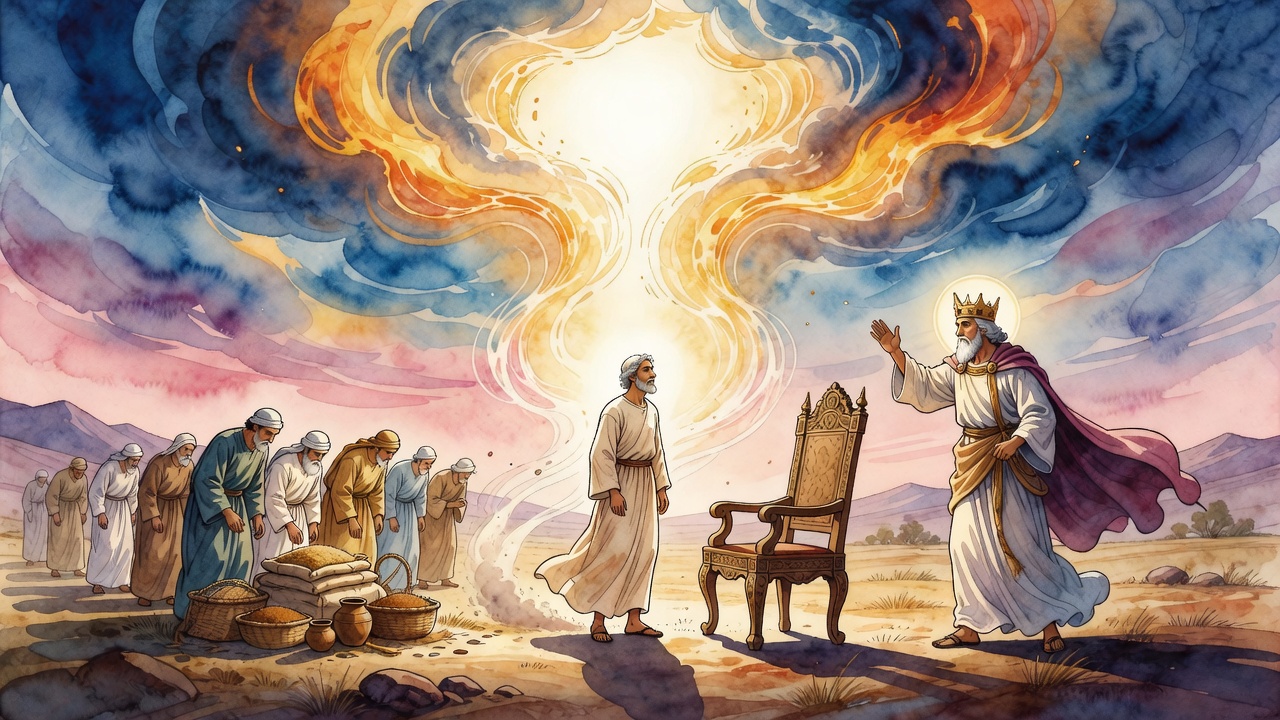
The sharecropper arrived first with the basket the lease required. Courtiers named him. The king barely lifted his eyes. "Take his tribute." Expected grain for expected land. The exchange closed before it opened. Sandals scraped. The basket changed hands. No one smiled hard enough to mean it.

A household man came next, someone born into the palace economy. Again the question, again the flat order. Duty walked in and duty walked out. The throne room stayed cool. Servants who had seen a hundred such mornings could have mouthed the lines before they were spoken.

Then a third figure crossed the threshold with empty hands of obligation and full hands of gift. "Who is this?" The answer cracked the routine. "Neither sharecropper nor household, but he came to honor you." The king sat forward. "Give him a chair. Let him sit."

Wood legs touched marble. The stranger sat in a nearness money had not purchased and law had not billed. Courtiers recalculated what the room was for.

The Chair That Sin Offerings Never Earn

Rabbi Pinchas told the parable so listeners would feel the difference in their ribs. A hattat, a sin offering, arrives because something went wrong. An asham, a guilt offering, arrives under the same pressure of repair. Both are real. Both are holy. Both are the sharecropper and the household man. They pay what the relationship already bills.

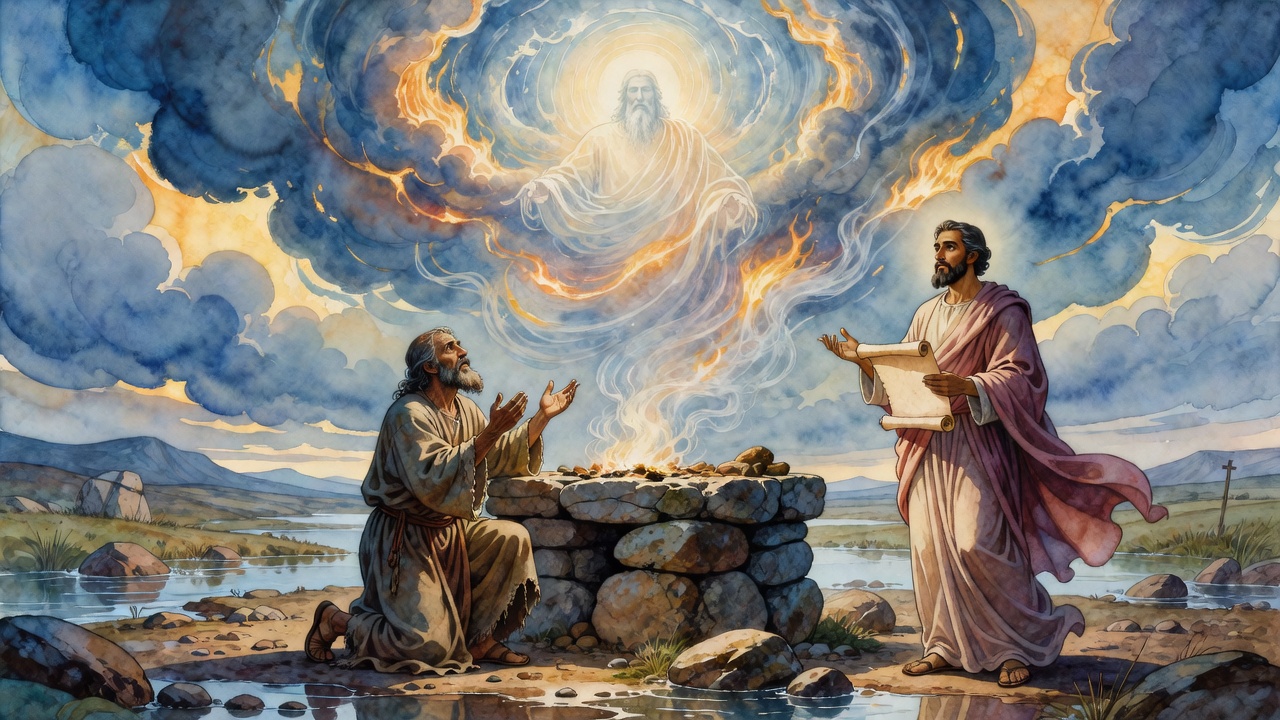
The todah, the thanks offering, is the stranger with the chair (Leviticus 7:12). No sin forced the walk to the altar. Gratitude pulled. The person could have stayed home and still been legally clean. Instead the feet moved toward God because the heart refused to stay quiet.

In the parable the king does not increase the stranger's tax. He increases the stranger's nearness. A chair is not a receipt. It is presence. Smoke from a thanks offering rises with a different temperature than smoke from repair. Priests know the cuts. Heaven, in the midrash's telling, knows the motive.

A family that brings a todah after a sea road survived does not walk like a family that brings a hattat after a hidden wrong surfaces. Shoulders tell the court before the animal does.

Three Desires Pulling the World

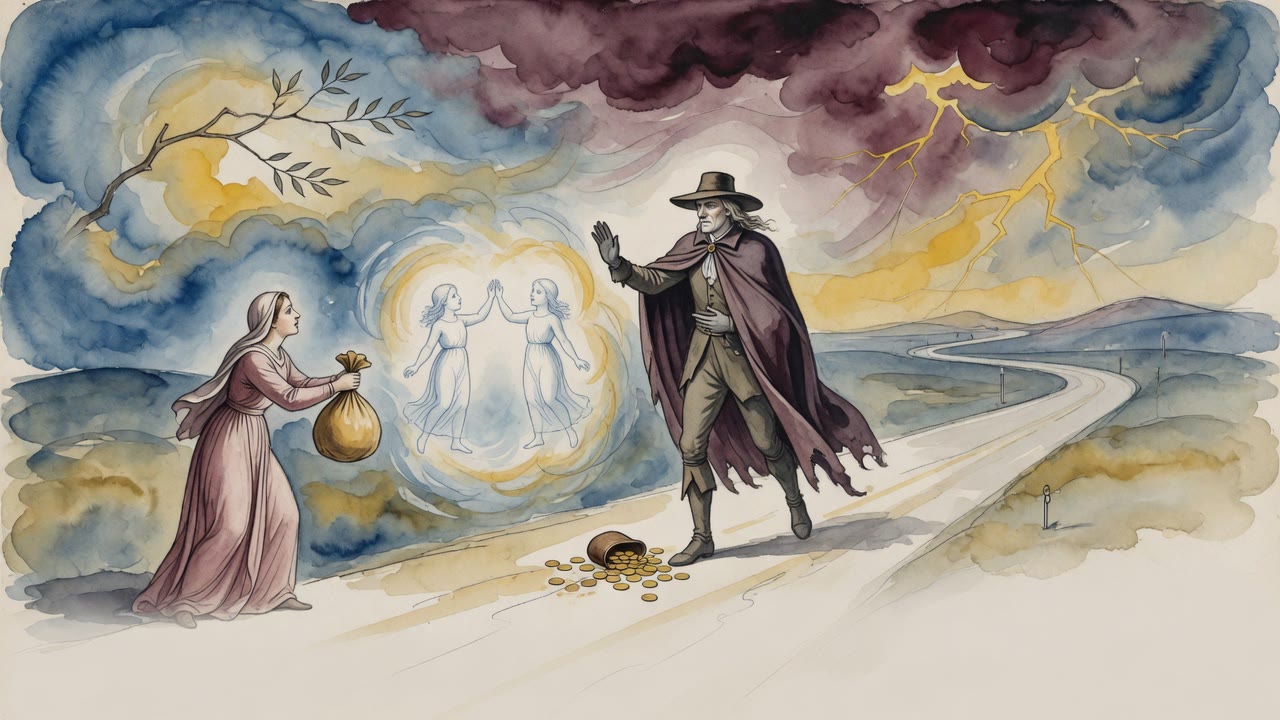
Another midrashic chamber, reading the Song of Songs, names three kinds of desire that tug human lives. Israel desires the Father in Heaven, and the verse answers with mutual pull. "I am my beloved's, and his desire is for me" (Song of Songs 7:11). A woman desires her husband, as Genesis already marked in the first human bond (Genesis 3:16). The yetzer hara, the evil inclination, desires only the path of Cain and those who lean that way, a hunger that crouches and waits (Genesis 4:7).

The thanks offering sits closest to the first desire. It is not the crouch of the inclination. It is not only the earthly bond, though marriage can teach the shape of longing. It is the free step toward the Beloved when no court has summoned the step.

Place the chair parable beside the three desires and the throne room sharpens. The sharecropper may love the king and still come because the lease says so. The uninvited guest comes because desire found a gift large enough to carry. Cain's hunger wants possession without covenant. The guest wants nearness without invoice.

Desire is not banned from the story. It is sorted. Some pulls rebuild the world. Some pull it toward blood on the field. The todah trains the first kind in public, with meat and bread and a declaration that gratitude has weight.

Smoke Without a Summons

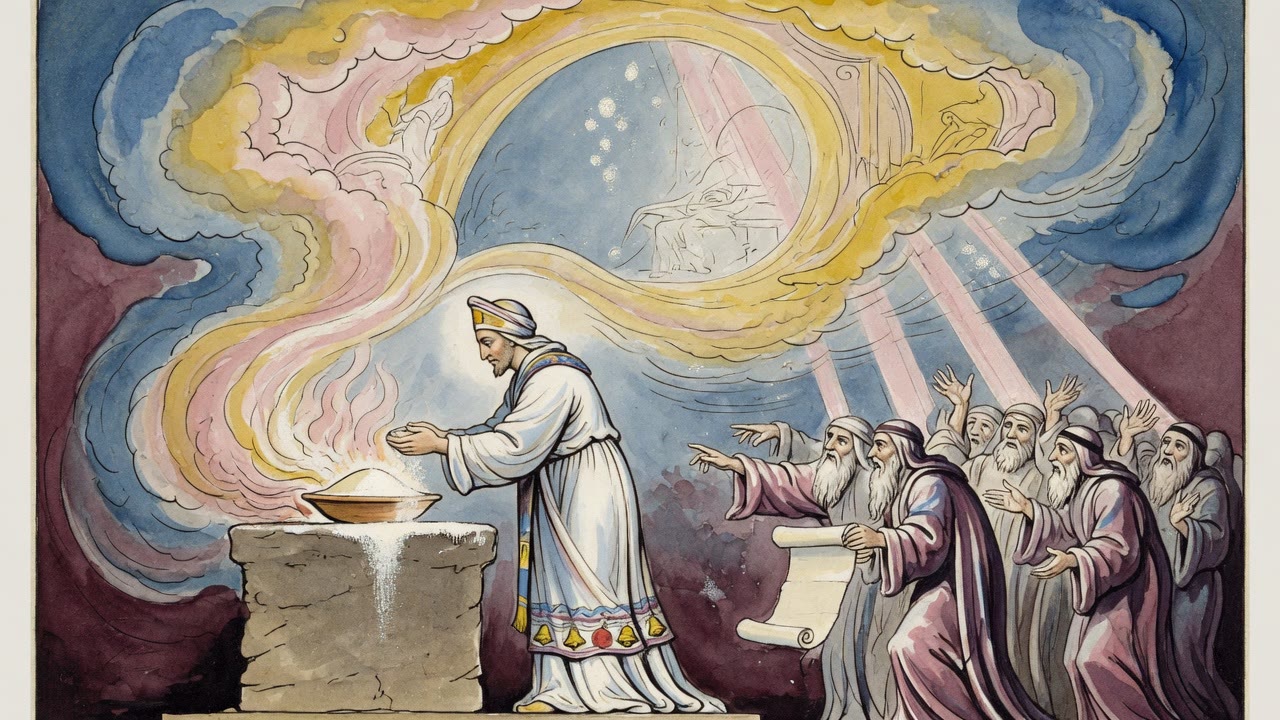
Picture the Temple court on an ordinary afternoon. A family leads an animal not because blood-guilt haunts them but because a recovery, a birth, a road survived, or a quiet year finally needs a public thank-you. Neighbors can tell the difference in the walk. No slumped shoulders of confession. Something closer to a feast held in serious clothes.

Priests know the rites for both kinds of approach. Required offerings keep the world from tearing. Free thanks keep the world from freezing into mere accounts. Children watch and learn that God is not only a judge with a ledger. God is also a king who notices the person who did not have to come.

The chair scrapes in the parable every time that lesson lands. Sharecropper grain still matters. Household duty still matters. The surprise guest still rearranges the room's attention.

When Obligation Is Not Enough

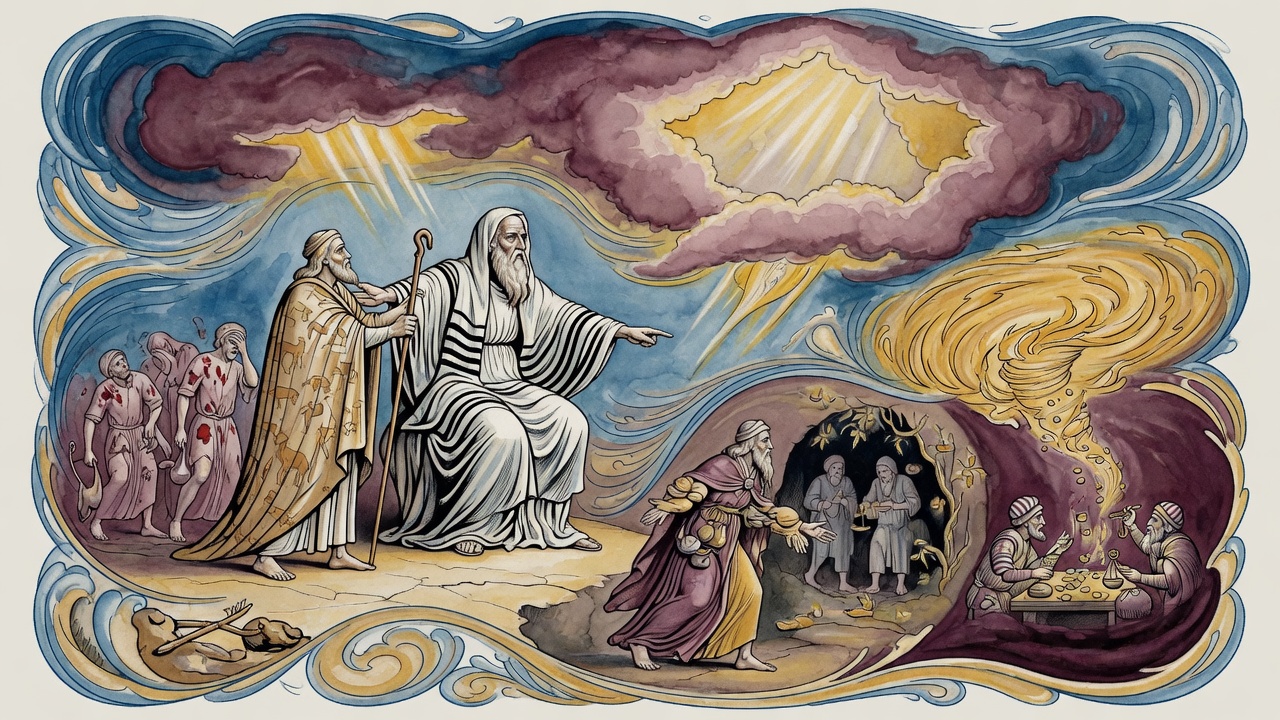
Israel's calendar is thick with musts. The midrash does not sneer at them. It simply refuses to let musts become the only language spoken toward God. A people that only ever pays invoices will forget how to bring a gift. A people that only ever brings gifts may forget repair. The House held both languages under one smoke column.

The uninvited guest still walks into the story whenever someone chooses gratitude without a summons. The king looks up. The sharecropper's basket is not rejected. It is simply no longer the only sound in the room. Desire for Heaven, desire in marriage, desire that crouches like Cain's inclination: three ropes. The chair is tied to the first rope pulled tight in freedom.

When the gates close for the evening, ash cools on both kinds of altars. Only one kind of walk leaves the court lighter without having paid a fine. That lightness is not cheap mercy. It is costly attention offered when no one forced the offering.


← All myths
From the tradition

Sources

2 sources

The texts behind this telling. Some cards carry a translation of the source; others are our own retelling of it, and each card says which. Every card links out to the original.

Vayikra Rabbah 9:4Vayikra Rabbah

Retold in our words. Read the original at the link below.The Sefaria Midrash Rabbah, 2022 · CC-BY

It's even found within the ancient wisdom of Vayikra Rabbah, a Midrashic (rabbinic interpretive commentary) compilation focusing on the book of Leviticus!

Rabbi Pinḥas, a sage whose words still echo through the ages, shares a parable. It's a story about a king. Kings love being honored. In this story, the king is visited by people offering him tribute.

First, a sharecropper arrives, bringing his due. "Who is that?" the king asks. "He is your sharecropper," they reply. "Take his tribute," the king says matter-of-factly. It's expected, it's business.

Then comes a member of the royal household, presenting their offering. Again, the king inquires, "Who is this?" "He is a member of your household." The king responds the same way: "Take his tribute." It's their duty, their place.

But then, a third person appears. This time, the king's curiosity is piqued. "Who is this?" he asks. And the answer? "He is neither your sharecropper nor a member of your household, but nonetheless, he came to honor you."

Now, that’s different.

The king’s reaction is striking. "Give him a chair and let him sit on it." A chair! An invitation to stay, to linger, to be in the king's presence not out of obligation, but out of pure, heartfelt respect.

Why this special treatment? Rabbi Pinḥas explains that since this person wasn't coming out of a sense of duty, but simply to honor the king, the king reciprocated that honor. It's the unexpected, the freely given, that truly touches the heart of the matter.

So what's the connection to sacrifices in Leviticus? Vayikra Rabbah uses this story to illuminate the nature of different offerings in the Temple. A ḥattat, a sin offering, is brought because of a sin. A 'asham, a guilt offering, is brought because of a sin. These are required, they address a specific transgression.

But then there's the todah, the thanks offering. As (Leviticus 7:12) says, "if he sacrifices it as a thanks offering." It’s not tied to a sin or a specific obligation. It’s brought simply out of gratitude, out of a desire to express thanks to God. It’s the chair in the king's presence.

The todah is like that third person in the parable. It's not driven by duty or obligation, but by a genuine desire to express thanks. And isn’t that the most beautiful kind of offering? The one that comes straight from the heart, unburdened by requirement, simply overflowing with appreciation?

And how might those offerings be received, not just by God, but by those around us? Perhaps a chair awaits.

Full source
Shir HaShirim Rabbah 7:11Shir HaShirim Rabbah

Retold in our words. Read the original at the link below.The Sefaria Midrash Rabbah, 2022 · CC-BY

What does that desire really mean? Shir HaShirim Rabbah, a collection of rabbinic interpretations on the Song of Songs, dives deep into that very question.

It suggests that there are actually three distinct kinds of desires at play in the world.

First, there's the desire of Israel for their Father in Heaven. It's that unwavering faith, that constant seeking of connection with the Divine. "I am my beloved's, and his desire is for me," the verse echoes, a perfect reflection of this mutual longing. We yearn for God, and God, in turn, desires our connection.

Then, there's the desire of a woman for her husband. This is a more earthly desire, of course, but no less powerful. The Torah itself touches upon this in (Genesis 3:16), saying, "Your desire shall be for your husband." It speaks to the fundamental bond, the magnetic pull between two souls intertwined in marriage.

And finally, there's the desire of the yetzer hara – the evil inclination – which the text says is only for Cain and his ilk. The Torah tells us, "Its desire is for you" (Genesis 4:7). This isn't a yearning for connection, but rather a grasping, a selfish hunger that leads down a darker path. It's that internal voice whispering temptations, urging us towards actions that separate us from the good.

Rabbi Yehoshua, in the name of Rabbi Aḥa, offers another intriguing perspective: the desire of rain for the earth. Now, this might seem a little out of left field, but Rain quenches the earth’s thirst, brings life and abundance. As we find in (Psalms 65:10): "You remember the earth and fulfill its desire, enriching it [tasherena] with abundance.”

But here's where it gets really interesting. Rabbi Aḥa goes on to say that "tasherena" – enriching – can also be interpreted in another way. If we merit it – ta’ashirena, [He] will enrich it. But, if we don't merit it – te’asrena, [He] will tithe it. It will produce for you only one-tenth. Wow. So even the earth's bounty, the very blessings we receive, are tied to our actions, to whether we are deserving of abundance or just a meager portion.

The text then offers one last, powerful reading of "and his desire [teshukato] is for me.” It states: we are exhausted [tashim], but even though we are exhausted we anticipate and hope for the salvation of the Holy One blessed be He each and every day. Even when we're worn down, beaten, and weary, we still hold onto that hope, that unwavering belief in redemption. And we proclaim the unity of God's name twice daily, declaring "Shema Yisrael, Adonai Eloheinu, Adonai Echad" (Deuteronomy 6:4) – "Hear, O Israel, the Lord is our God, the Lord is One."

So, what does all this mean for us today? Maybe it's a reminder that desire isn't always what it seems. It can be a longing for the Divine, a connection with another soul, a destructive urge, or even the earth's thirst for rain. But ultimately, it's up to us to choose which desires we nurture, which ones we allow to shape our lives. And perhaps, most importantly, to hold onto that hope, that faith, even when we're feeling utterly exhausted. Because even in those moments, the Divine desire for connection with us remains.

Full source