God Dug a Tunnel Under His Own Throne to Let Menashe's Prayer In
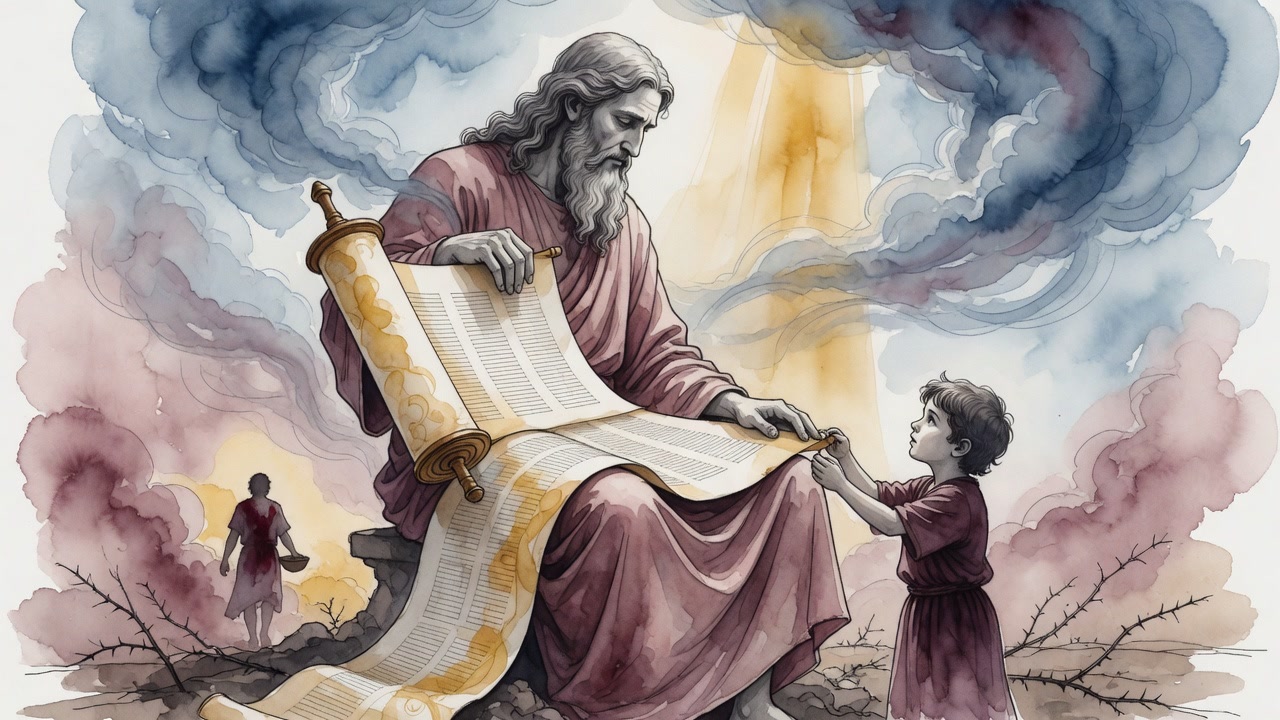
David looked down the line of kings coming out of him. When he reached the one who burned his own sons, he stopped calling himself a king.
Table of Contents
David stood before God and asked for a map.
 Click for full size
"Tell me the road to life," he said. "Show me which gate opens directly onto the world that is coming."
David Asked Which Gate Leads to Life
The answer was one word long, and he did not like it. If life is what you are asking for, then suffering. Rebuke is the road. There is no other gate.
He kept asking anyway. In his own psalms he could not settle on what to call himself. Some days he wrote as a king and asked God to give the king His justice. Other days he wrote as a pauper, a man overwhelmed, and begged that the prayer of the destitute not be thrown out.
The switch depended on what he was looking at. When he looked forward down the line of sons that would come out of him and saw Asa, and Yehoshafat, and Hezekiah, and Yoshiya, he wrote as a king. Then he would look a little further along the same line and see Ahaz, and Amon, and one other, and put the crown down and write as a beggar.
The King Who Burned His Sons
Menashe was twelve when he took the throne in Jerusalem. He ruled for fifty-five years, longer than any king of Judah before him or after him.
He rebuilt every hill shrine his father Hezekiah had torn down. He put altars to the host of heaven inside the two courts of the house of God, in the building where God had said His name would live. He read omens. He kept mediums and wizards on staff. He set a carved image in the sanctuary itself. He put sacrifices on high places his father had smashed, and he passed his own children through the fire in the valley below the city.
He filled Jerusalem from one end to the other with innocent blood. Fifty-five years of it. Nothing came down from heaven. The prophets who spoke against him were not heard. The years went on.
Hooks on the Road to Babylon
Then the captains of the Assyrian army came for him.
They did not honor him as a king. They took him with hooks, bound him in bronze fetters, and walked him to Babylon. The man who had spent half a century arranging gods in his capital arrived in a foreign prison with no altar, no Temple, no priest, and nothing to face when he turned to pray.
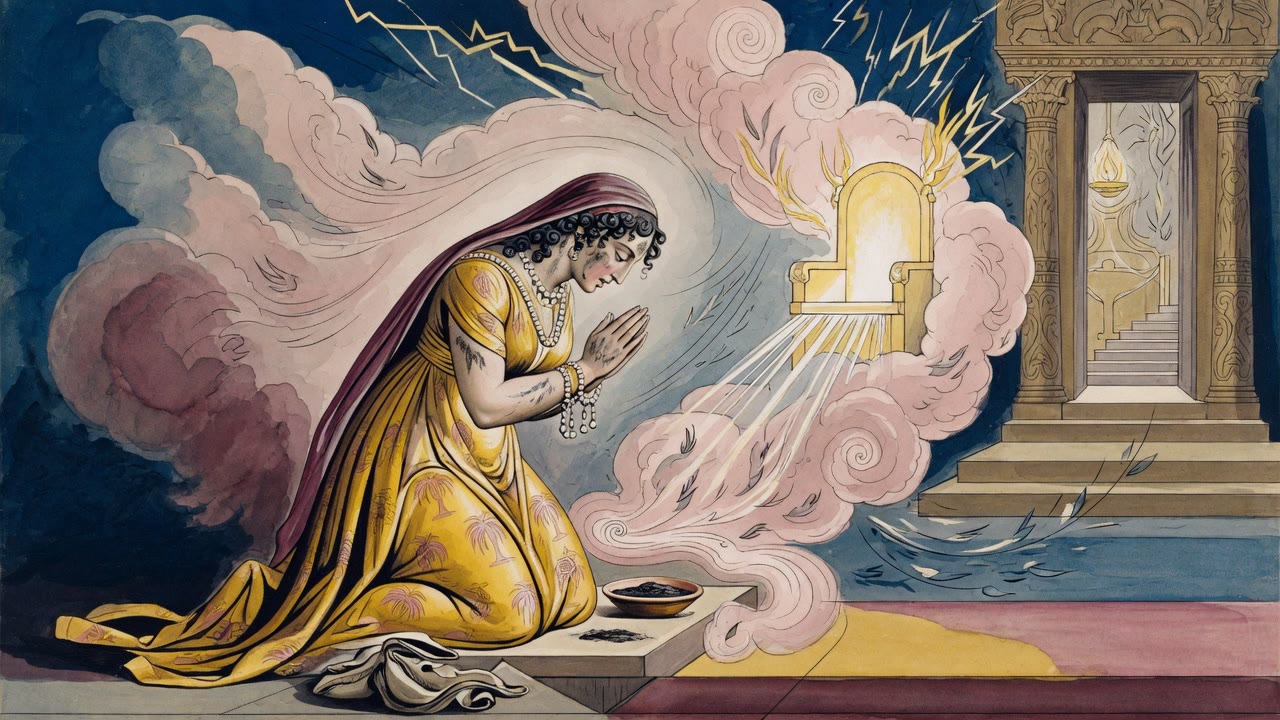
He prayed anyway. Out of that prison, in irons, the worst king Judah ever produced opened his mouth and asked the God of his fathers for help. Mercy was the last thing anyone in heaven owed him. He asked for it anyway.
The Angels Shut the Windows
The prayer went up. The ministering angels went to close the windows of heaven against it.
"Master of the world," they said. "This is the man who set up an idol inside Your own house. There is no mercy owed here. You are going to take him back?"
The answer came out of the throne. "If I do not take this one back, I have shut the door on every person who ever repents after him."
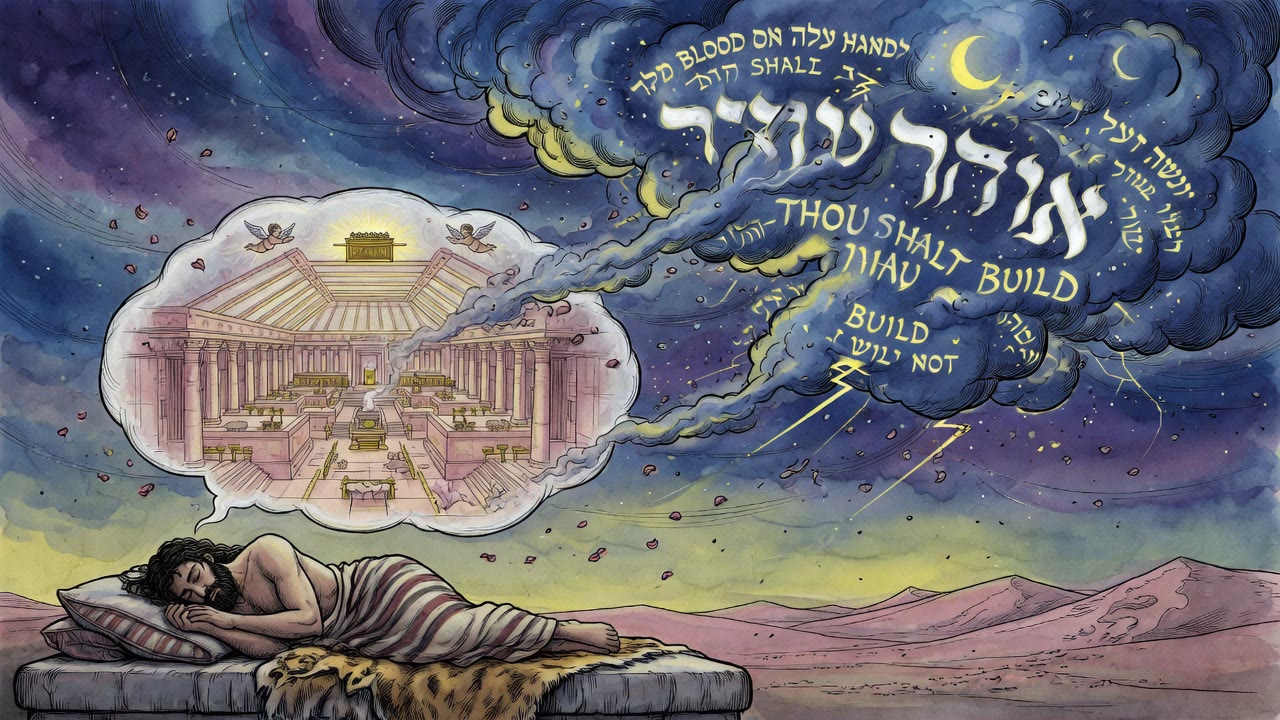
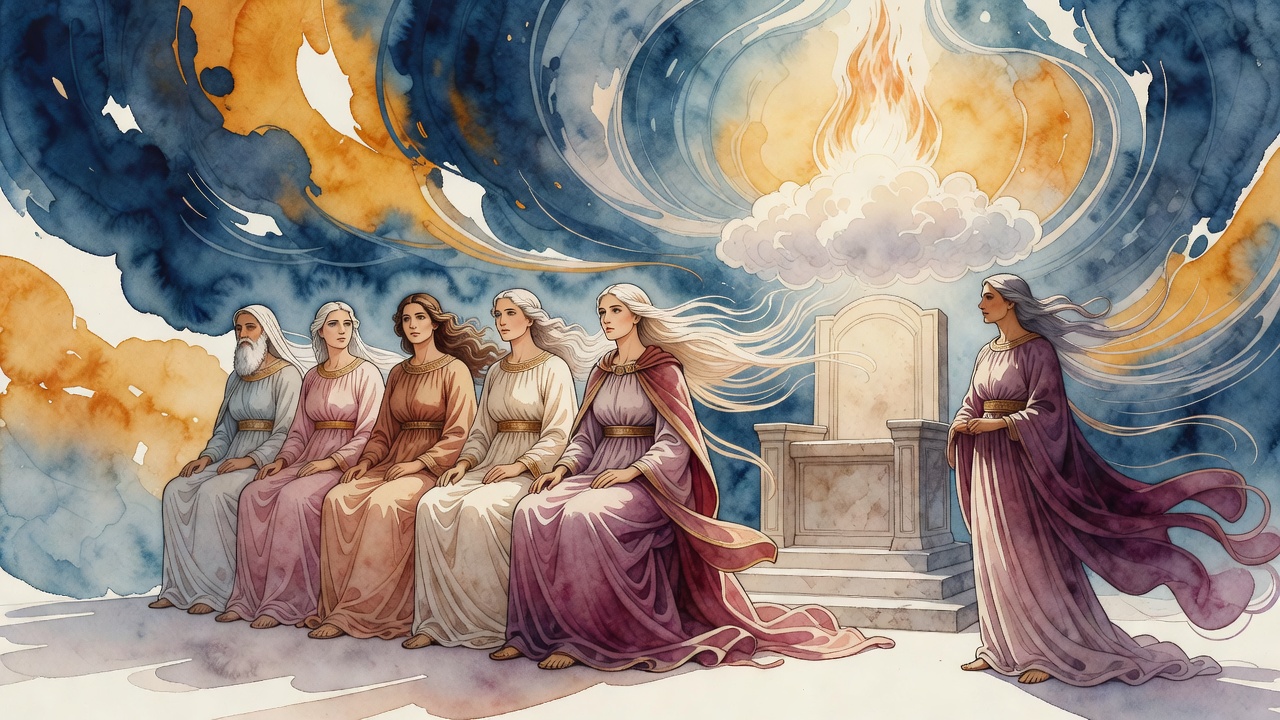
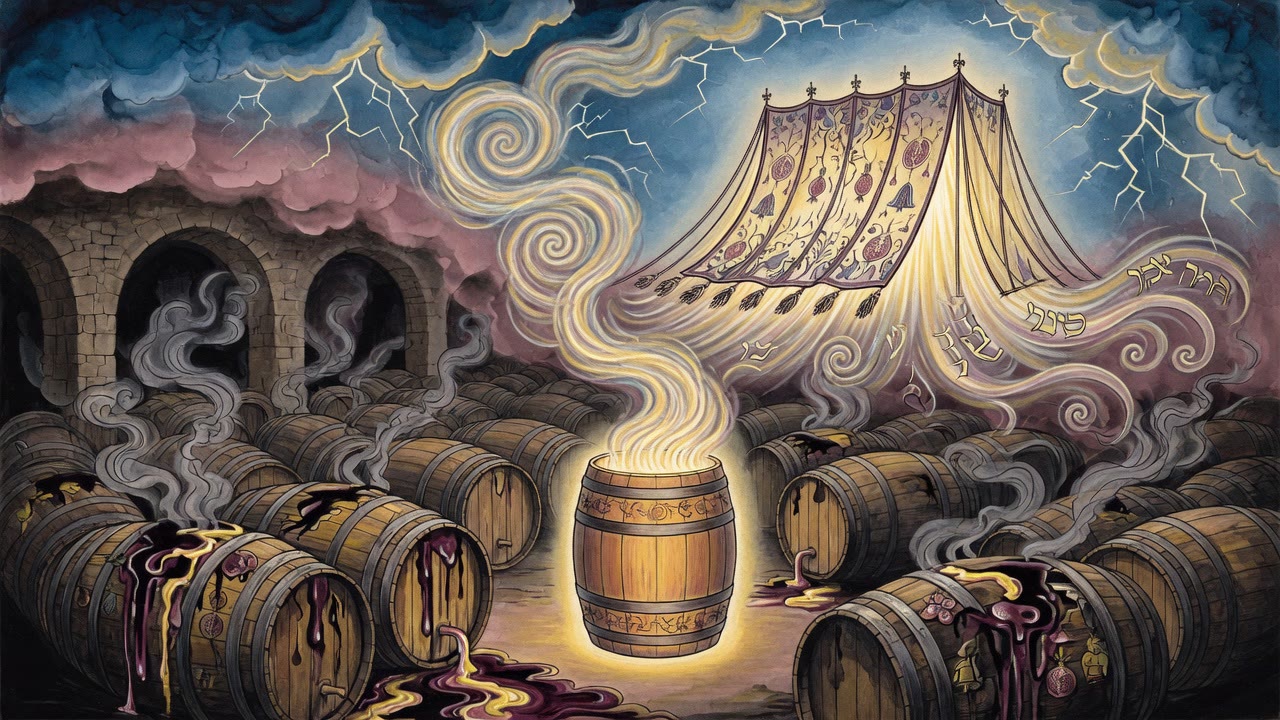
So God went around His own court. He did not order the windows opened. He did not argue with the angels standing in front of them. He dug. Underneath the Throne of Glory He cut a tunnel, a passage coming up from below where no angel was posted. He let Menashe's prayer through the floor of heaven.
The work was slow enough to watch. Stone that had never been meant to move, moved. A king in chains kept speaking into the dark of a Babylon cell. The prayer did not knock on a window. It came up under the seat itself.
A Wind Set Him on His Throne
A wind picked him up.
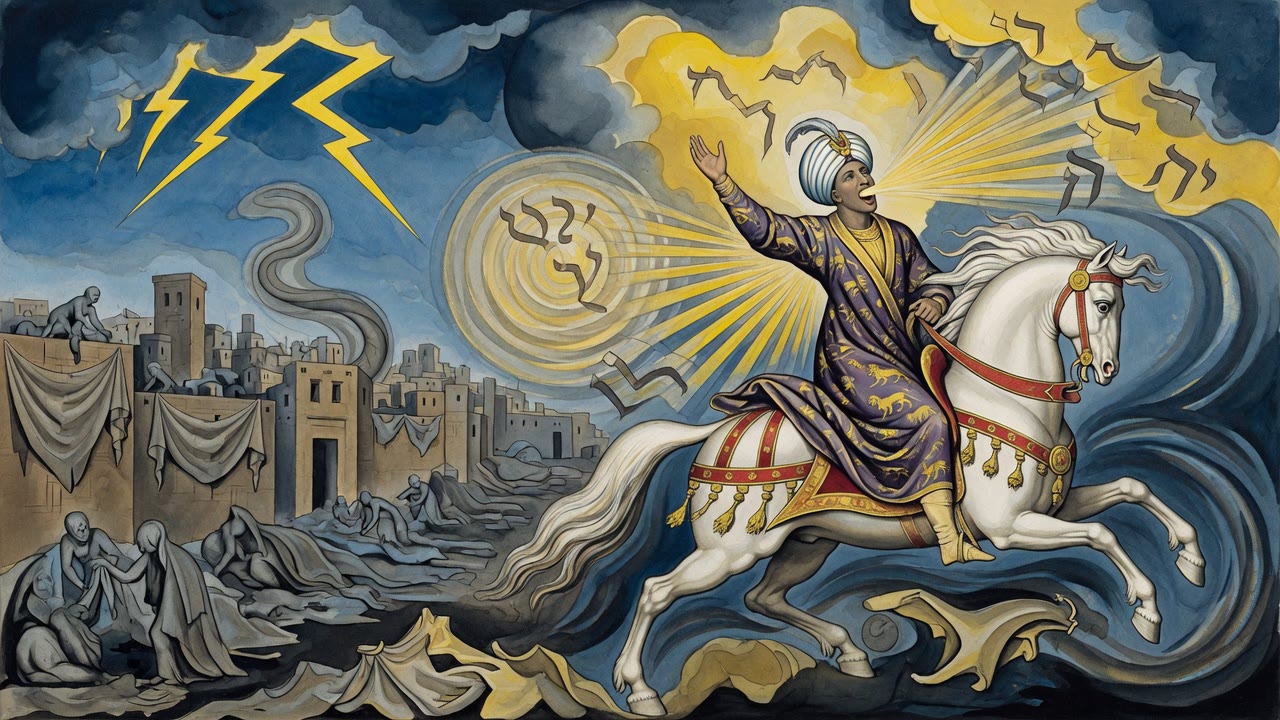
That is how he came back. Not an escort. Not a treaty. Not a ransom paid by anybody in Jerusalem. God moves the wind, and the wind carried a prisoner in chains out of Babylon and set him down in his own city on his own throne.
Menashe stood in the place where he had put the carved image and said the sentence that fifty-five years and a foreign prison had cost him. "There is justice, and there is a Judge."
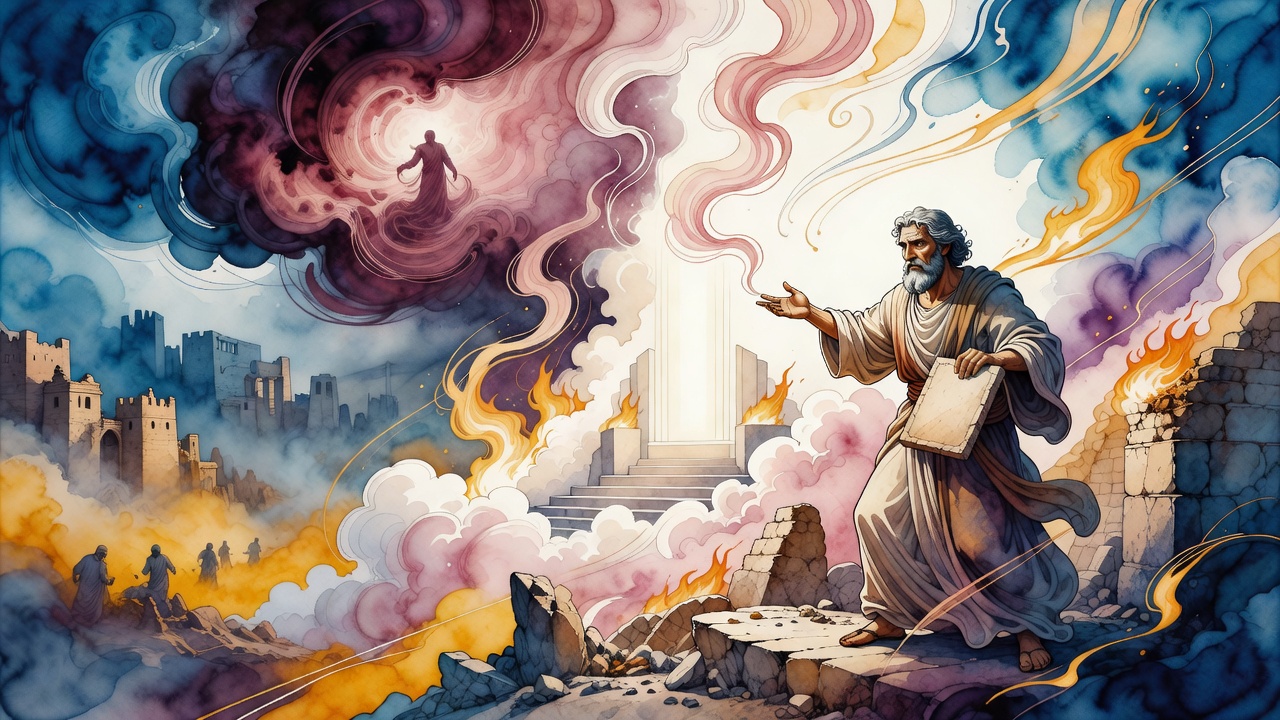
Then he went to work with his hands. He took the strange gods out of the house of God. He took the image out. He took the altars he had built on the Temple mount and in Jerusalem, and he carried them outside the city and threw them away.
Later there would be generations with no king and no prophet, no high priest, no Urim and Tumim, no way at all to send a question up and get an answer back. What those generations had was the same thing Menashe had in a cell in Babylon. The opening under the throne had been cut for exactly that reason.
← All myths