What the Patriarchs Left Behind When They Stopped Grieving
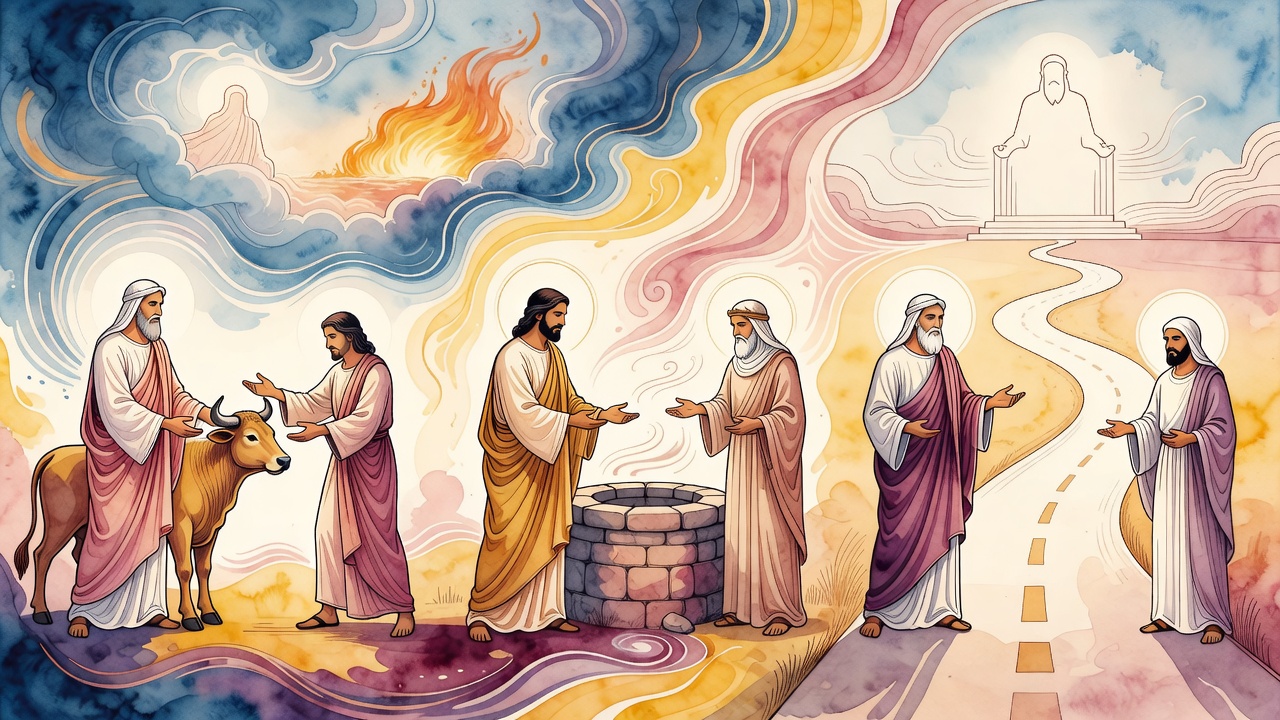
Abraham gave everything to Isaac after mourning ended. Bereshit Rabbah reads both Abraham's and Judah's transitions as dynasty built from loss.
Table of Contents
 Click for full size
An Old Man and an Impossible Gift
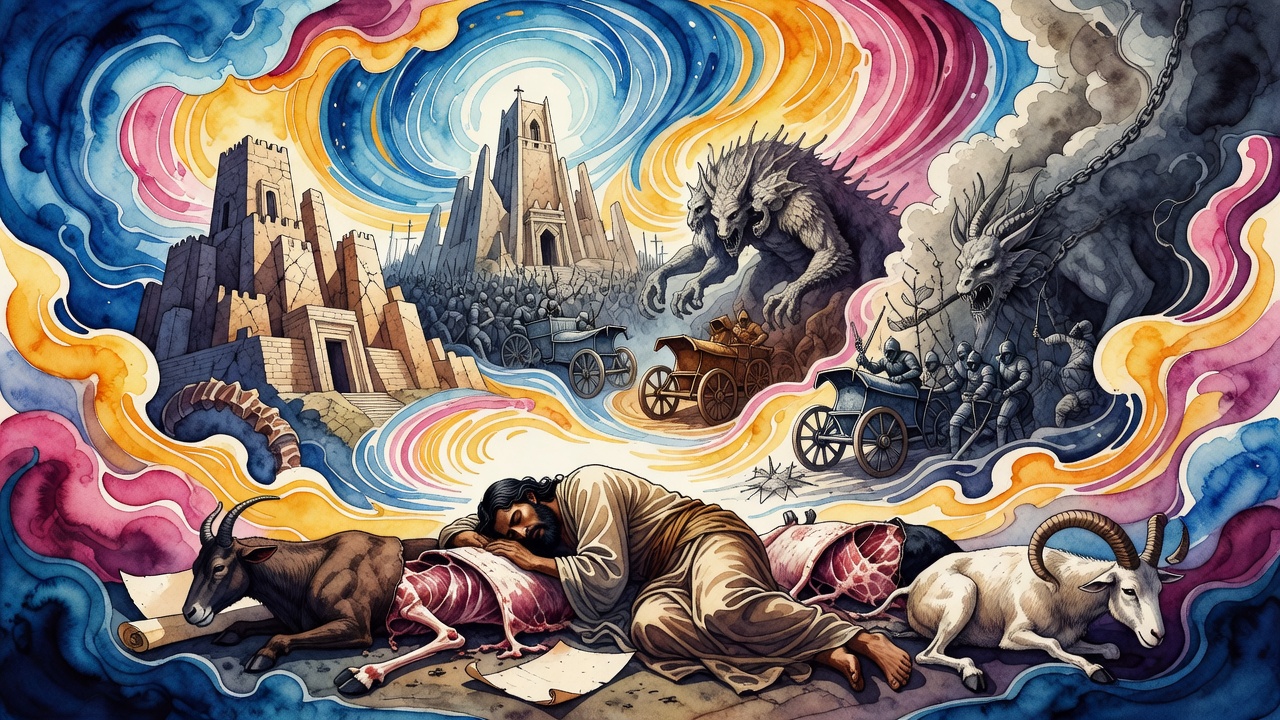
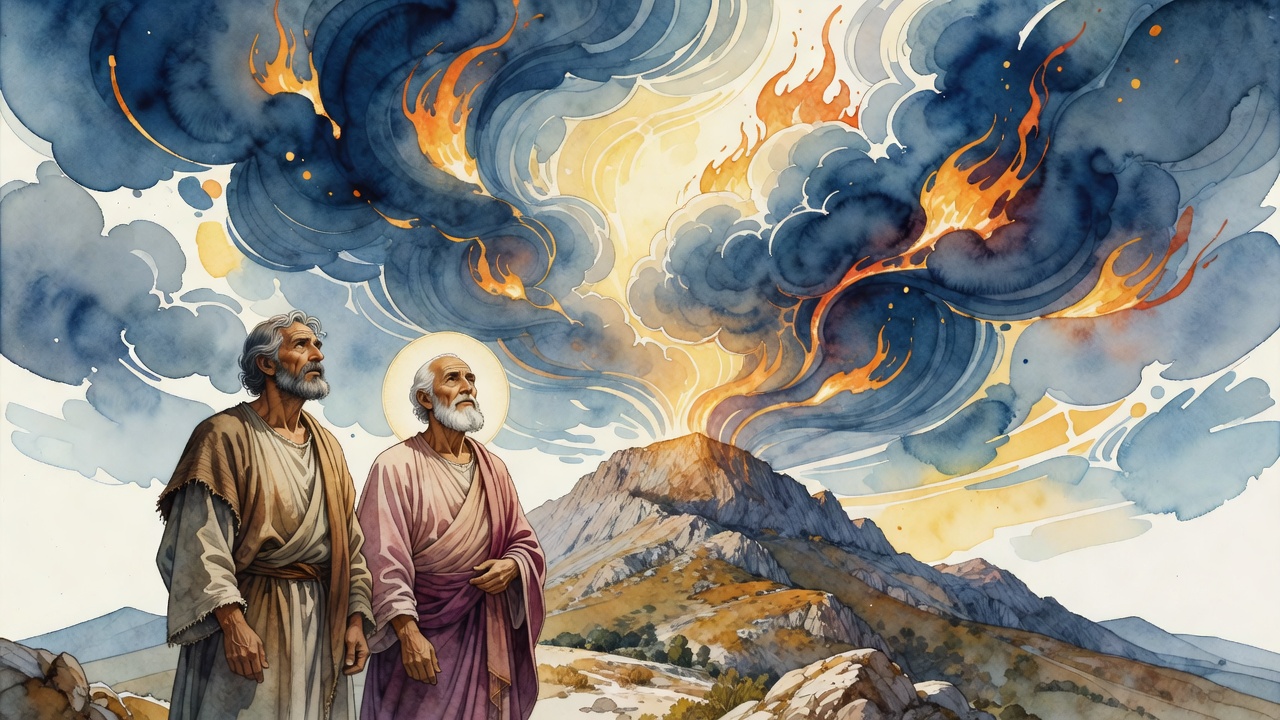
Abraham was old. Sarah was in the cave at Makhpela. Ishmael had gone with his mother into the wilderness of Paran, and the sons of Keturah had scattered with their gifts into the east. The world had narrowed to one surviving line.
The Torah drops a single sentence in Genesis 25:5: Abraham gave all that he had to Isaac. The rabbis of Bereshit Rabbah could not let that sentence pass without an argument about what all that he had actually meant.
Rabbi Yehuda said it meant the rights of the firstborn, transferred across the age gap between Isaac and the older Ishmael. A spiritual birthright, a legal standing, handed from father to younger son over the claims of the one who came first.
Rabbi Nehemya said it meant the power to bless. The same divine current that ran through Abraham's mouth when he stood outside the tent at Mamre and spoke with God. To give someone the power of blessing was to hand them the instrument that shaped destinies through words.
The collective rabbinic voice added the deed to the Makhpela field and the declaration naming Isaac the sole heir of everything.
The Orchard With Two Trees
Then Rabbi Hama stepped in with a parable that turned the entire question inside out.
A king has an orchard. He hands it to a sharecropper to tend. Inside the orchard grow two trees, their roots tangled together in the same soil. One tree bears fruit that sustains life. The other produces poison. If you water the good tree, you water the poisonous one too, because they share the same root system. If you cut off the water to the poisonous tree, the good tree dies.
The king, coming to examine his orchard, sees the problem. He uproots the poisonous tree and leaves the good one standing alone. Now the good tree can drink freely without feeding what would harm it.
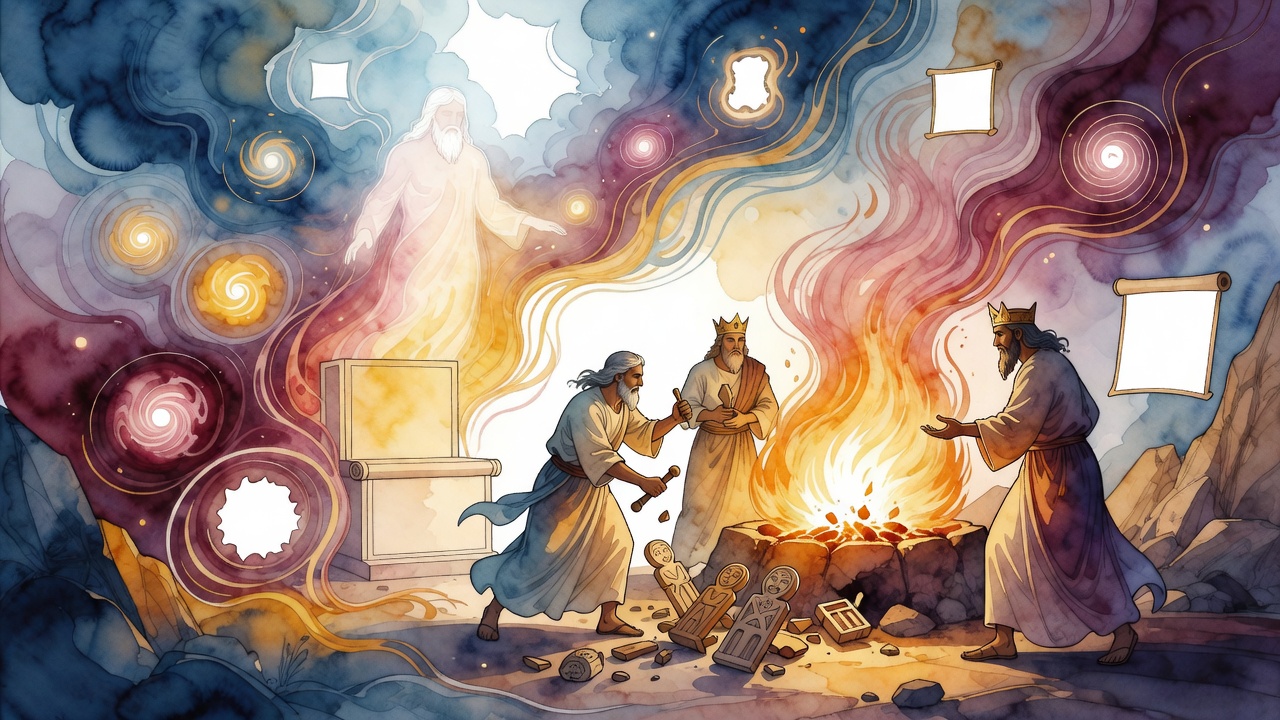
In Rabbi Hama's reading, Abraham was the king. Ishmael was the poisonous tree. Isaac was the tree that bore good fruit. The gift Abraham gave Isaac was not merely property or legal standing. It was the act of clearing the ground, of removing what would have competed with the line that needed to grow.
Twelve Months of Things Piling Up
The second passage is quieter and more precise. Genesis 38:12 gives us a single compound sentence: the days accumulated, the daughter of Shua died, Judah was comforted, and he went up to Timna for the sheepshearing.
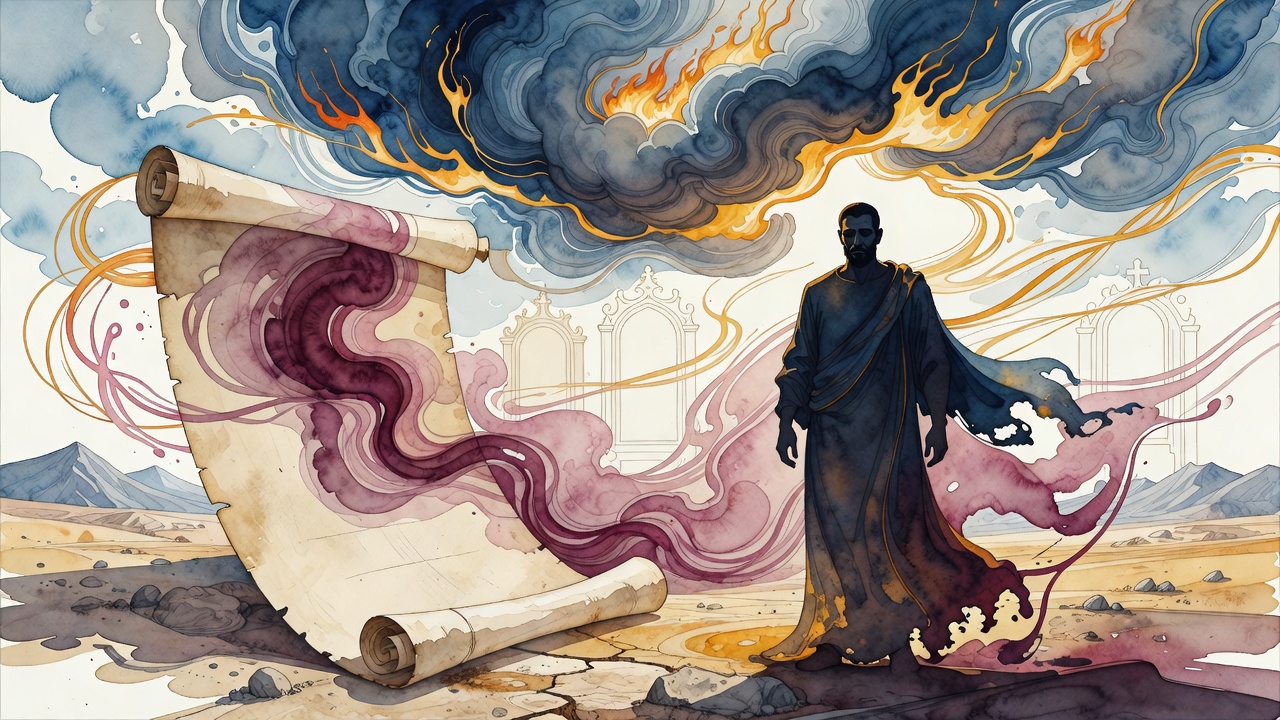
Bereshit Rabbah 85 opened the phrase the days accumulated as a number. Twelve months. A full calendar year of grief before Judah moved. Not a brief mourning period. Not a few weeks. One complete year of the days simply piling on top of each other while his wife was gone and the house was without her.
At the end of twelve months, Judah went up to his friend Hirah the Adullamite, and they went to Timna for the sheepshearing. A practical decision, a pastoral necessity, a man re-entering the rhythms of work after a year of standing still.
What happens next is Tamar. Judah does not know she is waiting for him on the road to Timna. He does not know that the moment grief lifts and movement resumes, the next step in the dynasty he carries is already in place and waiting. The twelve months of accumulated days led directly to the encounter that would produce Peretz, and through Peretz to David, and through David to everything that followed.
Grief, in both stories, is not simply a pause. It is the specific condition out of which the next generation of the lineage emerges. Abraham could not give Isaac everything until Ishmael was gone. Judah could not walk the road to Tamar until the twelve months were done. The gift and the encounter both required the clearing that grief performed.
The Shape Grief Left Behind
In both stories, the loss was not undone. Sarah was still in the cave at Makhpela. Judah's wife was still gone. The world did not restore itself when the patriarchs stopped grieving. What they left behind was not a recovered situation but a changed one, and it was inside the changed situation that the dynasty moved forward.
Abraham did not give Isaac everything because life had returned to normal. He gave it because the old configuration was finished and the new one had to be established while he was still alive to establish it. Judah did not go up to Timna because the sorrow had passed entirely. He went because the twelve months were done and the next step was waiting on the road. The giving and the going were acts performed inside grief's aftermath, not in spite of it.
Bereshit Rabbah read both transitions as dynasty built from loss. The rabbis who preserved these teachings were not recommending a fixed mourning period or a universal rule. They were pointing at something they saw recurring in the text: the moment when the patriarchs stopped grieving was never a restoration. It was an inauguration.
← All myths