Wheat Towered Like Cedars at Eden's Center
Call a man a fool, said Rabbi Meir, and someone answers that he has never eaten bread. Bread makes a person wise, and Eden's grain grew above Adam's head.
Table of Contents
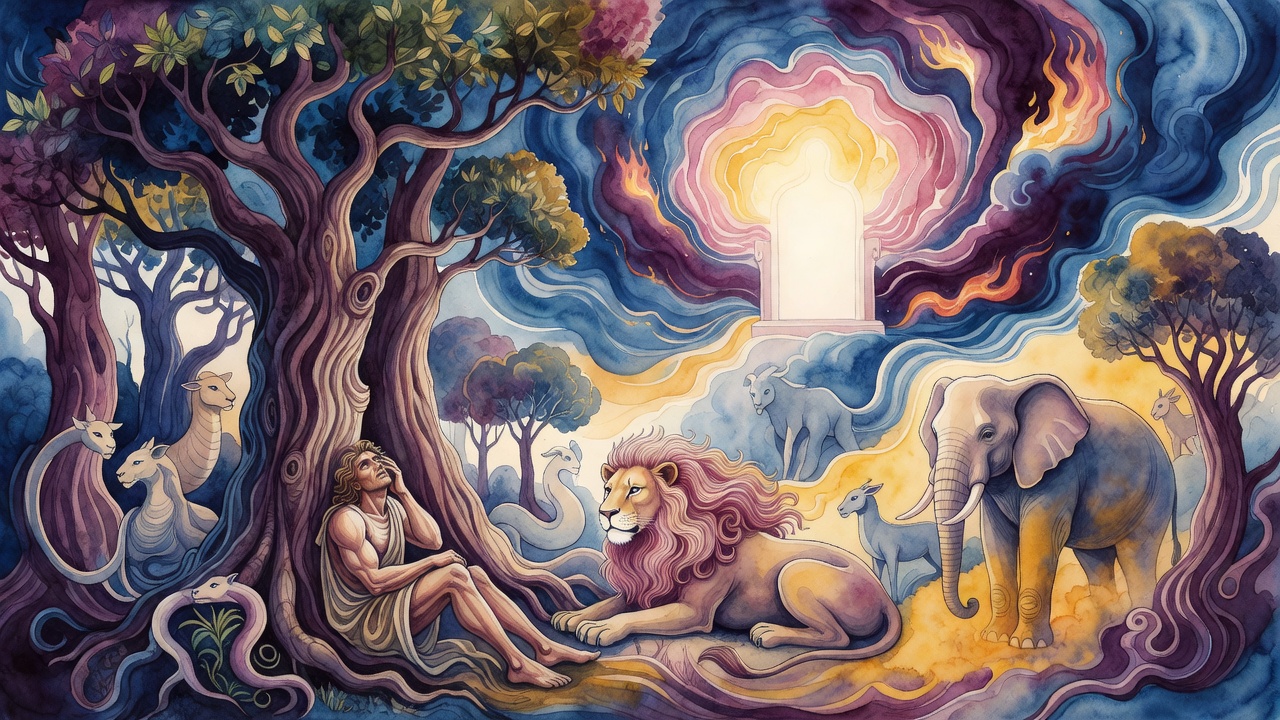
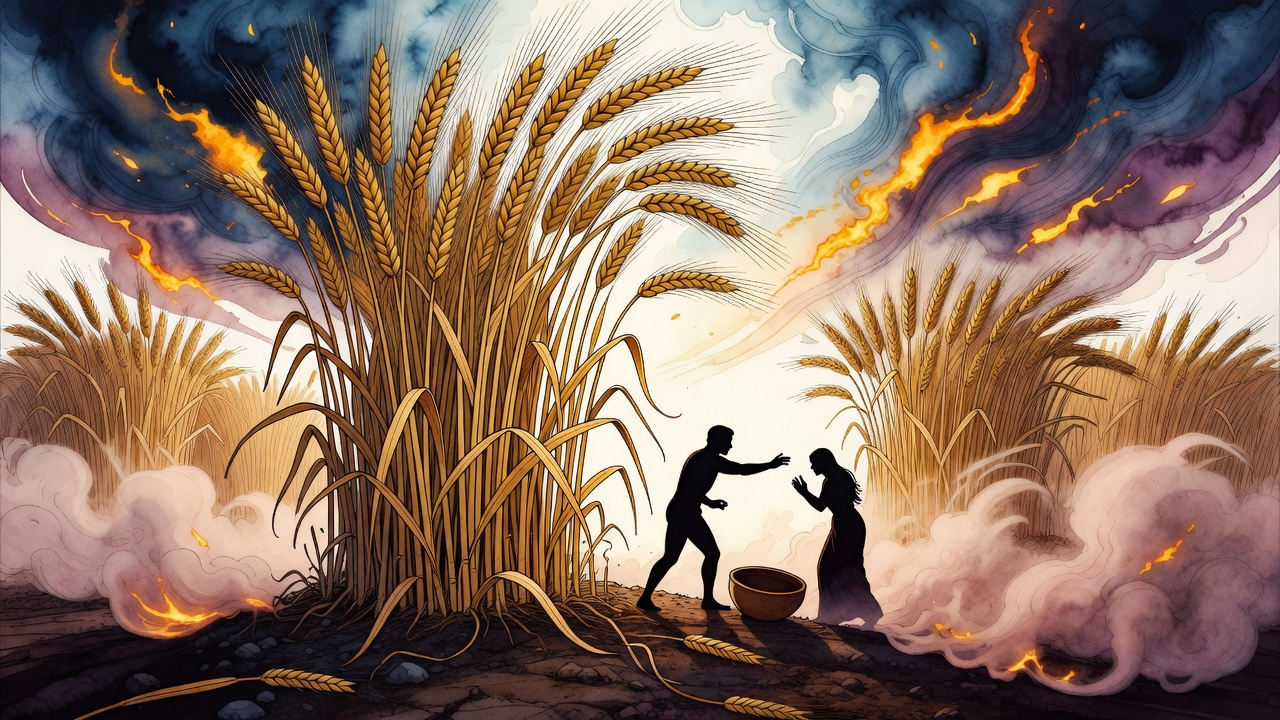
Adam tilted his head until his neck ached. The center of the garden was wheat, stalks rising like cedars of Lebanon, grain so tall the head of the stalk sat above a man's face like timber.
 Click for full size
Rabbi Meir would later say the proof lived in ordinary speech: call a man a fool and someone answers that he has never eaten a piece of wheat bread. Bread is the food of understanding. The forbidden tree was the tree of knowledge. What fits that name better than the grain that makes a person wise? The verse still calls it a tree, an etz, and wheat is no tree in the shrunken world. In Eden, before the world contracted, the stalk was timber. Daily bread grew to a grandeur only the beginning could sustain.
The Built Rib and the Braided Hair
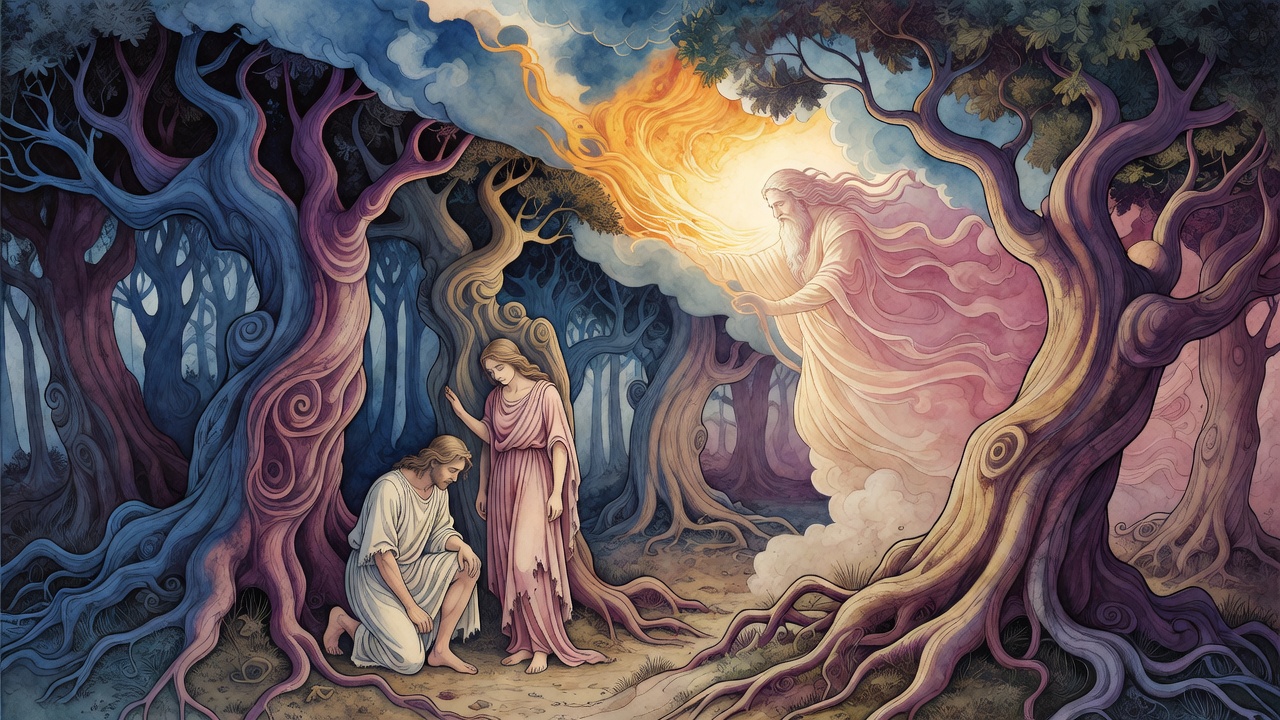
Before the bite, Eve had been built. The Holy One did not merely pull a rib and leave it raw. He built, craft and care in the verb, and braided her hair before bringing her to Adam, as if a king finished a queen's presentation before the court. Inside that building the tradition places an extra measure of binah (בינה), understanding, more understanding given to the woman than to the man, a gift that would later mark when a girl's vows bind a year earlier than a boy's.
Adam received a partner made with intention. He also received a command about a stalk of knowledge that towered above them both.
The Barrel Full of Snakes
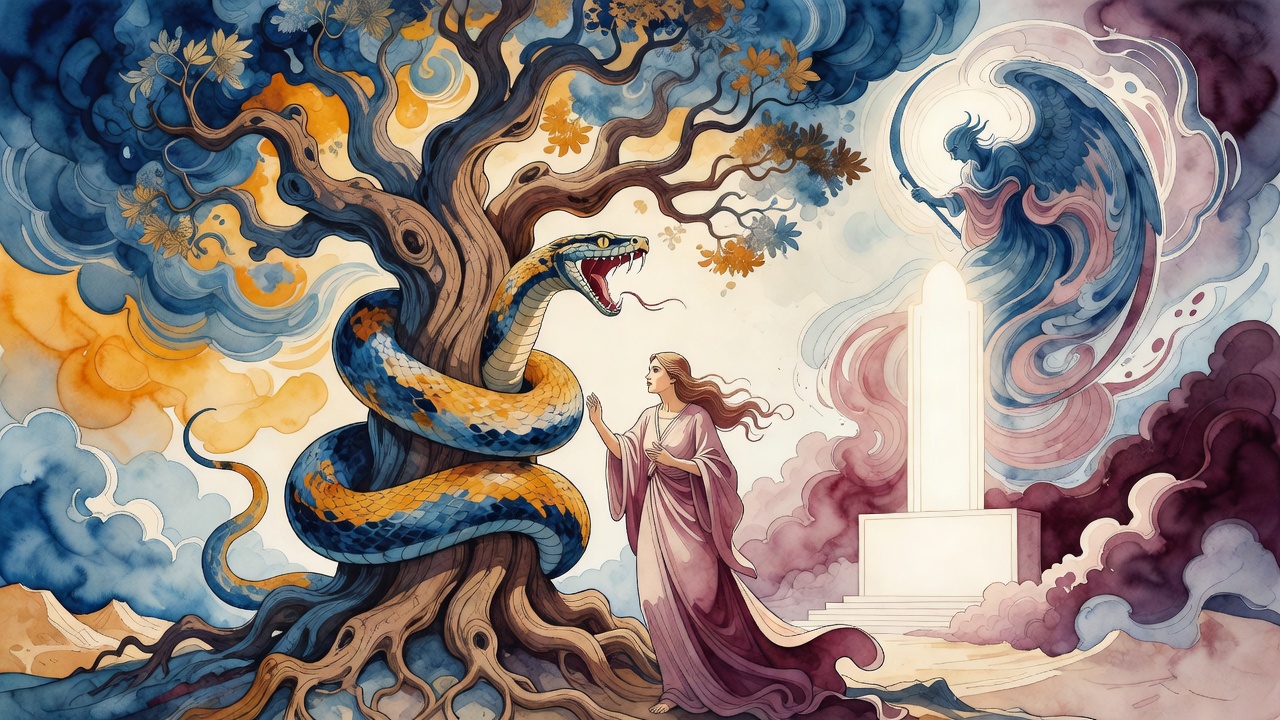
The serpent's lie worked the way a borrowed-vinegar story works. A woman asks a scholar's wife for vinegar and is told one barrel is forbidden, full of snakes and scorpions. The visitor whispers that the barrel is treasure, held back because the husband means to marry another and give it away. The wife reaches in. The snakes bite. When the husband hears the cry he already knows: she touched the one barrel he forbade.
So when God asked, "Who told you that you were naked?" the question was no question. He was asking whether Adam would own the deed.
The Hollow Vessel
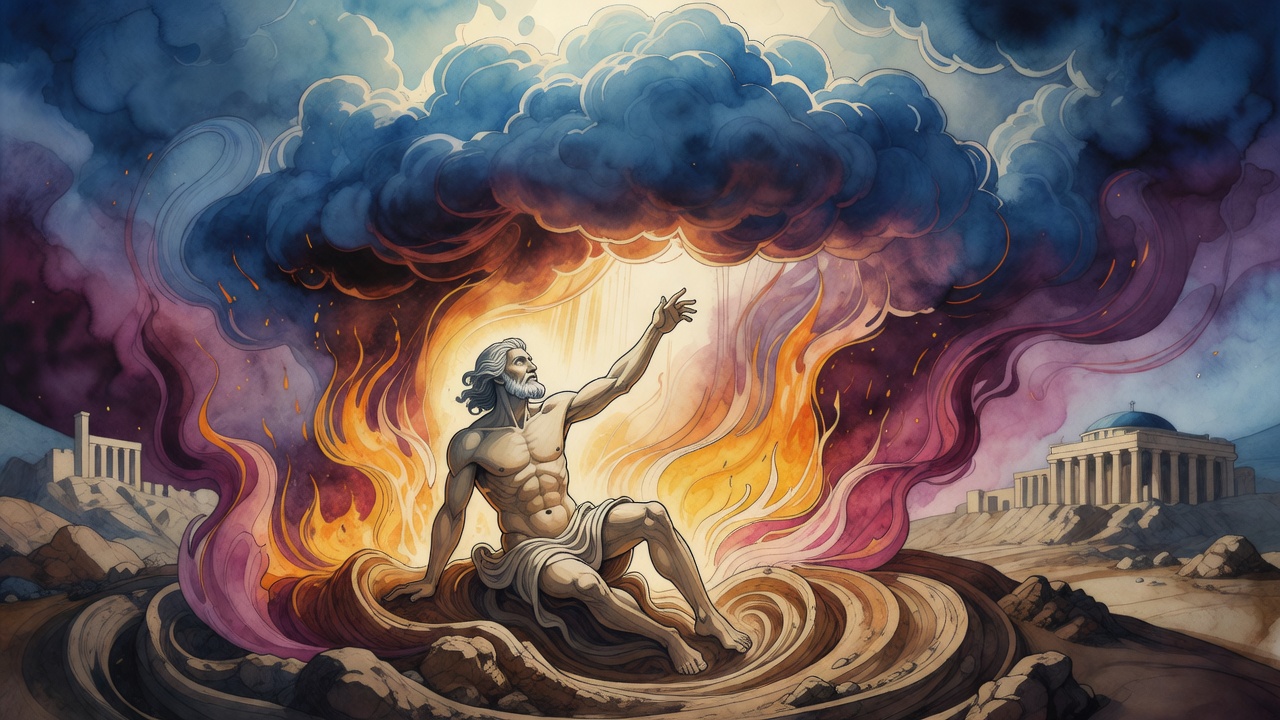
Adam did not own it. He pointed at the woman God had given him. The midrash counts him among four whose vessels rang hollow when heaven knocked to test them: Adam, Cain, Balaam, and Hezekiah. Only Ezekiel, asked whether dry bones could live, answered with humility: "You alone know."
Worse, Adam's grammar betrayed him. He did not say "I ate," finished and done. He said "I eat," as if the hand would close on the fruit again. The tradition holds he was not expelled for the bite alone but for the defiance that followed it. The serpent's contact left a stain that only standing at Sinai would later wash.
Eve had been built with understanding. Adam answered with blame. The wheat that should have been wisdom at the right hour became the first wound when taken early, and the man who named the animals could not name his own fault.
What Left the Garden With Them
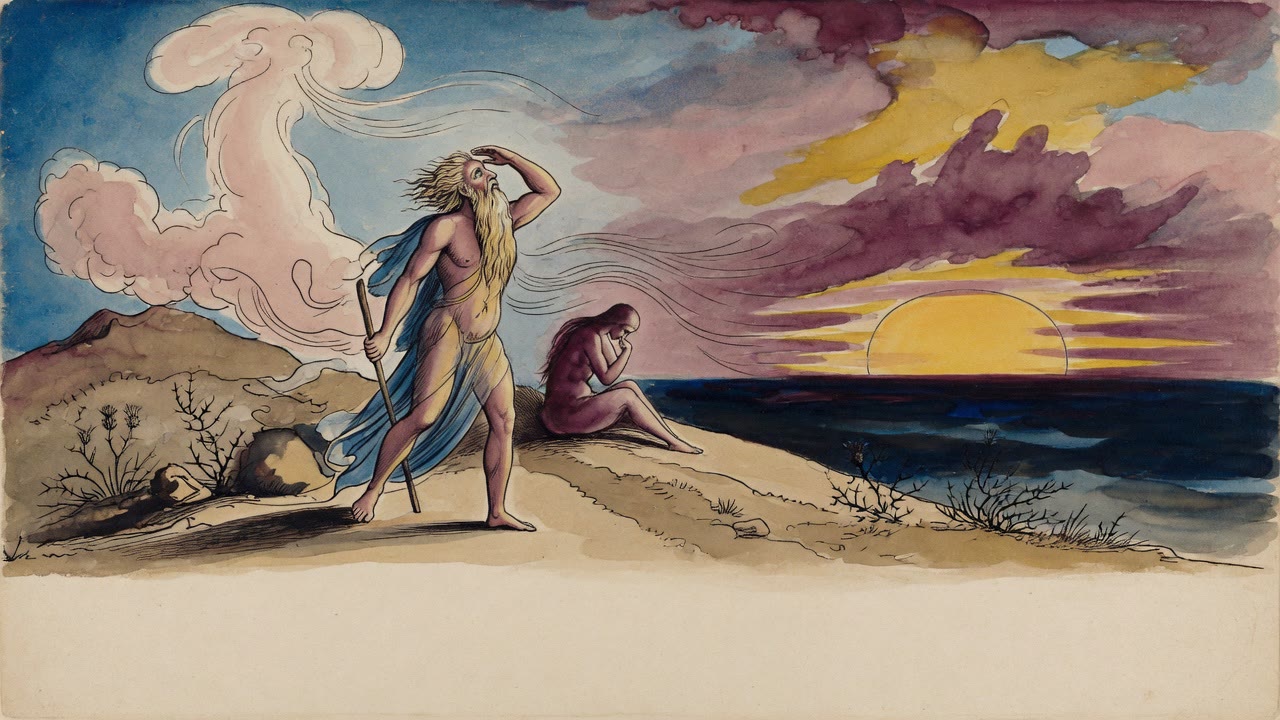
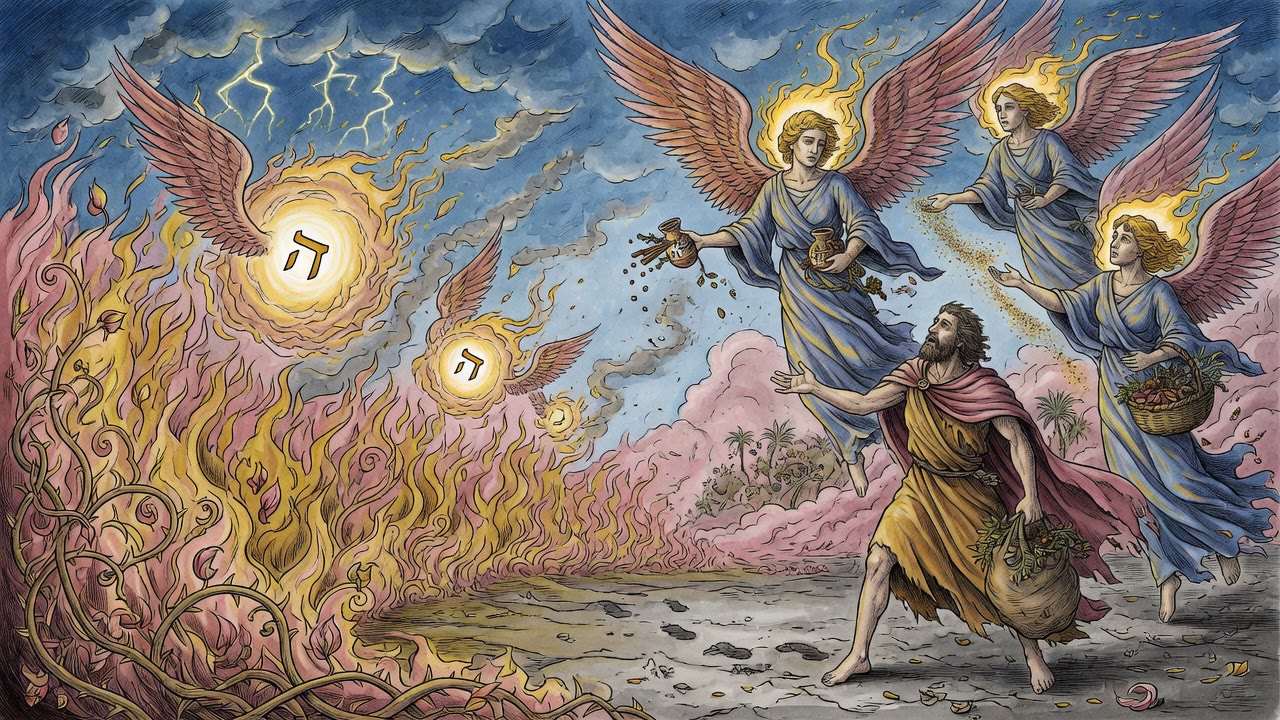
They walked out under stalks that still looked like timber. Knowledge had entered, but not as bread shared at a clean table. It entered as a secret stolen from a barrel that had always been snakes. Eve carried the binah she was given. Adam carried the hollow ring of a vessel that refused to hold truth. Between them the garden kept its tall wheat, and the world outside would harvest short stalks forever after, crouched low, remembering a height no field would reach again.
Adam reached for the head of the stalk the way a man reaches for a lamp on a high shelf. The grain broke between his teeth with a sound like ordinary bread. Wisdom arrived as heat behind the eyes, then as shame that had no name until the question found him naked among the trees. Eve stood with the understanding she had been built to carry, watching the man who received her with braided hair now point at her with a hollow hand.
The parable of the barrel would not leave the air between them. Someone had whispered treasure. Someone had reached. Someone had known all along what the barrel held. God's voice did not thunder. It asked a question that already contained the answer, and waited for a confession that never fully came. "I eat," Adam said, present tense, as if the meal were still on his tongue and still unfinished.
They left with knowledge that would not bake into bread for a long time. The tall wheat stayed in Eden, unharvested, a forest of grain no sickle would ever touch. Outside, the stalks of the world would grow short, and people would crouch to gather what once required a lifted face. Eve's binah did not leave her. Adam's hollow ring did not leave him. Between those two inheritances the first family learned that understanding and honesty are not the same gift.
← All myths