Parshat Bereshit5 min read

The Serpent Touches the Tree That Cries Out

The Tree of Knowledge shouts at the serpent to keep off. Eve sees the Angel of Death, then chooses not to die alone.

Curated by Arthur · Told by Maggid ·
Table of Contents
  1. Mercy Over Dark Water
  2. The Angel of Death at the Fruit
  3. Teeth Set on Edge
  4. What the Garden Remembered

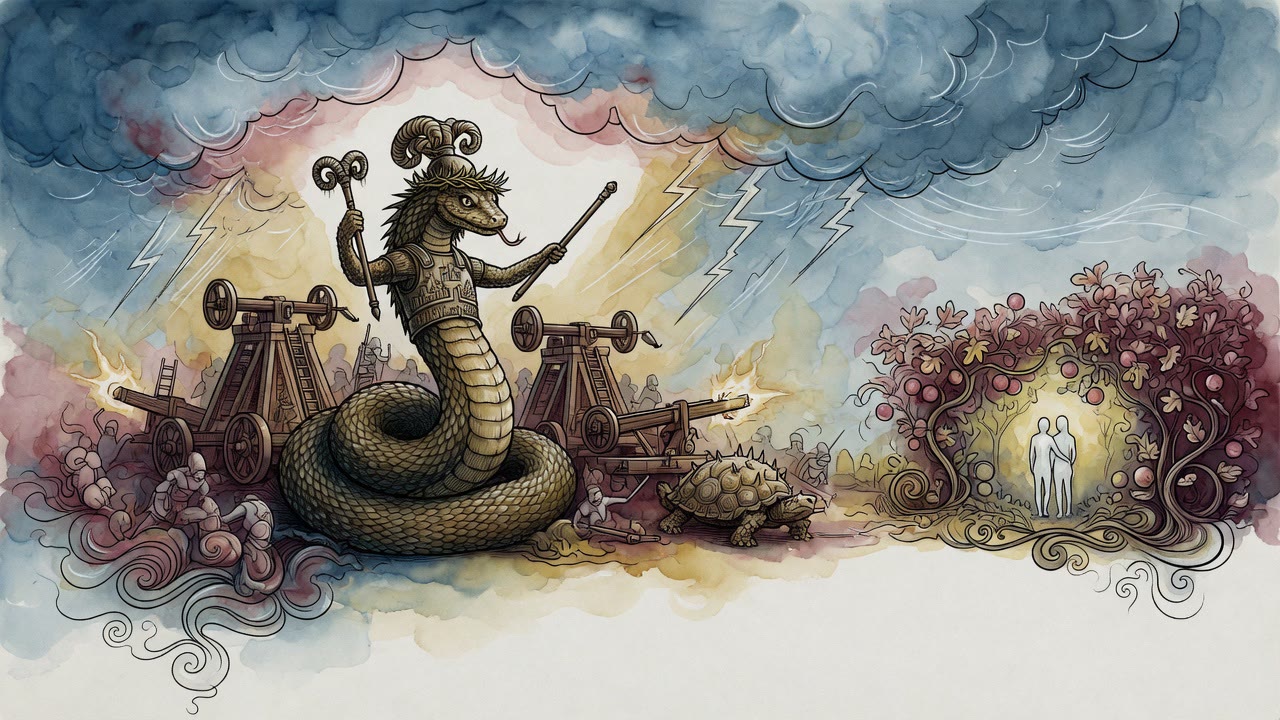
Eve stood under the branches with fruit still whole above her head. The serpent did not creep. He walked upright toward the trunk as if the garden owed him an answer, hips loose, tongue already working the air.
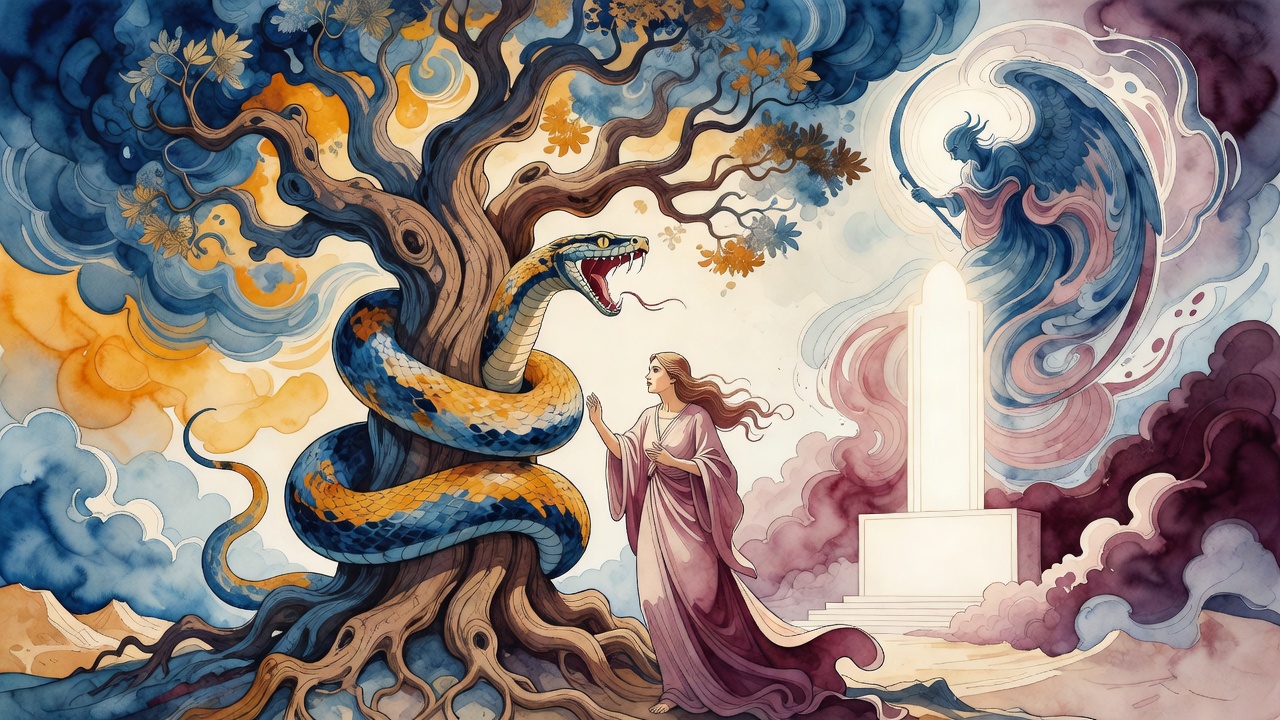
The Serpent Touches the Tree That Cries Out Click for full size

The tree answered before she could. "Wicked one! Do not touch me!" The wood itself refused him. Branches shook as if a foot of pride had come against them, and the serpent only smiled, the way a thief smiles at a latch that clicks open after all.

He laid a hand on the bark. Nothing fell. He did not die. Birds kept singing. The river kept its course. He turned to the woman with the simplest lie a body can tell. "I touched it, and I did not die. You can touch it too."

The command had been about eating, not touching. He blurred the edge on purpose. Fear of death became a dare. The tree's protest hung in the leaves unanswered.

Mercy Over Dark Water

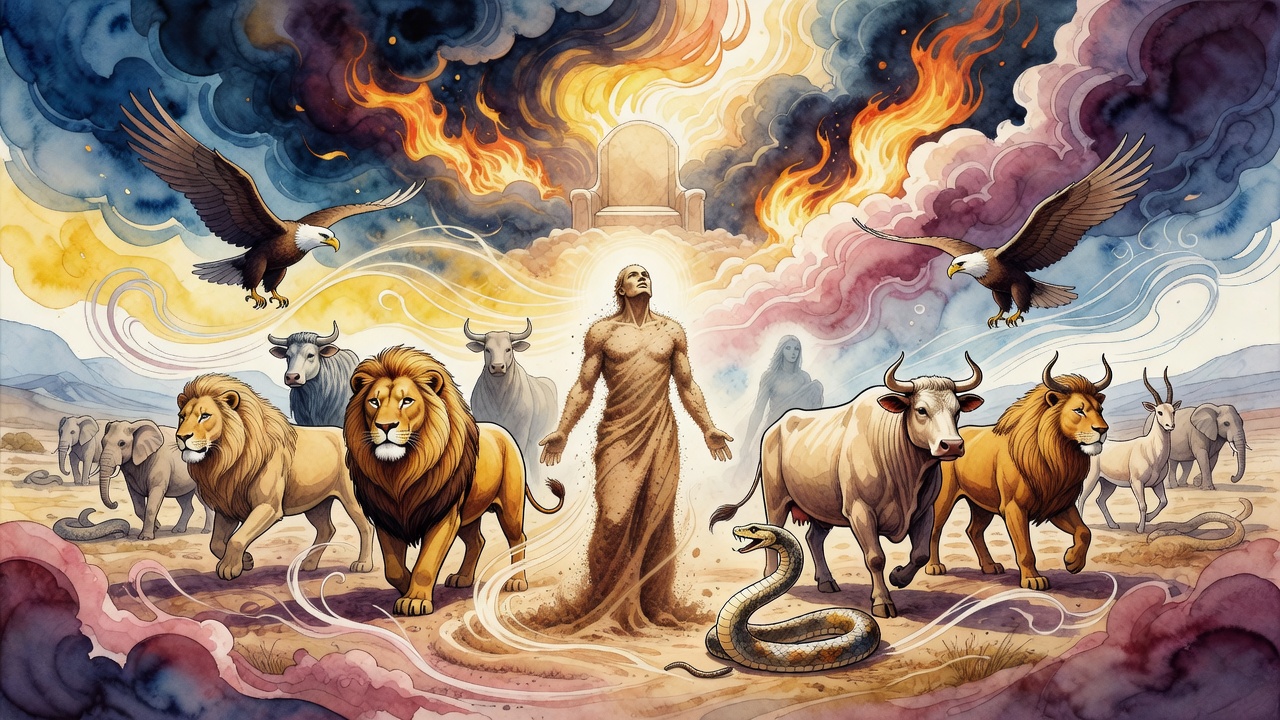
Before any fruit, before any garden argument, the world had opened under a different light. In the beginning, in great wisdom, God created and finished the heavens and the earth. The deep was not a poem. It was empty of humans and animals, empty of planted trees, desolate as a field after harvest with nothing left to reap.

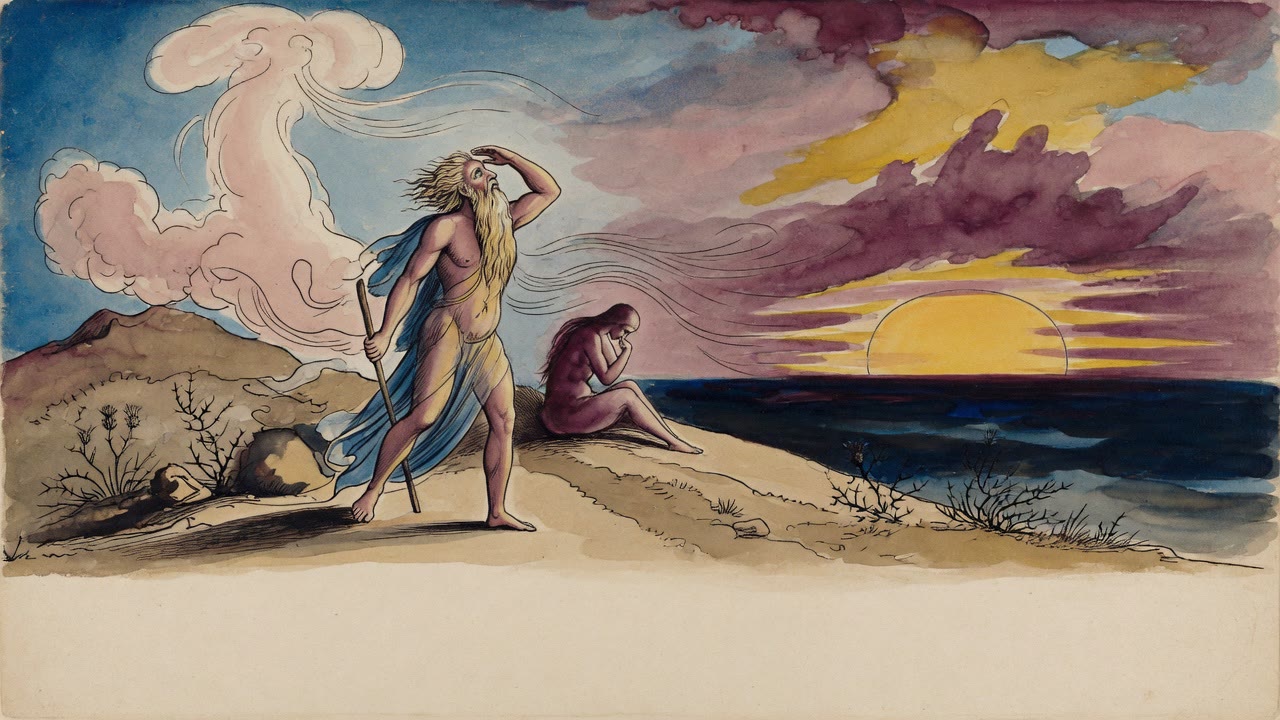
A merciful spirit from before God blew across the water. Creation did not begin with a fist. It began with mercy moving over dark water, ordering what had no form so that something living could stand under a tree and choose.

Day by day the emptiness filled: light cut from dark, sky from sea, seed from soil, fish from birds, beasts from the ground. The garden was the last room of that merciful building project, a place where desire could meet a single fence and decide whether fence meant love or insult.

That same God who started with mercy now watched a creature He had made test the one boundary He had drawn.

The Angel of Death at the Fruit

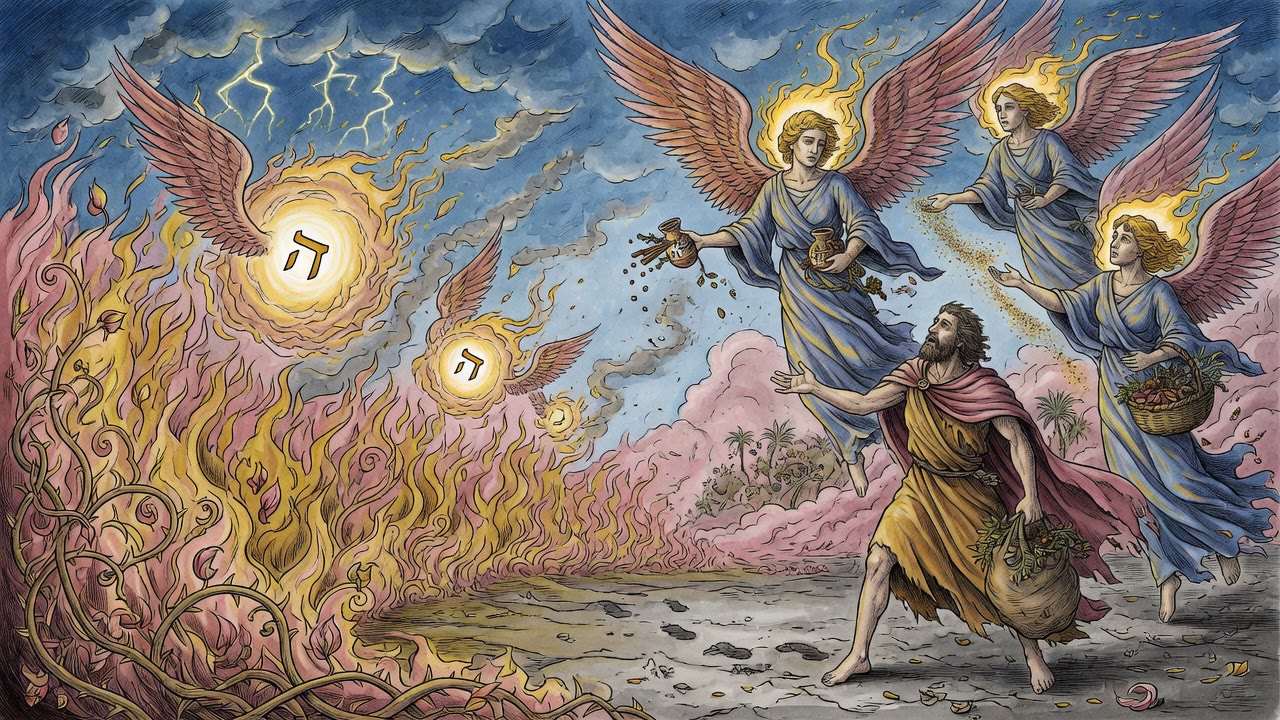
Eve stepped closer. The fruit was near enough to smell, sweet and ordinary, which made the danger worse. Then she saw him: the Angel of Death standing where the light broke through the leaves. Not a shadow. A presence. Mortality, sudden and clear, looking back at her as if the future had arrived early.

"Woe is me!" she cried.

The next thought was colder than fear. If she alone died, God would make another woman for Adam. The garden would go on without her. Someone else would walk these paths and take her place in the naming of the days.

She would not leave him that way. "I will cause him to eat with me. If we shall die, we shall both die, and if we shall live, we shall both live." She took the fruit. She ate. She carried a piece to the man who had named the animals and slept through the first surgery of the world.

Teeth Set on Edge

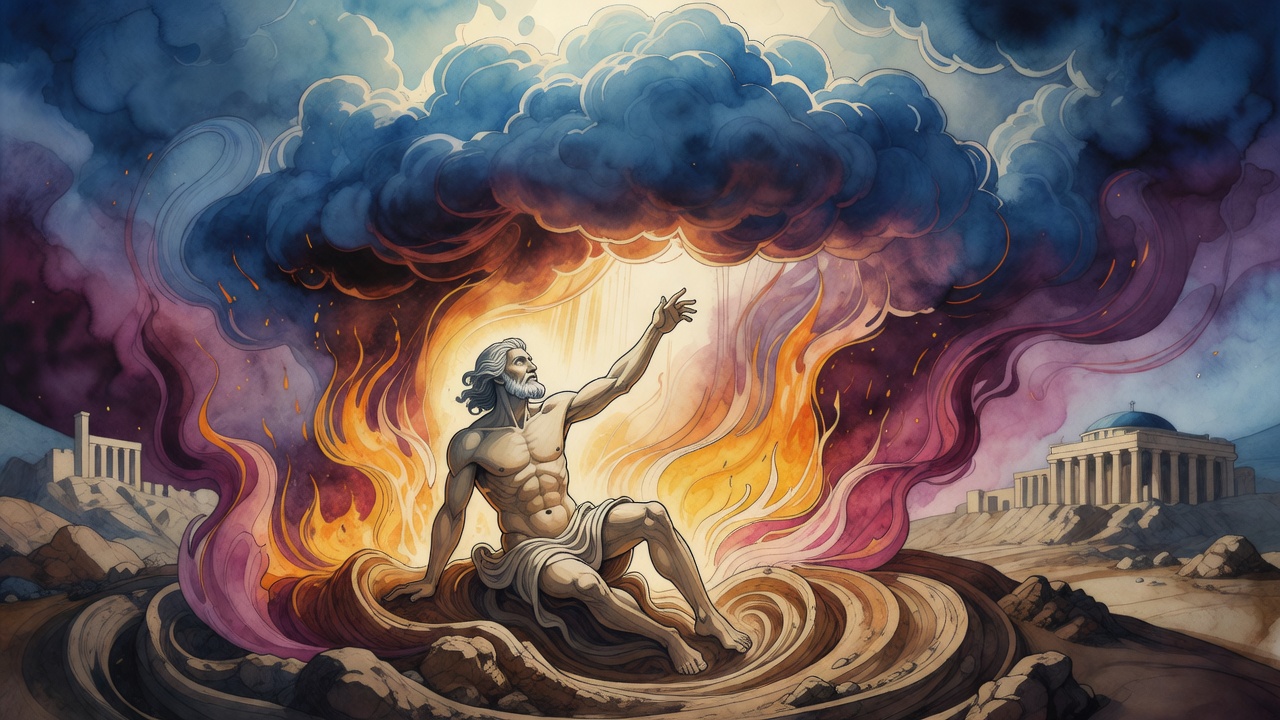
Adam bit. His eyes opened, and his teeth were set on edge, as if the fruit had gone sour in a single instant. Nakedness was not a costume change. It was a jolt through the jaw, a knowledge that went all the way into the bone.

"What is this that you have given me to eat," he asked, "that my eyes should be opened and my teeth set on edge?" He already knew the answer would outlive him. "Just as my teeth were set on edge, so shall the teeth of all generations be set on edge."

The serpent had won a moment. The tree had shouted and been ignored. Mercy that once blew over empty water now had to deal with two humans who could no longer pretend they were only dust and breath. They sewed leaves with shaking hands and hid among the trunks.

What the Garden Remembered

God walked and asked a question that was not for information (Genesis 3:9). "Where are you?" was an invitation to speak before sentence. Adam pointed at Eve. Eve pointed at the serpent. The chain of blame ran downhill.

The serpent lost his upright walk. The ground took a curse. Eve, who had refused to die alone, would bring life through pain. Cherubim and a turning sword closed the gate. Still the first wind over the deep had been merciful. Still wisdom, not brute force, had framed the sky.

The garden held both truths at once: a creation begun in compassion, and a choice that set human teeth on edge forever after.

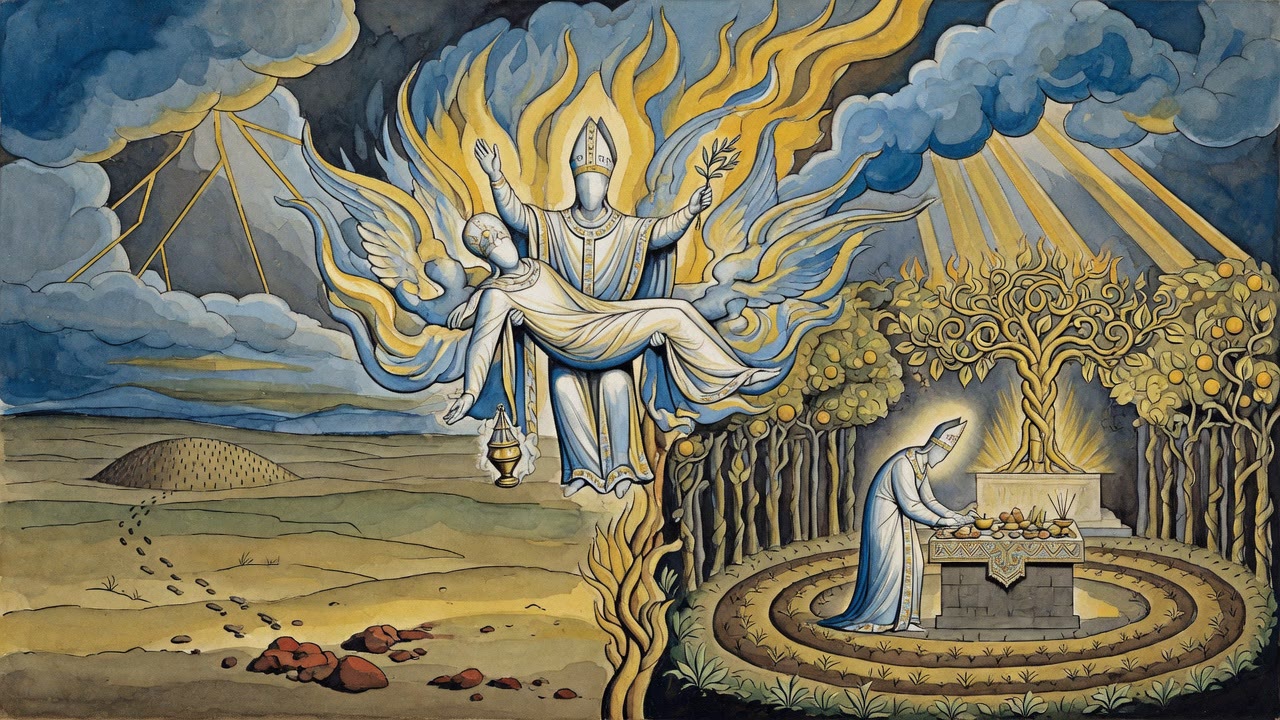
Keep the scene in the muscles. A turned face, a hand on a censer, a jawbone wet with water, a field half ruined and half green. Law that never leaves the page cannot do this work.


← All myths

From the tradition

Sources

2 sources

The texts behind this telling. Some cards carry a translation of the source; others are our own retelling of it, and each card says which. Every card links out to the original.

Pirkei DeRabbi Eliezer 13:7Pirkei DeRabbi Eliezer

Retold in our words. Read the original at the link below.Pirke de Rabbi Eliezer, trans. Rabbi Gerald Friedlander, London (1916) · CC-BY

The familiar picture has a silent, almost dreamlike scene. But the ancient text Pirkei DeRabbi Eliezer paints a much more vivid – and unsettling – picture.

The serpent, not slithering silently, but boldly approaching the Etz haDa'at, the Tree of Knowledge. And here’s the thing: according to this ancient story, the tree itself cries out! "Wicked One! do not touch me!" it protests, almost quoting Psalm 36: "Let not the foot of pride come against me… There are the workers of iniquity fallen. The very creation recoiling from the touch of evil.

The serpent, of course, isn't deterred. He's a master of manipulation. He turns to the woman and says, "Look, I touched it, and I didn't die. You can touch it too, and you won't die." It's a chillingly simple argument, preying on her curiosity and, perhaps, a growing distrust.

Then, the pivotal moment. The woman approaches the tree, and Pirkei DeRabbi Eliezer adds a truly dramatic detail: she sees the Angel of Death. The realization of mortality crashing down upon her. "Woe is me!" she cries.

But her next thought is even more revealing. She reasons that if she dies, God will simply create another woman for Adam. So, she resolves, "I will cause him to eat with me; if we shall die, we shall both die, and if we shall live, we shall both live." It's a moment of profound, almost desperate, connection. A choice made not out of malice, perhaps, but out of a primal fear of being alone.

So, she takes the fruit, eats, and then gives it to Adam, as we know from (Genesis 3:6): "And she took of the fruit thereof, and did eat; and she gave also unto her husband with her."

And what happens when Adam eats? Pirkei DeRabbi Eliezer offers a particularly visceral description. He sees that he's naked, yes, but more than that, "his eyes were opened, and his teeth were set on edge." It's a physical reaction, a jolt of awareness that goes right to the core.

"What is this that thou hast given me to eat," he asks, "that my eyes should be opened and my teeth set on edge? Just as my teeth were set on edge, so shall the teeth of all generations be set on edge." This isn't just about personal discomfort. It's about a legacy, a shared human experience of… what? Discomfort? Awareness? Suffering?

Was it the act of disobedience itself, or the sudden, sharp awareness of reality, that truly changed everything? And is that "setting on edge" something we still feel today, a constant reminder of that first bite, that first moment of knowing?

Full source
Targum Neofiti, Genesis 1Targum Neofiti

Retold in our words. Read the original at the link below.Sefaria Community Translation · CC0

The Hebrew Bible begins with "In the beginning, God created the heavens and the earth" (Genesis 1:1). Targum Neofiti, the Palestinian Aramaic translation, opens with something grander: "In the beginning and in great wisdom, God created and finished the heavens and the earth." Creation was not a brute act of power. It was an exercise of wisdom.

This single addition, "in great wisdom", separates the Palestinian Targum from Targum Onkelos, the Babylonian standard. Where Onkelos stays close to the Hebrew, Neofiti interprets freely, embedding rabbinic theology directly into the translation. The creation account becomes a commentary on how God works: wisely, deliberately, with a plan.

The description of primordial chaos is also more vivid. The Hebrew says the earth was tohu va-vohu, "formless and void." Neofiti specifies: "desolate from humans and animals alike, empty of all planted vegetation and trees." The void is not abstract. It is a concrete absence, no people, no animals, no plants. The reader can picture the emptiness before imagining its filling.

Where Onkelos translates God's ruach (spirit) as a "breath from before God" that "blew," Neofiti calls it a "merciful spirit from before God" that "blew across the water." One word, "merciful", transforms the theology. Creation did not begin with power or judgment. It began with mercy. The very first divine act was compassion, expressed as wind moving over dark water.

The Neofiti creation account is shorter than Onkelos's version, covering only two days in this passage. But its additions reveal a distinct theological personality, warmer, more interpretive, more willing to tell the reader not just what God did but how God felt while doing it.

Full source