When Eyes Darkened Before the Merkavah Seer
A man hardens his face against one who has seen the chariot. Heaven answers with dark eyes, erased lineage, and trumpets thrice each day.
Table of Contents
He hardened his face first. The man who had come down from the chariot sat on a low stool in the study house, still pale from the ascent, and the challenger leaned in until their breath mixed. "You saw nothing," he said. "You bring back riddles and call them law."
 Click for full size
The seer did not raise a hand. He only looked up.
By evening the challenger's eyes no longer took the light. He rubbed them with his knuckles, then with the edge of his sleeve, then with wet cloths his wife pressed into his palms. The lamps of the street still burned. The moon still hung. The light simply would not enter the balls of his eyes. He staggered home with a hand on the wall, and the wall felt farther away with every step.
The Hand Raised in Reproach
Word moved faster than charity. A second man, hearing that the seer had been gainsaid and had not struck back, decided the mystic was soft. He stretched out his hand in the marketplace and struck the seer's shoulder, hard enough to turn him. The seer stumbled, righted himself, and kept walking toward the gate of the town.
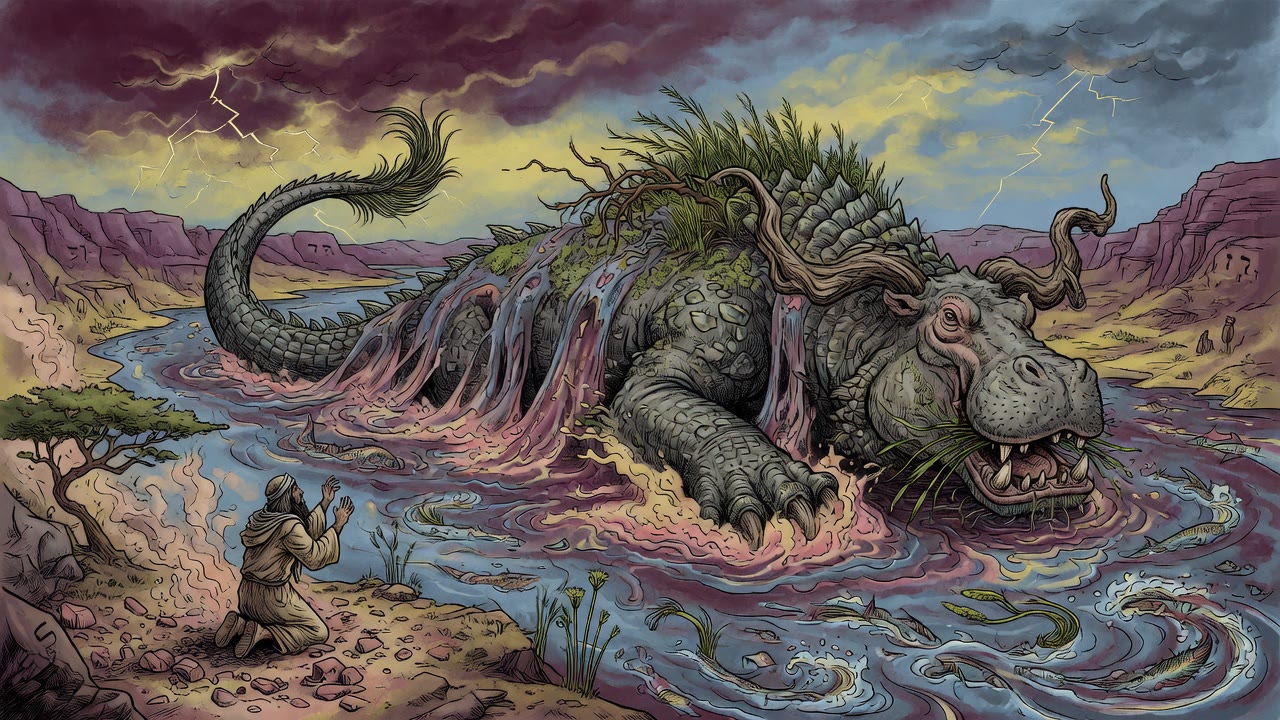
That night the striker woke scratching. Scales rose along his arms. By dawn leprosy crowned his forehead with a white pox that the bathhouse attendants would not touch. He clawed at his own skin until blood ran into the folds of his shirt, and still the growths thickened. He sent for physicians. They stood in the doorway and would not cross the threshold.
A third man chose words instead of fists. He stood in the synagogue courtyard and spread an evil report: the seer stole offerings, the seer invented visions, the seer left his wife while he flew. The rumor took root the way dry grass takes fire. By the week of the new moon the gossip's tongue blistered. Ulcers opened at the corners of his mouth. Morbid growths and discolourations mapped his throat. He tried to swallow water and could not finish the cup.
The seer, for his part, sat apart from the children of men without claiming a throne. Those above and those below had already marked him. He washed his hands before bread. He answered questions when asked. He did not explain the halls he had walked or the crowns he had seen. Exaltation sat on him the way dust sits on a traveler who has not yet shaken it off.
Offenses Falling From Heaven
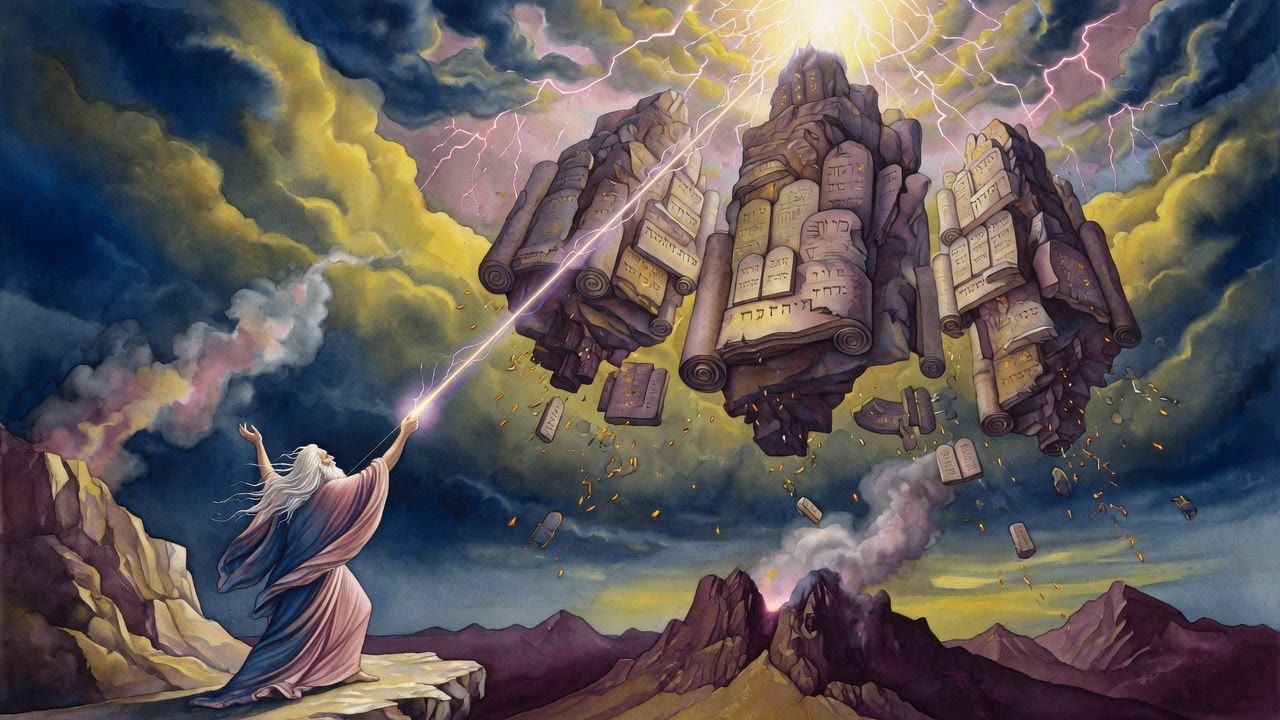
Anyone who found cause of offense in him discovered that offense answered offense. Harsh weights dropped from a height no ladder could reach. A merchant who cursed the seer for blocking a cart found his warehouse beams crack overnight. A scribe who mocked the seer's silence in the house of study spilled ink across a year's labor and could not wash the pages clean. The heavenly court of justice did not send letters. It stretched forth a hand and consumed from the world the ones who had stretched forth hands first.
The seer walked the same alleys as before. Children still pointed. Dogs still barked. Nothing about his step asked for reverence. The protection did not need his consent. It hung around him the way heat hangs around a forge after the fire is banked: invisible until someone steps too close and their skin remembers.
Men who had planned to treat him despitefully began to count their sons. One of them, a landowner with three boys and a vineyard, spat when the seer passed the press. Within a season the vineyard failed, the boys took fever in the same week, and by the next harvest the man left neither root nor branch nor yet inheritor. The neighbors did not need a prophet to connect the chain. They closed their shutters when the seer walked by, not from hatred, but from the cold math of survival.
Trumpets Three Times a Day
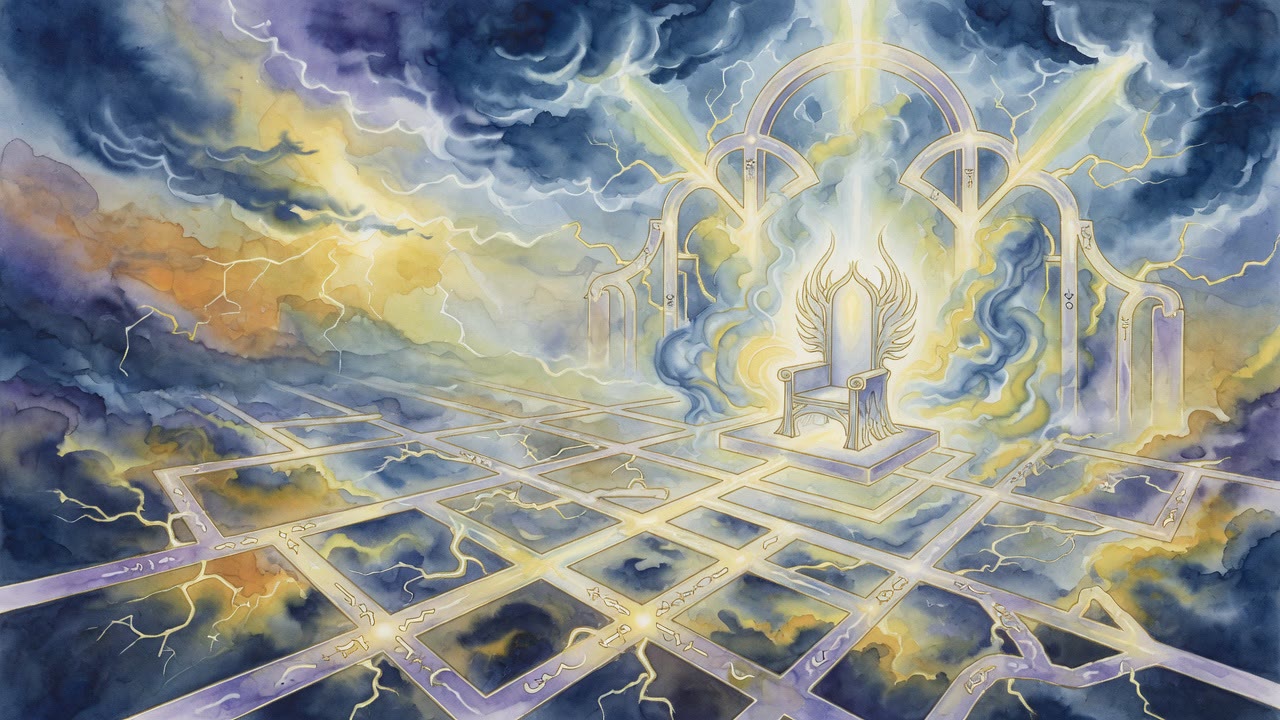
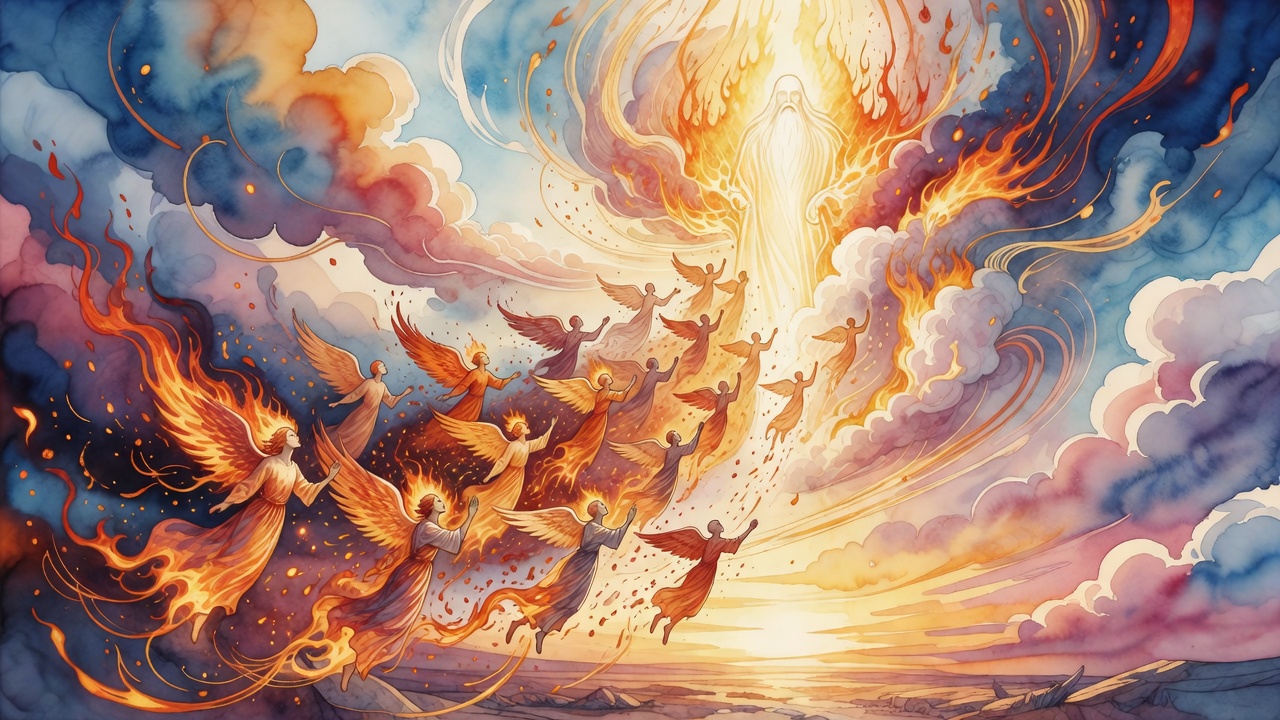
Above the town, beyond the roof beams and the thin blue of the afternoon, the heavenly court of justice kept a schedule. Three times each day they blew the trumpets thrice. The sound did not always reach human ears, but the seer sometimes stopped mid-step and tilted his head as if listening to a drum far under water.
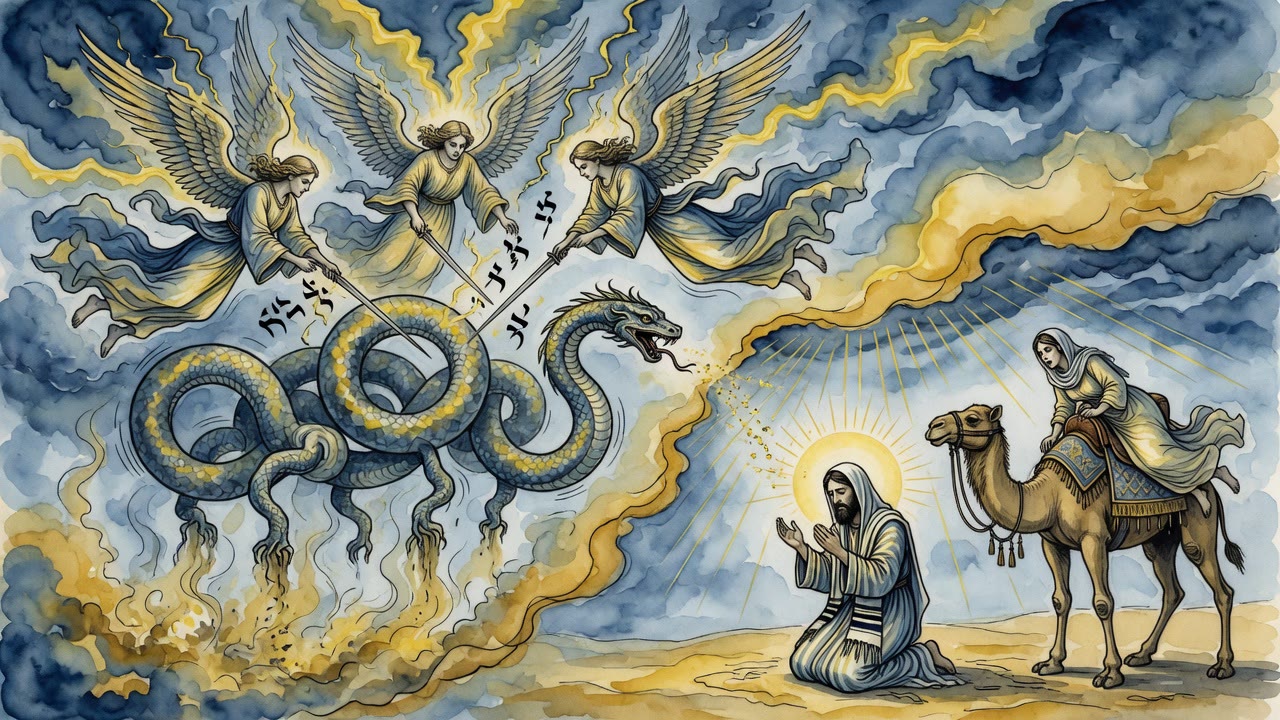
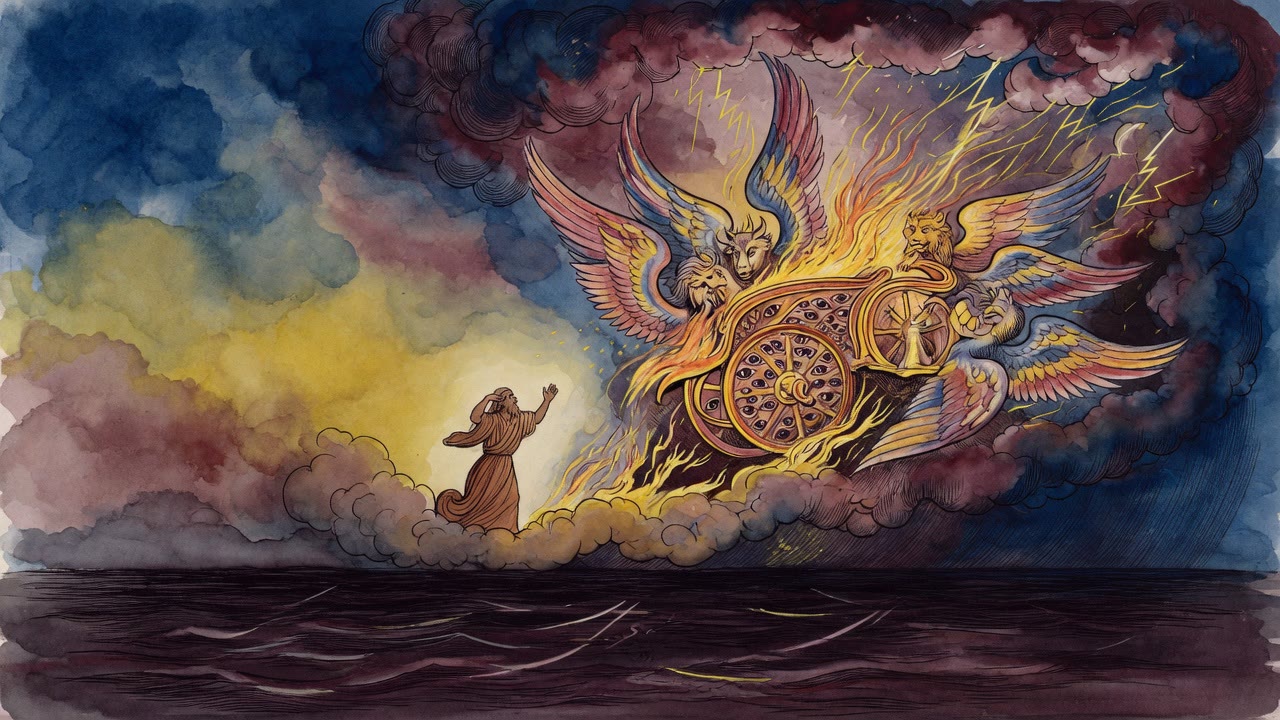
The decree was not subtle. They excommunicated with the lesser ban, then with the greater ban, naming the target with the patience of a ledger. Let him be cut off, they said, to Tazsh the Lord God of Israel, to Him and to the throne of His glory and to the crown upon His head, to the heavenly court and to the earthly court, to all the host of heaven and to all its servants: the one who stands before a man beholding the Merkavah (מרכבה), the divine chariot, and who abandons him.
Abandonment was the deepest cut. Contradiction darkened eyes. Slander ate flesh. A blow brought scales. But to stand beside the visionary in the hour after the ascent, when his knees still shook and his mouth still tasted metal, and then to step away as if the journey had never happened, that brought the double ban. The court did not forgive the friend who turned his back while the seer's pupils still held fire.
One companion had climbed with him part of the way and fled at the first gate. When the seer returned alone, that companion poured wine and laughed too loudly and would not meet his gaze. By the third trumpet of the following day the companion's name was already spoken in the ban above. No mercy was reserved for him. His judgment was determined while he still wiped the wine from his beard.
What the Seer Could Not Refuse
The seer tried once to wave the protection off. He stood in the street and told a boy who had thrown a stone that the boy was only a boy. The stone had missed. The seer smiled. That night the boy's father, who had put the stone in the child's hand, woke with a fever that would not break until he walked barefoot to the seer's door and asked pardon on the threshold. The seer granted it. The fever broke at dawn. The protection, it seemed, answered intention as much as impact.
He was set apart without a crown men could see. Honored above and below meant that angels and mortals both moved differently near him: the former with assignment, the latter with caution. He slept little. When he slept he woke with his fists closed, as if he had been gripping a rail on a road that had no rails.
Neighbors learned the grammar of approach. Do not gainsay him to his face. Do not despise him in the market. Do not abandon him in the hour after the vision when he still needs a cup of water and a quiet room. The rules were not posted on the study-house door. They were written in dark eyes and empty houses and the memory of trumpets no one quite heard.
The Seat That Remained
Years later the seer died in his bed with his mouth open as if still listening. The town buried him before noon. The challenger who had first hardened his face was already blind and begged to walk behind the bier. No one stopped him. He counted steps with a stick and stumbled on every third stone.
That evening the trumpets still blew on their schedule. The ban against abandoners did not end with the seer's last breath. The heavenly court kept the ledger open for anyone who had stood before a beholder of the chariot and walked away. The stool in the study house stayed empty for a season. Dust settled on it in a clean circle, as if even the air preferred not to sit there.
Men who had planned clever insults forgot the wording. Women who had gossiped at the well found other subjects. The boy who had thrown the stone grew up and taught his own sons a different game. Somewhere above the roof tiles, three times a day, the thrice-blown call still named the crime: not curiosity, not fear, but the particular cold of turning one's back on a human being who has just looked where flesh is not built to look.
← All myths