3 min read

When God Asked the Angels to Ask Israel's Court

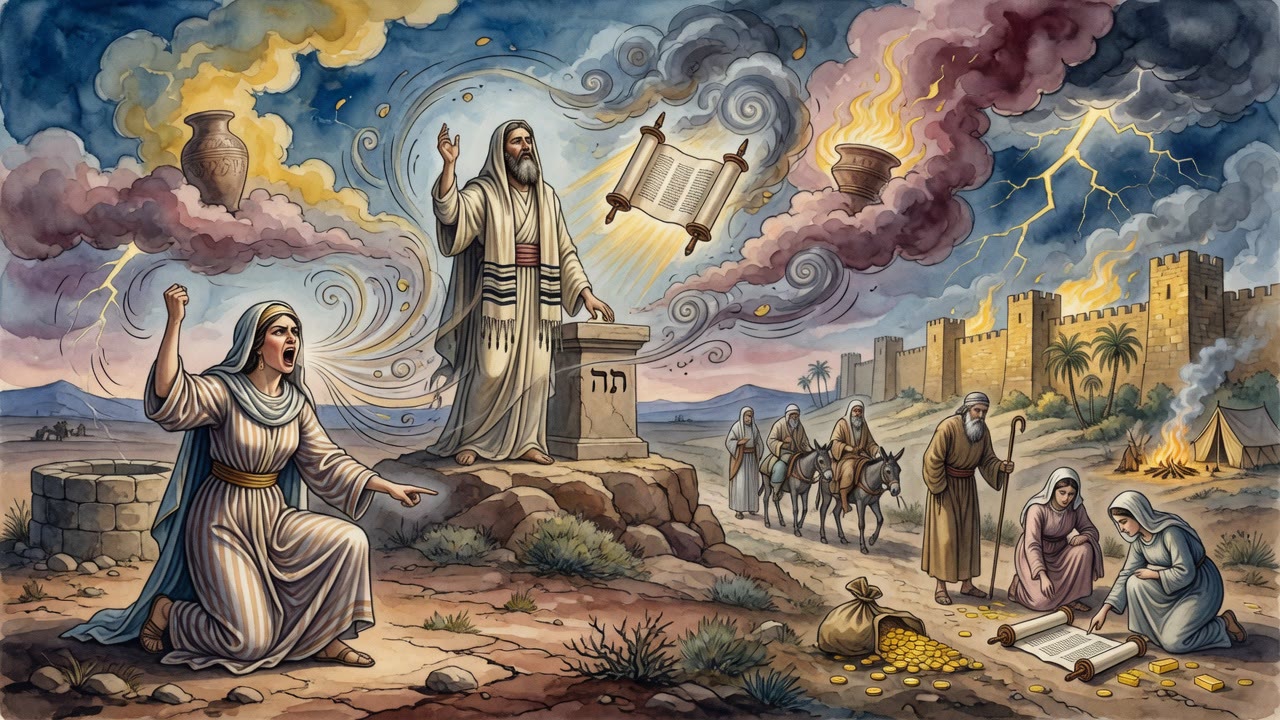
Heaven set up the New Year court only after Israel's sages named the day, and Jacob took the moon while Esau took the sun.

Curated by Arthur · Told by Maggid ·
Table of Contents
  1. This Month Shall Be for You
  2. Jacob's Moon and Esau's Sun
  3. The Hidden Month of Pardon
  4. Platforms Raised and Taken Down

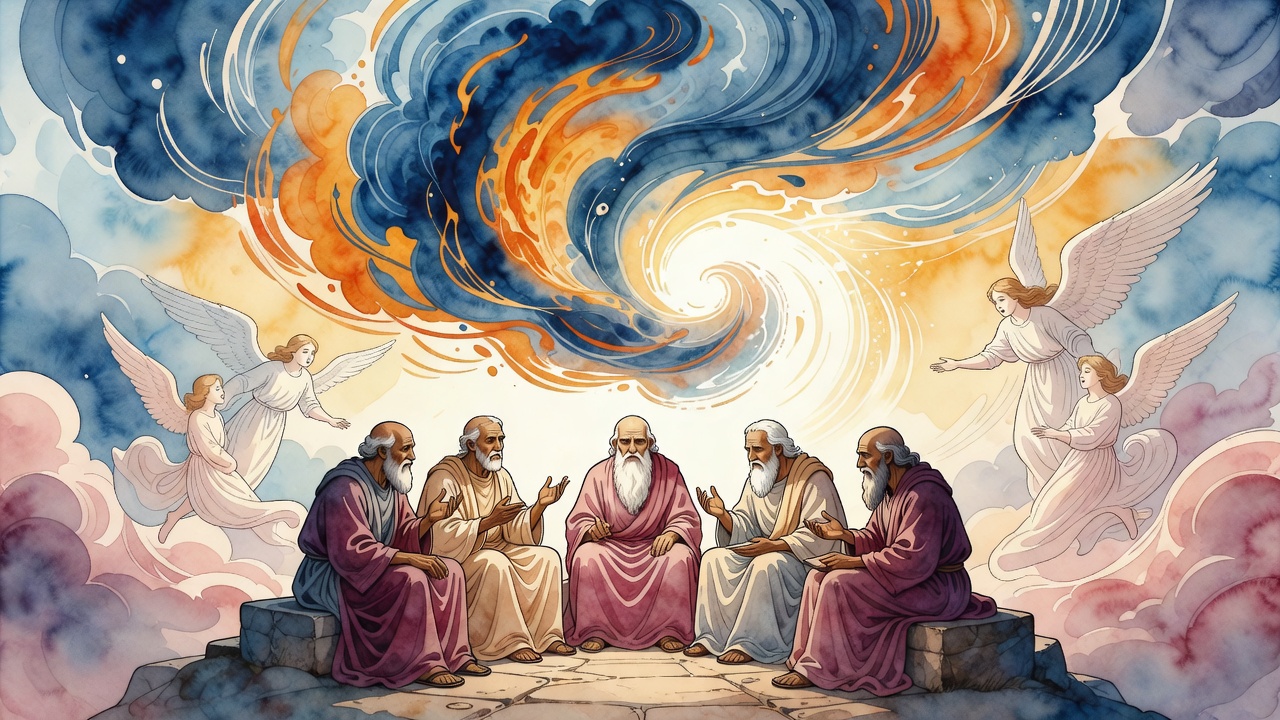
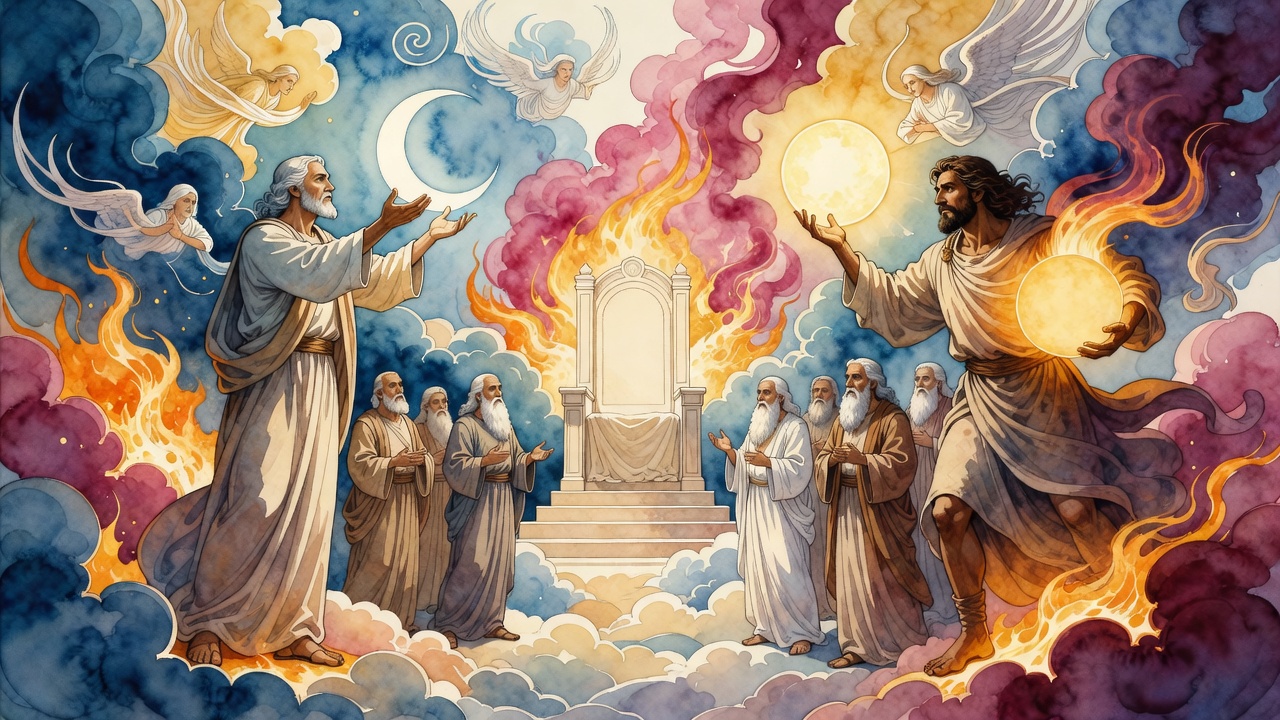
The angels crowded around the throne and asked when the New Year would fall.
When God Asked the Angels to Ask Israel's Court Click for full size

God did not open a celestial ledger.

He told them to go ask the court on earth.

This Month Shall Be for You

The angels crowded around the throne and asked when the New Year would fall. God did not open a celestial ledger. He told them to go ask the court on earth. Below, human sages watched the sky, counted days, and named a date. Only then did Heaven set up its courtroom. If the court below delayed, God told the angels to take the platform down and reconvene tomorrow.

The sources fix the moment with a name, a number, a place, or a law that will not bend for convenience or for fear.

Jacob's Moon and Esau's Sun

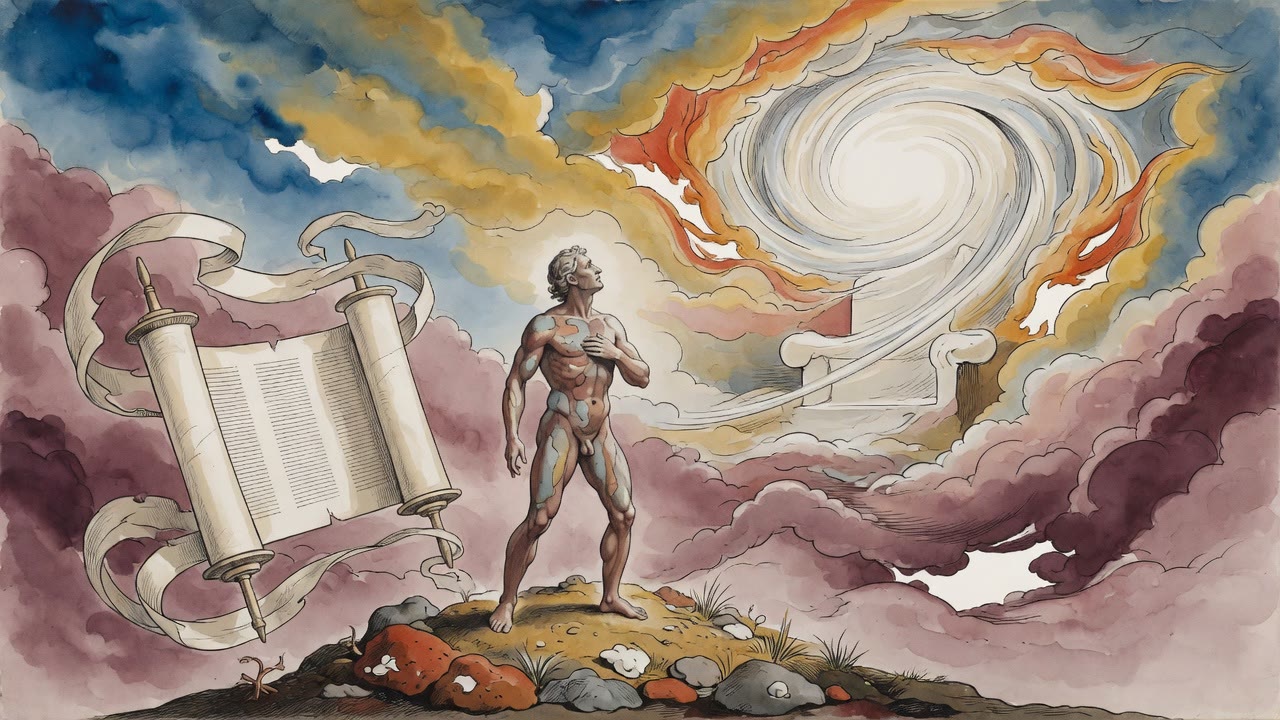
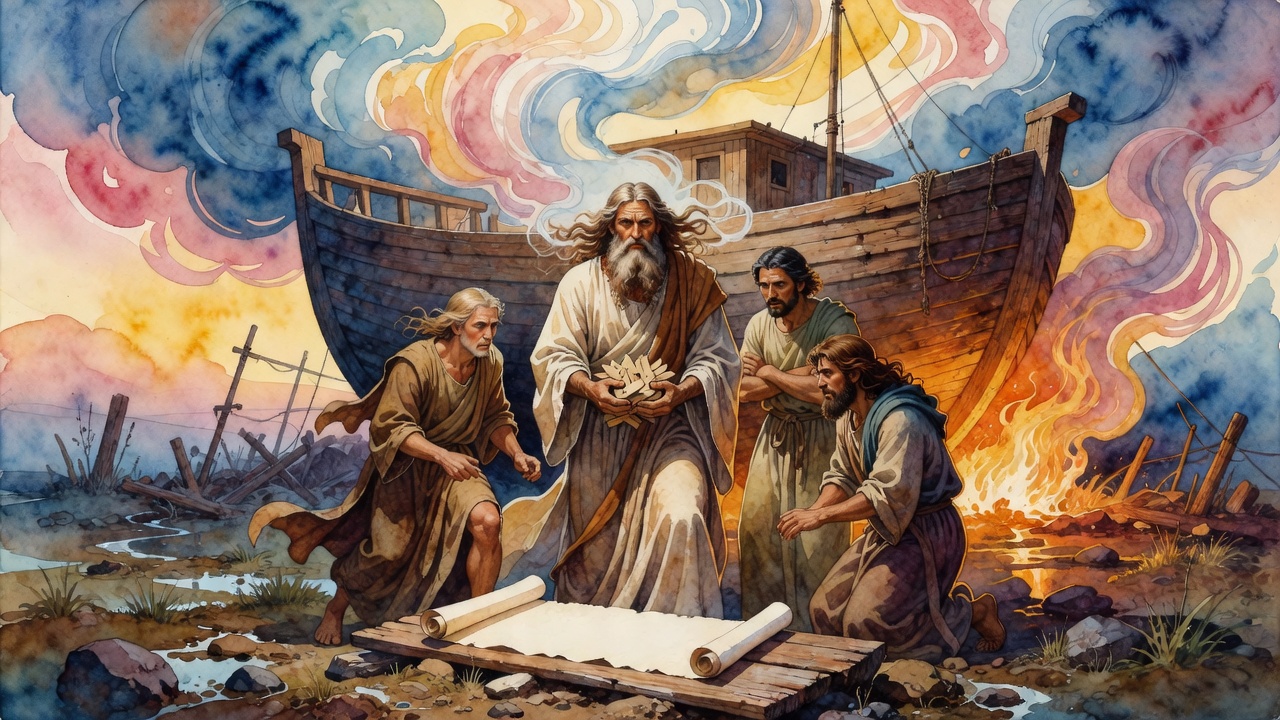
This month shall be for you (Exodus 12:2). The phrase for you became an act of trust. God handed Israel the calendar like a father handing tools to a child come of age: timepiece, watchtower, signet ring, keys, craftsman's case, physician's remedies. Rabbi Hoshaya pressed it to the edge. When the human court declares today is the New Year, Heaven must follow. Rabbi Simon imagined angels asking God the date and God answering that even He would go ask the earthly court.

The Hidden Month of Pardon

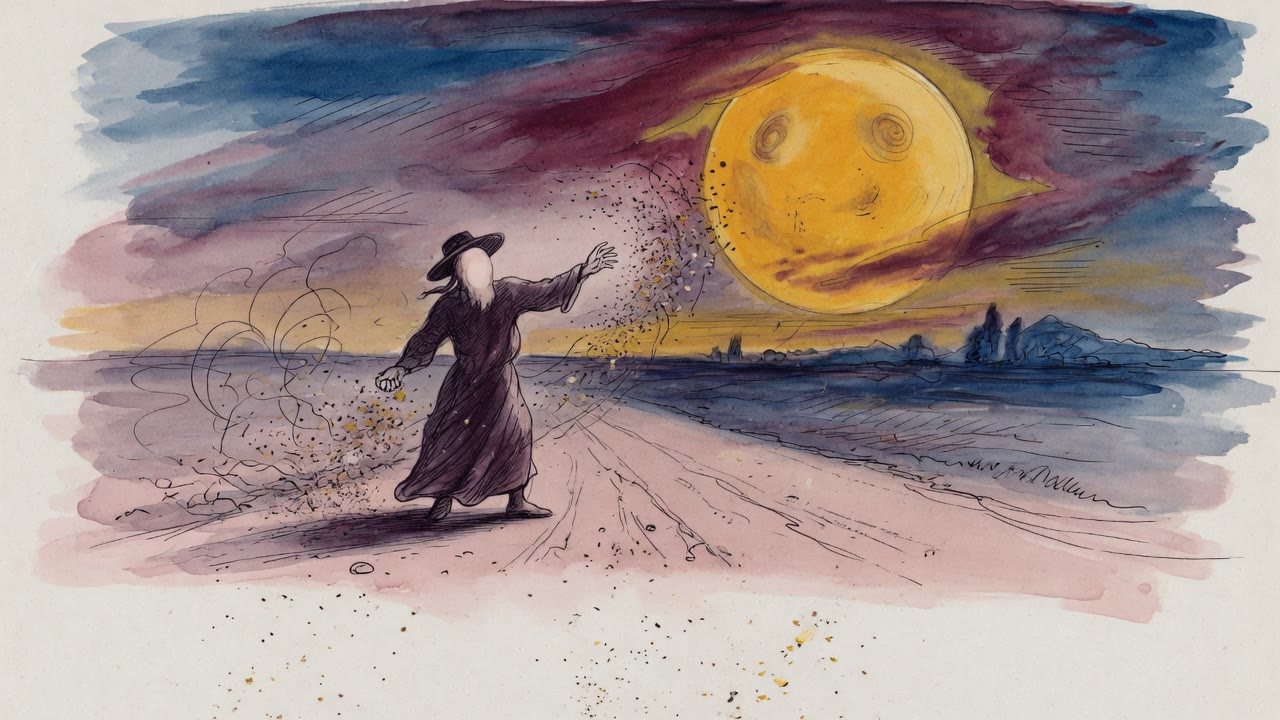
Rabbi Yohanan sealed it: appointed times of the LORD which you shall proclaim. If Israel proclaims them, they are God's festivals. Rabbi Abin the Levite asked why the moon. The great measures himself by the great, the small by the small. Esau the elder takes the sun. Jacob the younger takes the moon, which disappears and is renewed.

Platforms Raised and Taken Down

Rabbi Berekhiah lingered over keseh, concealment (Psalms 81:4). Tishrei hides its feast at the dark new moon. Inside the name he heard tishrei v'tishbok, may You release and forgive. The shofar (the ram's horn sounded on holy days) sounds under a thin moon. Sacred time rises from a human declaration.


← All myths
From the tradition

Sources

3 sources

The texts behind this telling. Some cards carry a translation of the source; others are our own retelling of it, and each card says which. Every card links out to the original.

Pesikta DeRav Kahana 5:13Pesikta de-Rav Kahana

Translation of the source text.Pesikta de Rav Kahana according to an Oxford manuscript, Dov Mandelbaum ed., N.Y. 1987 · CC-BY

"This month shall be for you" (Exodus 12:2) - it is handed over to you. Rabbi Yehoshua ben Levi said: it is like a king who had a timepiece, and when his son came of age he handed over to him his timepiece. Rabbi Yose son of Rabbi Hanina said: like a king who had a watchtower, and when his son came of age he handed over to him his watchtower. Rabbi Aha said: like a king who had a signet ring, and when his son came of age he handed over to him his ring. Rabbi Yitzhak said: like a king who had many treasuries and a key for each one, and when his son came of age he handed over to him the keys. Rabbi Hiyya bar Abba said: like a craftsman who had tools of his trade, and when his son came of age he handed over to him his tools. And the rabbis said: like a physician who had a case of remedies, and when his son came of age he handed over to him his case.

Rabbi Hoshaya taught: the court below decreed and said, "Today is the New Year," and the Holy One, blessed be He, says to the ministering angels, "Set up the platform, let the advocates stand and let the scribes stand, for the court below has decreed and said, today is the New Year." If the witnesses were delayed in coming, or the court decided to intercalate the year to the next day, the Holy One, blessed be He, says to the ministering angels, "Remove the platform, let the advocates be removed and let the scribes be removed, for the court below has decreed and said, tomorrow is the New Year." And what is the reason? "For it is a statute for Israel, an ordinance of the God of Jacob" (Psalms 81:5) - if it is not a statute for Israel, then, as it were, it is not an ordinance of the God of Jacob.

Rabbi Pinhas and Rabbi Hezekiah in the name of Rabbi Simon: all the ministering angels gather before the Holy One, blessed be He, and say before Him, "Master of the worlds, when is the New Year?" And He says, "You ask Me? I and you, let us ask the court below." And what is the reason? "For what great nation has a god so near to it as the LORD our God is whenever we call upon Him" (Deuteronomy 4:7), and "our calling" means nothing other than the festivals, as it says, "these are the appointed times of the LORD, holy convocations" (Leviticus 23:4).

Rabbi Crispa in the name of Rabbi Yohanan: in the past, "the appointed times of the LORD" (ibid.); from here onward, "which you shall proclaim" (ibid.) - He said to them, if you have proclaimed them, they are My appointed times, and if not, they are not My appointed times.

Full source
Midrash Tanchuma Buber, Bo 9:1Midrash Tanchuma Buber, Bo

Translation of the source text.Midrash Tanchuma (Buber), Public Domain, on Sefaria · CC-BY-SA

"This month shall be for you" (Exodus 12:2). You count by months (that is, by moons), but the nations of the world count by days. Said Rabbi Abin the Levite: It is the way of the world that the great one counts by the great, and the small one by the small. Esau, who is the elder, as it is said, "her elder son" (Genesis 27:15), counts by the sun, which is the great one, as it is said, "the greater light" (Genesis 1:16). Jacob, who is called the younger, as it is said, "her younger son" (Genesis 27:15), counts by the small one, by the moon, as it is said, "and the lesser light" (Genesis 1:16). Thus, "this month [shall be for you]."

Full source
Pesikta DeRav Kahana 23:6Pesikta de-Rav Kahana

Translation of the source text.Pesikta de Rav Kahana according to an Oxford manuscript, Dov Mandelbaum ed., N.Y. 1987 · CC-BY

Rabbi Berekhiah opened: "Blow the shofar at the new moon, at the concealment [keseh] for our feast day" (Psalms 81:4). None of the months is truly "the month," except the one of concealment. And none of the months is concealed, except for "our feast day." But surely Nisan is a month, and it is concealed, and it has a feast, and its feast falls on its own day? Rather, the meaning is: a month that is concealed and has a feast whose feast is on the very day of the new moon itself, and which is that? This is Tishrei. "Tishrei", it is written Tishrei because of the words "may You forgive [tishrei] and pardon [tishbok] our debts." When? "In the seventh month" (Leviticus 23:24).

Full source