Rabbi Hiyya Threw Dust at the Moon Before the Court Sat
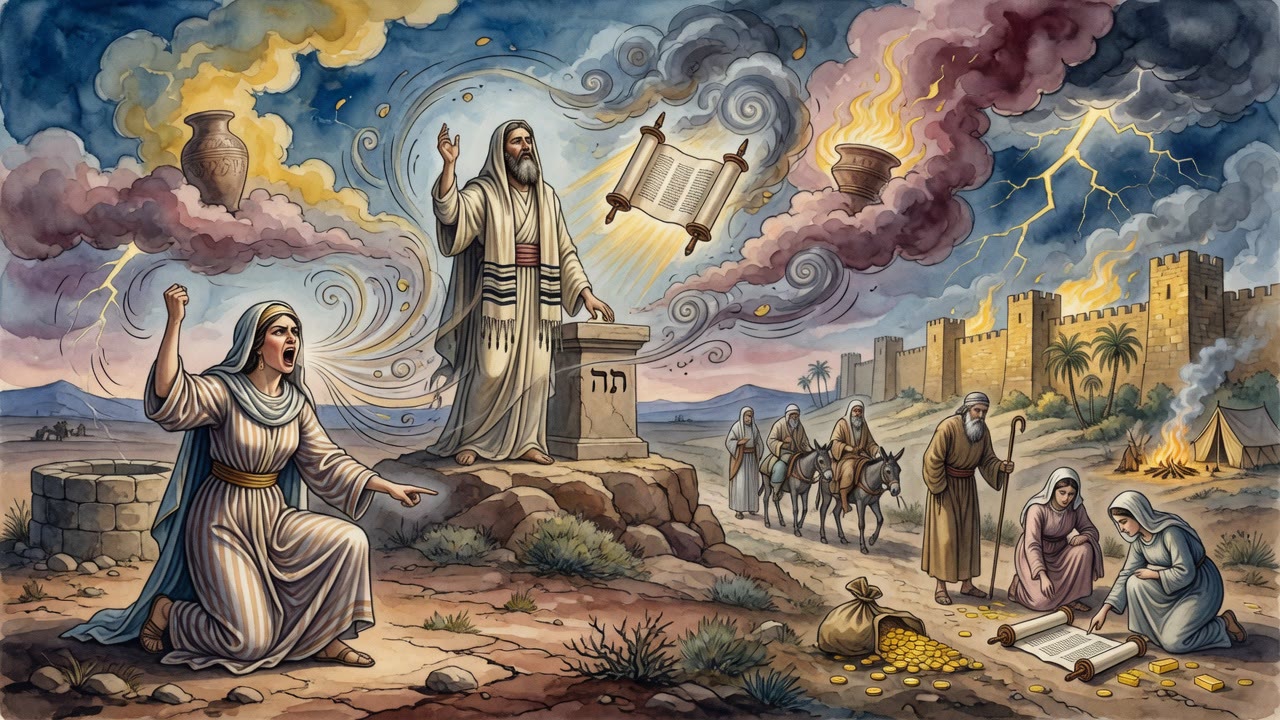
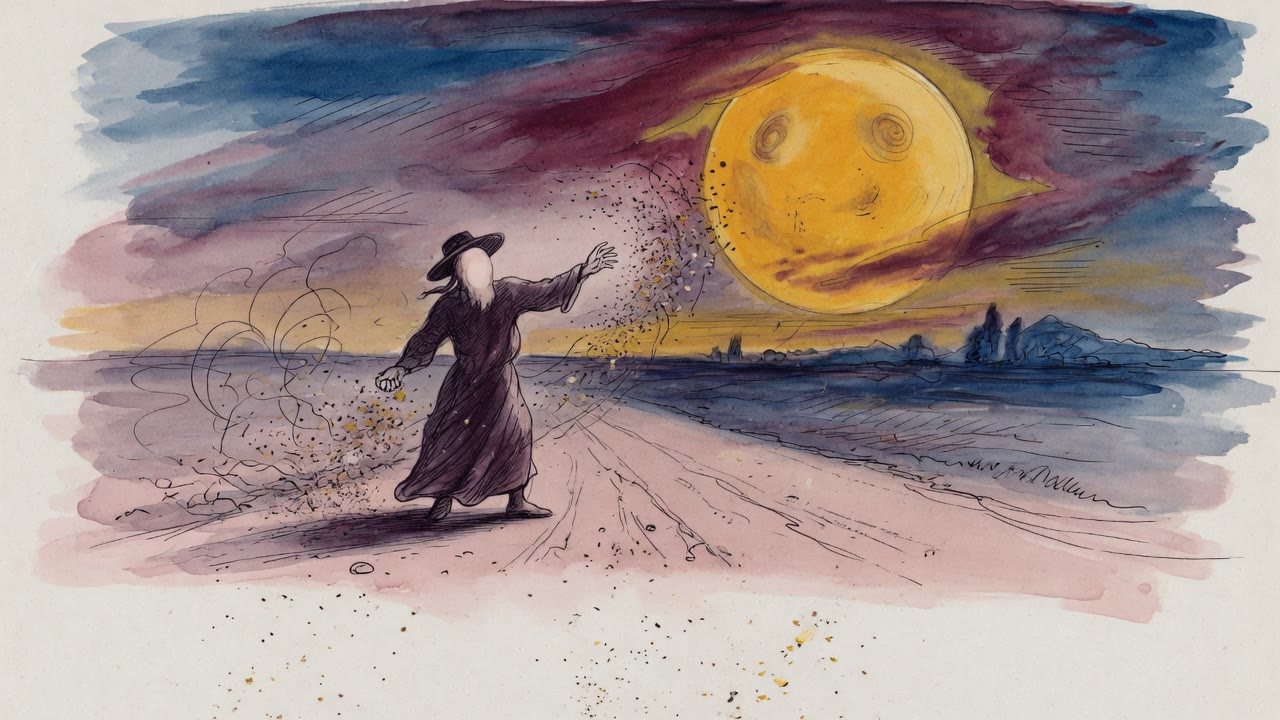
The moon blazed a night too early on the road to Rosh Hashanah, and Rabbi Hiyya filled his hands with grit and threw it at the sky.
Table of Contents
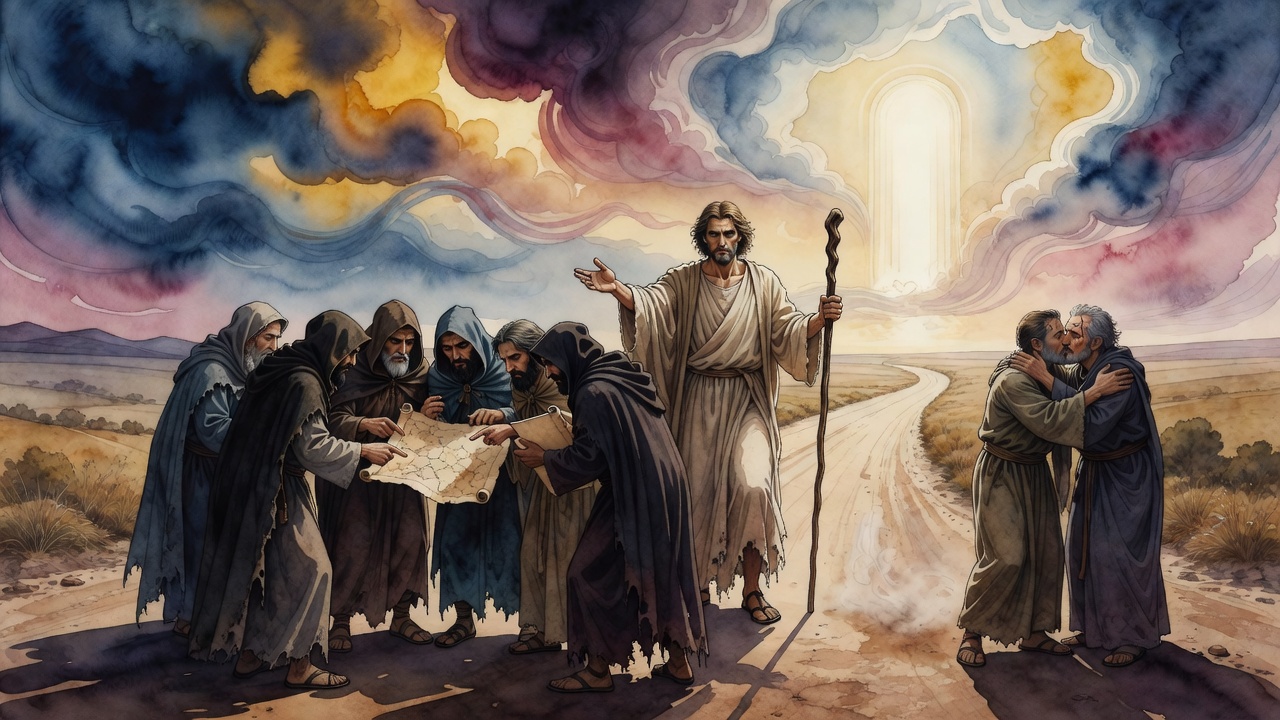
The drovers walked three mil that night and never lit a torch. Their cattle moved along the cart track in a hard silver light that laid open every rut and every loose stone, and the men kept going because nothing gave them a reason to stop. It was the eve of Rosh Hashanah. The moon burning over the road had not been declared by anybody.
 Click for full size
Rabbi Hiyya the Great came out into that light and stood in it.
Pebbles and Dust Thrown at a Sky
He bent to the roadside and filled both hands. Pebbles, and the dust that came up with them, and he threw the whole handful straight upward, then bent and filled his hands again. Grit rained back across his shoulders and caught in his beard. He kept throwing.
"Tomorrow we are to seek to renew you," he shouted at it, "and you have risen for yourself tonight."
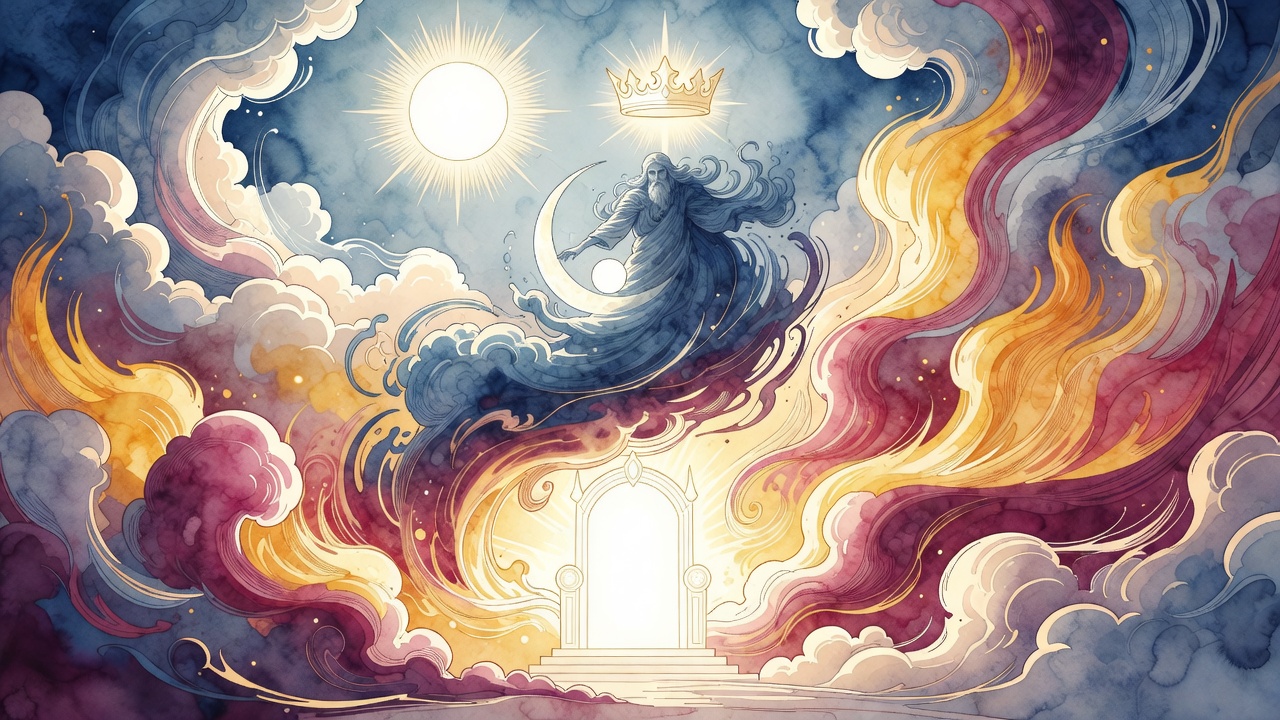
The moon went out. It did not set and it did not slide behind cloud. It was swallowed up in the place where it stood, and the road went black under the cattle, and the drovers halted with their hands stretched in front of them, feeling for animals they could no longer see. Nothing up there argued back. The moon hung under an authority it had never been invited to share.
The Light It Had Been Spending
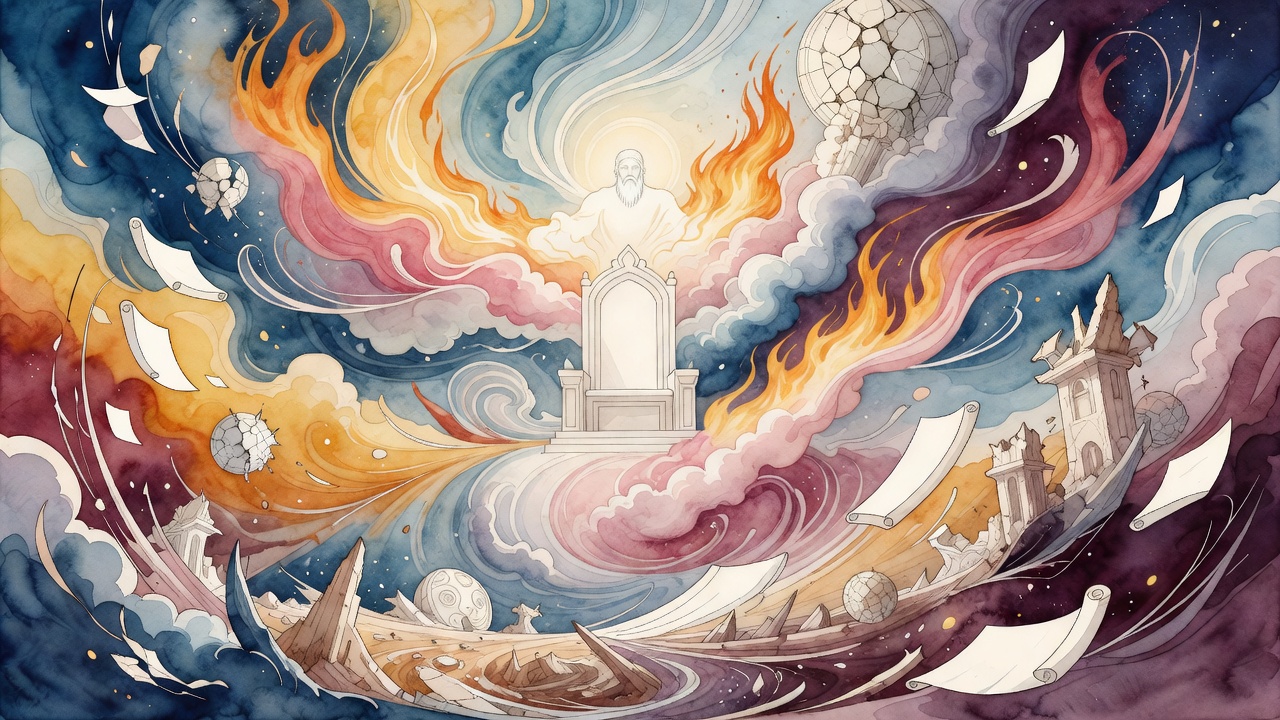
None of what went dark over that track had ever belonged to the moon. The sun does not own its fire either. The two of them run beneath a light that pours from above them and they snatch sparks off it as they go, moving at the light of arrows and the brightness of a flashing spear (Habakkuk 3:11), and of that light above, one part in a hundred was ever let down to any creature at all. The rest of it stays where the darkness is, and only the One who knows what is in the darkness (Daniel 2:22) has any account of it.
The two lamps were set in the firmament to give light upon the earth (Genesis 1:17), and that was the whole of the commission. What had spilled across the cart track was a borrowed hundredth, spent a night before the borrower had leave to spend it.
The Blessing They Could Not Agree On
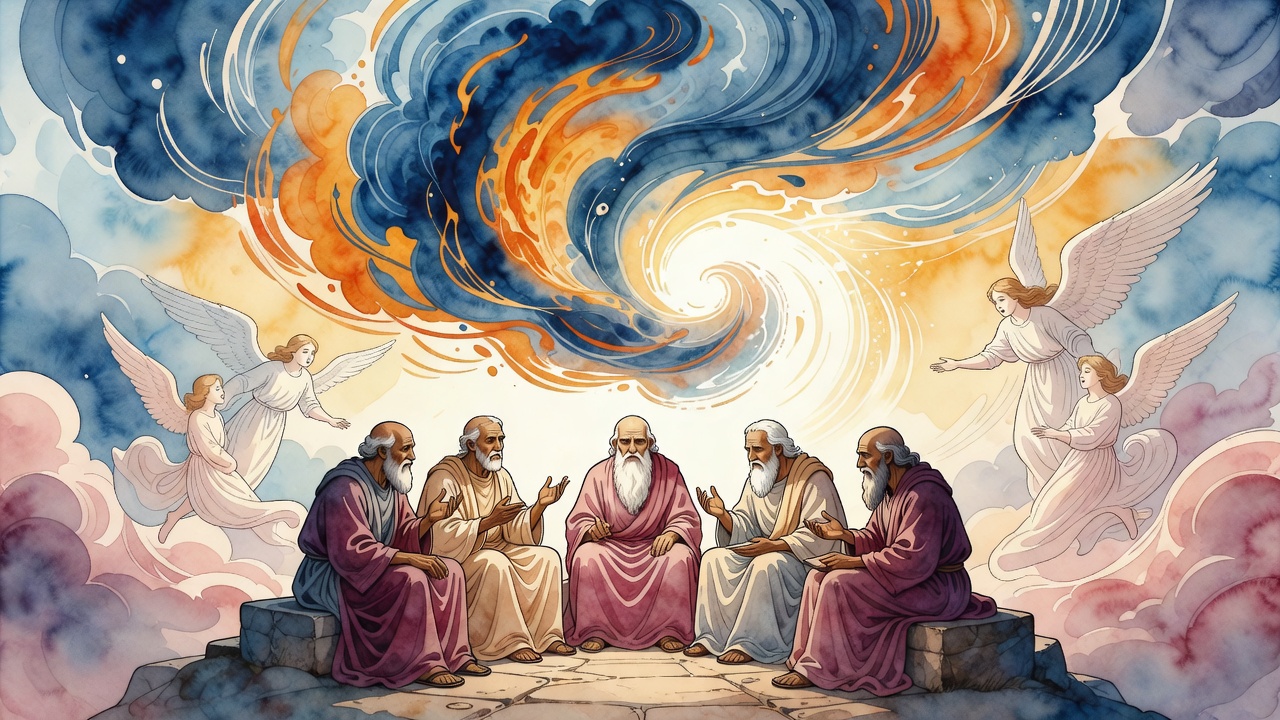
Inside the study hall the argument over what a man says at the sight of a new moon had never settled. One sage gave the words as "Blessed is the One who renews the months." Another would not take that and gave "Blessed is the One who consecrates the months." A third stood up and said the thing that emptied the room of noise.
"Blessed is the One who consecrates Israel, because if Israel does not consecrate the month, the consecration is nothing."
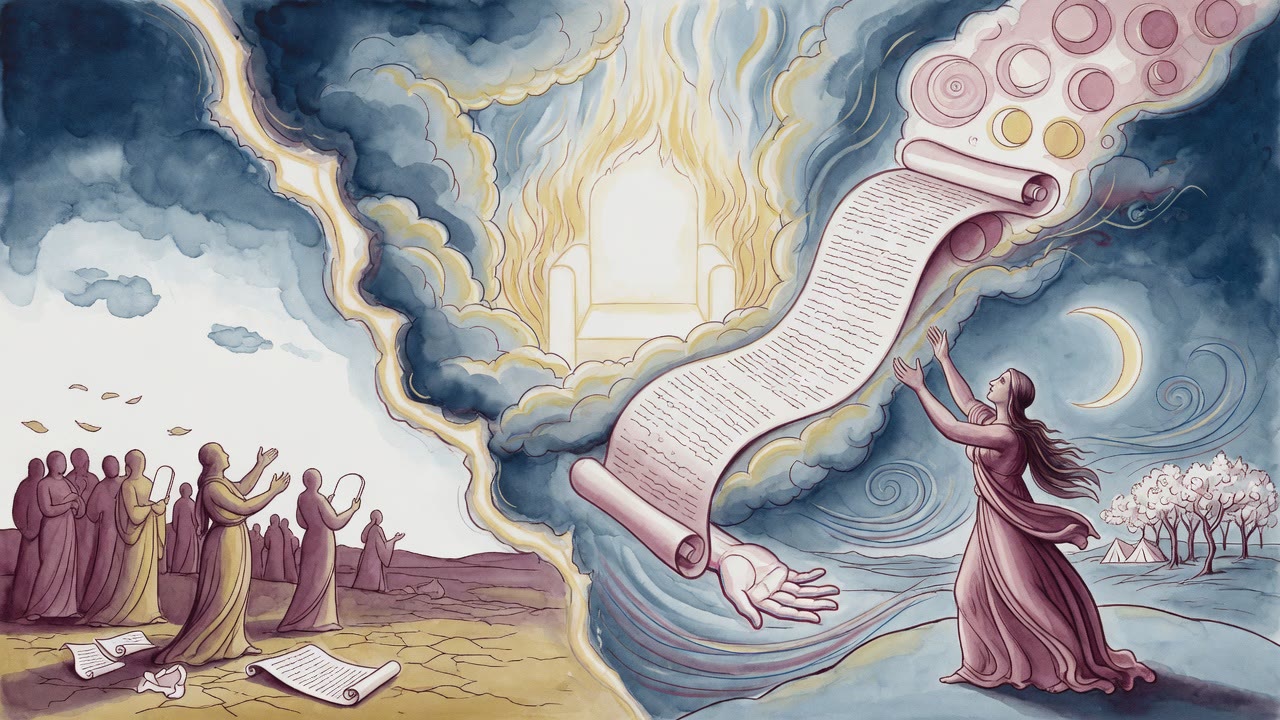
Someone pushed back at once. Heaven does not wait on a show of hands in a Galilean courtroom. The answer came in God's own words, which the sages had been carrying around for generations like a stone in a pocket. "I am holy. Do I sanctify for Myself? I sanctify Israel, and they sanctify Me." A people told "You shall be holy to Me" (Leviticus 20:26) is a people made holy, and what the holy consecrate stands consecrated. David had already sung it from the far side of the same bargain, that the Holy One sits enthroned upon the praises of Israel (Psalms 22:4).
The Bowl the Priest Filled
They settled it with a bowl.
Moses consecrated the Tabernacle once, with oil and with his own hands, and its vessels along with it. He never came back to do it a second time. Vessels cracked and wore thin, and new ones were carried in, hammered that same season, never touched by Moses at all. So a priest would take up a new bowl off the workbench and pour into it the blood meant for the altar, or the wine for a libation, or lay a meal offering inside it, and the bowl came away holy. Holiness moved out of what was carried into the thing that carried it.
If a common bowl turns holy by holding something holy, then a people already consecrated to Heaven can hold a month in their hands and make it holy. They had been doing it since Egypt. The first month was put into their keeping while the doorposts were still unmarked and the bricks were still counted, slaves given the year to name before they were given a single free day. "This month shall be for you" (Exodus 12:2). For them. Not for the sky.
The Court Sat at First Light
Morning came with no moon anywhere in it. Witnesses walked in from the outlying villages to report the thin curve they had seen before the road went black, and the court took them one at a time and pressed them about the hour and the direction and how the horns of it had leaned. Hiyya sat through the questioning with dust still in the folds of his beard.
When the last witness stepped back, the head of the court said one word. Mekudash (מקודש), sanctified. The whole assembly said it back to him twice, the way it is done, and the month came into being between one breath and the next.
That evening a thin curve rose over the same cart track, no brighter than it had any right to be. The drovers who had stood blind in the road the night before moved their herds under it without hurrying, and the light held steady the whole way, because this time it had been sent for.
← All myths