God Stoops to Abraham and Rises Only for the Poor
David shouted at heaven to stand up five times and got nothing back. Then God named the one harm that would get Him off the ground.
Table of Contents
David shouted for God to stand, and the seat stayed occupied.
 Click for full size
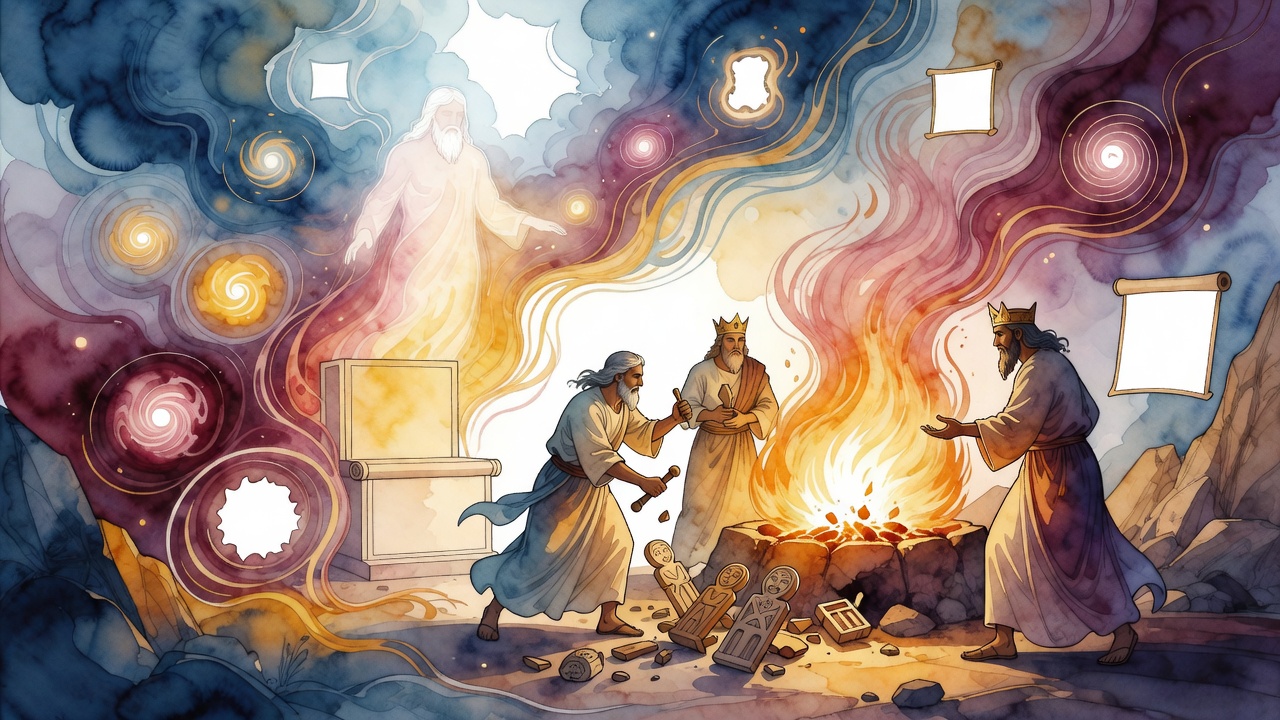
"Arise, Lord, save me." "Arise, Lord, in Your anger." "Arise, Lord God, lift Your hand and do not forget." "Arise, Lord, let no man be arrogant." "Arise, Lord, go out and meet him." Five times. Each time the throne did not move.
David Called Arise Five Times
Rabbi Pinhas, in the name of Rabbi Reuven, counted those five shouts in the psalms. A king of Israel wanted heaven on its feet for him, the way a man in danger wants a larger body between himself and the blow.
"David, my son," God told him. "Call for Me to get up as often as you like. I am not getting up."
Then He named the one condition. David had asked from a throne. The answer pointed at someone else's empty bowl.
The Presence Stood While Abraham Sat
The posture David wanted had already been given, once, to a man who did not stand up.
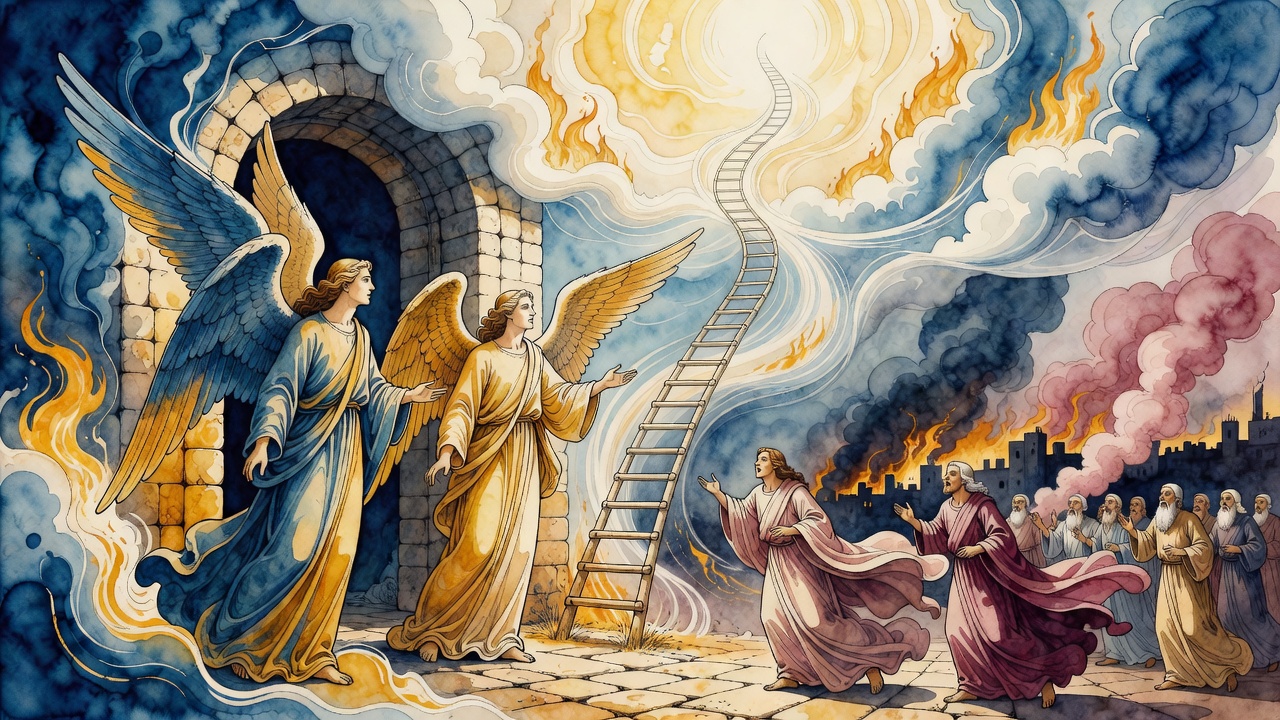
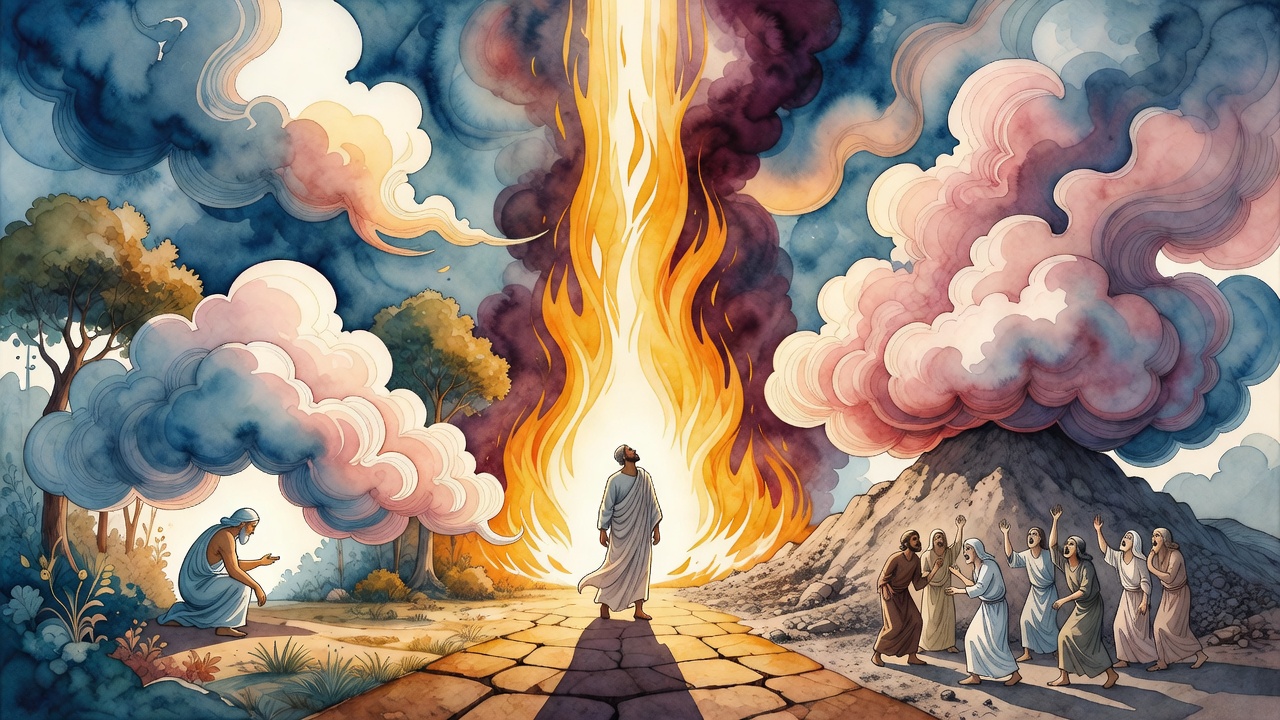
Abraham was old. It was the worst heat of the day. He sat in the opening of his tent at Mamre and did not rise. The Presence stood over him anyway. A worshipper stands and his god sits. Here the old man stayed in the shade and the Presence took the standing.
Abraham had a record behind him. A furnace in Ur that did not burn him. A famine he walked his whole household through. Four kings he chased down and beat with the men of his own camp. The psalm calls all of it a shield, and a right hand holding a man upright. The same psalm ends on a stranger line. Your humility made me great. The humility is that doorway. Abraham sat. God stooped. The heat went on, and the standing did not stop.
Adam Sat in a Garden Built on Credit
Before that doorway there was a garden, and a guest who did not yet know why he had been invited.
A king prepared a banquet and sent word to a single guest. Come in. It is all set out for you. Rabbi Nehemya said that was the garden. God did not simply put Adam down in Eden. God enticed him in, the way a host spreads everything a man could want and then waits by the door. Rabbi Yehuda heard the same verb and heard a coronation instead, the one Deuteronomy uses when Israel is told to set a king over itself. Adam was not parked in Eden. Adam was installed there.
Then Adam asked his own question. You know my sitting and my rising. You understand my thought from far away. The sitting was the garden. The rising was the morning they put him out of it. And the thought from far away was the one he could not get past. By what merit did You decide to make me at all?
The answer came from a distance he could not see across. Isaiah speaks of a bird of prey summoned from the east, a man of counsel called out of a far country. Adam was made on the credit of a man who would not be born for twenty generations. That man was Abraham, still unborn, already paying for a seat in a garden Adam would lose.
God Rose Only for the Robbed Poor
So God would stoop for Abraham in a tent door, and would not stand for David on a throne. He named the price out loud.
"Because of the robbery of the poor, because of the groaning of the needy, now I will arise."
Not for a king in danger. Not for an army massing at a border. The price is somebody else's hunger. God rises when the poor are stripped, and a man who wants heaven standing has to go look at who is being robbed in his own streets.
Rabbi Yona pushed that further than most people care to follow. As long as the poor are lying in the ashes, he said, God is lying in the ashes too. There is no throne being kept warm above the wreckage. There is a figure down in it.
Rabbi Aha found the picture for the day it ends. A rooster settles into the ash pile to sleep. When it comes up it gives that hard shudder that throws grey in every direction. That, he said, is what the rising looks like. Isaiah shouts the order at the city. Shake off the dust, get up, take your seat, Jerusalem. Zechariah shouts the other half at everyone else. Be silent, all flesh, before the Lord. Silent for what reason? Because He has been roused out of His holy dwelling. Nothing about it is quiet, and none of it starts until the ash heap is empty.
Jacob Sent Word Down the Road to Seir
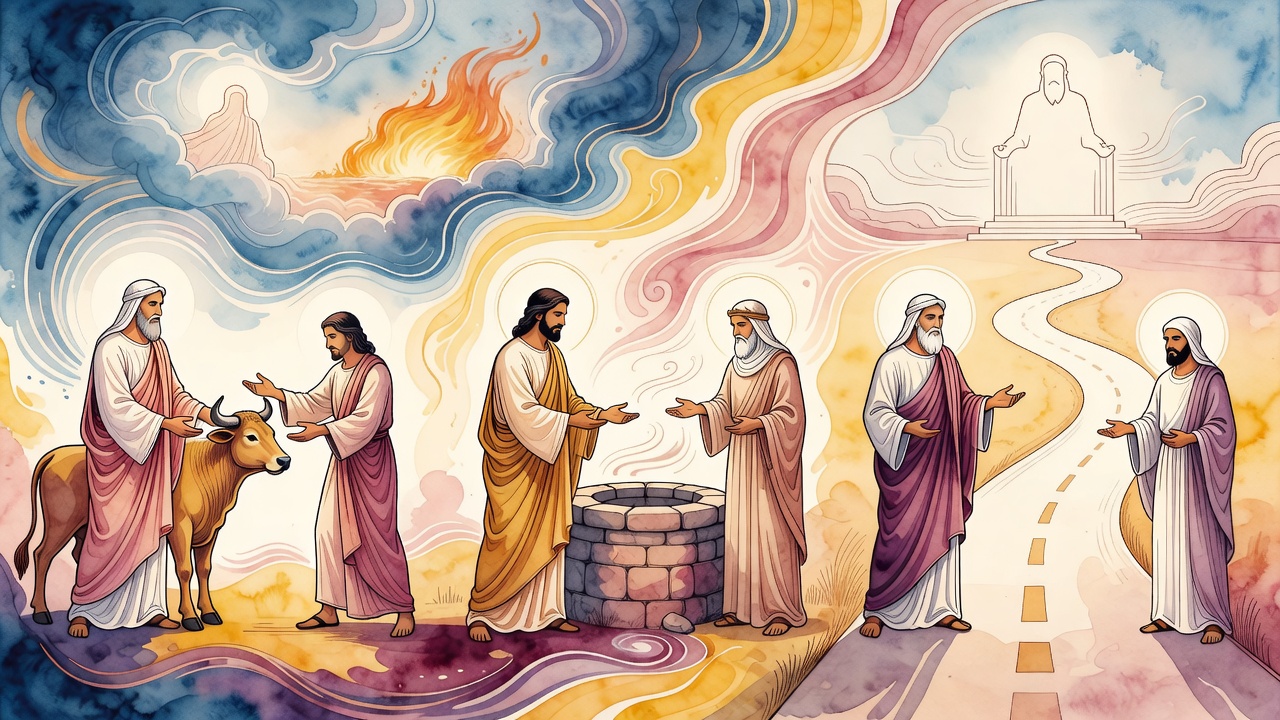
All of that argument hangs off one verse about a frightened man. Jacob sent messengers ahead of him to his brother Esau, into the land of Seir, the open country of Edom, and he told them exactly what to say. So says your servant Jacob.
He was buying safety in advance. He wanted heaven on its feet for him, and he wanted it settled before he had to stand in front of his brother.
What came back was flat. He was going on his way, God said. Then you sent to him, and called yourself his servant.
Esau had been headed somewhere else. The messengers turned him around. Jacob got the meeting he had paid for with a word he should not have spoken, and God still did not rise for a man arranging his own rescue. The poor were still in the ashes. The rooster had not yet shaken them off.
← All myths