When Jerusalem Grew Too Narrow for All Its Rising Dead
In the age of resurrection the righteous rise in such numbers that Jerusalem itself cries the place is too narrow, and the walls begin to move.
Table of Contents
 Click for full size
The Dead Rose Faster Than the Walls Could Hold
The soil of the valley split, and the first of the righteous stood up out of it. Dust ran off his shoulders. He blinked at a sky that had been waiting for him. Behind him a hundred more broke the surface, then a field of them, then more than any field could hold. They had kept faith through fire and exile and long forgetting, and they came home the only way left to them, straight up through the ground.
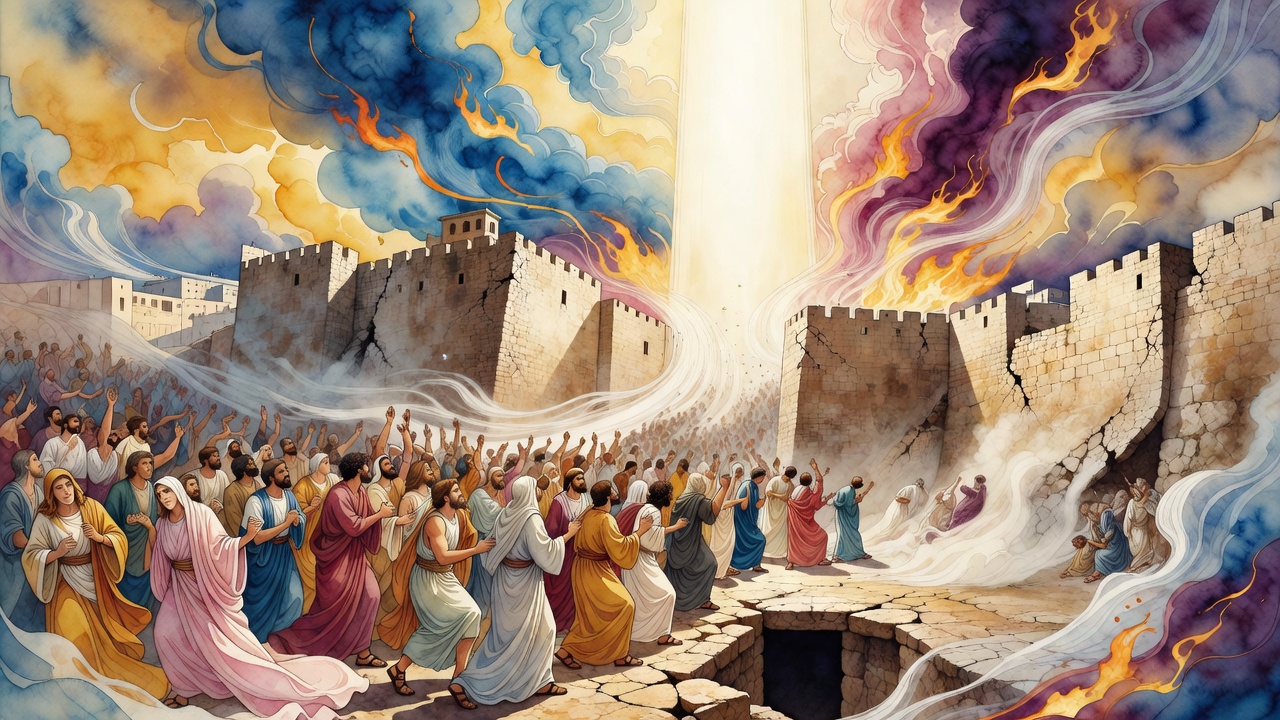
The gates of Jerusalem stood open to receive them. That was the trouble. The gates had always been wide enough. A city built for pilgrims three times a year knew how to swallow a crowd and never choke. But this was no festival crowd. This was every generation at once. Every mother who had died with a prayer half-said. Every child of the covenant the nations had buried far from the hill. They pressed toward the walls in numbers no census had ever counted, and the old stones began to feel the weight of them.
The City Cried That Its Gates Were Too Narrow
Somewhere inside the crush a voice went up, and it was the city's own. Jerusalem spoke. "The place is too narrow for me," she said. "Give me room where I may dwell."
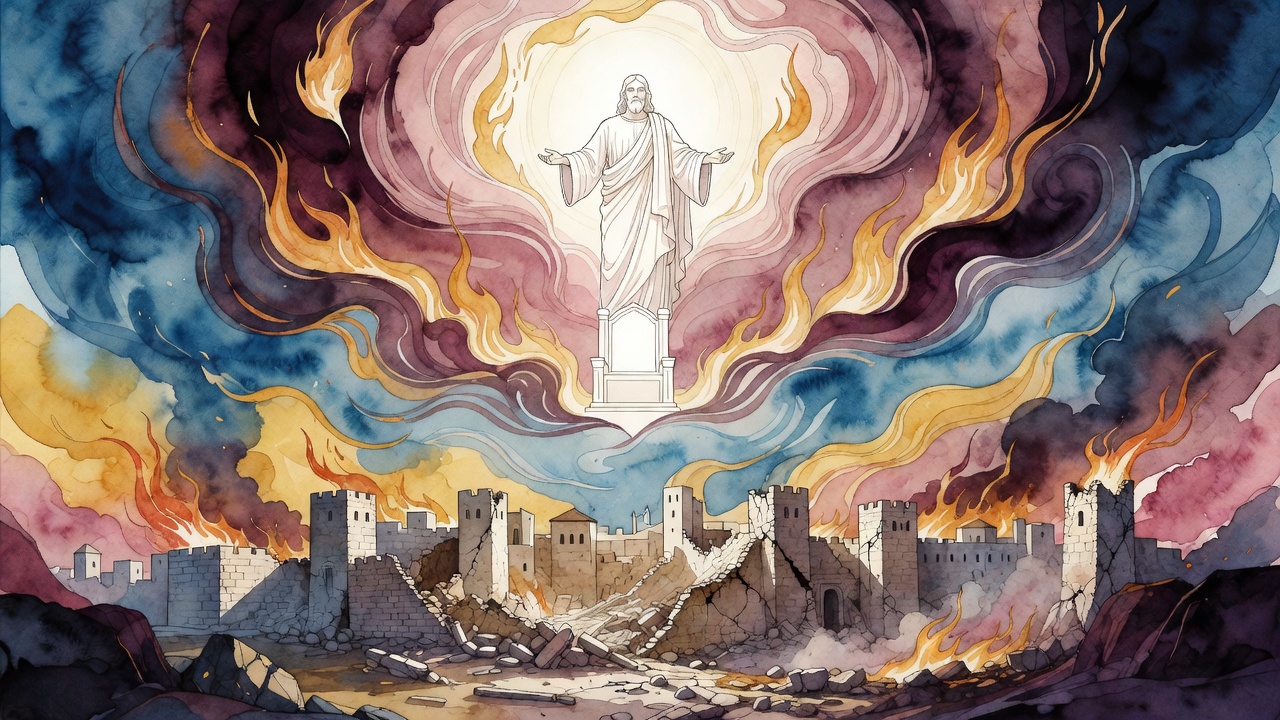
The walls did not fall. They moved. Jerusalem spread on every side in the shape of a fig, narrow at the base and wide as it rose, and the streets ran out past every border the mapmakers had ever drawn. Northward the edge of the city kept going. It crossed the fields, crossed the old frontier, and did not stop until it reached the gates of Damascus. And still the risen came. So the city opened what it had, courtyards and cellars and the cool shade beneath its own expanding weight, and the newly raised lay down and rested underneath it, gathered in at last, sheltered by the thing they had died longing for.
It Climbed the Sky Toward the Throne
Outward was not enough. The city began to climb.
Course by course Jerusalem lifted off her foundations and ascended, past the roofs of the world, past the birds, past the clouds, up and up until her highest stones stood level with the Throne of Glory. Around all of it God moved to build a defense. Not a rampart of rock this time. "I will be to her a wall of fire round about," He said, and a ring of flame rose and closed over the whole vast height of her. The risen multitude now lived inside a city walled in burning light, and no army that had ever sacked her could come within reach of it again.
The Stolen Acacia Trees Came Back to the Soil
Then God bent to the older wound, the one in the ground itself. When the armies had come in the years of ruin they had not stopped at breaking walls. They had gone at the trees. They had torn the acacias out of the earth by the root, every last one, hauled the timber off as spoil, and left the hill stripped and bare. For generations after, the prophets had called the holy place a desert, not because sand had drifted over it but because everything living had been dragged out of it. Now the debt came due. Into that desert God set cedar and acacia once more. He lowered tree after tree back into the exact soil it had been stolen from and pressed each root home, until the bare hill of exile stood dark and green and rooted, as if no hand had ever uprooted a thing.
The Footsteps Came, and the Old Offerings Rose Again
Into the green, into the fire, into the risen thousands, came a sound the city had ached for across all her long ages of waiting. Footsteps. The Messiah walked her streets at last, in a world finally stretched wide enough and raised high enough to hold everyone who had ever kept faith.
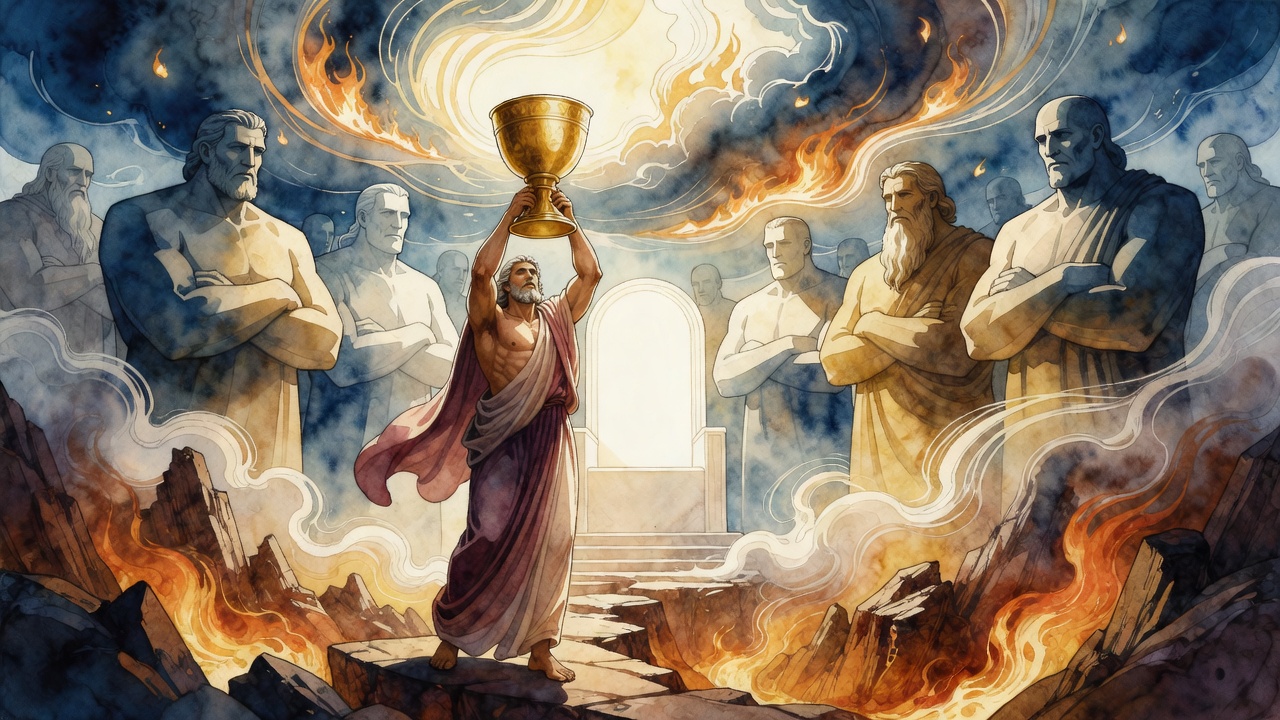
And behind the footsteps the old service began again. The risen carried their offerings up to the height where the city met the Throne, and the smoke rose, and not one thread of it was lost. Every gift any of them had ever brought, in the world that was and in the world now come, rose up and was received and was pleasing. "The offering of Judah and Jerusalem will be pleasant," ran the ancient word, "as in the days of old and as in former years." The days of old had come back. And this time they had brought all their dead with them.
← All myths