Jacob Offered to Buy Esau's Entire Share of the World to Come
Jacob offered Esau the whole of this world for a share of the next, and Esau's friends counted the price in someone else's four hundred years.
Table of Contents
 Click for full size
The Question Jacob Set Between Them
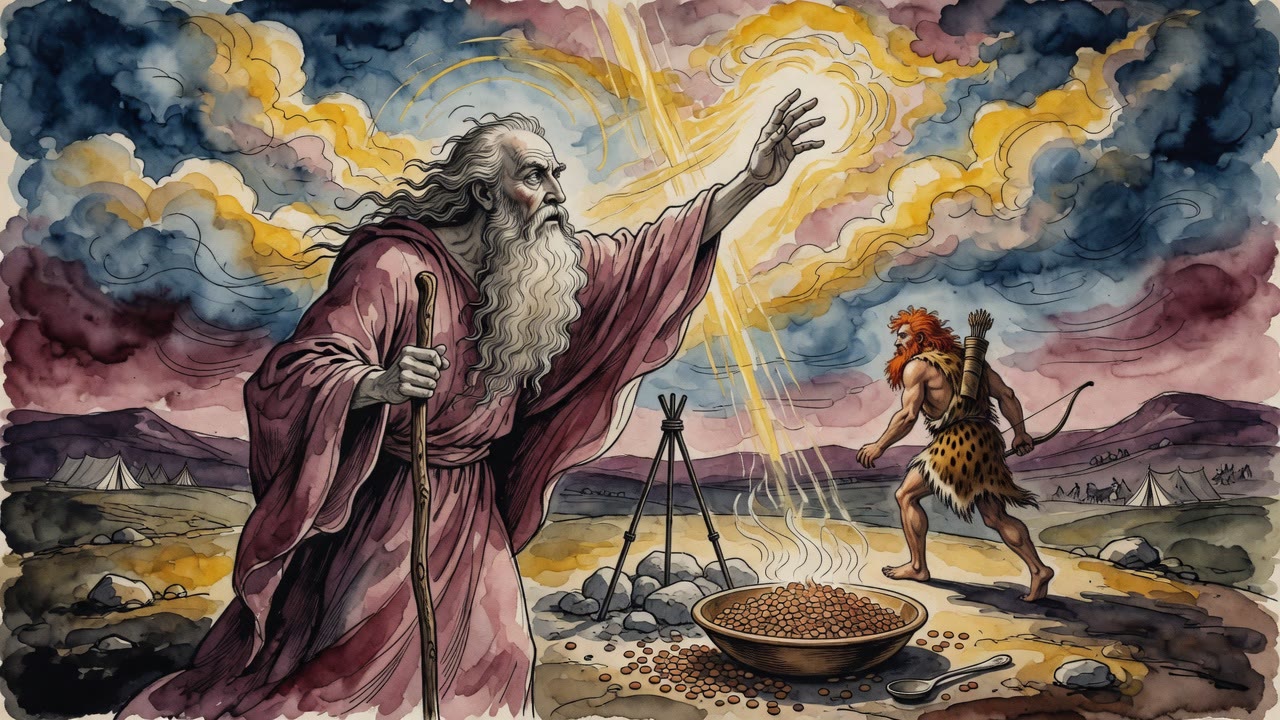
Two brothers sat across a low table, and the same womb had made them nothing alike. Jacob kept his eyes on his own hands. Esau sprawled, restless, a man who would rather be out after a deer than sitting still under a roof.
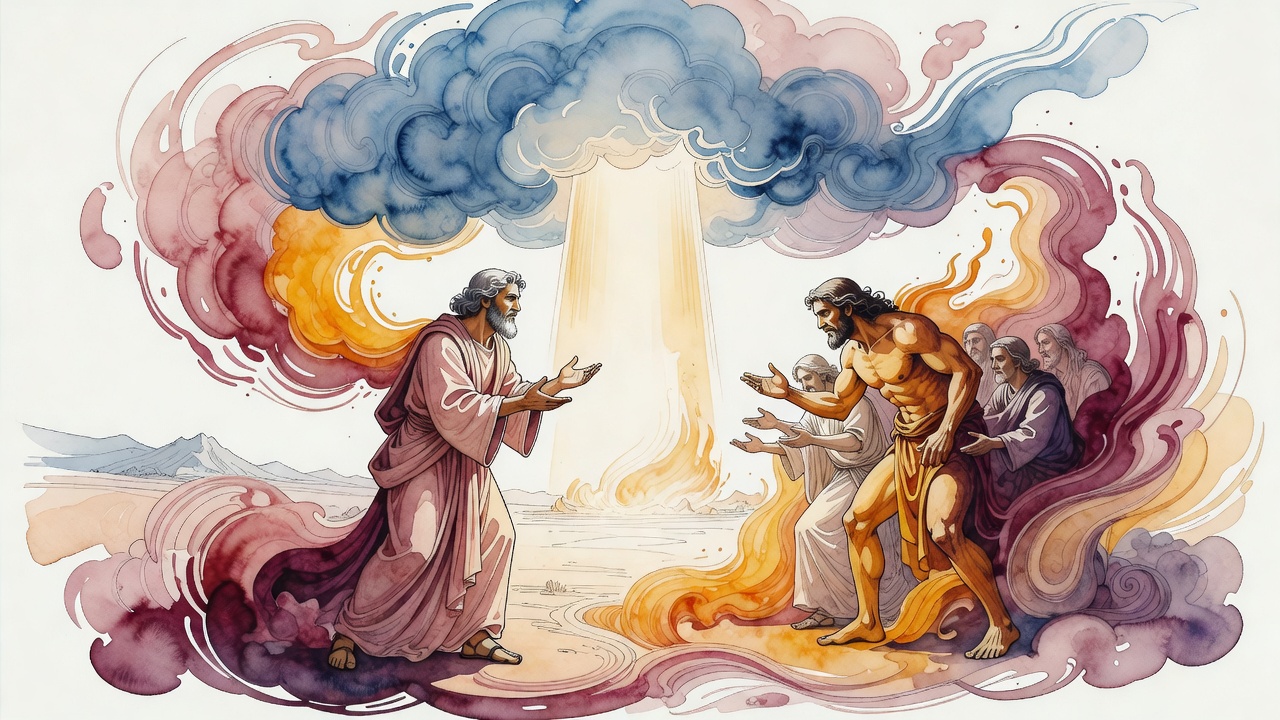
Jacob spoke first, and he did not open with the flocks or the wells. He opened with the end of everything. "If we act like other men," he said, "what shall we do on the day of the Lord, the day on which the pious will receive their reward, when a herald will proclaim: Where is He that weigheth the deeds of men, where is He that counteth?"
He wanted to know what would set the two of them apart from every ordinary man who ate and slept and was buried and forgotten. He was after the accounting that comes when the ledger of a whole life is finally opened and read aloud.
Esau Wanted the Dead to Come Back First
Esau laughed the way a hunter laughs at a story about a lion nobody has ever seen.
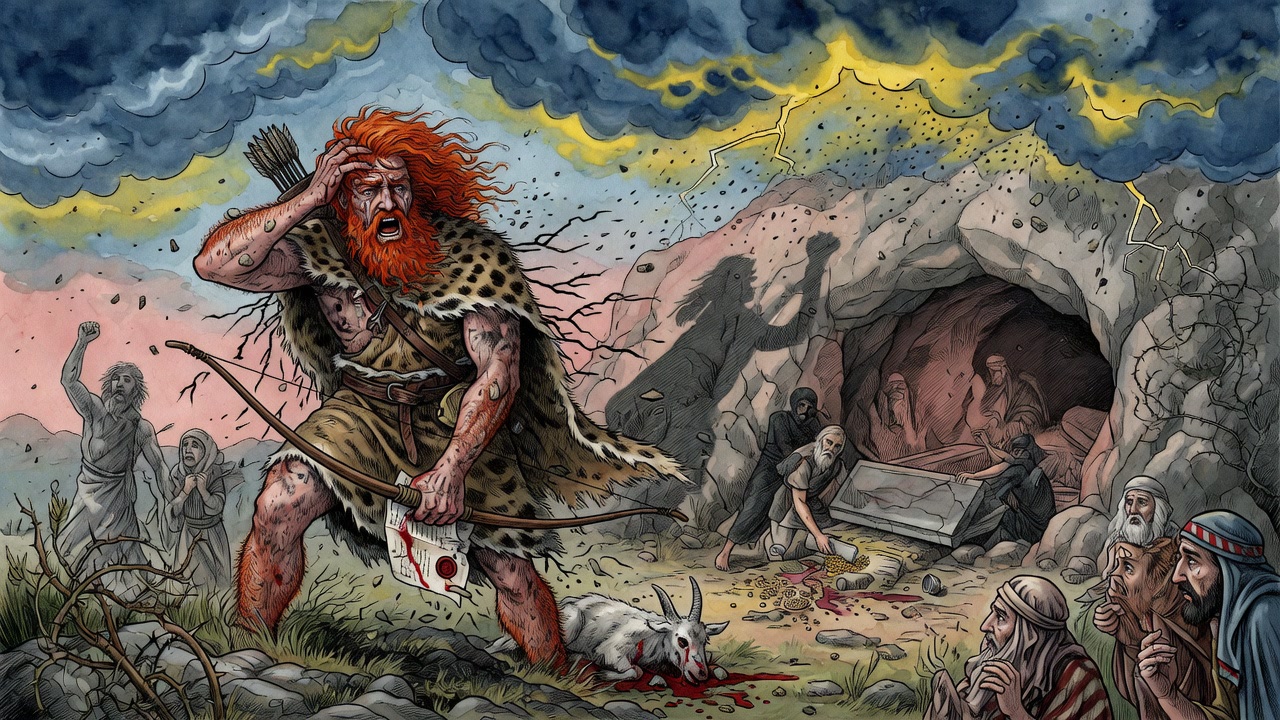
"Is there a future world?" he said. "Or will the dead be called back to life?" He leaned in over the table. "If it were so, why hath not Adam returned?" He counted the names off like coins that were not in his hand. "Hast thou heard that Noah, through whom the world was raised anew, hath reappeared? Yea, Abraham, the friend of God, more beloved of Him than any man, hath he come to life again?"
Not one of them had walked back out of the ground. The graves stayed shut. Esau wanted a witness he could grip by the arm, a resurrected grandfather standing in the doorway, and until such a man arrived he would keep both hands on the things of this world and let the next one keep its silence.
The Offer to Buy an Eternity
Jacob heard his brother throw away the world to come as if it were an empty sack, and the strategist in him came awake. If Esau set no price on eternity, then eternity could be bought.
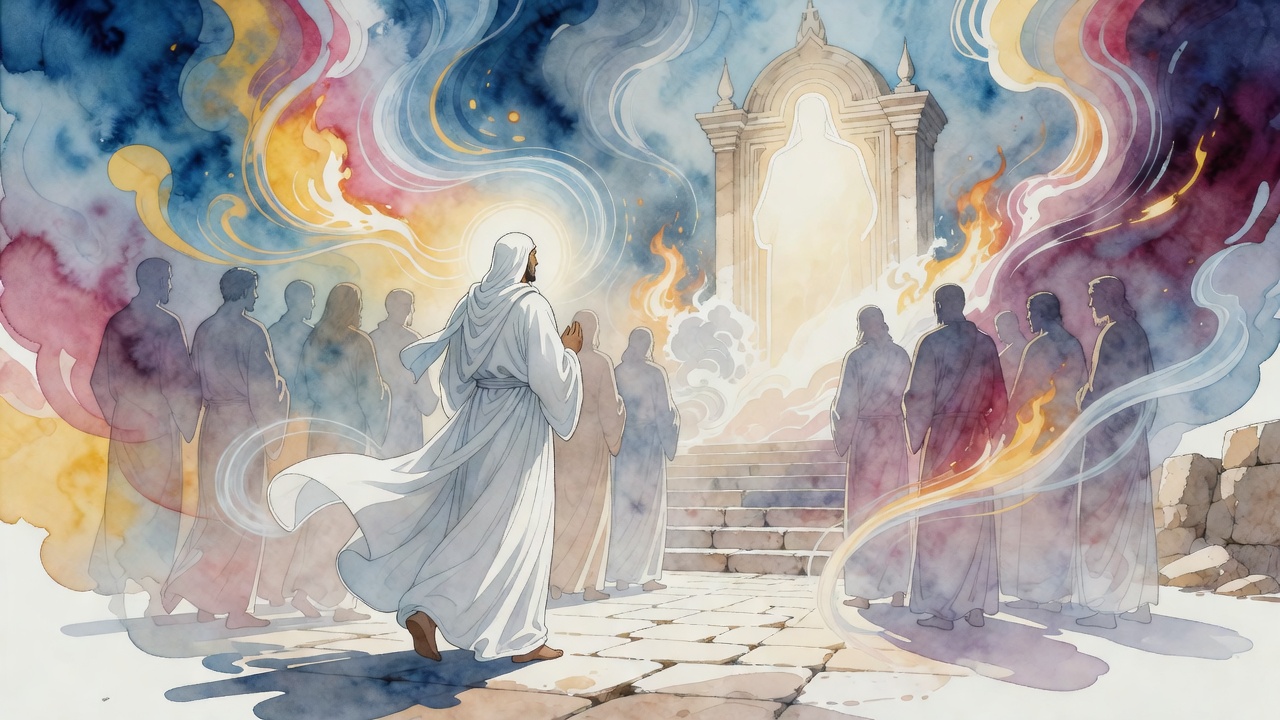
So Jacob made him an offer. Take my portion of this world, the fields and the flocks and the fat years, and hand me your share of the Olam Ha-Ba, the world that waits on the far side of the grave. Trade the ground you can stand on now for a country you swear does not exist.
For a man who had just denied the country existed, it was pure profit. Something for nothing. Esau reached out his hand to take it.
The Friends Who Smelled Profit in a Prophecy
But Esau kept the kind of friends who grow very wise the moment someone else's soul is lying on the table. They caught his arm and pulled it back.
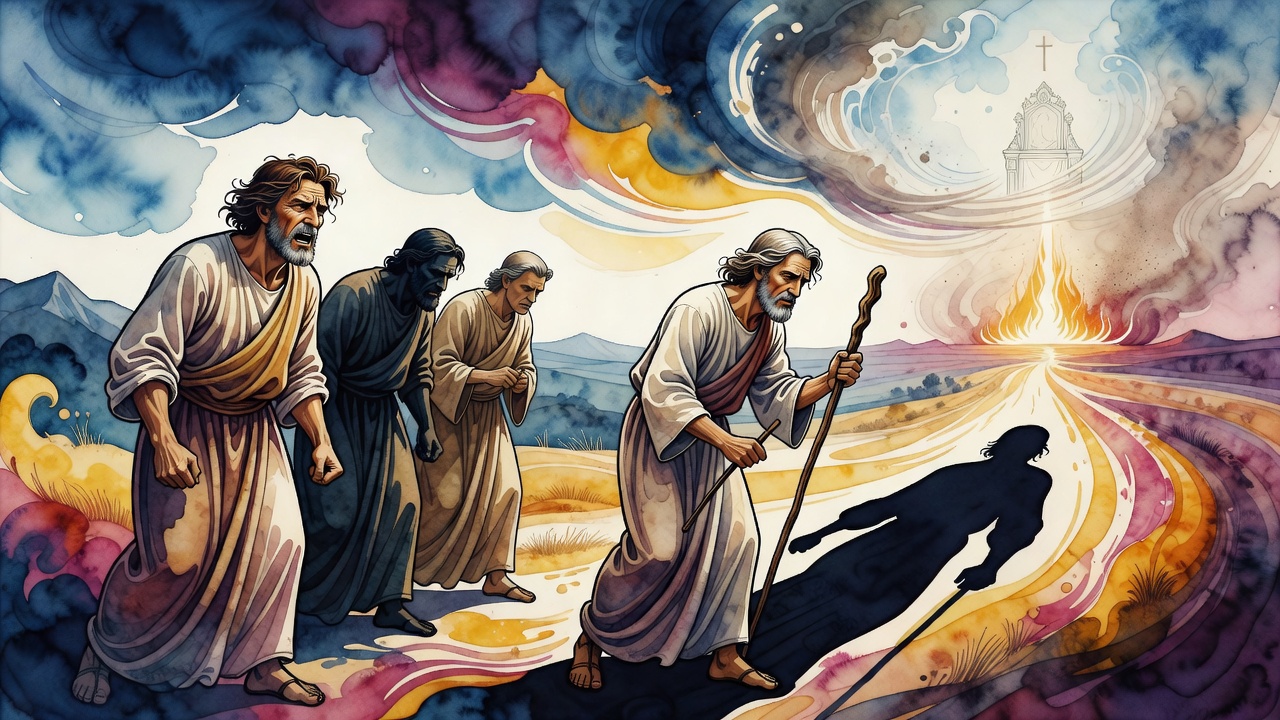
"Don't accept these conditions," they told him. They had all heard the old promise, the words God once spoke to Abraham. His descendants would be strangers in a land not their own, and they would be crushed there four hundred years. "Just wait it out," the friends said. "Let Jacob and his family go down to Egypt and pay off that debt."
Their reasoning was cold and it was simple. Why buy the world to come from Jacob today when Jacob's own children would sweat and bleed for four centuries to earn it? Let the brother do the suffering. Let his sons make the bricks. Then step over their backs and collect the reward without spending a thing. It was not brotherly love. It was arithmetic.
The Message Jacob Sent Instead
Years on, when Jacob came home with wives and children and long lines of herds, he sent word ahead to the brother who had once wanted him dead. The message was not soft.
"Even though I lived with that heathen of heathens, Laban," Jacob said, "I haven't forgotten my God. I still fulfill all six hundred and thirteen commandments of the Torah." Twenty years inside a swindler's house had not cost him a single one of them.
Then he laid the two roads down side by side. "If you want peace, I'm ready," he said. "But if you want war, I'm ready too. I have men of valor and strength. They only need to utter a word, and God will make it happen."
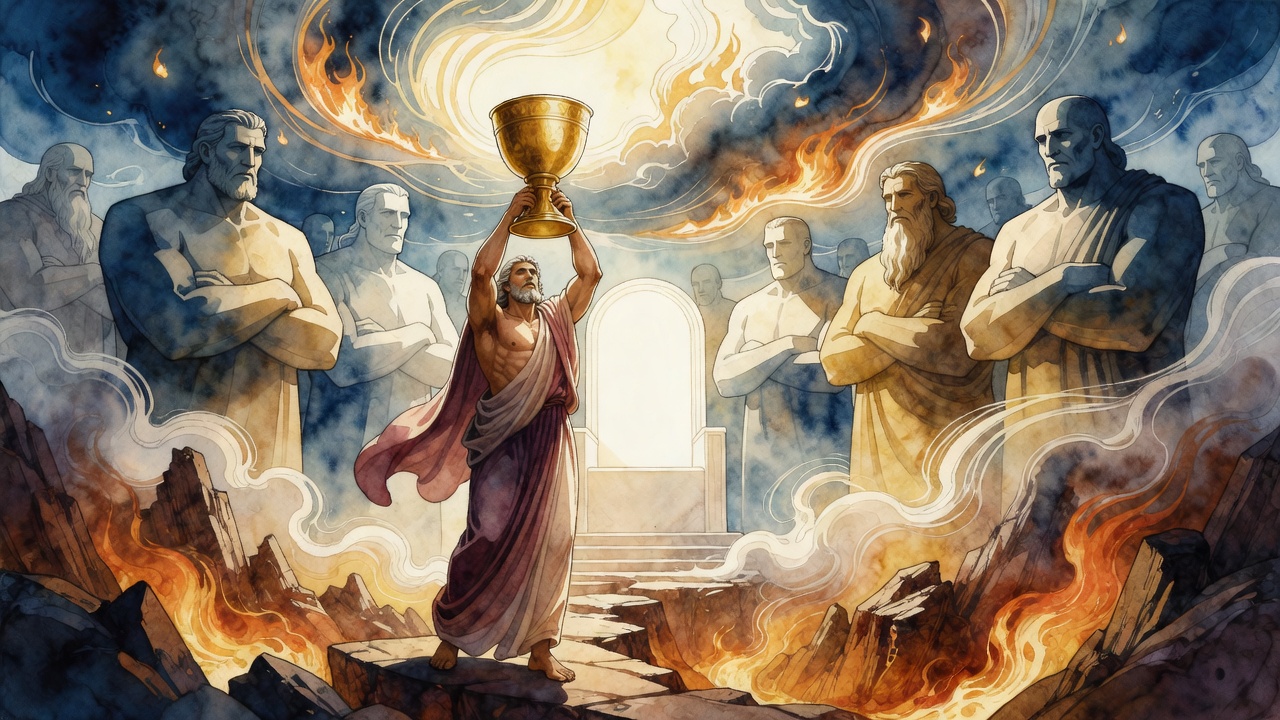
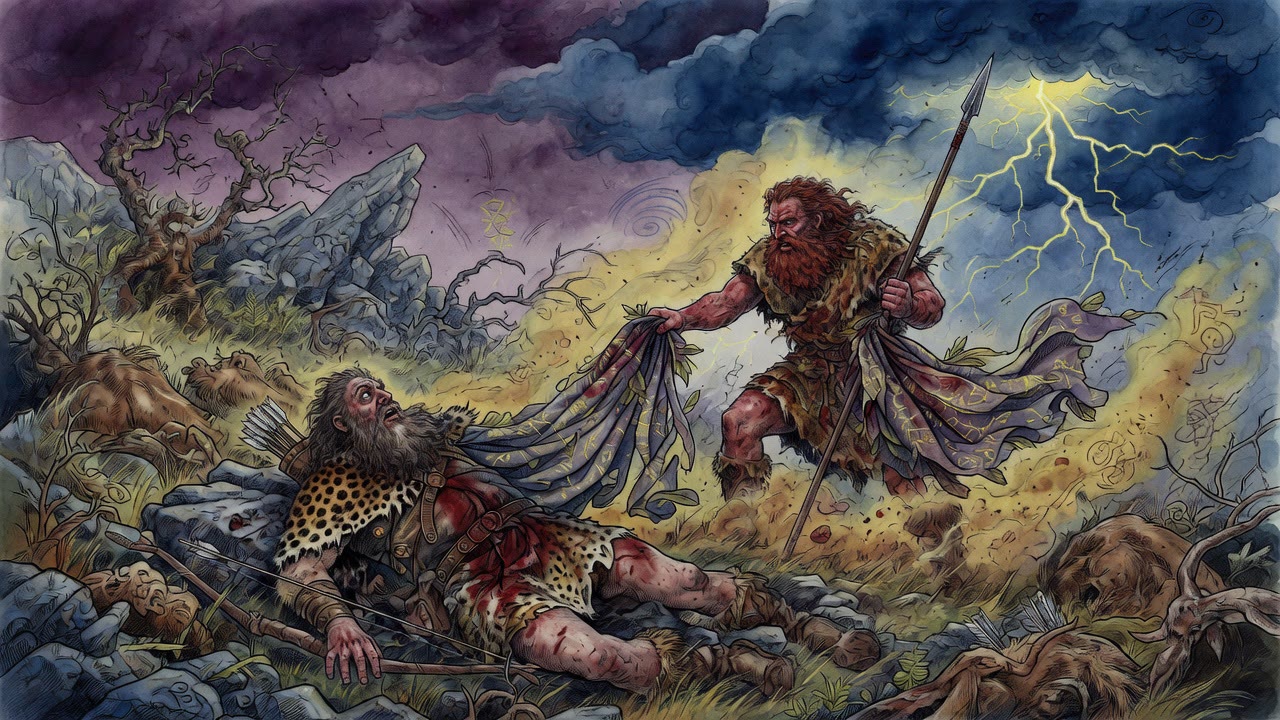
He was not finished. "I waited with Laban until Joseph was born," he said. "He is destined to subdue you." And the last line carried past the tents, past Esau, past the lives of both the men in the room. "Even though my descendants will be enslaved in this world, a day will come when they will rule over their rulers."
Esau had asked for a dead man to climb out of a grave before he would believe in the world to come. Jacob handed him something harder to argue with. A living son, already born and breathing, who would outlast him. A promise that the four hundred years of debt would end with the debtors seated on the throne.
The share of eternity never changed hands. One brother would not pay for a thing he could not see. The other never once stopped keeping the commandments that had already bought it.
← All myths