When Nebuchadnezzar Learned Empires Can Be Refused
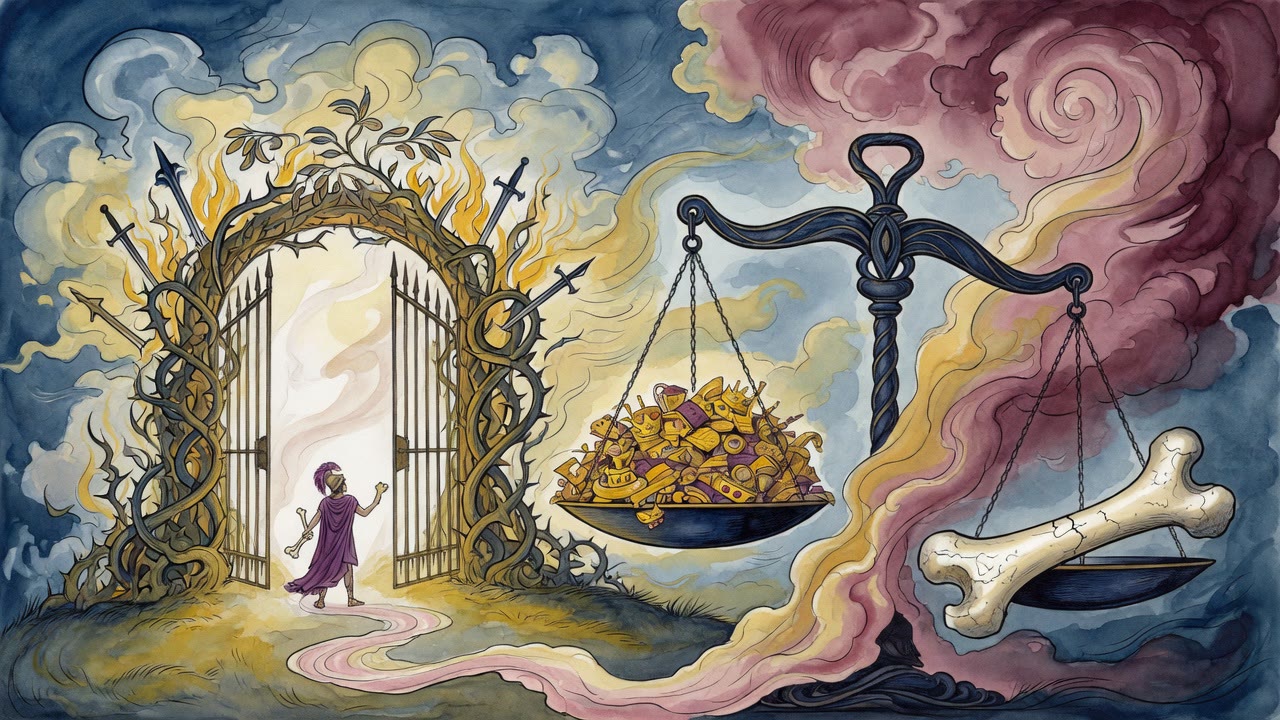
His envoys came home with dust on their cloaks. The west had laughed them out of the gates. He swore on the throne that those lands would burn.
Table of Contents
Nebuchadnezzar sat in Nineveh in the twelfth year of his reign and looked west toward a city that had decided it would not move. Arpachshad, king of Media, ruled from Achmata, also called Ekbatana. The names did not sit on the known maps. The walls did.
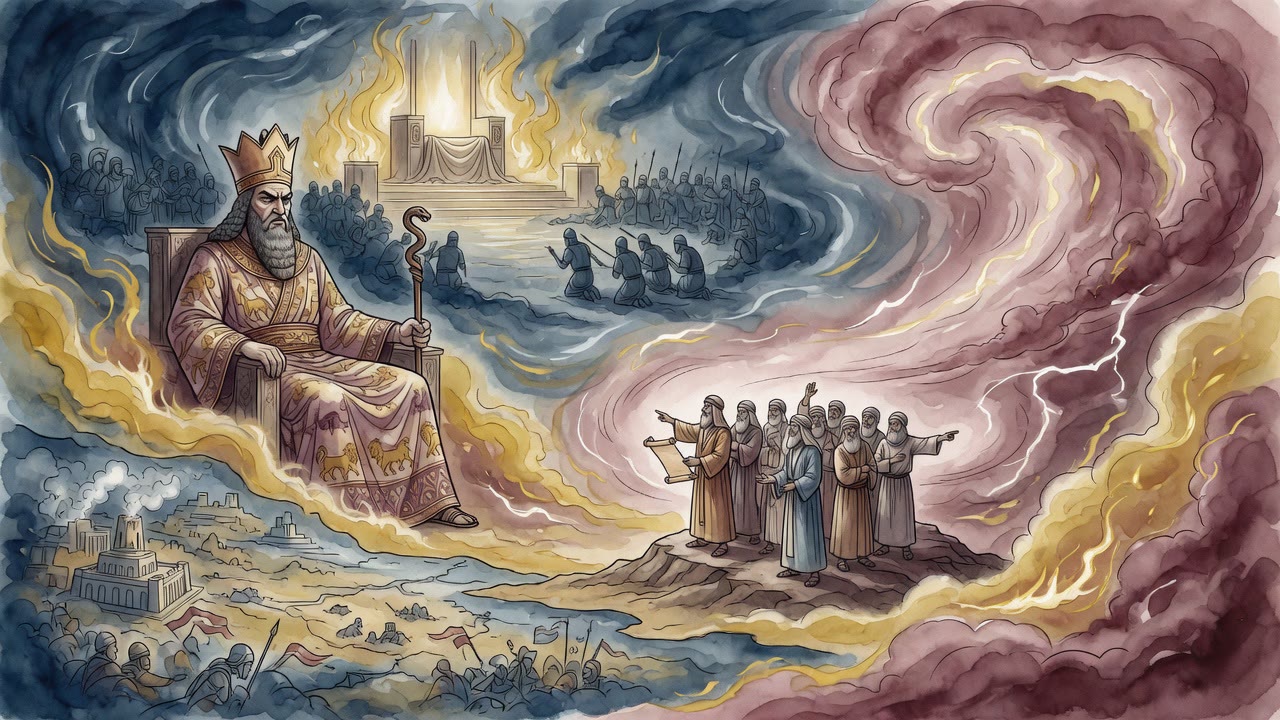 Click for full size
Stone Stacked against an Army
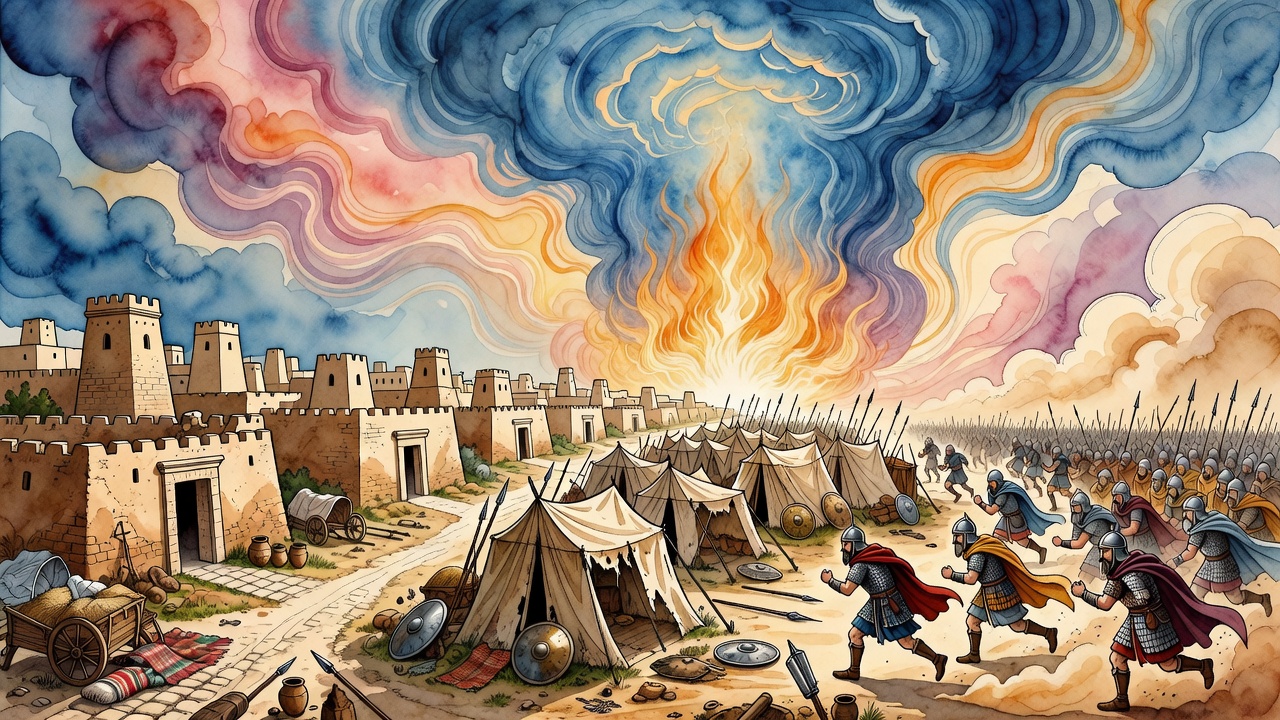
Arpachshad ringed his capital with hewn stone three cubits wide and six cubits high. The walls rose seventy cubits. They were fifty cubits thick. Over the gates he set towers a hundred cubits tall, their foundations sixty cubits in the earth. The gates themselves stood seventy cubits high and forty wide, so chariots and infantry could pour out together and fill the plain.
The city said, in stone, that it would still be there after any siege. Builders wiped dust from the last course and stepped back. Watchmen walked the new height and could see a day's ride of road. Nebuchadnezzar began to count men.
The King of Media Falls
In the seventeenth year he went out with the whole host. The battle ran the way a patient empire prefers. His hand overcame. He slew people, chariots, horsemen. He took the lesser cities, then came to Achmata, broke the towers, and left the streets empty. Glory went to waste in a day. A hundred cubits of tower lay in the lane like a felled tree.
Arpachshad ran for the Mountains of Reu. Nebuchadnezzar hunted him there and shot him with arrows until the king of Media fell. The walls that were supposed to mean we are not moving had not been enough. Numbers and time had been enough. Nebuchadnezzar took that lesson home like a captured banner and hung it where the court would have to see it.
Envoys Sent Home in Scorn
He wanted the rest of the world to answer when he called. He sent messengers to Persia and to all who dwelt in the west: Cilicia, Damascus, Lebanon, Carmel, Gilead, the Galilee, the Valley of Jezreel. He called Samaria and her cities, the nations beyond the Jordan as far as Jerusalem, Goshen, Egypt, the mountains of Kedar. He wanted allies for a campaign larger than Media.
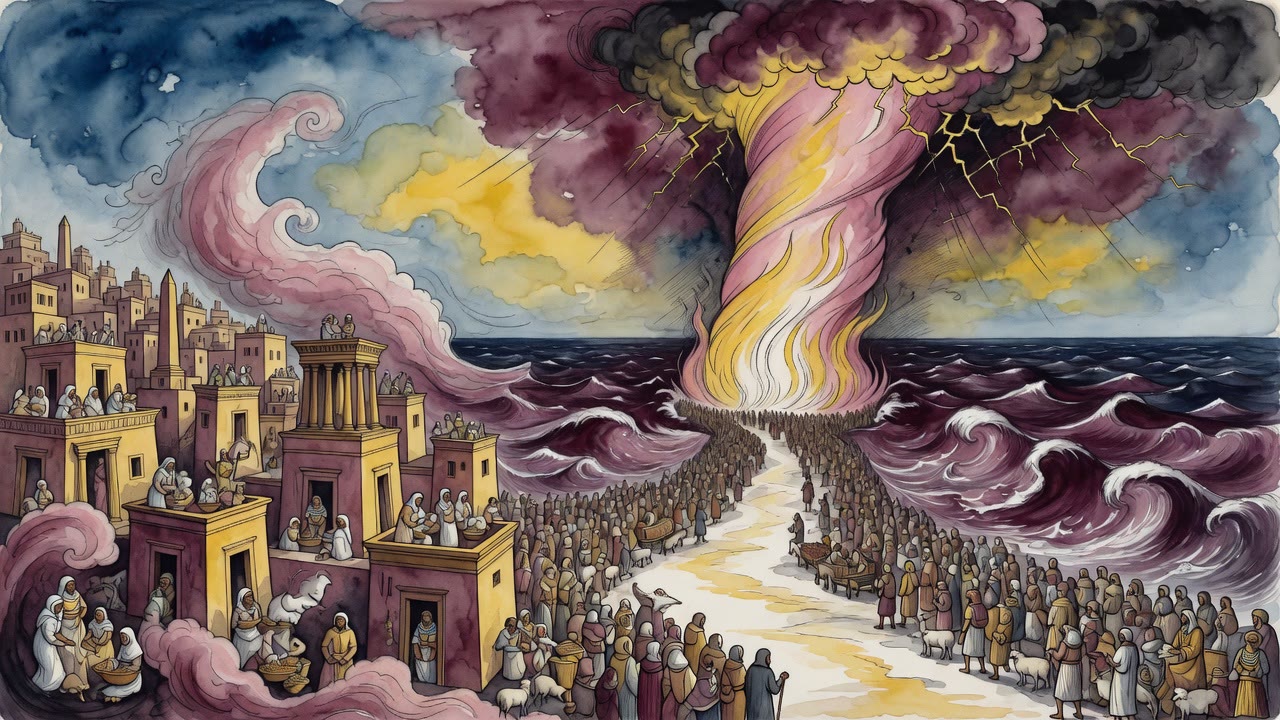
The east had come. Mountain people, river people on the Euphrates and Hidekel and Gihon, Arioch king of Elam, men of Gilead. The west did not.
They refused to hearken. They did not send troops. They were not afraid. They rebuffed the ambassadors with disgrace and sent them home wearing the scorn like dust on a cloak. One envoy's staff had been snapped. Another had been spat on in a gate. They stood in Nineveh and had to say the words aloud. The west had laughed.
Wrath went through Nebuchadnezzar the way fire goes through dry grass. An empire that can be laughed at is, in that hour, not an empire.
He Swore on the Throne
He swore on his throne and his kingdom. He would take vengeance. He would destroy the borders of Cilicia, Damascus, Aram. He would slay by the sword Ammon and Moab, the land of Judah, Egypt, and all who lived between the two seas. The oath had to be carried or the chair he sat on meant nothing.
He returned to Nineveh with the host, cheerful, and made them a feast for a hundred and twenty days. Meat, wine, noise. Musicians played until their wrists ached. The laugh of the west still sat in the room under the music. On the twenty-second day of the first month, in the eighteenth year of his reign, he convened a council in the palace to do what he had spoken.
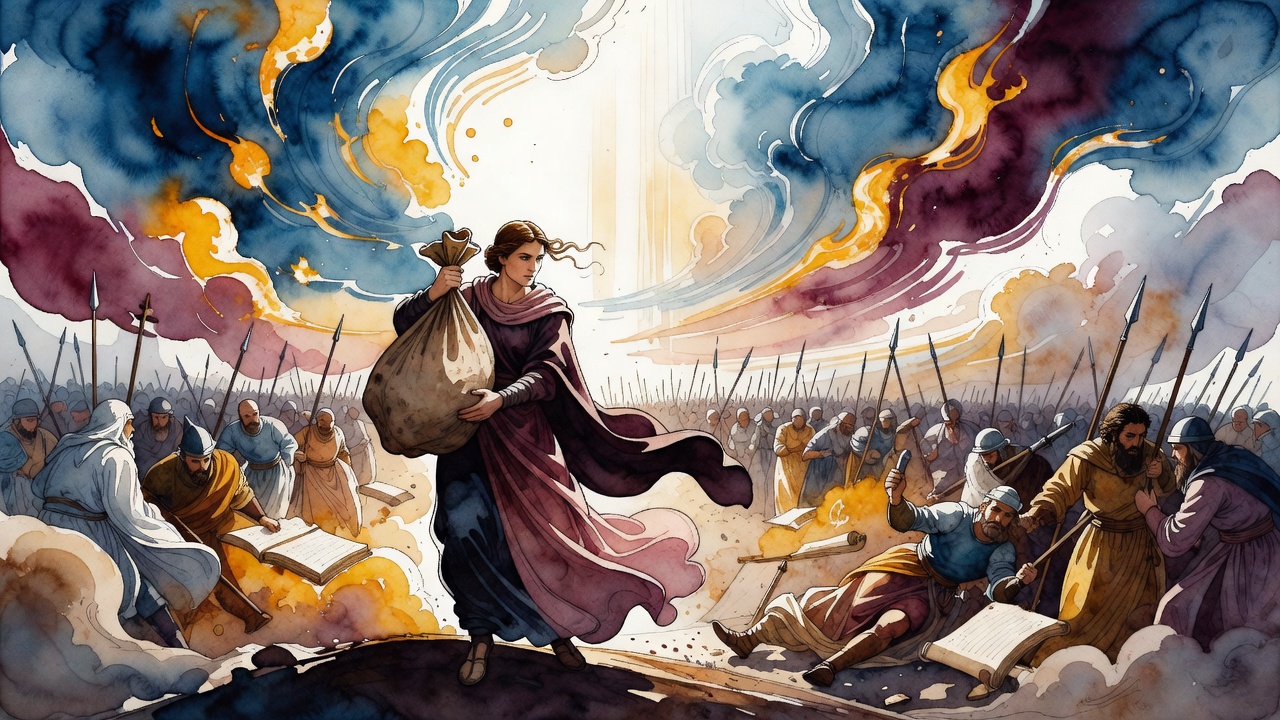
Armies would go. Cities would kneel or burn. A small hill town would later refuse in a different register, with a widow and a wine jar and a sword, and a general's head would leave in a bag. That refusal was still ahead. This one had already landed. The king who had learned that walls do not stop armies had now learned that a messenger can be mocked, and that mockery does not come out with washing.
← All myths