When the Axe Head Flew Free and a Man Fled
In the forest the iron left the handle and a neighbor fell. He ran marked roads toward a city that would hold him until a high priest died.
Table of Contents
 Click for full size
The Iron Left the Wood
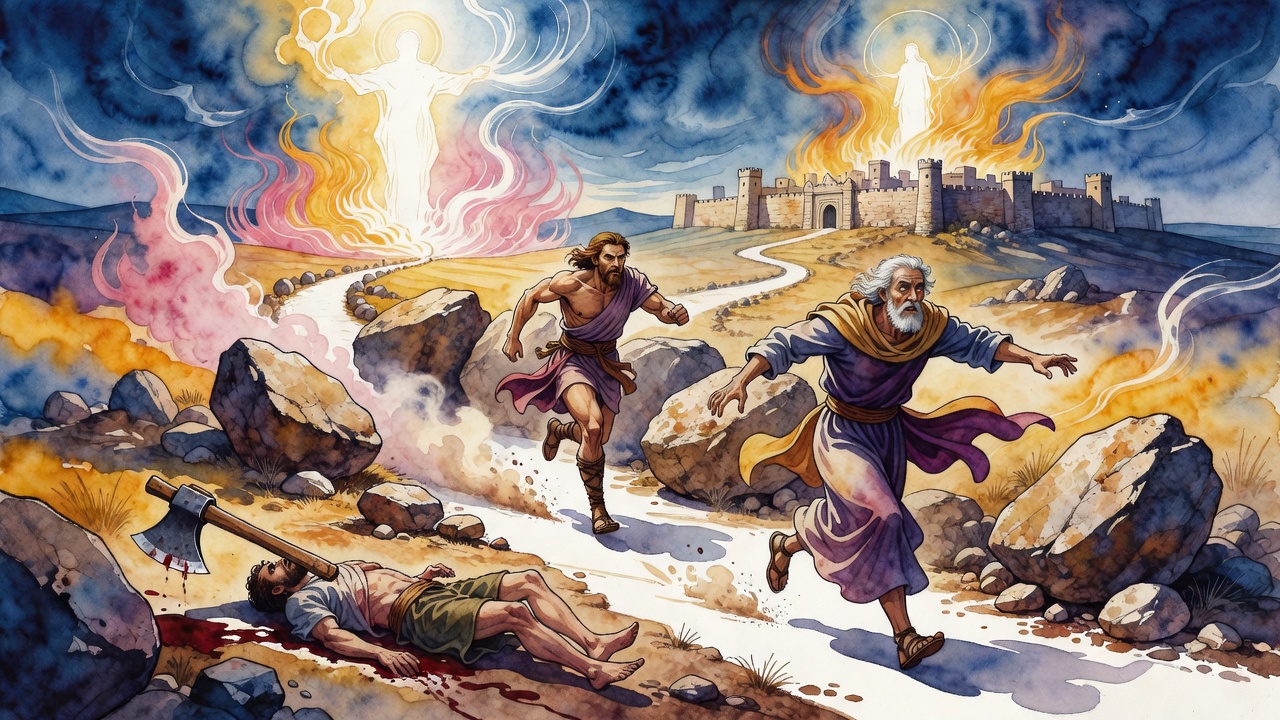
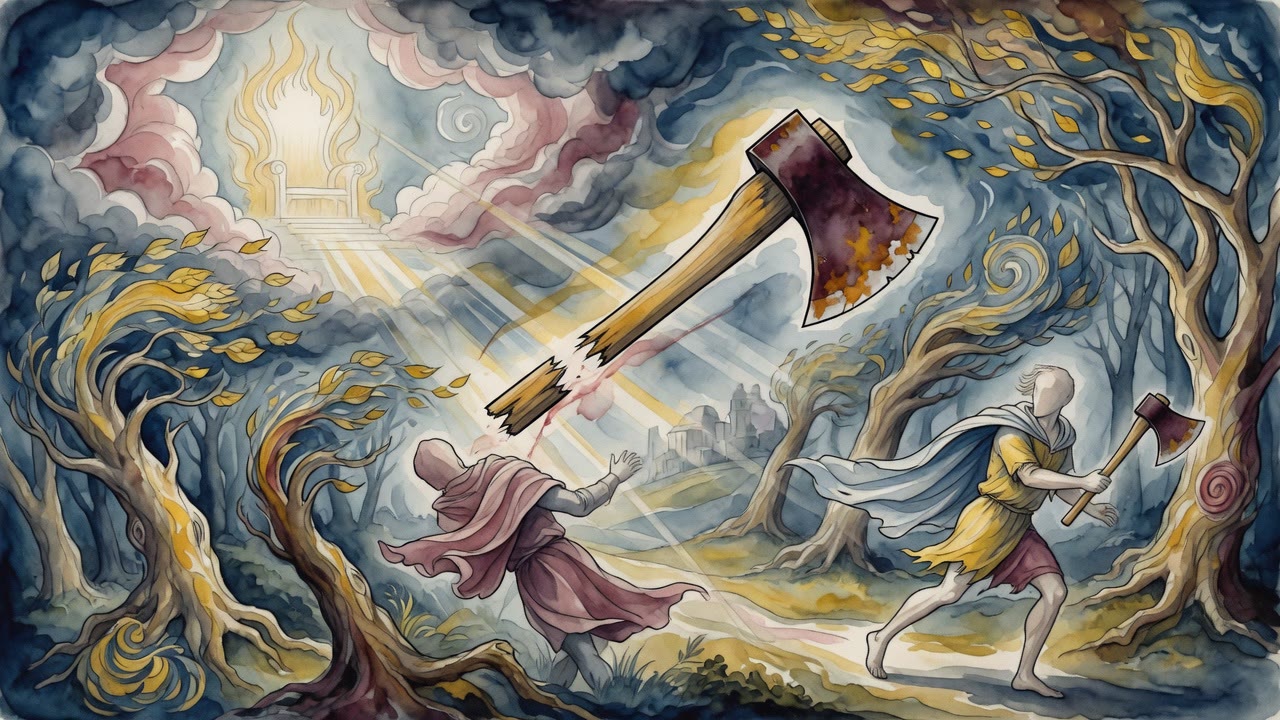
The axe rose for a branch and the head of the iron came free. It spun through the forest light and found a neighbor's skull. One moment they had been cutting timber together, sharing the dull work of winter fuel. The next, the living man stood over a body and heard his own breath like a stranger's in the leaves.
No quarrel had brought them into the trees. No old insult sat between them like a third worker. The forest was open ground where both had a right to walk, and the law would later mark that fact as carefully as a boundary stone. The killer's hands shook. He wiped them on bark and still felt wetness. Crows shifted on a dead limb. He did not wait for the dead man's kin to arrive with swords and a claim of blood.
He ran.
Roads Built for a Running Man
The land was not left to chance. Three cities of average size, neither fortresses nor hamlets, had been set aside in the midst of the inheritance, not on the border where an outsider might snatch a fugitive before judges spoke. Across the Jordan the same pattern held, cities aligned like two rows in a vineyard so a fleeing body would not die for lack of a straight line.
Stations stood along the ways. Markers pointed. The road itself was a kind of mercy. Prepare the way, the command said, because panic makes a man miss a turn and die outside the wall with the avenger only a hill behind. He did not invent these paths. Conquest had finished, houses had been taken, settlement had spread, and only then did the refuge cities open. He was not permitted to treat them as a gift for foreigners. They were set aside for Israel, inland, after inheritance, average and reachable.
He passed a station, another, a third. A boy selling water stared at the blood on his sleeve. He did not stop. The gate of a city rose and the air changed from forest to wall-shadow.
There He Would Live and Die
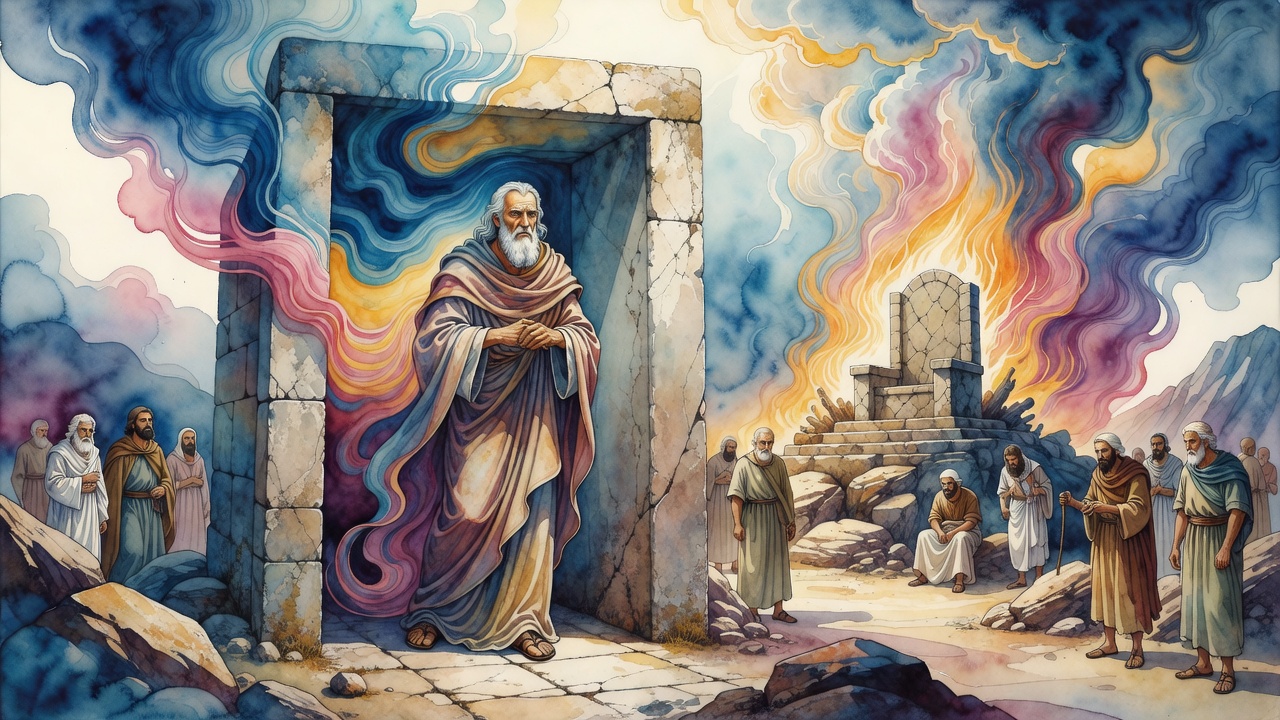
Inside the gate he did not become a guest of honor by default. If the townspeople pressed wine on him and called him blessed for arriving whole, he had to answer with a hard word. "I am a slayer." Only if they insisted after that confession could he take their kindness. The place would hold three destinies for him at once. There he would dwell. There he would die if the years closed over him. There he would be buried if exile never lifted.
Even a high priest, if his hands ever slipped the same way, would have to flee to such a city. The difference cut deeper for him. Ordinary exiles leave when the high priest dies. The high priest who flees has no second door. The city becomes his world until his own end. Rank does not cancel the road. It only changes how long the road lasts.
Who Counts as Neighbor
The law did not throw every killer into the same net. "His neighbor" repeated until the sages heard exclusions and inclusions braided into one phrase. A sojourning convert stood outside this particular shield in one reading. A father who struck a son, or a son who struck a father, still counted as neighbor enough that the road of refuge opened. Strangers to the covenant did not get Israel's cities of flight as their own inheritance of mercy.
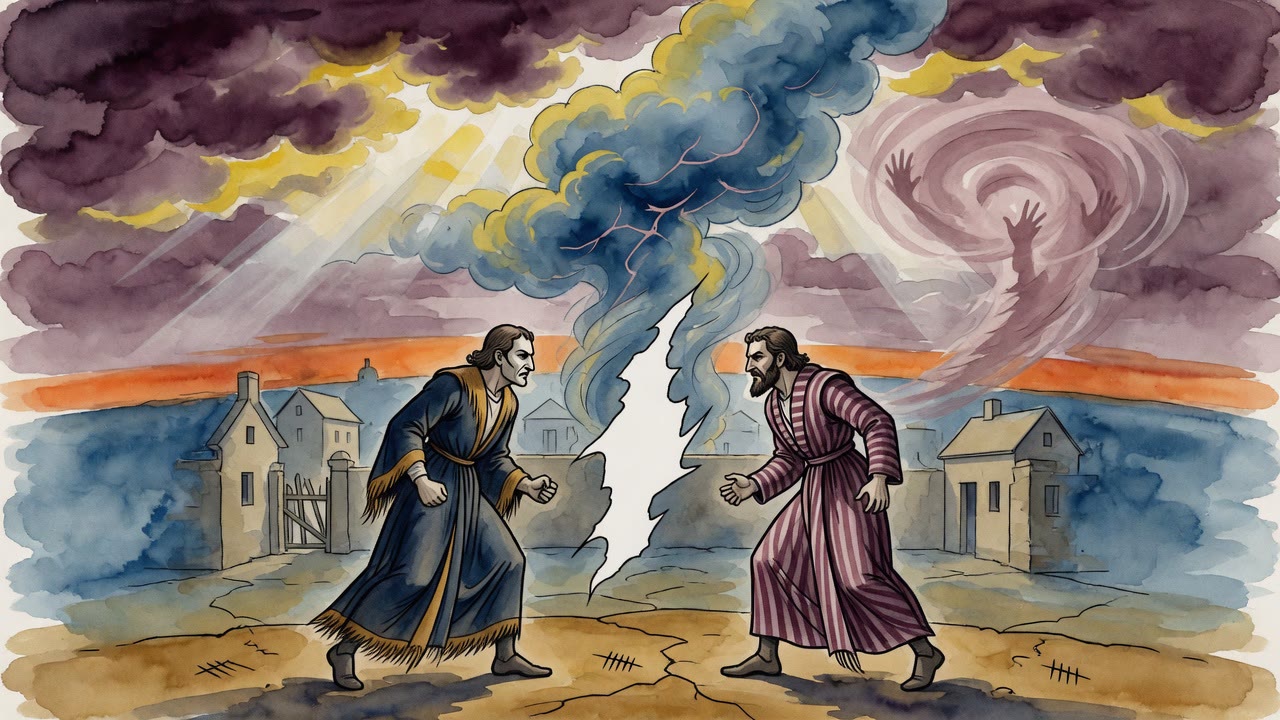
Hate changed everything. If the axe had only been the end of an old quarrel, the city would not take him. "Not having hated him" was not poetry. It was the hinge between exile that protects and blood that demands the court. Yesterday and the day before and three days of silence out of spite could turn a shared forest into a murder scene the law refuses to soften. He thanked God, if he could still pray, that their last words in the trees had been about the grain of wood and not about a debt.
The Kin at the Gate
Behind him the avenger of blood would come, not always as a villain, sometimes as a brother with a name to answer for. The city walls were for the one who had not planned the death. The avenger stopped at the gate because Torah had drawn a line between rage and judgment. Inside, the man who had fled slept poorly on a borrowed mat. He listened for footsteps that never entered. He learned the market and the well. He said his name less often than before.
Years might pass. A high priest somewhere in Jerusalem would die, and then the exiles would stream home with tears and fear mixed, because freedom after blood never tastes clean. Or the high priest would live long, and the man in the refuge would grow old between walls he never chose, buried at last in the soil of the city that saved him and refused to let him forget. Children in the lanes would point and whisper slayer, and he would nod, because the confession never expired.
At night he still saw the iron leave the wood. The law could house him. It could not unspin the moment. Mercy, in this book, looks like a wall with a door that opens only once, inward, for a man who did not mean to kill and still must live as if he did.
← All myths