5 min read

The High Priest Could Not Leave the Refuge

Even the high priest, if he killed without intent, had to flee. Ordinary exiles wait for his death to go free. If he is the exile, no door reopens.

Curated by Arthur · Told by Maggid ·
Table of Contents
  1. Blood on Sacred Hands
  2. I Am a Slayer
  3. The City That Held Two Kinds of Guilt
  4. Jerusalem Without Him
  5. The Long Stay
The High Priest Could Not Leave the Refuge Click for full size

Blood on Sacred Hands

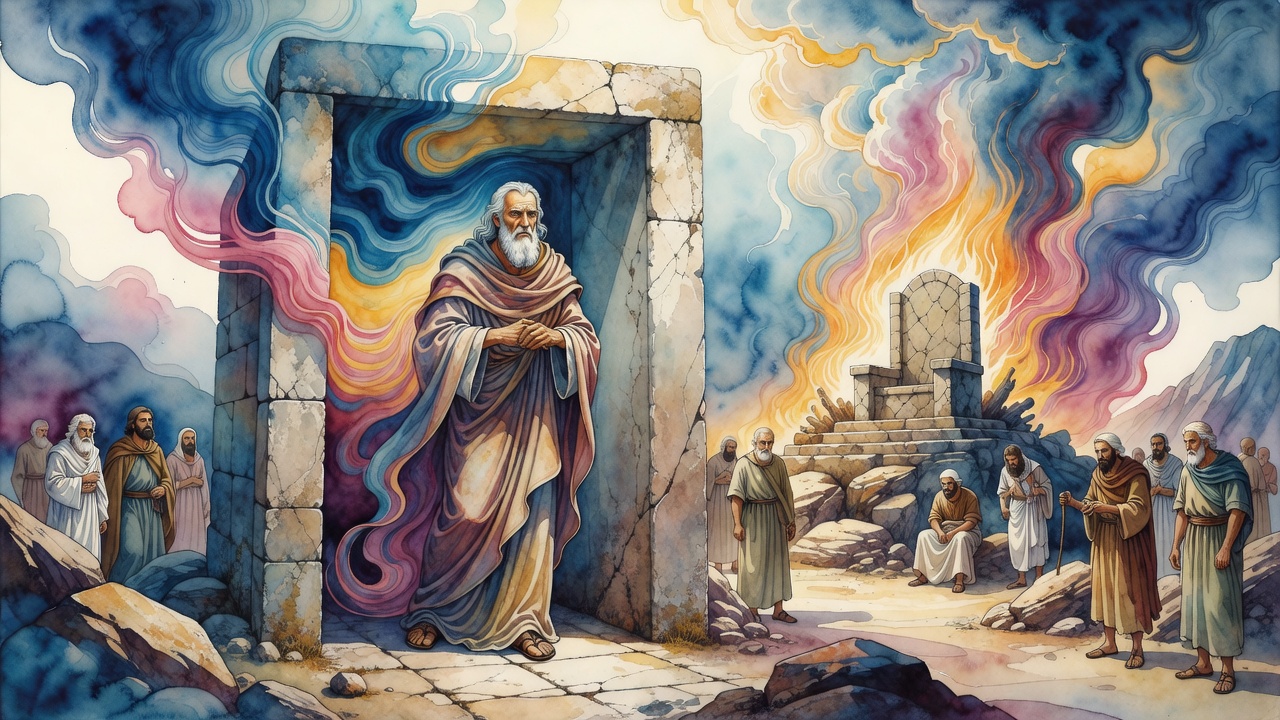
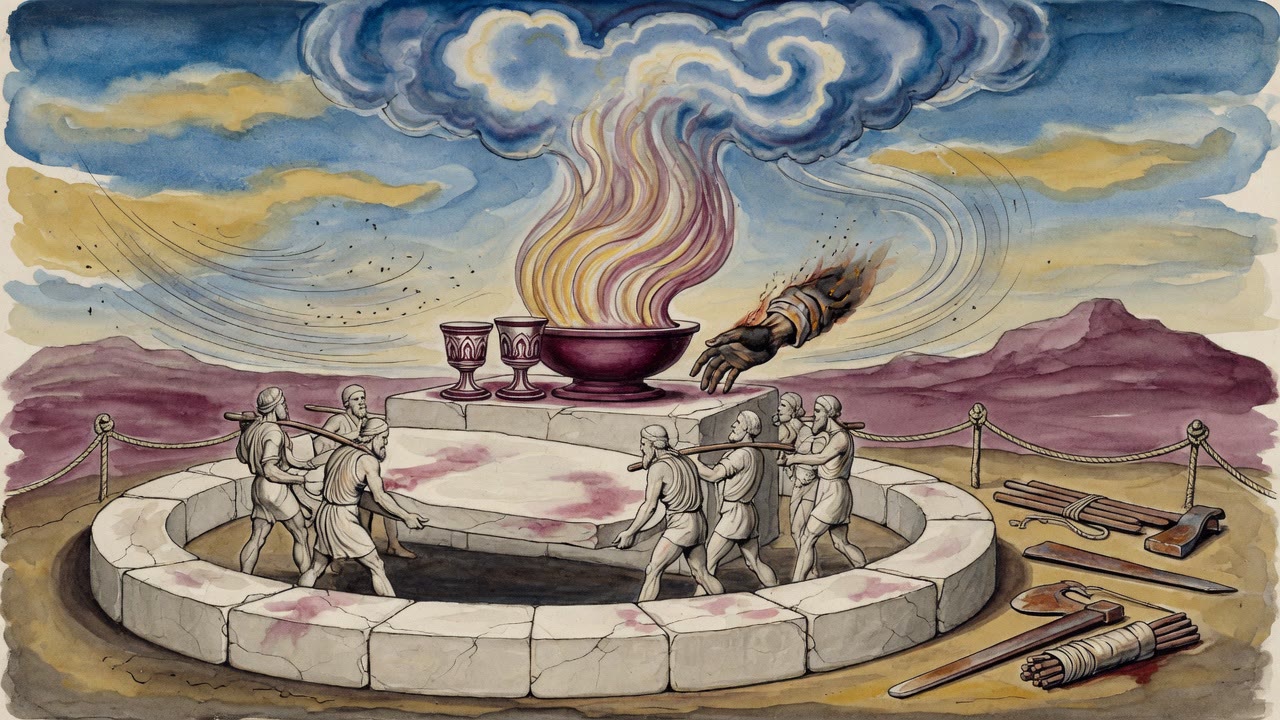
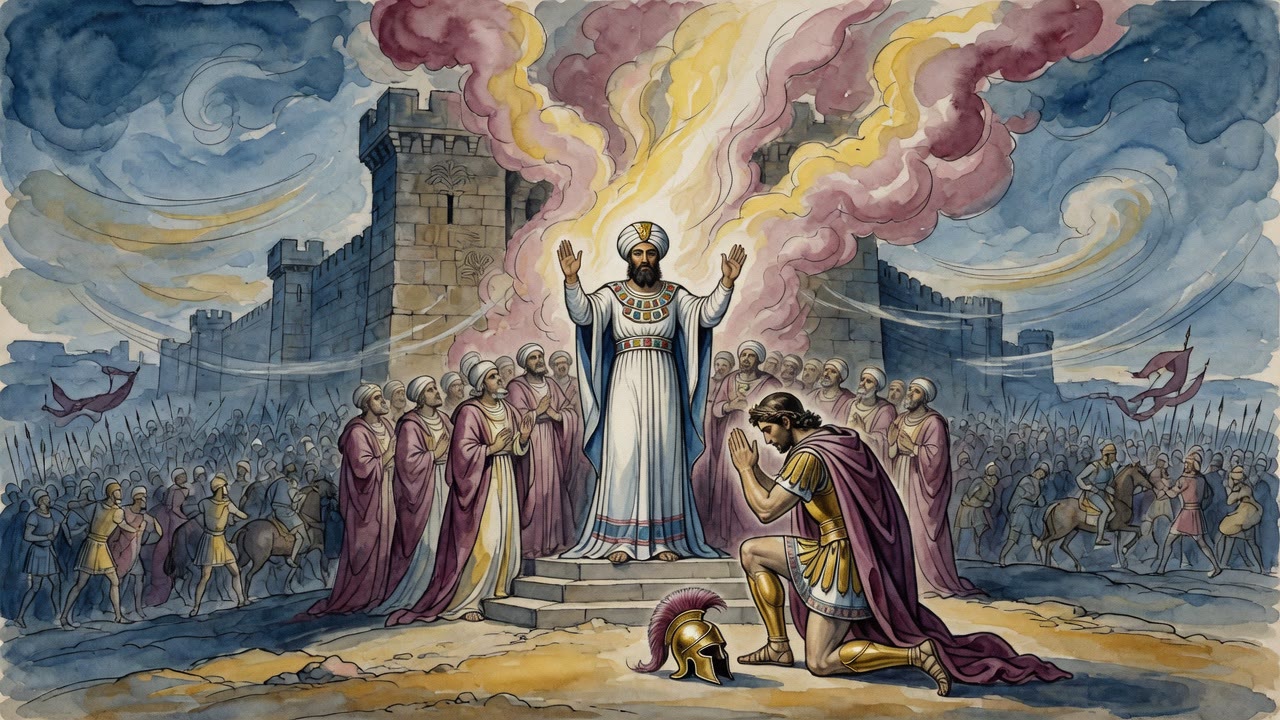
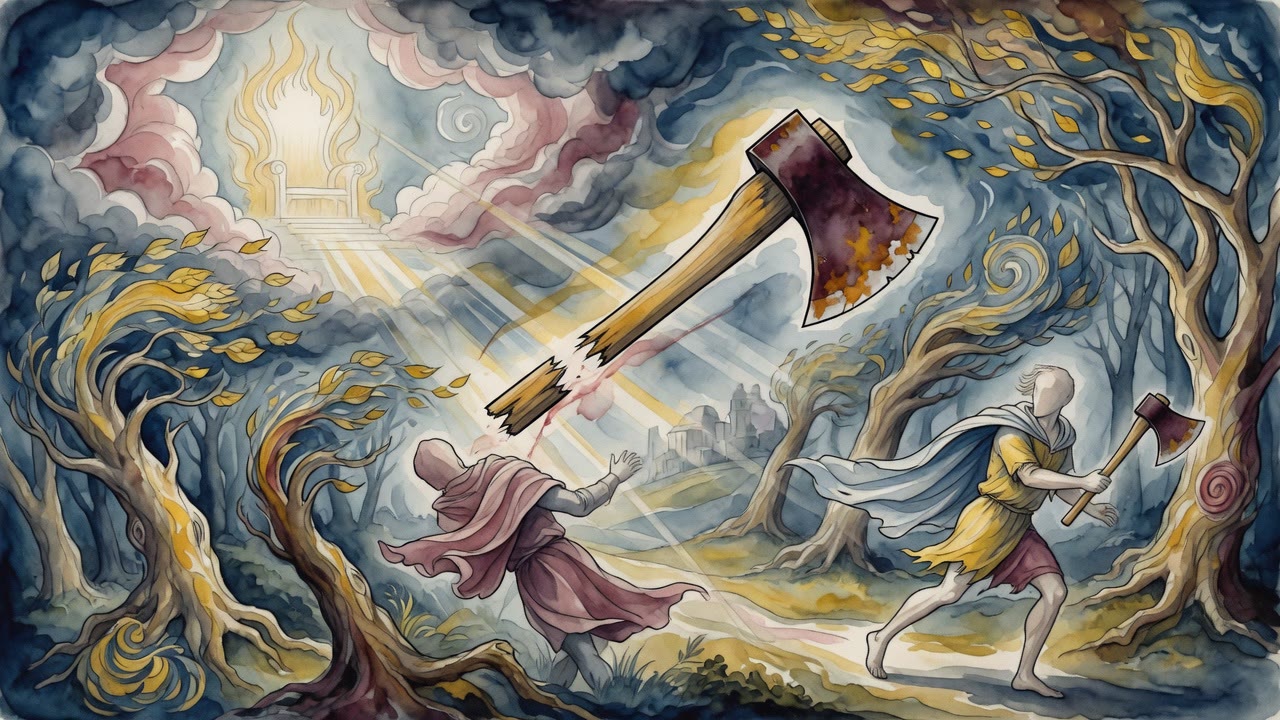
The high priest's sleeve brushed a beam as men raised timber for a repair near the Temple courts, and a tool slipped from a scaffold. A worker fell and did not rise. Incense still clung to the priest's garments from the morning service. The Name still lived in the chambers behind him. None of that stopped the law from treating him as a slayer who must run.

"That every slayer may flee there," the verse says, and the sages heard even him inside the word every. The man who entered the Holy of Holies once a year could also stand at a city gate with dust on his feet and a confession in his mouth. Holiness is not a shield against physics. Atonement for a people does not cancel a corpse at the foot of a ladder.

I Am a Slayer

If the people of the refuge wanted to honor him, to seat him first, to pretend the breastplate still glittered under travel stains, he had to stop them with a sentence. "I am a slayer." The word of the slayer is part of the statute. He may not hide behind office. Only if they insist after the truth may he accept their bows and their wine.

There he would dwell. There he would die. There he would be buried. For ordinary men those three "theres" last until another high priest dies and the gates open outward across the land. For this man the math breaks. He cannot leave when a high priest dies, because he is the measure other men wait on. His mortality is other men's clock. His own exile has no such clock. The irony is almost cruel enough to be a parable, except it is procedure.

The City That Held Two Kinds of Guilt

Inside the walls lived other fugitives, men who had dropped axes, men who had thrown stones without aim, men who woke each night seeing a face. They watched the high priest buy bread and draw water. Some lowered their eyes. Some asked him to pray over a sick child. He had no altar here that matched the one he left. He had only the long middle of a life interrupted, and a market that learned his step.

Rebbi remembered that some killers flee of their own will, thinking the cities shield both the witting and the unwitting. Courts send and bring them back. The congregation rescues the one who should live free of death, returns the one who must stay, and delivers the one whose blood is already forfeit. Rank does not rewrite those three doors. It only makes the middle door eternal for a priest who stumbles while the nation still needs a high priest's name for other men's release.

He watched a young woodcutter arrive weeping and confess. He wanted to say the road was built for both of them. He said nothing. The woodcutter would leave someday if a high priest died. He would not.

Jerusalem Without Him

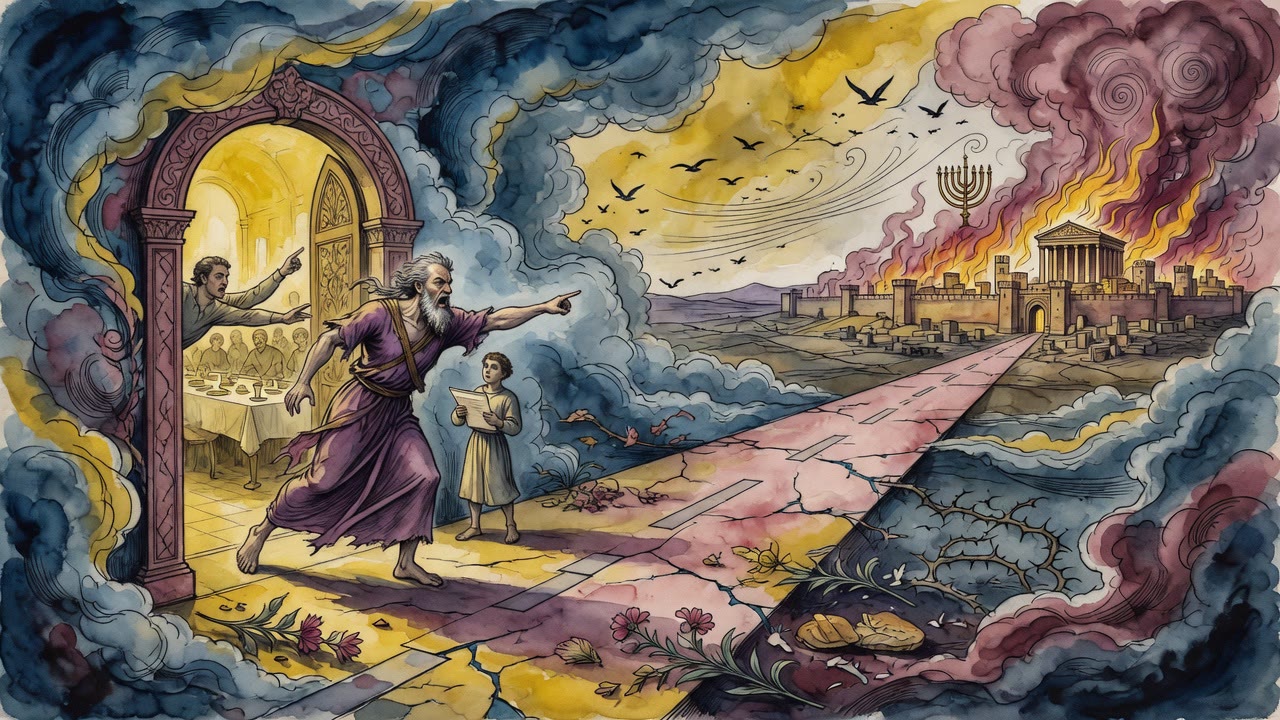
In Jerusalem the service continued with substitutes and grief. A people that had trusted his atonement now learned that atonement does not cancel a fallen beam. A body was buried. A road was prepared. Stations still pointed toward inland cities of middling size, not border traps. The vineyard rows of refuge east and west of the Jordan did not rearrange themselves for gold thread on a hem or for the bells on a robe left hanging in a chamber.

Children in the refuge city learned a hard theology without books. The holiest man they would ever meet might be the quiet one who never left the walls. When he died, other exiles elsewhere would go home with songs mixed with shame. That irony sat on every threshold. His death freed strangers. His life, if he was the exile, freed no one, not even himself. Mothers told the story to warn boys about carelessness near tools. Fathers told it to warn priests about pride.

The Long Stay

Years stacked. Festivals passed outside the walls with music he could almost hear on the wind when the gates opened for traders. He aged into the city's lanes. New fugitives arrived with the same wild eyes he had worn on the first night. He told none of them that holiness is a shield against accident. He had worn holiness like a coat and still run until his lungs burned.

When burial came, it came there. The soil of the refuge took the body that once entered the innermost room. The law's mercy and the law's severity met in one grave marked without temple stones. A people that builds roads for runners also builds a cage without cruelty's name, and even a high priest can learn its length by walking it every morning to the well, past men who will outlive his sentence by outliving him.

Somewhere on the road, a station marker still pointed travelers toward safety. It did not say the safety might last forever for the wrong holy man. The marker only said run. He had run. The rest was the city, the confession, and the years.


← All myths
From the tradition

Sources

4 sources

The texts behind this telling. Some cards carry a translation of the source; others are our own retelling of it, and each card says which. Every card links out to the original.

Sifrei Devarim 181:1Sifrei Devarim

Retold in our words. Read the original at the link below.Sifrei by Rabbi Shraga Silverstein · CC-BY

The Torah, in the Book of Deuteronomy, actually makes provision for that. It speaks of cities of refuge, places of safety for those who have committed unintentional manslaughter. But what might surprise you is who could seek that refuge, and what happened when they got there.

(Deuteronomy 19:4) tells us about these cities, stating, "that every slayer may flee there." But The ancient rabbis, in the Sifrei Devarim, a collection of legal interpretations on the Book of Deuteronomy, ask a fascinating question: Who is included in "every slayer"?

Hold on. The High Priest, the holiest person in the land, taking a life? It seems almost impossible. But the Torah is comprehensive, and even the most esteemed among us are not immune from accidents or unintended consequences. The Sifrei Devarim points out that even the High Priest, should he accidentally cause someone's death, could flee to a city of refuge.

But there's a crucial difference. While other refugees could eventually leave the city upon the death of the current High Priest, the High Priest himself was bound to remain there. The very person who once officiated in the Temple, who embodied spiritual leadership, was now confined. It’s a striking image, isn’t it?

Why this difference? Perhaps it's because his position held him to a higher standard. Or perhaps it was to ensure that the atonement brought about by his service was not diminished by the shadow of his own unintentional act. The texts don’t explicitly say, leaving us to ponder the nuances.

But the Sifrei Devarim doesn't stop there. It explores the etiquette, if you will, of entering a city of refuge. (Deuteronomy 19:4) states, "And this is the dvar of the slayer." Dvar, in Hebrew, means "word," but it also implies "matter" or "thing." This verse is interpreted to mean that if someone fleeing to a city of refuge is met with honor and welcome, they are obligated to declare, "I am a slayer."

It would be tempting to accept that honor without revealing the circumstances that led you there. But Jewish law insists on honesty and transparency. The refugee must acknowledge their role in the death, even if unintentional.

The text continues, "If they persist, he may accept their homage." So, if the people of the city, knowing the truth, still choose to honor the refugee, then they are permitted to accept it. It's a fascinating dance between humility, transparency, and communal acceptance. It highlights the community's role in offering refuge, not just physically, but also emotionally and spiritually. The community is actively choosing to offer a space for repentance and reintegration.

What does this all mean for us today? Perhaps it's a reminder that everyone, regardless of status, is subject to human fallibility. It’s evidence of the importance of honest self-reflection, even when it’s difficult. And maybe, most importantly, it illustrates the power of community to offer forgiveness and a path toward healing, even in the most challenging of circumstances. It makes you wonder, what kind of refuge are we creating in our own communities?

Full source
Sifrei Devarim 180:7Sifrei Devarim

Retold in our words. Read the original at the link below.Sifrei by Rabbi Shraga Silverstein · CC-BY

Sifrei Devarim turns to Cities of Refuge for the Accidental Manslayer.

These weren't just any cities. They were specifically designated places, offering protection to someone who had unintentionally killed another person. A terrible accident, a life taken, but without malice. Where do you go? How do you find safety from the victim's family seeking revenge?

The book of Sifrei Devarim, a commentary on Deuteronomy, lays out some of the specific rules for establishing these cities. And right away, we see a fascinating limitation. "Shall you set aside for yourself," it says, emphasizing that these cities were meant for the Israelite community, "and not for others," meaning not for gentiles. A stark reminder that even in offering refuge, there were boundaries.

Where were these sanctuaries located? "In the midst of your land," the text continues, "and not in a border city. The goal was accessibility, ensuring that anyone within the Israelite territory could reach a city of refuge with relative ease. Border cities, by their very nature, are less accessible to those in the interior.

But it gets even more specific. The Sifrei Devarim emphasizes that this all comes into play "which the L-rd your G-d gives you to inherit," meaning only after the land has been conquered and inherited. It's not just about setting aside space; it's about establishing these cities within a secure and divinely sanctioned territory.

And how do you get to these cities? It wasn't enough to just declare them. "Prepare for yourself the way," the text urges. This wasn't just a suggestion; it was a directive to create well-maintained roads and clear signage leading to the cities of refuge. The Rabbis understood, escape is only possible when it is easy.

But what about the distribution of these cities? Should they be scattered randomly across the land? Absolutely not. The Sifrei Devarim is very clear: "and divide in thirds the border of your land." They were to be aligned, "by threes" ensuring even geographical distribution. This wasn't some haphazard arrangement, but a carefully planned network of safe havens.

And finally, the text adds a fascinating detail: "that the L-rd your G-d shall cause you to inherit" – this includes the cities of refuge across the Jordan River, aligned "like two rows in a vineyard." The image of rows in a vineyard gives us a sense of organized care and structured provision. Even across geographical boundaries, the system of refuge extended, providing consistent protection.

So what does all this tell us? It’s more than just ancient law. It speaks to a deep understanding of human nature, the potential for unintentional harm, and the vital need for compassion and justice. The cities of refuge weren't just about providing physical safety; they were about offering a path to redemption, a chance to atone for an accidental wrong, and a reminder that even in the darkest of times, there is always a place of sanctuary. And, perhaps, a question for us to consider: What are our modern-day cities of refuge? How do we create systems of support and understanding for those who have unintentionally caused harm?

Full source
Sifrei Devarim 181:5Sifrei Devarim

Retold in our words. Read the original at the link below.Sifrei by Rabbi Shraga Silverstein · CC-BY

Sifrei Devarim turns to Legend of There.

Specifically, It asks a simple question: Why does the text repeat certain words three times? But in Jewish tradition, repetition is rarely accidental. It’s a clue, a signpost pointing to a deeper meaning.

First, the passage notes the word "there" is mentioned three times in the context of these cities of refuge: "who shall flee there..There shall be his dwelling; there shall be his death; there shall be his burial." Why so much emphasis on "there"?

In Sifrei Devarim, this repetition is profoundly significant. It suggests the city of refuge isn’t just a temporary safe house. It’s a complete life. It implies that the city of refuge could become the accidental killer’s entire world: their home, their final resting place. It’s a powerful and sobering thought. It speaks to the weight of the act, even when unintentional, and the potential for a life permanently altered.

Now, let's turn to another repetition. The phrase "his neighbor" – re’eihu in Hebrew – appears three times: "one who smites his neighborhis neighbor – to exclude others…his neighbor – even his neighbor, a father (who killed) his son or a son (who killed) his father.”

Why the triple emphasis on "his neighbor"? This, according to Sifrei Devarim, serves to define the boundaries of who is included in this system of refuge. It clarifies that the cities of refuge are primarily intended for Israelites. "His neighbor" excludes others, meaning non-Jews. Sifrei Devarim specifies that this excludes gentiles, and even a ger toshav, a sojourning convert – someone living among the Israelites but not fully converted.

But then it takes a sharp turn. "His neighbor" – even a father who killed his son, or a son who killed his father! This is a shocking inclusion. Even in the most extreme and heartbreaking of familial tragedies, the possibility of unintentional manslaughter and refuge is considered. It highlights the comprehensive nature of the law, its attempt to provide a framework even for the most devastating circumstances.

Finally, the passage touches on the phrase "not having hated him" (mitmol shilshom). If there WAS pre-existing hatred, the person isn't exiled to a city of refuge. It seems straightforward, but it raises a crucial question: how do we truly know what's in someone's heart? This is where interpretation and rabbinic discussion come into play, wrestling with the complexities of intent and motivation.

Every word, every repetition, is pregnant with meaning. It invites us to consider not just the letter of the law, but the spirit behind it: the delicate balance between justice and mercy, community and individual responsibility, and the enduring human struggle to make sense of life, death, and everything in between.

Full source
Sifrei Devarim 187:5Sifrei Devarim

Retold in our words. Read the original at the link below.Sifrei by Rabbi Shraga Silverstein · CC-BY

It wasn't as simple as a one-size-fits-all approach. The legal system, as described in texts like Sifrei Devarim, was surprisingly sophisticated, with different outcomes depending on the severity of the crime.

A scenario: someone has committed a crime. Now, what happens next? Well, according to Sifrei Devarim 187, it all hinged on the nature of their transgression.

If someone committed a crime that warranted the death penalty "Then the elders of his city shall send, and they shall take him from there." This wasn't some arbitrary act. It was a carefully considered judgment, carried out by the community’s leaders, ensuring that justice was served.

What if the crime wasn't severe enough for capital punishment? Here's where things get interesting. The text continues by explaining that if someone wasn't liable for the death penalty, they were set free. The Book of Numbers (Bamidbar) 35:25 puts it this way: "then the congregation shall rescue the slayer." It highlights the community's role in ensuring a fair outcome.

Now, what about cases where someone was liable for galut (exile)? This wasn't a free pass. Exile, in this context, meant being banished to a designated city of refuge. Sifrei Devarim specifies that the individual would be returned to their place in the city of refuge. Again, quoting Bamidbar 35:25, "then the congregation shall return him to his city of refuge." The community was responsible for upholding this system of protection.

But here’s a twist, a fascinating insight from Rebbi (Rabbi Judah ha-Nasi, compiler of the Mishnah (the earliest code of rabbinic law)). He adds that sometimes, the slayer themselves would flee to these cities of refuge. Why? Because they thought these cities offered protection regardless of whether the killing was intentional or accidental. They sought refuge, hoping to exploit the system's safety net.: This little passage from Sifrei Devarim gives us a glimpse into a complex legal and social structure. It wasn't just about punishment; it was about community, responsibility, and even the human tendency to seek loopholes. What does true justice really look like?

Full source