Parshat Shoftim5 min read

The Avenger of Blood Ran While the Killer Fled

An axe head slipped and a man fell dead. The killer ran for a city of refuge while the goel hadam closed the road behind him.

Curated by Arthur · Told by Maggid ·
Table of Contents
  1. Three Cities Moses Cut Into the Map
  2. What Happens If the Avenger Will Not Strike
  3. The Gate and the Elders
  4. Accident Is Not Innocence
  5. Why the Map Keeps Adding Cities

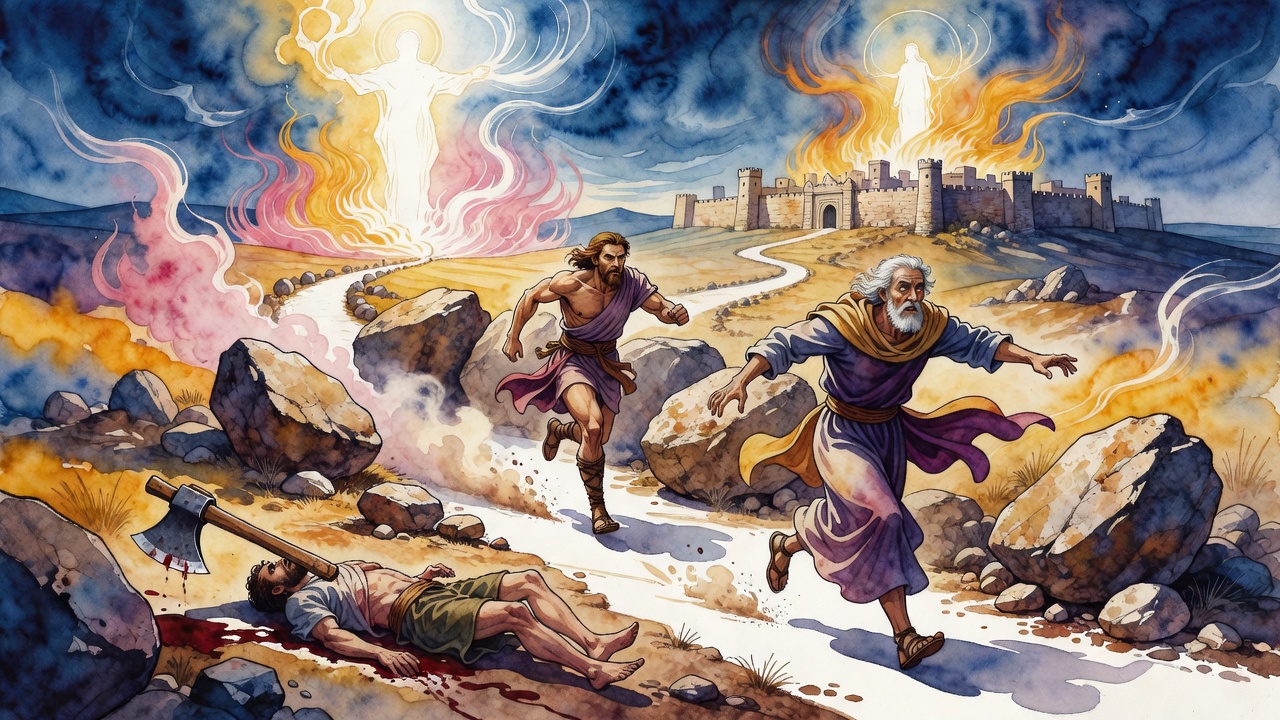
The axe head left the handle with a sound like a snapped bone. It flashed once in the sun and buried itself in the neighbor's temple. The woodcutter stood with empty hands and a body at his feet.
The Avenger of Blood Ran While the Killer Fled Click for full size

He ran.

Behind him a cousin of the dead man took up the right of the go'el hadam (גֹּאֵל הַדָּם), the avenger of blood. The law did not ask him if he felt ready. Kinship itself put the chase into his legs. Dust rose on the road east of the Jordan. The killer's lungs burned. He did not look back.

Three Cities Moses Cut Into the Map

Moses had already set three cities of refuge on the east bank while Israel still camped outside the land. Bezer. Ramoth. Golan. The names were not poetry. They were doors. A man who had killed without hatred could reach one, seize the gate, and live long enough for a court to hear whether the blood was accidental or intended.

The promise behind those doors was older than the camp. Everything that followed the oath to the forefathers rode on their merit: the land, the cities across the Jordan, even the three havens planted there before the people crossed. Later six cities would stand, three more west of the river. In a farther time the count would rise again. Mercy was drawn as a map that could still grow.

The woodcutter knew only the nearest name. He ran toward it as if the road itself were a prayer.

What Happens If the Avenger Will Not Strike

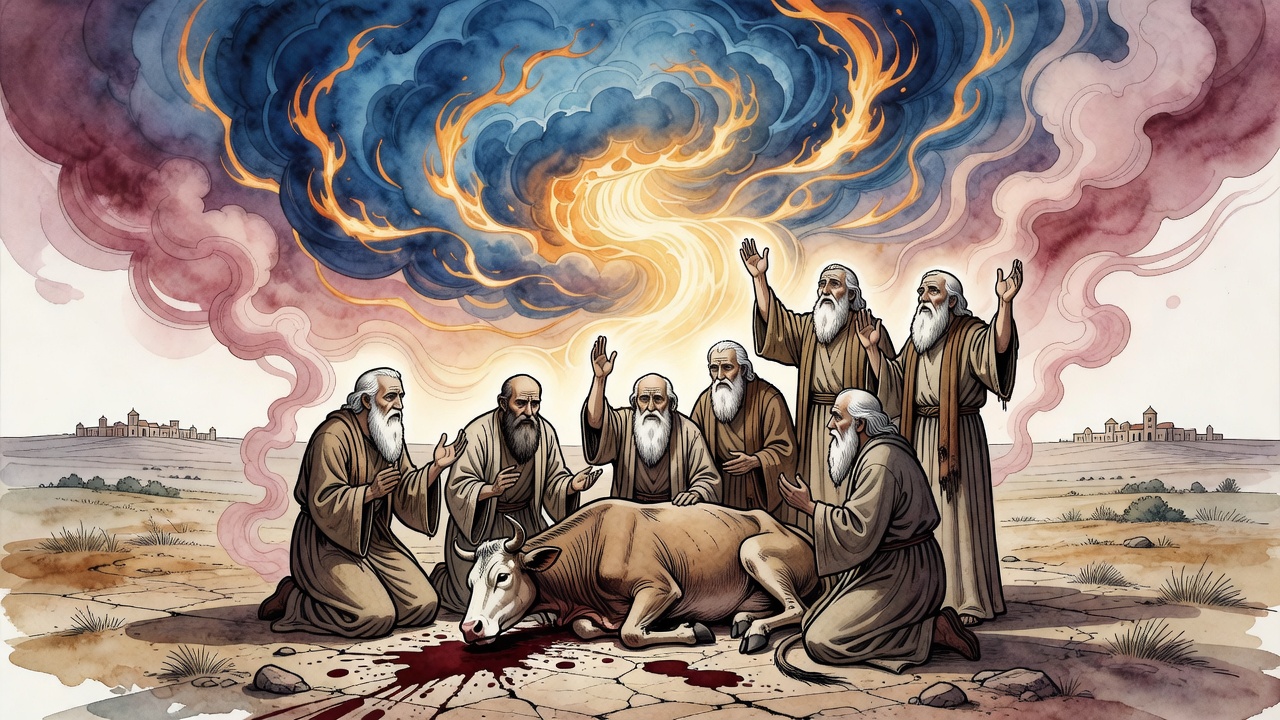
The court that waits inside those walls is not soft. If the judges find deliberate murder, the killer does not stay under the city's roof. The verse is hard: they shall place him into the hand of the avenger of blood, and he shall die (Deuteronomy 19:12). The Sifrei presses the edge further. If the go'el will not act, the sentence does not evaporate. "And he shall die" means the community itself must finish what kinship refused.

Pity is forbidden to become a loophole. "Let your eye not pity him, and remove the innocent blood from Israel" (Deuteronomy 19:13). The dead man's blood is not an emotion. It is a stain that demands an answer. The city of refuge is sanctuary for the accidental hand. It is not a hiding place for the deliberate one.

The woodcutter ran with that double law in his throat. He needed the gate to open for accident. He feared a court that would call his blow intention.

The Gate and the Elders

He reached Bezer at dusk. The watchman saw a man covered in dust and blood that was not his own. Protocol was older than either of them. The elders of the city sat. He told the story of the axe, the handle, the neighbor who had stood too close. No feud. No prior words. A tool that failed and a body that fell.

Outside the walls the go'el hadam arrived with a spear and a face that had not yet decided whether law or grief would win. The elders stood between them. Until judgment, the city held the runner. The spear stayed outside.

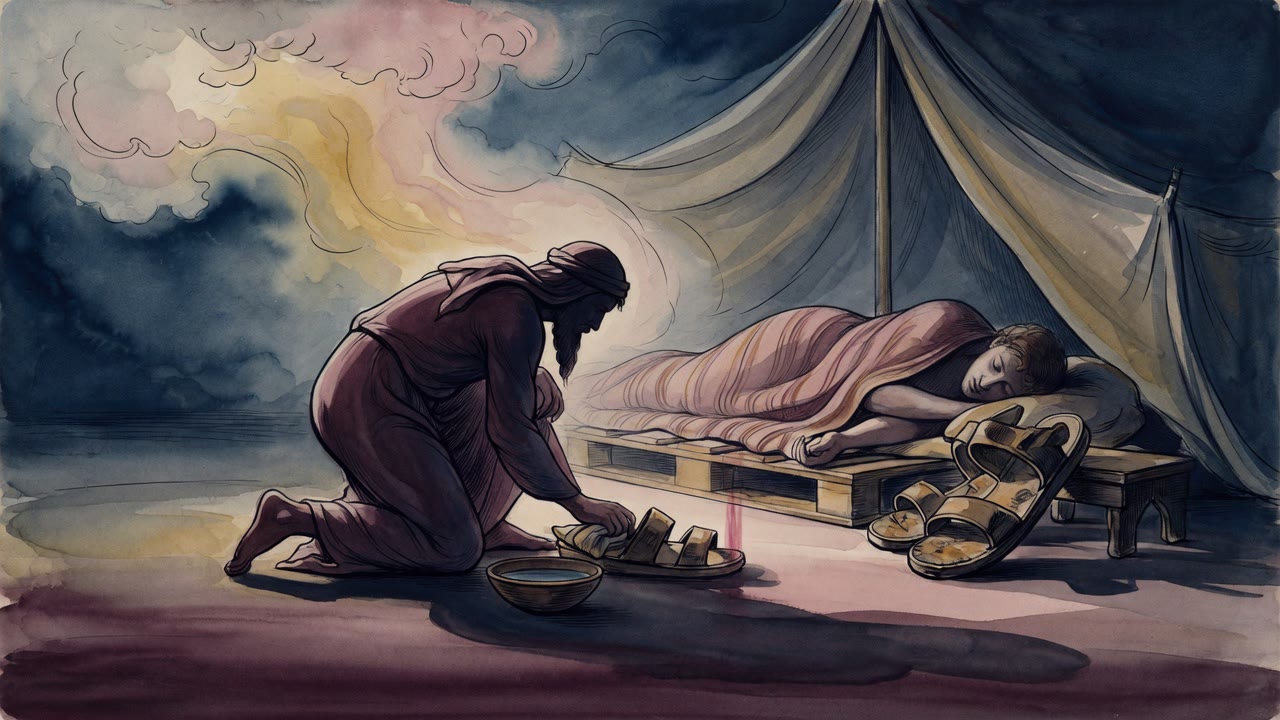
That night the woodcutter slept on stone with his back to a wall. Every footfall on the street sounded like kinship coming to claim him. The city did not promise comfort. It promised procedure.

Accident Is Not Innocence

In the morning the court measured the handle, the head, the angle of the wound. Witnesses who had been felling timber with them swore there had been no quarrel. The go'el listened with his jaw locked. When the elders named the killing accidental, the avenger's right to kill ended at the gate. The woodcutter would remain in the city of refuge until the high priest of that generation died. Then the road home would open without blood on it.

He wept, not from joy, but from the weight of years he would live among strangers because a tool had betrayed him. The dead man would not rise. The law did not pretend otherwise. It only refused to let one death become two when the hand had not meant to kill.

Why the Map Keeps Adding Cities

Moses set three. Israel later set three more. The tradition speaks of three still to come. The count is not bureaucracy. It is a confession that mercy must scale with the land and with the people who live in it. The oath to the forefathers is not a museum piece. It builds havens where panic and justice can meet without devouring each other.

On the road outside Bezer the go'el turned home with empty hands and a living cousin behind stone walls. The woodcutter learned the names of streets that were not his. Somewhere west of the river, other cities waited for other hands that would shake and fail. The map of refuge was already older than any single chase, and it was still not finished.

Years later a boy in Bezer asked the woodcutter why the avenger had stopped at the gate. The man who had run until his lungs failed answered without theology. "Because the city is stronger than my cousin's grief, and weaker than deliberate blood. That is the only reason I am still here to answer you."


← All myths
From the tradition

Sources

2 sources

The texts behind this telling. Some cards carry a translation of the source; others are our own retelling of it, and each card says which. Every card links out to the original.

Sifrei Devarim 187:8Sifrei Devarim

Retold in our words. Read the original at the link below.Sifrei by Rabbi Shraga Silverstein · CC-BY

Someone accidentally causes another person’s death. A tragedy, no doubt. But what happens next? What does justice look like?

The Book of Deuteronomy, or Devarim in Hebrew, lays out a system of cities of refuge, places where someone who has unintentionally killed another can flee to escape the wrath of the go’el hadam (גֹּאֵל הַדָּם), the “avenger of blood" – usually a relative of the deceased, who is given the right, even the obligation, to avenge the death.

What if the avenger of blood… doesn’t avenge?

That’s where the ancient text Sifrei Devarim, a collection of legal interpretations on Deuteronomy, gets interesting. It quotes Deuteronomy (19:12), which says "and they shall place him into the hand of the avenger of blood and he shall die." The Sifrei asks: What happens if the go’el hadam doesn't fulfill their role? Does the accused get off scot-free?

The answer, according to the Sifrei, is a resounding no. The text derives from the simple phrase "and he shall die" that if the avenger of blood doesn't act, then the accused is still to die, at the hand of any man. Whoa. That's It suggests a communal responsibility to ensure justice is served, even if the designated avenger fails to act. It's a stark reminder that the value of a human life is paramount.

But then, almost immediately, the text anticipates our unease. Surely, you might think, killing someone – even accidentally – is bad enough. Why compound the tragedy with yet another death? Why risk spilling more blood and potentially creating a new cycle of vengeance?

The Sifrei anticipates this objection, quoting (Deuteronomy 19:13): "Let your eye not pity him, and remove the innocent blood from Israel."

It’s as if the Torah is saying: Don’t let your compassion cloud your judgment. Because if you do, you risk sending the wrong message. You risk devaluing the life that was lost.

The Sifrei then takes this idea a step further. "And remove the innocent blood" doesn't just refer to the blood of the victim, it explains. It means "remove the doers of evil from Israel." It's not just about punishing the individual, but about purifying the community. It's about creating a society where human life is sacred and where actions have consequences.

So, what are we left with? A challenging, perhaps even unsettling, view of justice. It’s a system that acknowledges the complexities of human action, the tragedy of unintended consequences, and the need for both compassion and accountability. It forces us to confront uncomfortable questions about the value of life, the nature of justice, and our responsibility to one another. It's not easy, and perhaps that's the point. Justice, true justice, rarely is.

Full source
Sifrei Devarim 185:1Sifrei Devarim

Retold in our words. Read the original at the link below.Sifrei by Rabbi Shraga Silverstein · CC-BY

The verse states, "as He swore to your forefathers". And the Sifrei Devarim explains that everything that follows is "all in the merit of the forefathers." The blessings, the promises, the very land itself.. it's all connected to the actions, the faith, and the dedication of those who came before us. It paints a powerful picture of intergenerational legacy. It's not just about our individual merit; it's about the collective merit of our ancestors rippling through time.

What about the specifics of these promises? The text continues, "and He give you all the land that He swore to give to your forefathers." This wasn't just any land, but included (the cities of) the Keni, the Kenizi, and the Kadmoni – lands "across the Jordan, where three cities of refuge were established." These cities of refuge, places of sanctuary for those who accidentally committed manslaughter, are more than just geographical locations. They represent a commitment to justice, to mercy, and to providing a haven for those in need.

Let’s In Devarim (Deuteronomy) 19:9, it says, "If you keep all of this mitzvah (commandment) to do it … then you shall add for yourself, etc." The Sifrei Devarim derives something amazing from this verse. It tells us that Moses himself set aside three cities of refuge east of the Jordan River. But that wasn't the end of the story. When the Israelites finally entered Eretz Yisrael (the Land of Israel), they established another three cities. And, looking towards the future, the text suggests that in time to come, yet another three cities are destined to be added.

Think about the progression: three, then six, then nine. It's a fascinating numerical sequence. What does it mean? Some commentators see it as a reflection of the ever-expanding nature of God's mercy and protection. Others see it as a symbolic representation of growth and completeness. What do you see in it?

The idea that these cities would be added in stages also speaks to the ongoing process of building a just and compassionate society. It’s not a one-time achievement, but a continuous effort, a perpetual striving to create spaces of safety and redemption.

So, what can we take away from this passage in Sifrei Devarim? Perhaps it's a reminder that we are all part of a larger story, a continuous chain of generations linked by shared promises and shared responsibilities. And, maybe, it's a call to action, urging us to continue the work of our ancestors, to build a world where mercy and justice prevail, one city – one act of kindness – at a time.

Full source