When the King of Kings Pretended to Sleep Over Shushan
Haman built the gallows and went to bed happy. Nobody else in the world slept. In the cave at Hebron, Abraham turned over in the ground.
Table of Contents
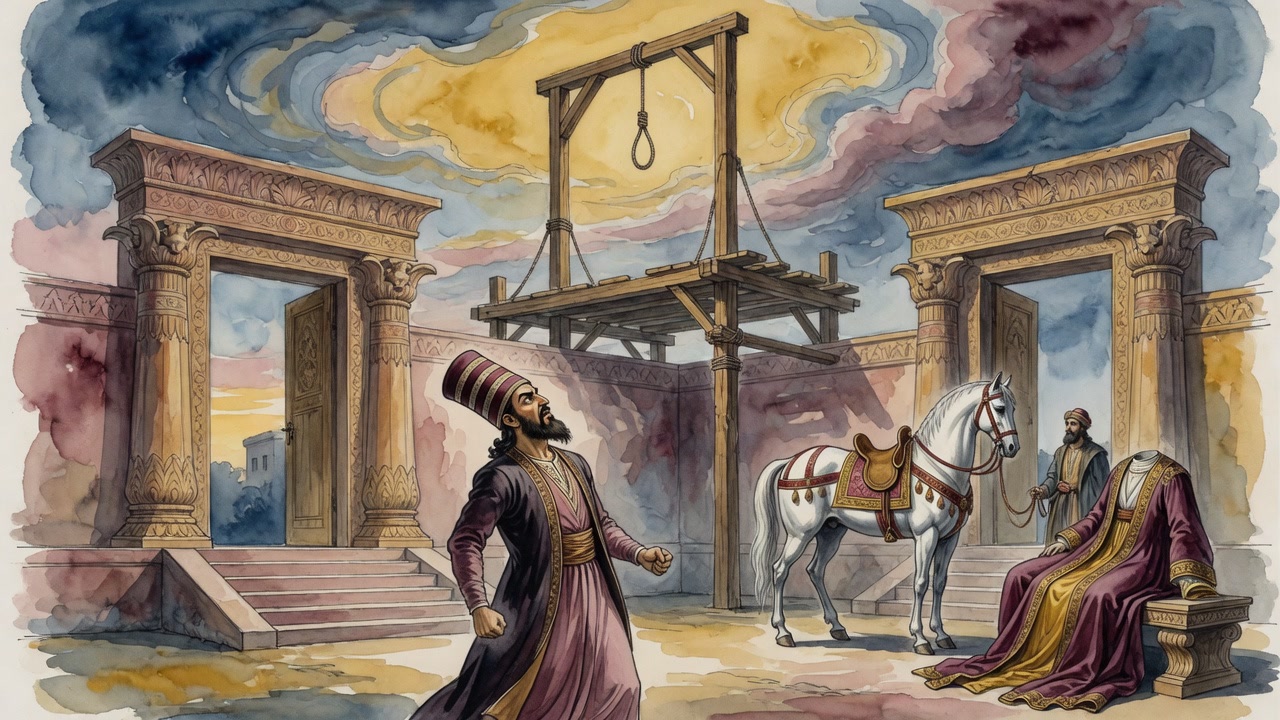
Haman went to bed satisfied. The beam stood ready in his courtyard, fifty cubits of cypress reaching for the stars, and in the morning Mordecai would hang from it. He had said as much to his friends. "Tomorrow I will hang him," and the words pleased him so well he repeated them. Then he lay down on his bed and waited for the easy sleep of a man who has already won.
 Click for full size
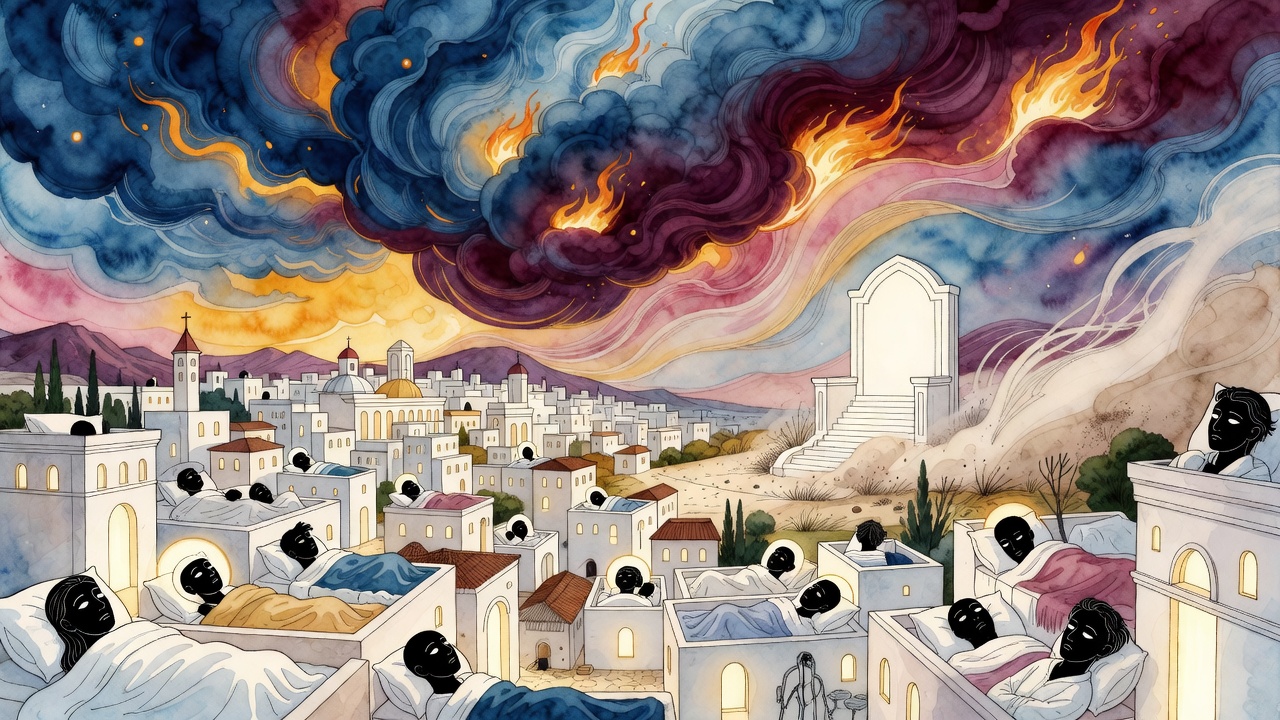
He did not sleep. No one did.
The Fathers Stirred in the Cave
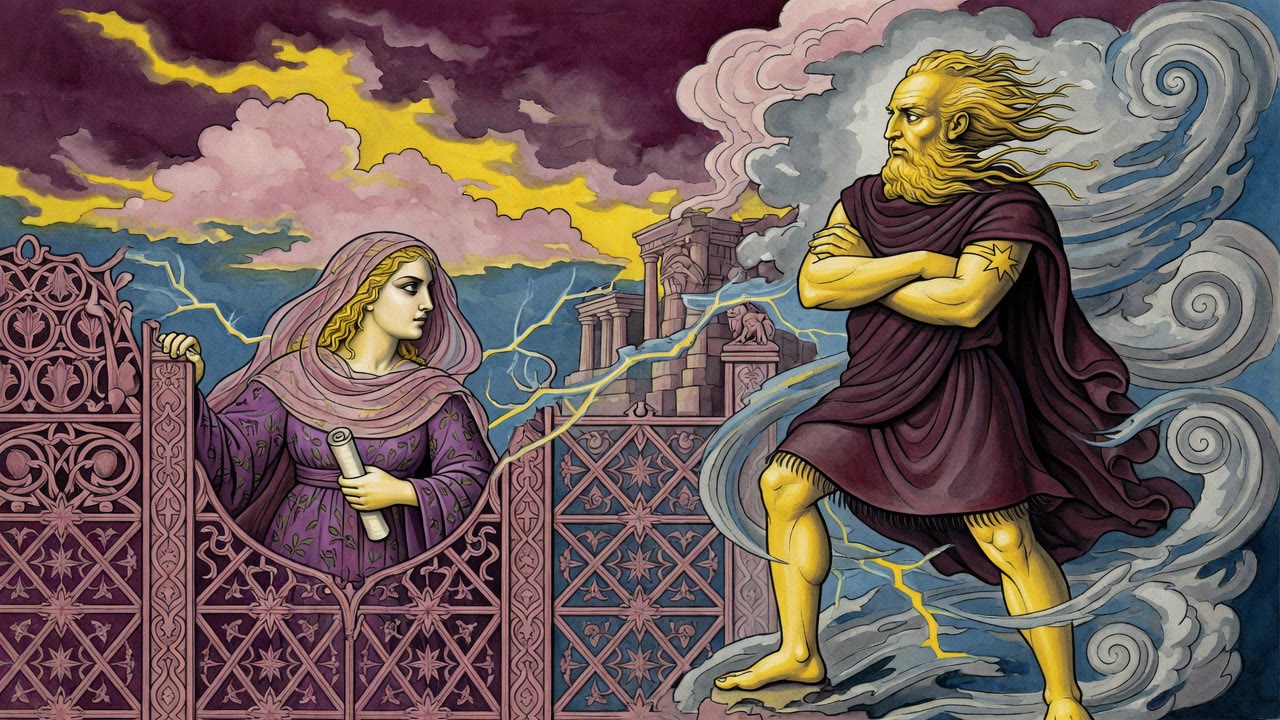
Far from Shushan, under the field at Machpelah, the air went cold. Abraham turned in the dark of the cave, and beside him Isaac and Jacob turned too, the three fathers of the world unable to lie still in the ground that held them. A cry came down out of the north, the howl of a falling cedar, and the cypresses of Lebanon answered it. The cedar was Abraham, the head of the fathers, and he had felt the axe at the root of his children before any blade was raised.
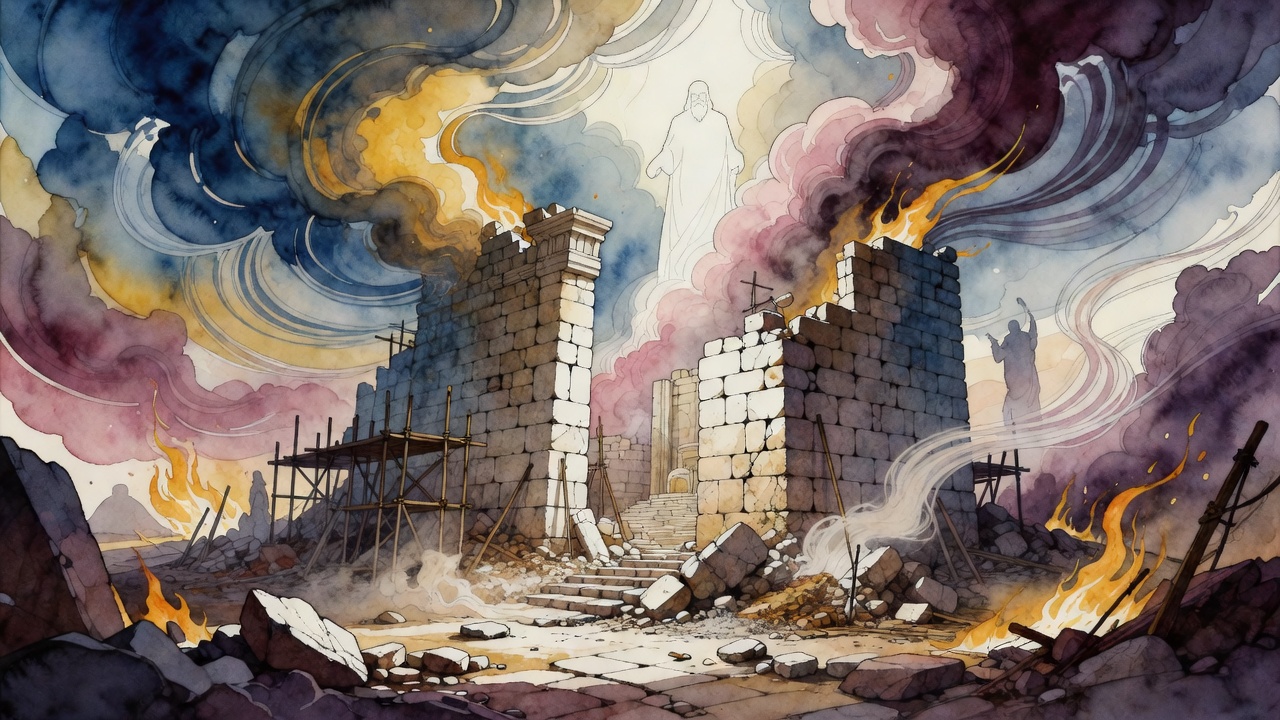
The shepherds woke next. Moses and Aaron, who had brought the flock out of Egypt and counted every lamb by name, heard the wailing of their own glory laid waste and could not close their eyes. Somewhere a numbering had begun that they had not ordered, a counting of the dead before the dead were dead.
A People Lay Awake and Did the Arithmetic of Their Own End
In Shushan, Israel did not weep quietly. They sat in their houses and worked a terrible sum out loud. "Master of the universe," they said, "You wrote in Your own Torah, if a man dies and has no son, his inheritance passes to his brother. But we are to be destroyed, killed, annihilated, every one of us, man and child together. Whose will the money be? Let the gate stand open. Let anyone who wants walk in and take it, because tomorrow there will be no one left to own it."
They had read the decree. They knew the date. Sleep was a thing for people who expected another year.
Mordecai did not sleep either. He sat in his sackcloth with the ash still gray on his face, and he listened to the silence outside his door for the sound of soldiers, because Haman had promised the morning to his rope.
The Watchers of Heaven Lost Their Rest
Higher up, where the ministering angels stood their endless watch, the watching broke. The mighty ones who never tired cried out in the open, the way men cry when the thing they guard is about to be torn from their hands. They looked down at one sleepless city and one waiting beam and they did not know how the night would end. That was the worst of it. The angels did not know.
And the King did not sleep. Not Ahasuerus on his couch in the palace, though his eyes were open too. The King of kings, the Holy One, whose throne the heavens themselves had shaken because He had seen Israel in distress.
The One Who Never Sleeps Had Only Seemed To
There is no sleep on high. The Guardian of Israel neither slumbers nor sleeps, and Israel knew the verse by heart. So when the night felt empty of Him, when the nations sat at peace and His children sat counting their inheritance to ghosts, it was not that He had closed His eyes. It was that He had let Himself seem to. When His people turn from Him He lies still as a sleeper, and they cry up at the silence, "Rouse Yourself, why do You sleep, O Lord?" The sleep is a posture, not a truth. And on this night the posture ended.
The Holy One turned to the angel set over sleep and spoke as a father speaks when he has watched long enough. "My children are in distress, and this wicked one rests easy on his bed? Go. Take his sleep from him."
The Sword in the Dream and the Man in the Court
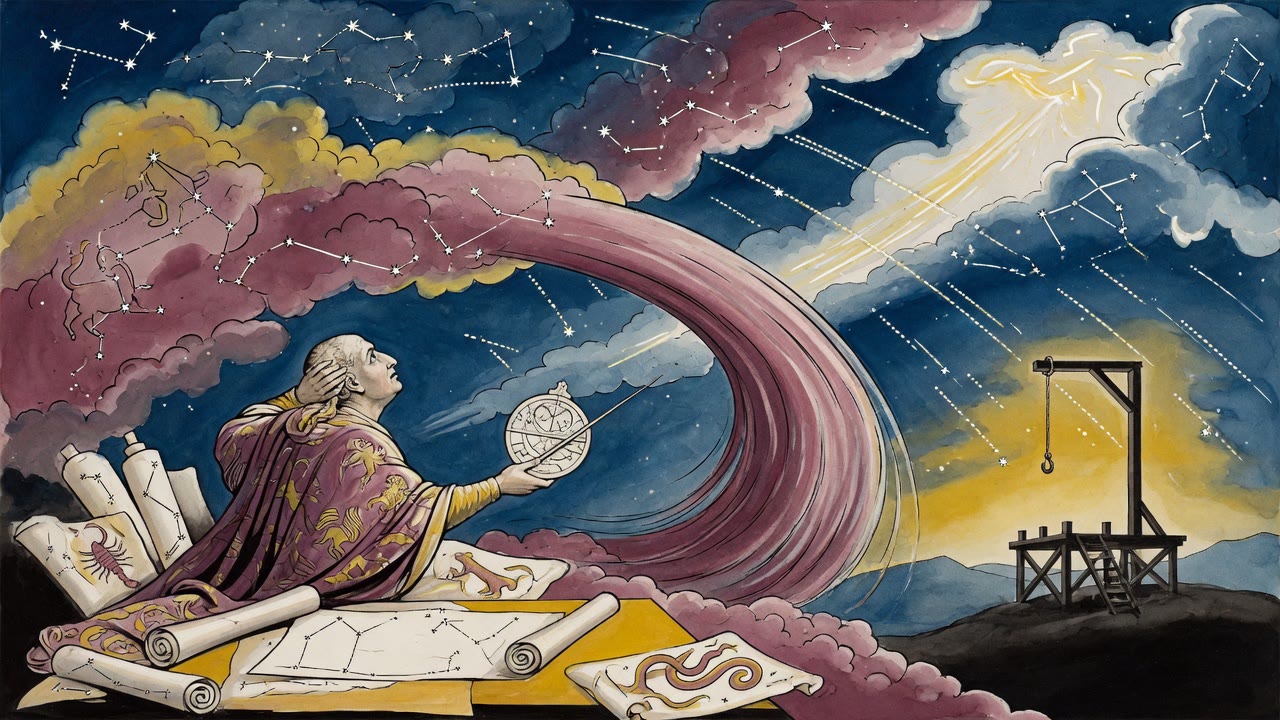
So sleep was taken, but not from Haman first. The heavens reached into the one bed in Shushan that had been comfortable and disturbed the throne-shadow of the king who sat under God's own title. Ahasuerus thrashed awake. He had dreamed a sword, and the hand on the hilt was Haman's, and the blade was turned at his own throat. He sat up shaking in the dark and shouted for his scribes. "Bring the book of records. Read me what has happened in my reign."
They unrolled the chronicles and read until they reached a small forgotten entry, two doorkeepers named Bigtana and Teresh who had plotted the king's death, and the man who had exposed them and saved the crown. The man was Mordecai. Nothing had ever been done for him.
While the words still hung in the air a servant looked out and said, "Haman is standing in the courtyard." He had come early, in the black hour before dawn, to ask for his enemy's life. And the king, the dream still wet on him, went pale. "It is true," he said. "The thing I saw is true. A man does not come at this hour for anything but to kill me."
By the time the sun rose over Shushan, the beam was still standing in Haman's yard. But the man who would hang from it was no longer the one he had chosen.
← All myths