The Decree Against Israel Began With the Temple's Unfinished Walls
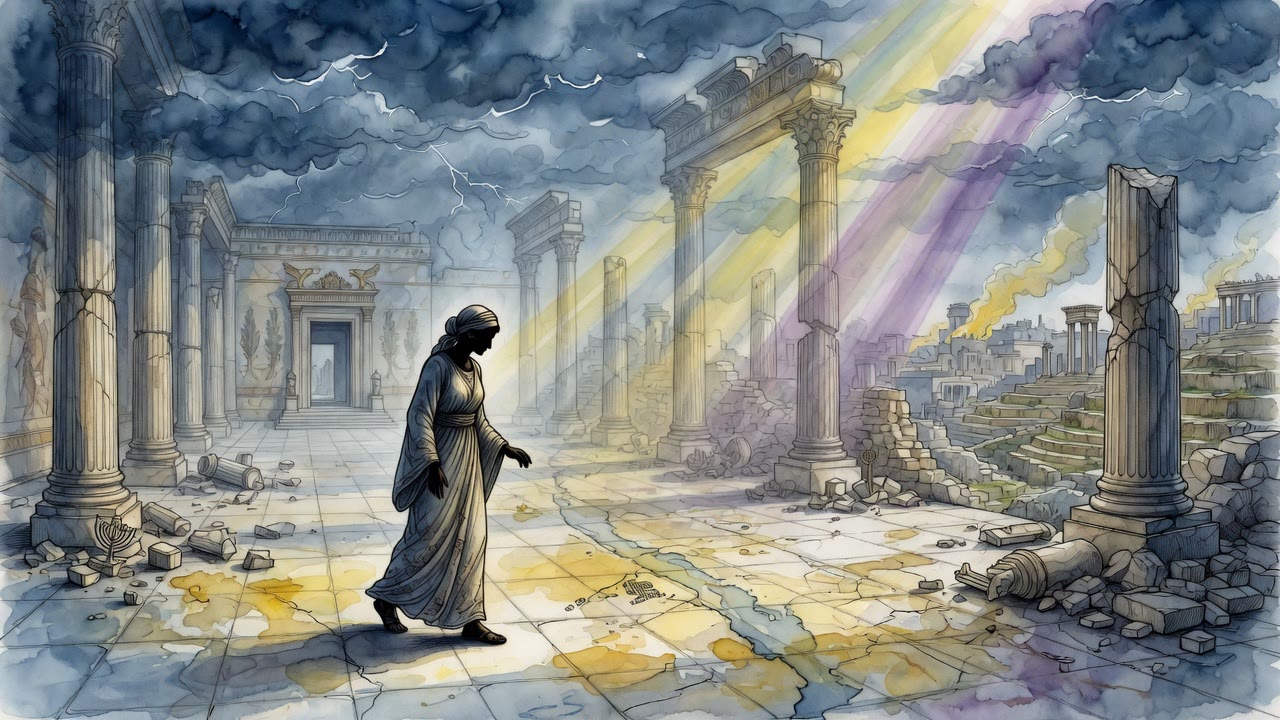
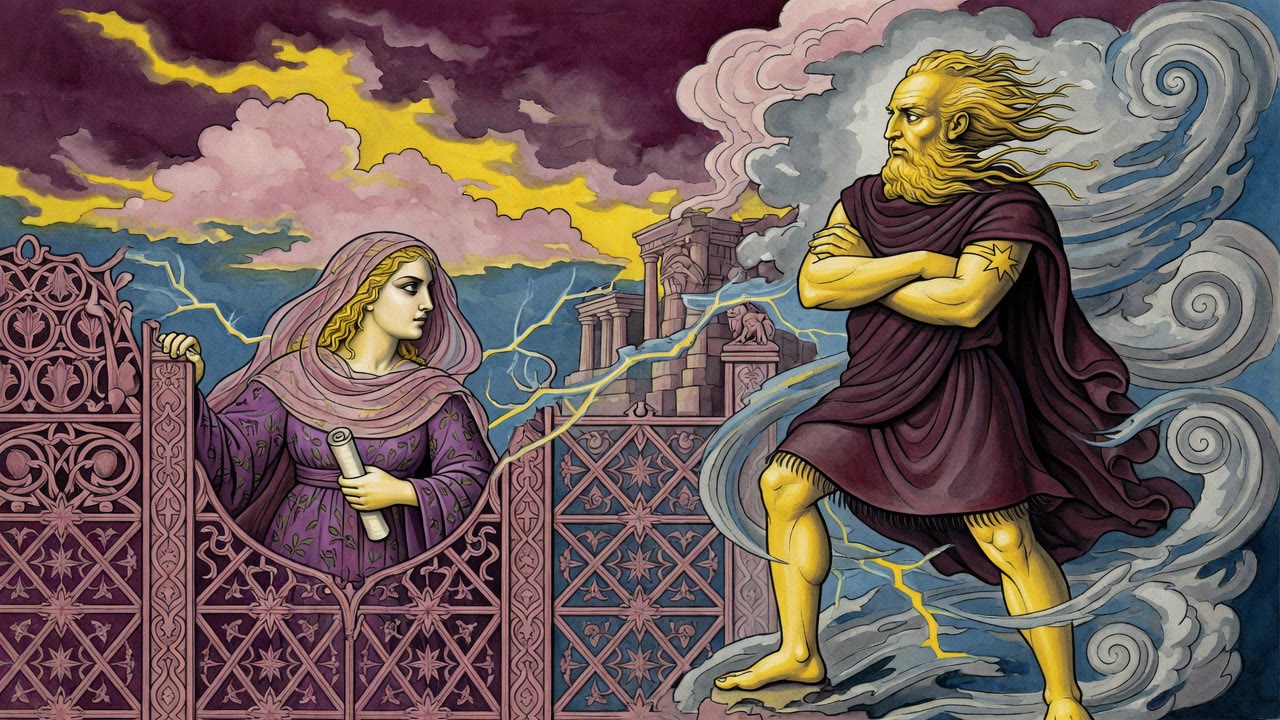
In Midrash Panim Acherim, Purim does not begin in a palace. It begins at a Jerusalem construction site Haman had already moved to stop.
Table of Contents
 Click for full size
The Building Site Under the Palace Floor
The scroll of Esther does not mention Jerusalem once. It mentions Shushan on every page. The Persian capital is the whole world of the scroll: the banquet hall, the king's gate, the inner court, the gallows Haman built. Midrash Panim Acherim, the medieval collection printed at Vilna in 1886, reads all of that and sees something buried underneath it.
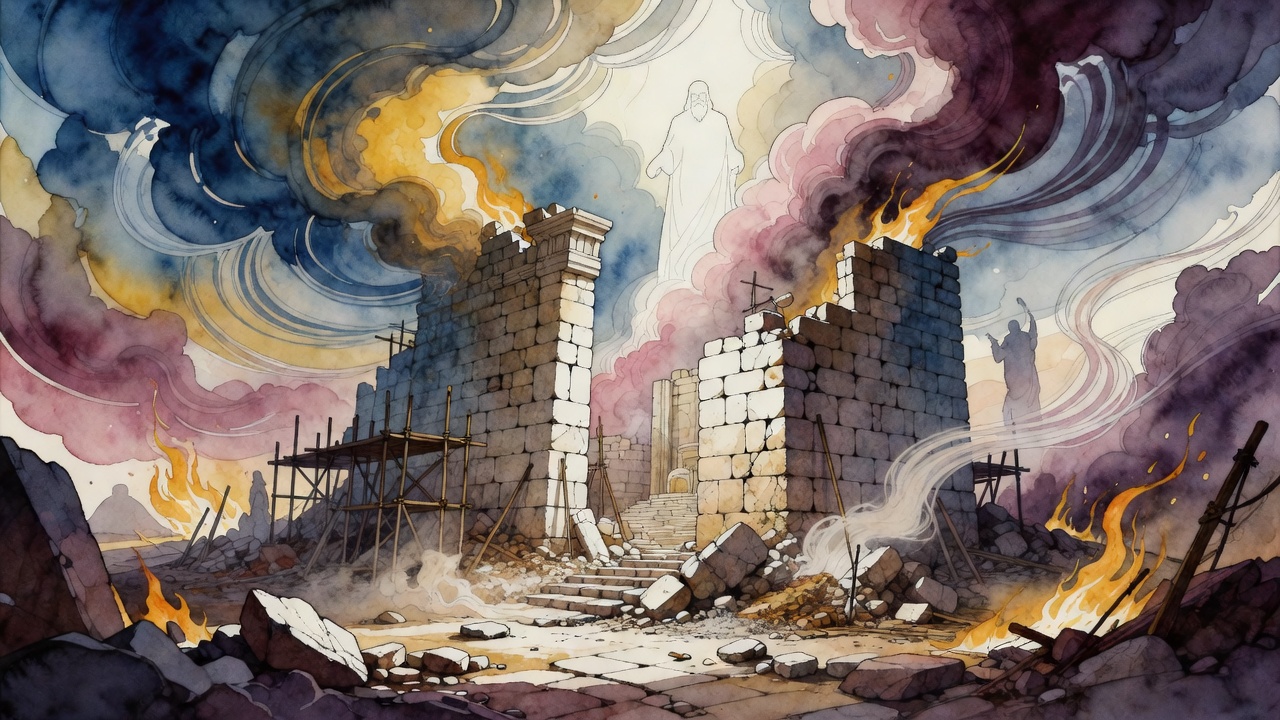
In its first move, the midrash pulls the verse from Amos: a man flees a lion and a bear meets him. Babylon was the lion. Media was the bear. Israel had survived one empire only to be caught by another. The clock Alexander started, the one the First Book of Maccabees opens with, had a longer prehistory. The exiles had already come back to Jerusalem under Cyrus. They had already leaned their hands against the wall. They had begun to build the Temple.
That is where Haman stands up. Not as a court enemy with a personal grievance against one Jew at the king's gate. As the force that comes against the house of God while its walls are still unfinished.
The Princes Emptied Their Seats
The palace begins to empty around the king. Ahasuerus sits enthroned from India to Ethiopia, one hundred twenty-seven provinces, and he holds a banquet that goes on for a hundred and eighty days. The princes come. Then they leave. The Sanhedrin, in the tradition's memory, had been invited and had attended, eating from the Temple vessels that had been taken to Babylon and then to Persia. They had sat at that table.
Then Haman rose and the princes who had stopped the Temple's construction lost their seats at court. Not all at once. The midrash traces the removals: the one who had written the letter to block the building was gone, then the next, then the next. The people who had stood against Jerusalem's reconstruction found their place in the royal court dissolving around them as if someone were correcting an old account.
Haman was the last of that line. He had no genuine royal lineage behind him. He bought his position. He got it for a price he paid directly into the treasury. What he bought with it was the decree against the Jews, the one that would be sent to all one hundred twenty-seven provinces: destroy them, kill them, annihilate them, on a single day.
Why Haman Cast Lots Until He Found Adar
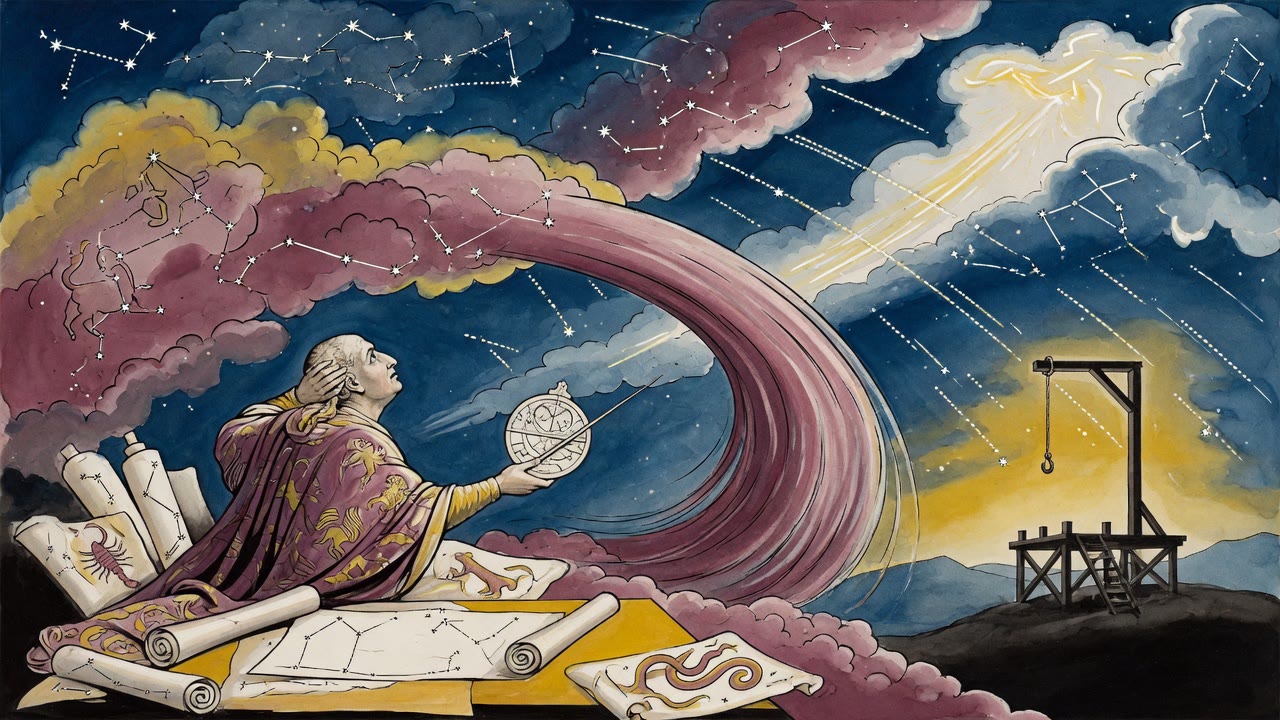
Haman cast lots for twelve months, from Nisan to Adar, looking for the month where he held the advantage. Every month had its weight. He passed Nisan because Moses was born in Nisan and Moses was strong. He passed month after month. When he reached Adar he stopped. The lot said Adar was the month Moses died.
What Haman did not know, what the lot did not show him, was that Moses was born in Adar too. The same month that held the death also held the birth. He thought he had found a fish trap for Israel, a month where the scales were tipped against them. He had found the month that belonged to Moses from beginning to end.
Esther Wore Two Garments at Once
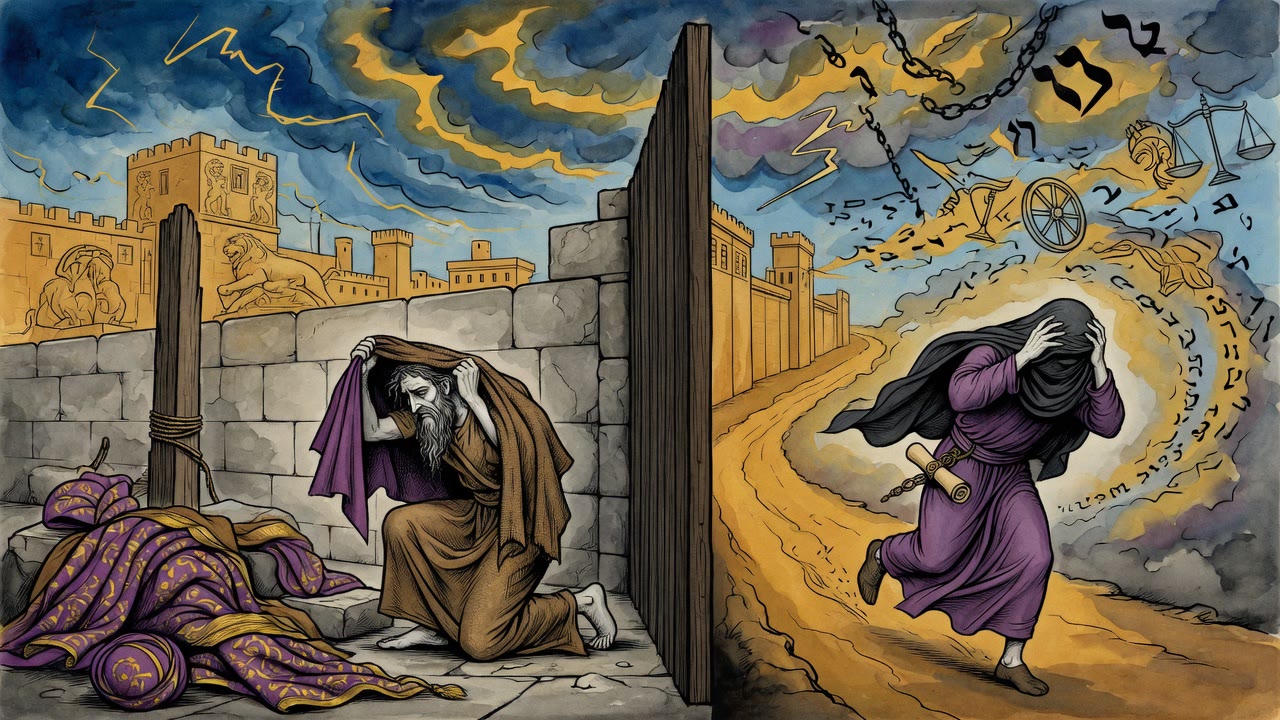
When Esther went to the king unsummoned, something wrapped around her that the scroll does not describe. The midrash says the spirit of holiness clothed her, that she wore both her ordinary royal garments and a heavenly royalty at the same time. She walked into the inner court wearing two kinds of dress, one visible to everyone in the palace, one visible only to heaven.
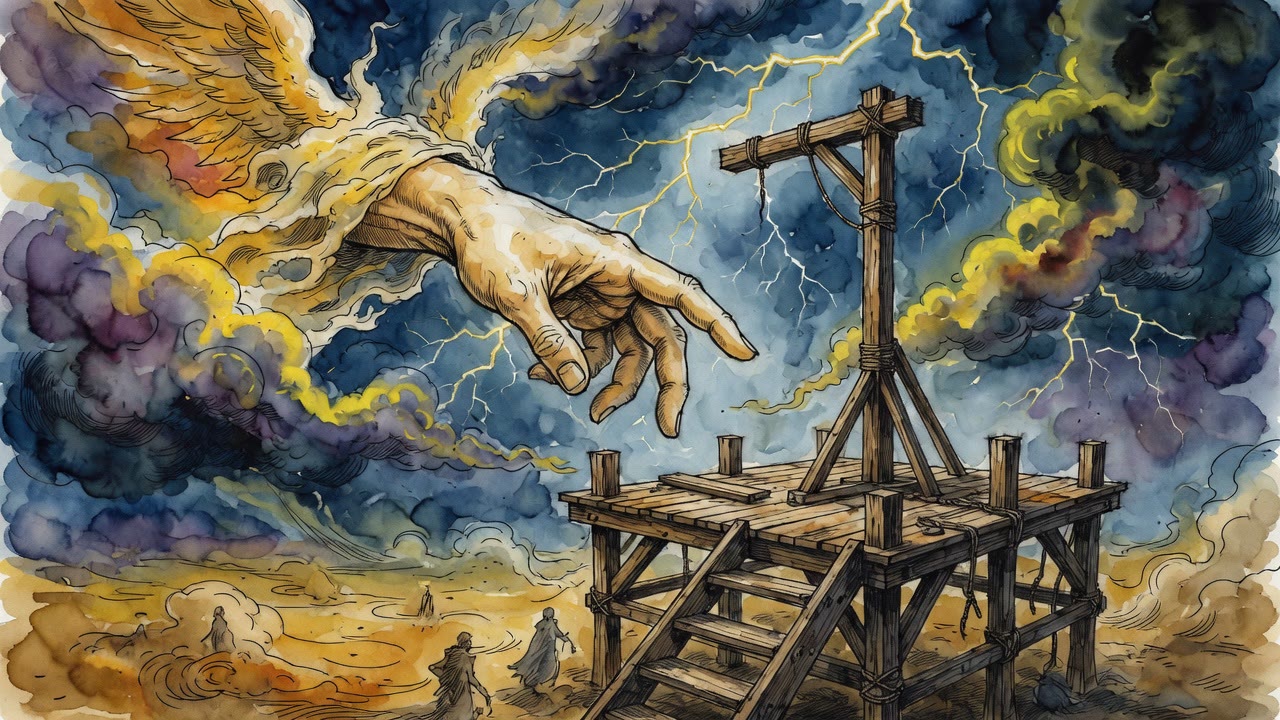
The king saw her from his throne and his eyes met hers and the scepter went out toward her. The midrash says the angel Michael moved it. The king did not extend it himself. What reached out toward Esther was extended by a hand that Ahasuerus did not know he was using.
Haman had chosen hanging because God had promised to save Israel from every other form of death he could name. The sword, the fire, the water, the wild beast, all the ways empires had tried to destroy Israel in the past had already been promised against. Hanging was what was left. He built the gallows fifty cubits high so every courtier in Shushan could watch. He got exactly that: every courtier in Shushan watched him hang on it.
← All myths