God's Question to Adam in Eden Was a Lament, Not a Search
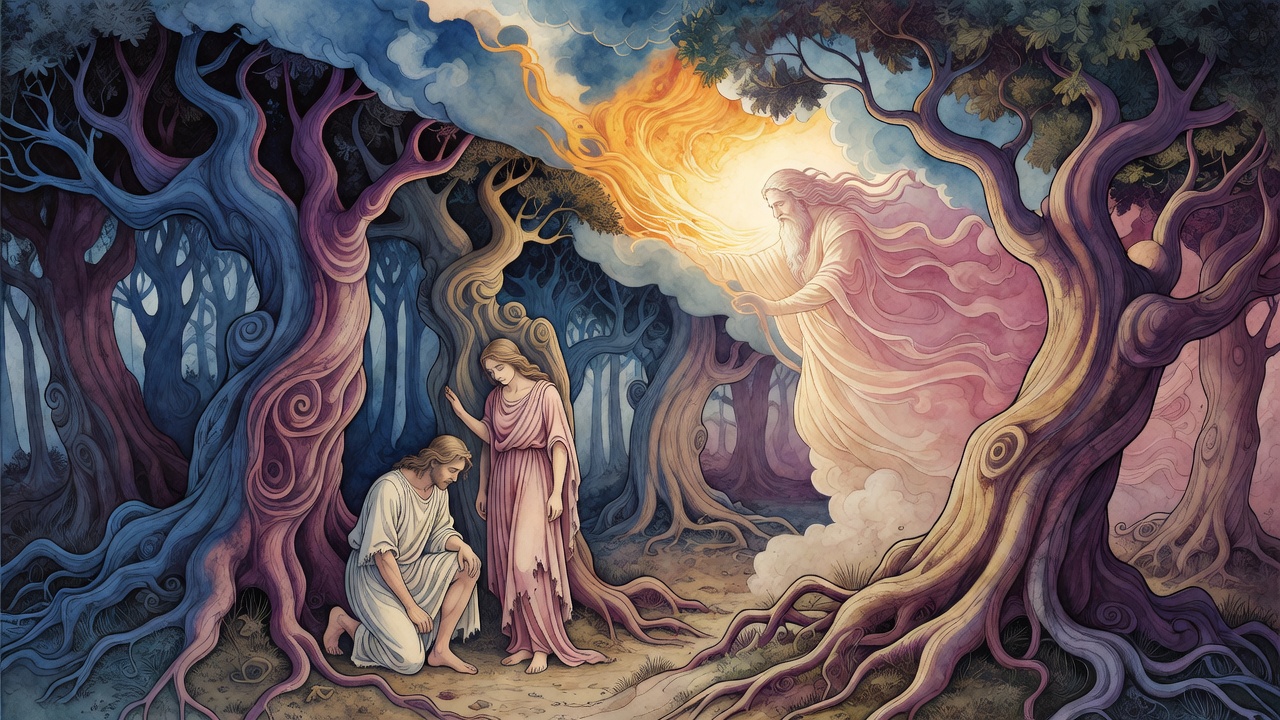
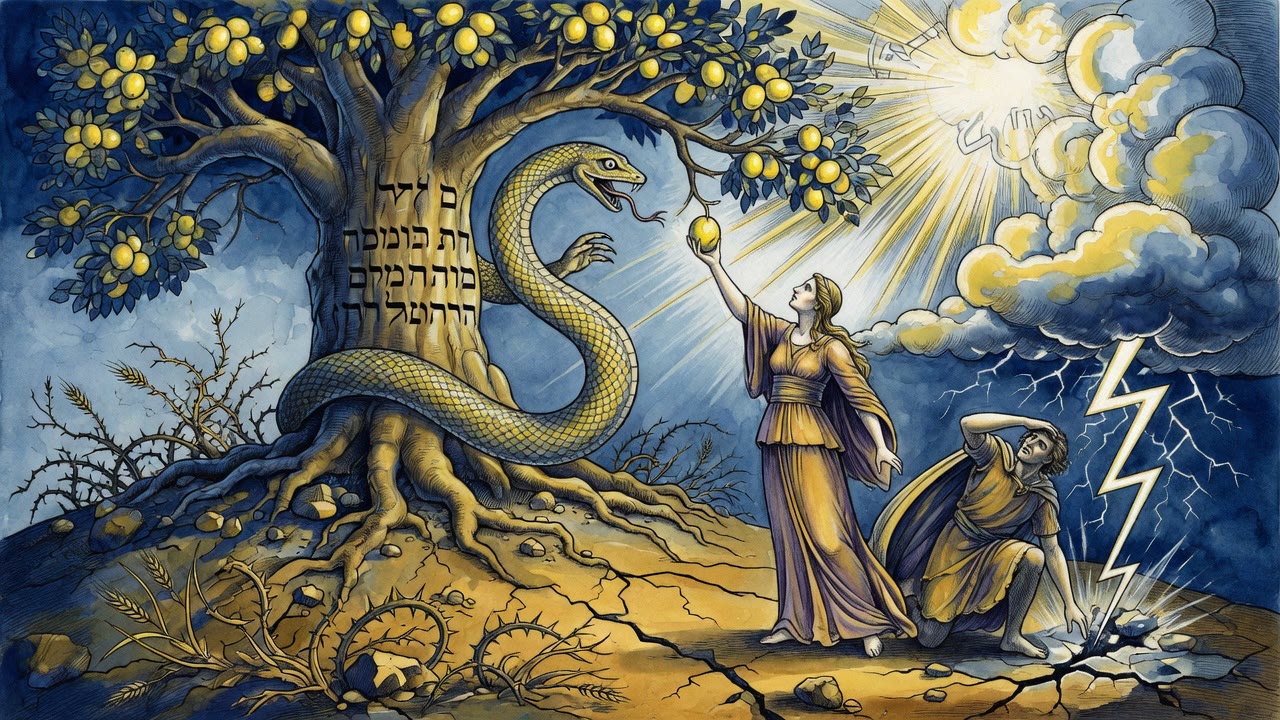
Adam hid among the trees with fig leaves on his skin. The voice at dusk did not hunt him. It asked where he was, and meant what he had become.
Table of Contents
Adam pressed fig leaves against his ribs and waited for the footsteps to pass.
 Click for full size
They did not pass. In Eden the cool of the day had always meant walking with God among the trees. Now the same hour arrived, and Adam crouched, and the leaves stuck to sweat, and the voice stopped where he was hiding.
"Where are you?" (Genesis 3:9).
Fig Leaves Against the Skin
He had eaten. The fruit was gone from the tree and present in his mouth as a taste he could not spit out. Eve stood somewhere to his left, also covered, also silent. The serpent had already gone toward dust. Nothing in the garden looked the size it had been that morning.
Adam did not run. There was nowhere to run that was not still the garden. He hid. Hiding is what a man does when he knows he can be found and hopes, against that knowledge, to be skipped.
The leaves kept slipping. He held them anyway. A search would have been a mercy. A search would have meant God might miss him. No search came. The voice was already beside the tree.
A Question That Already Knew
God did not ask for a map. Every path was His. Every tree was His. The man under the leaves was His. "Where are you?" was a lament spoken close enough for Adam to hear his own absence named while he still stood within earshot.
"Where are you now, O man? From how many good things are you changed?" The voice did not rise. It did not need to. "You forsook immortality and a life of the most perfect happiness. You have become changed to death and misery in which you are buried."
Adam was not lost on the ground. He was lost in what he had become. A father can stand three feet from a son and mourn the son who is already gone. That is how the question landed. The man who had stood upright in a life without death was now a man under leaves, led by an appetite he had failed to govern.
He did not answer with a place. He had no place left that matched the name he used to wear.
Eve Heard No Question
God did not put the same question to Eve.
She stood in the same shade. She had been the first to take and the first to give. God had watched her hand, and watched the man follow that hand, and the lament that found Adam did not turn to her as a question. The silence was its own sentence. She was not asked where she was. The act had already spoken.
Adam felt that silence in his chest. He was the one who should have refused. He had listened. He had eaten. Now he crouched, and she was not even called to give a location. The question went to the one who should have stopped. It did not go to the one who had led.
"Where are you?" meant "What have you become?" It went into the head that had let a mouth and a hand decide.
The Blow Turned Toward the Ground
When the sentence came, God looked at the thought behind Adam's eyes and would not strike it. Intellect is a gift. He would not curse the spark He had put in the head. He turned the blow toward the earth and toward the work of raising food from it (Genesis 3:17).
"Cursed is the ground for your sake." Adam heard the dirt named in his place. His body would work that dirt. His mind would still be his to use. The gift stayed. The ground would not stay easy.
He put his hand on the soil as he left. It did not give. He would eat by sweat. A sound will could still raise strength from that field. A savage will would raise thorns, sorrow, fear, the kind of vice that turns back and pierces the thought that failed to govern it. Refuse wisdom, and the mouth eats like a beast, grass for fodder, because the food that steadies a will has been refused.
Thorns Under the Plow
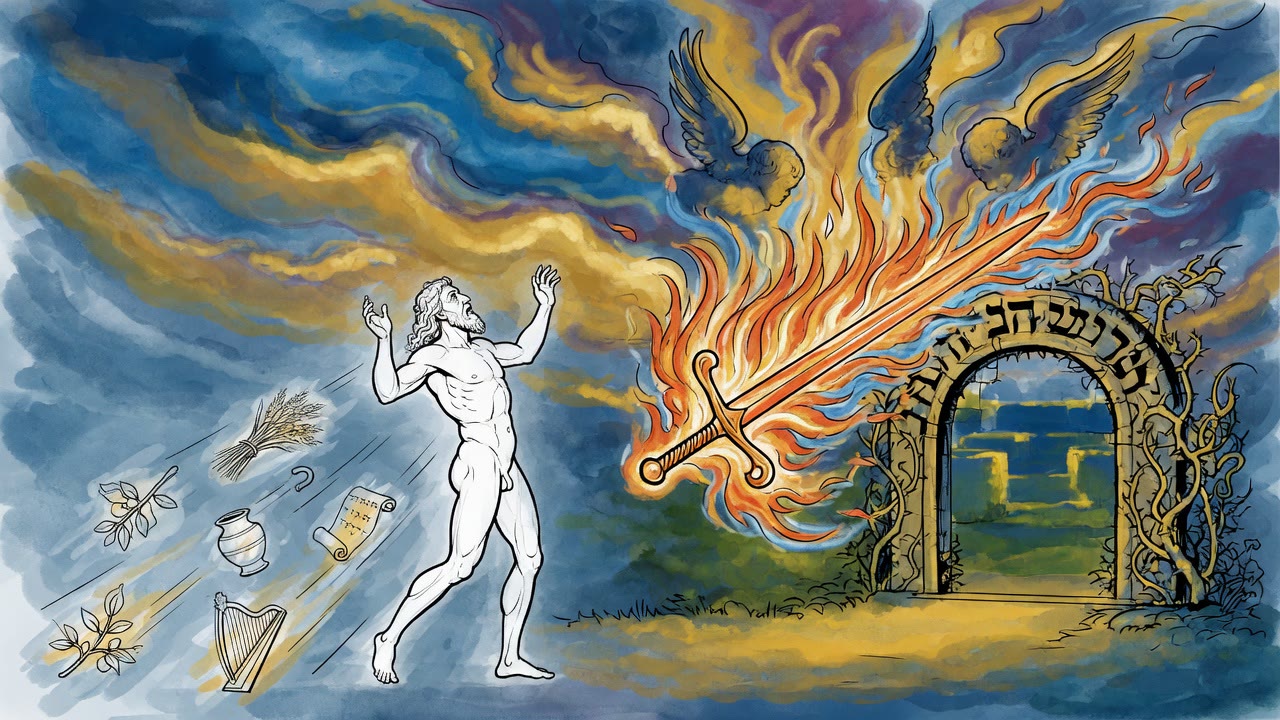
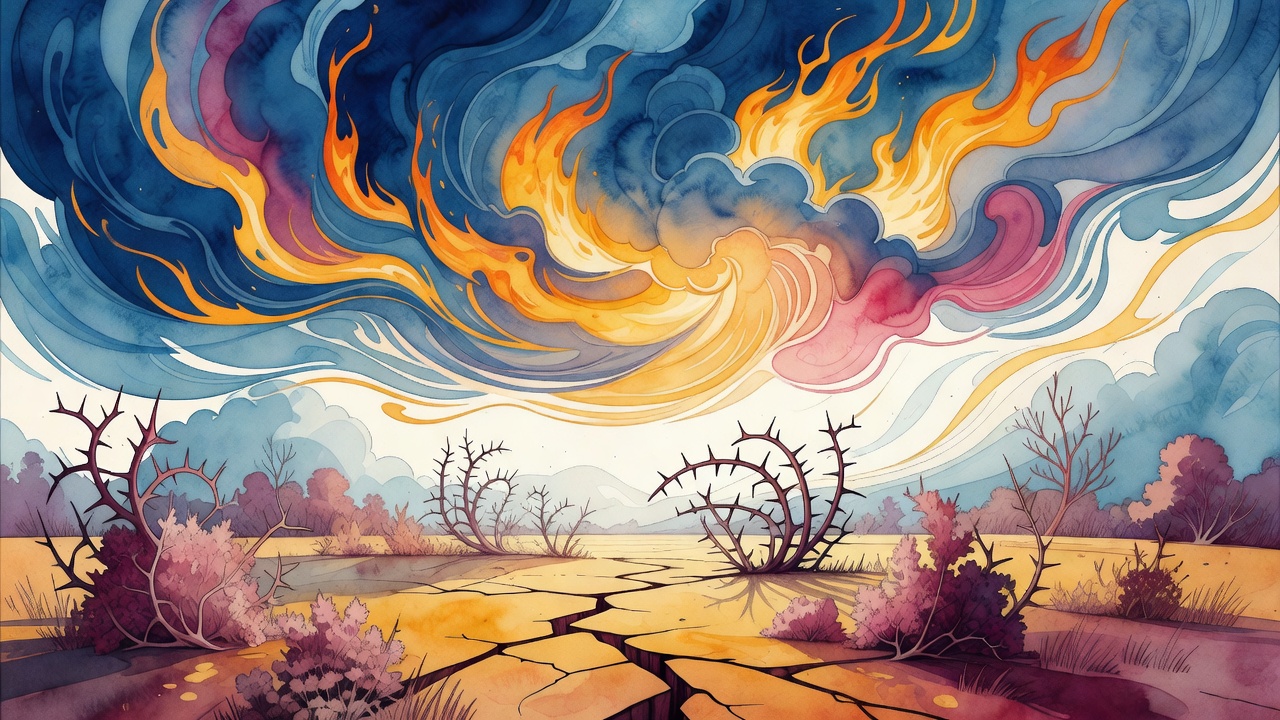
Adam put the plow in. The first stone answered. Then a thorn. Then another. The garden that had given fruit freely was behind him. Bread would come against thistle, or not come.
"Where are you?" still hung over the furrow. Not because God had lost him. Because he had lost the place he was, and the lament walked the rows with him. Every catch of the blade was an echo of leaves that could not hide a changed man.
Eve heard the cost in her own body. The serpent heard dust. Between them the earth took the blow meant to spare the gift in the head. Adam heard his name turned into a wound, and then he was told to till a ground that would not pretend the fall never happened.
He kept a mind Heaven had refused to curse. He lost height. He farmed.
← All myths