Parshat Bereshit5 min read

Paradise Hides Beneath the Armenian Springs

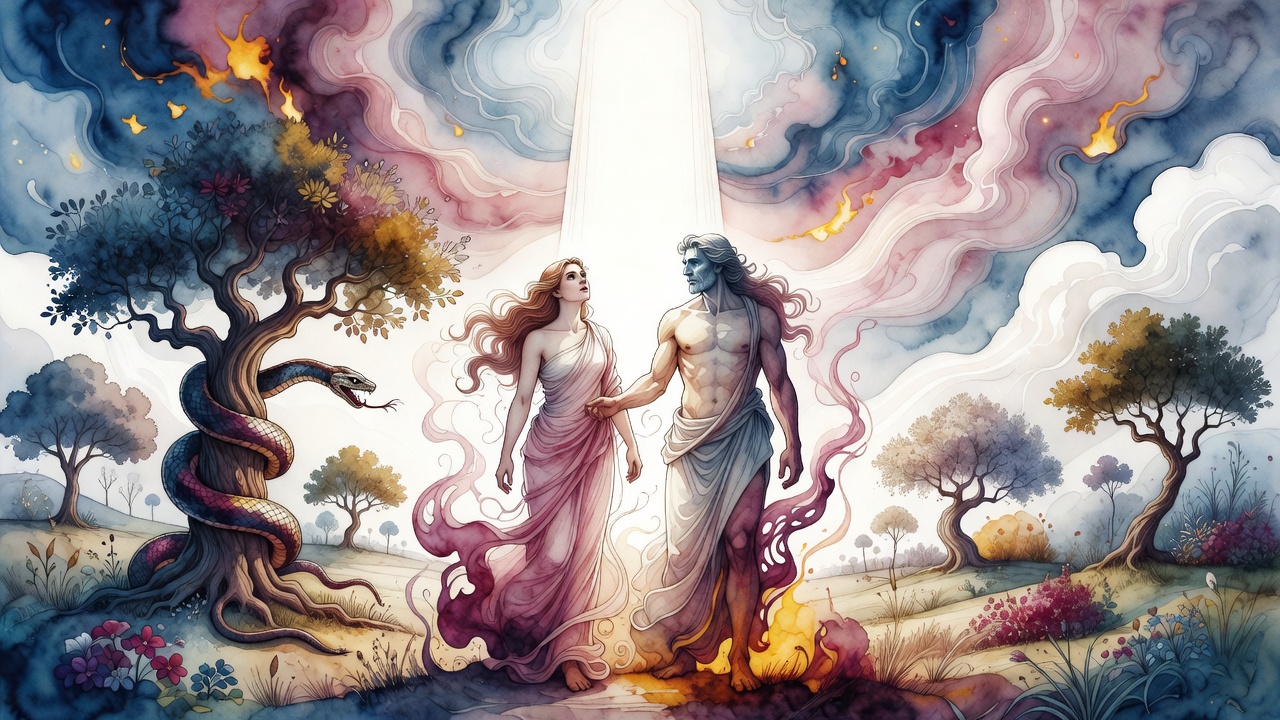
Philo went to the cold springs where the Tigris and Euphrates start. He found rock, goats, and wind, so he put Eden's river under the ground.

Curated by Arthur · Told by Maggid ·
Table of Contents
  1. Maps That Fail the Eye
  2. Four Rivers, Four Strengths
  3. Blueprint Larger Than a Plot of Land
  4. Cain's Field and Abel's Flock
  5. The Distance That Protects
Paradise Hides Beneath the Armenian Springs Click for full size

Maps That Fail the Eye

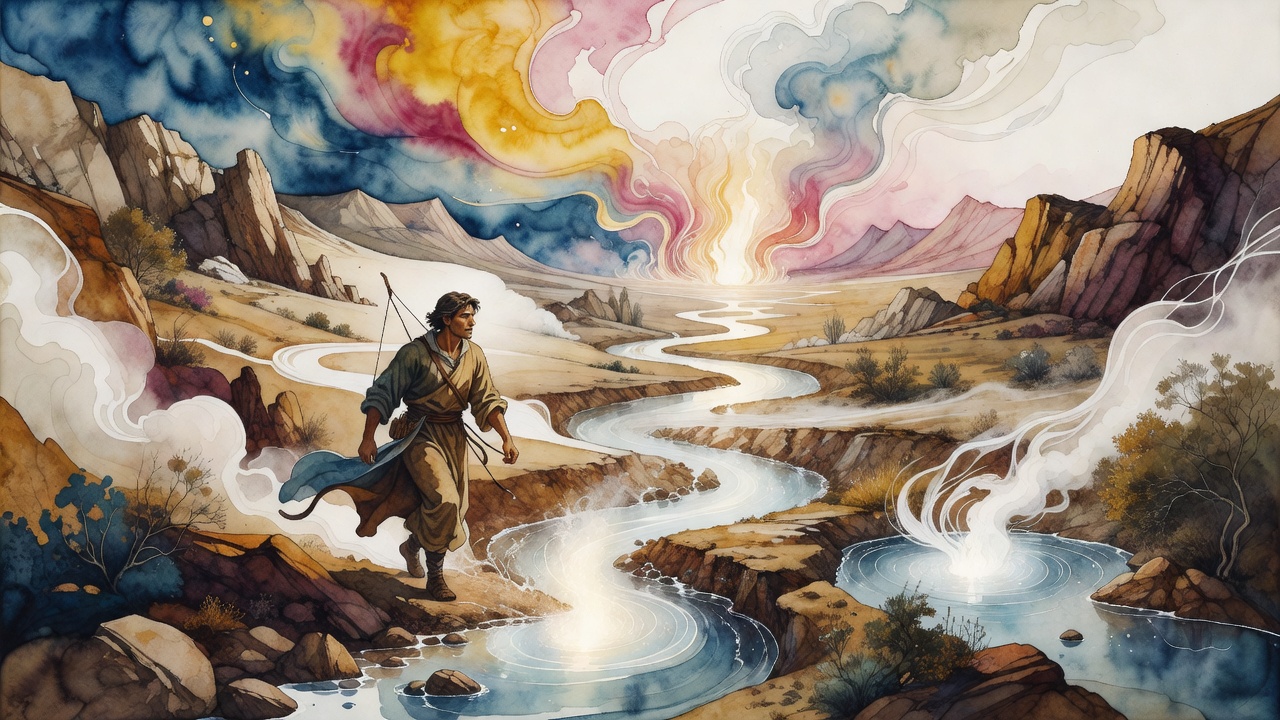
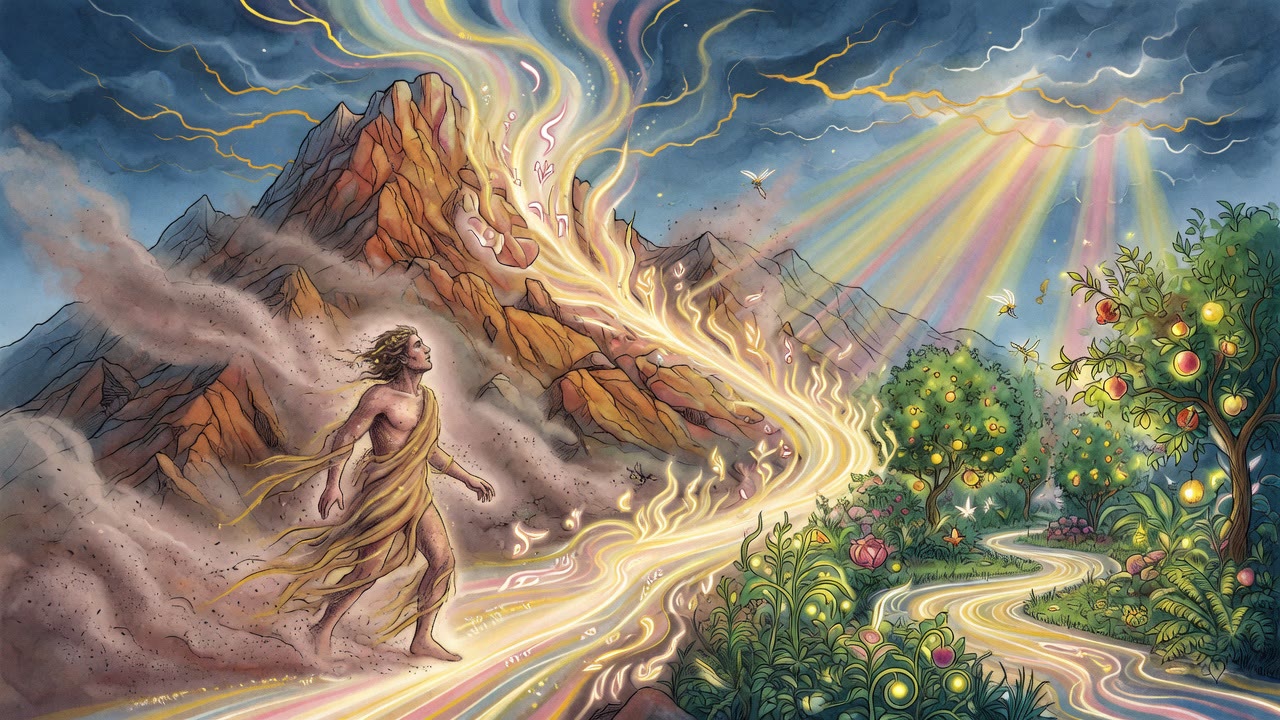
A traveler stood in the high cold where locals pointed at springs and said, here the great rivers begin. Tigris. Euphrates. The names from the garden story. He looked for gates, for cherubim, for a tree that still remembered the first prohibition. He found rock, goats, and wind. No paradise. Not that day. Not in any living memory the shepherds owned.

The reading of the puzzle does not shrug. Scripture is not careless. If four rivers are named, the naming holds. But the mountains of Armenia are not a museum of Eden. The sources men point to may be only parts of a longer course. Paradise sits at a distance from the inhabited world, fed by a river that runs under the earth and throws up streams in many places, Armenia among them.

The traveler knelt and put his ear to stone. He imagined water moving in the dark like a secret still keeping the first garden alive somewhere else.

Four Rivers, Four Strengths

The allegory does not cancel the geography. It deepens it. Pishon becomes prudence, careful measure. Gihon becomes sobriety, appetite under rein. Tigris becomes fortitude, anger held in a hard hand. Euphrates becomes justice, the joy that orders a people. A man who cannot find Eden on a map can still lose his way inside himself when those four streams dry up.

Adam once walked where those virtues were as near as water. After the exile, the garden's coordinates went dark to ordinary feet. The virtues remained as a portable paradise or a portable lack. The rivers are not decoration. They are a moral hydrology.

On the mountain, the traveler tasted snowmelt and thought of justice. The cold was clean. Clean is not the same as Eden, but it rhymes enough to keep a person walking instead of cursing the mapmakers.

Blueprint Larger Than a Plot of Land

Later mystics speak of Adam Kadmon (אדם קדמון), primordial Adam, not the man of dust alone but the template through which worlds are arranged. The garden of the first human sits inside a larger likeness: government of spheres and blades of grass ordered as if on a cosmic body. Eden is a place and also a pattern. Lose the place. Keep hunting the pattern, or become a creature of pure accident.

The traveler had no kabbalistic diagrams in his pack. He had the ache of a missing garden. That ache is already a kind of map. It says the world is not only what the eye owns. Something was arranged. Something was lost. Something still structures what remains.

God is not an instrument in that arranging. God is the cause. Creation does not happen by a tool separate from the Maker. From God, not merely by a borrowed hand. The garden's missingness does not make the Cause less first.

Cain's Field and Abel's Flock

Even after Eden, the story of brothers begins with work. Abel keeps sheep. Cain works soil. The order of naming is not idle. Shepherd and tiller already choose how to stand under heaven without a gate behind them. Paradise hidden does not cancel responsibility on open ground where blood can still cry from dirt.

The traveler left Armenia with empty hands and a full argument. He would tell anyone who asked that the garden is not disproved by the absence of fruit trees at a tourist spring. A buried river can feed four famous mouths and still keep its head in a country no passport reaches.

At night he dreamed of a wall of light and woke to ordinary stars. Ordinary stars were enough to walk by if the four virtues still ran somewhere under his ribs when anger or greed rose like flash floods.

The Distance That Protects

Perhaps paradise stays distant so that appetite cannot pave it and sell tickets. Perhaps the subterranean river is a mercy, keeping holy water from being fenced and priced. The double move, physical puzzle and moral rivers, leaves the seeker without a cheap pilgrimage and without an excuse to stop seeking when the first spring fails the eye.

Adam's exile set the terms. The Cause still causes. The pattern still patterns. The traveler drinks from a common stream and blesses the Name for water that does not need to be Eden to be gift.

Somewhere, out of reach of Armenia's goats, a garden holds its breath. Somewhere closer, a person chooses prudence over panic, sobriety over flood, fortitude over rage, justice over the easy slight. That choice is a small arrival. The map will not show it. The soul will, the way a buried river shows itself only when a valley suddenly greens.


← All myths
From the tradition

Sources

3 sources

The texts behind this telling. Some cards carry a translation of the source; others are our own retelling of it, and each card says which. Every card links out to the original.

The Midrash of Philo 10:2The Midrash of Philo

Retold in our words. Read the original at the link below.The Works of Philo Judaeus, trans. C. D. Yonge, London, H. G. Bohn, 1854-1890 · Public Domain

One intriguing perspective comes to us from the writings attributed to Philo of Alexandria, a Jewish philosopher who lived in Egypt during the time of the Second Temple. In "The Midrash of Philo," he grapples with this very geographical puzzle.

Philo notes that the Tigris and Euphrates are said to spring from the mountains of Armenia. Okay, sounds straightforward enough. But then he throws a curveball: "…but there is no paradise there at this day, nor do both the sources of both these rivers remain there." So, what gives? Did Paradise move? Did the rivers shift course?

Philo proposes a fascinating solution. Maybe, just maybe, the earthly location we associate with the rivers isn't the actual source of Paradise at all. Perhaps, he suggests, Paradise exists in a place "at a distance from this part of the world which we inhabit." Maybe there's a hidden river, flowing beneath the earth, feeding these mighty waterways. This subterranean river, according to Philo, sends forth countless streams that eventually burst forth in various locations, including – but not limited to – the mountains of Armenia.

So, are the mountains of Armenia the true source? Philo hedges a bit. He suggests that what we consider the sources of the rivers might actually be just part of their course. Or, he adds, we can still consider them "correctly looked upon as sources," because we must consider the scriptures infallible, which point out the fact of four rivers.

But here's where it gets really interesting. Philo hints at another layer of understanding. Maybe this isn't just about physical geography at all. Perhaps, "this passage also contains an allegorical meaning."

The four rivers, he says, could represent four virtues: The Pishon, he connects to prudence, linking it to the idea of parsimony, or careful management. The Gihon symbolizes sobriety, reflecting restraint and moderation in our appetites. The Tigris embodies fortitude, the strength to control our anger and passions. And finally, the Euphrates represents justice, the quality that brings the greatest joy to humankind.

Isn't that a beautiful idea? That these rivers, these life-giving forces of the earth, could also be seen as symbols of the virtues that sustain our inner lives?

So, what do we take away from Philo’s midrash (rabbinic interpretive commentary)? Is it a geographical puzzle, a mystical journey, or a moral lesson? Maybe it’s all three. Perhaps the true location of Paradise isn't a place on a map, but a state of being – a place where prudence, sobriety, fortitude, and justice flow freely within us.

Maybe that's the Paradise we should be searching for.

Full source
Kalach Pitchei Chokhmah 12:1Kalach Pitchei Chokhmah

Retold in our words. Read the original at the link below.138 Openings of Wisdom, trans. Rabbi Avraham Greenbaum, Azamra Institute (2005) · CC-BY

Jewish mystical thought has a fascinating answer, and it all hinges on a concept called Adam Kadmon.

Adam Kadmon (אדם קדמון) literally translates to "Primordial Adam," but it's not quite the Adam you might be thinking of from the Garden of Eden. This is something… bigger. According to the Kalach Pitchei Chokhmah (Wisdom), this Adam Kadmon is the underlying blueprint of everything that exists.

Think of it like this: Imagine a grand, cosmic human form. Not a physical body, but a spiritual template. This template, this Adam Kadmon, encompasses the entire governmental order – everything from the celestial spheres to the smallest blade of grass. It’s all arranged in the likeness of this primordial being.

That everything, absolutely everything, is interconnected and organized according to this divine archetype. It suggests a profound unity underlying the apparent diversity of the world.

So, the next time you're feeling lost in the complexities of life, remember Adam Kadmon. Remember that, according to this ancient wisdom, everything is part of a single, grand design. A design that reflects something infinitely greater than ourselves. What does that say about our place within it? Just a thought.

Full source
The Midrash of Philo 2:1The Midrash of Philo

Retold in our words. Read the original at the link below.The Works of Philo Judaeus, trans. C. D. Yonge, London, H. G. Bohn, 1854-1890 · Public Domain

The ancient sages certainly did! And they wrestled with questions that still resonate today.

Philo, the 1st-century Jewish philosopher from Alexandria, Egypt, grappled with these very questions. He explores the nature of God's creative act. He distinguishes between different modes of creation. Imagine it this way: Did God create out of existing materials, from a pre-existing cause, or by using an instrument?

Philo argues that God is not an instrument. He is the cause itself. It's a subtle but powerful distinction. It means that the world wasn't fashioned with tools separate from God's very being. To say creation was made "by God" but not "from God" is, according to Philo, a deviation from true wisdom. God's creative power is intrinsic, emanating directly from the divine essence. The creation springs forth from God's being.

What about the story of Cain and Abel?

(Genesis 4:2) tells us that Abel was a shepherd, while Cain cultivated the land. Why does the Torah highlight Abel's occupation first? What's the significance of this seemingly simple detail? It's a question that invites us to look deeper into the narrative. What secrets might be hidden within those first descriptions? What does it tell us about the nature of these brothers, and perhaps even about humanity itself?

Full source