Adam Lost the Power to Split Four Rivers
Adam once opened four riverheads with one spade. After the serpent, his face changed. By Enosh the divine image thinned and spirits found prey.
Table of Contents
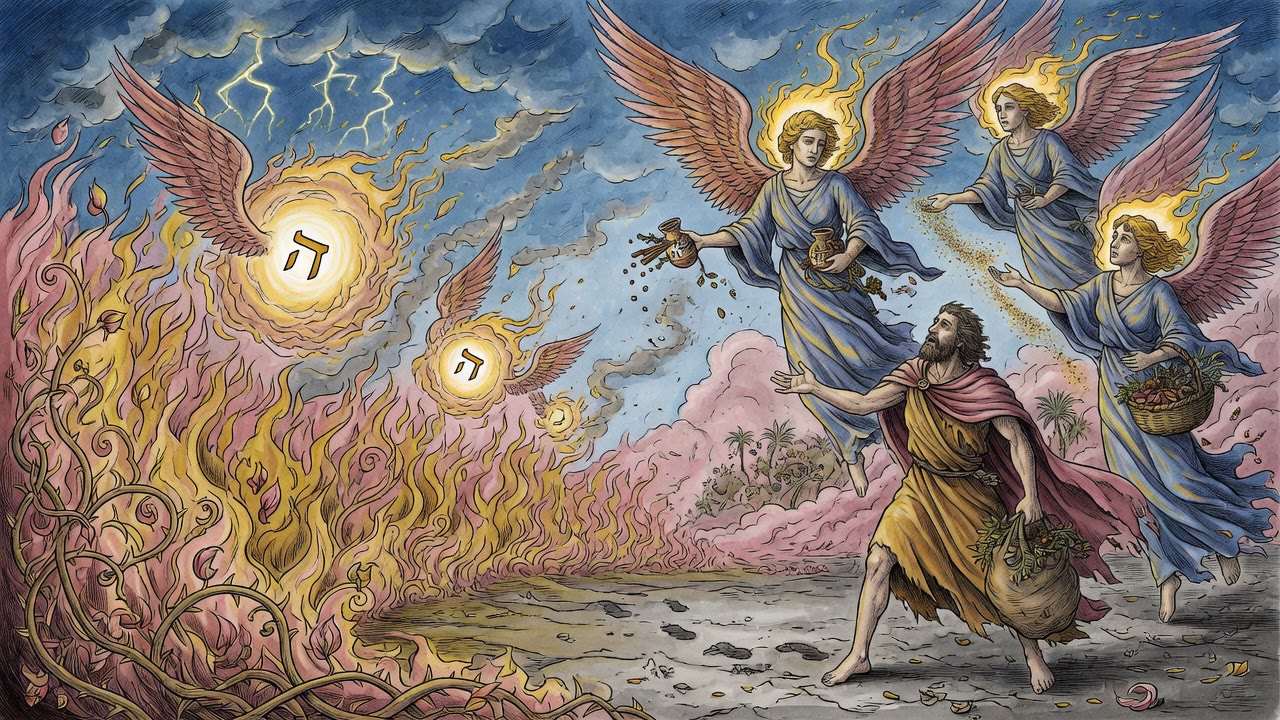
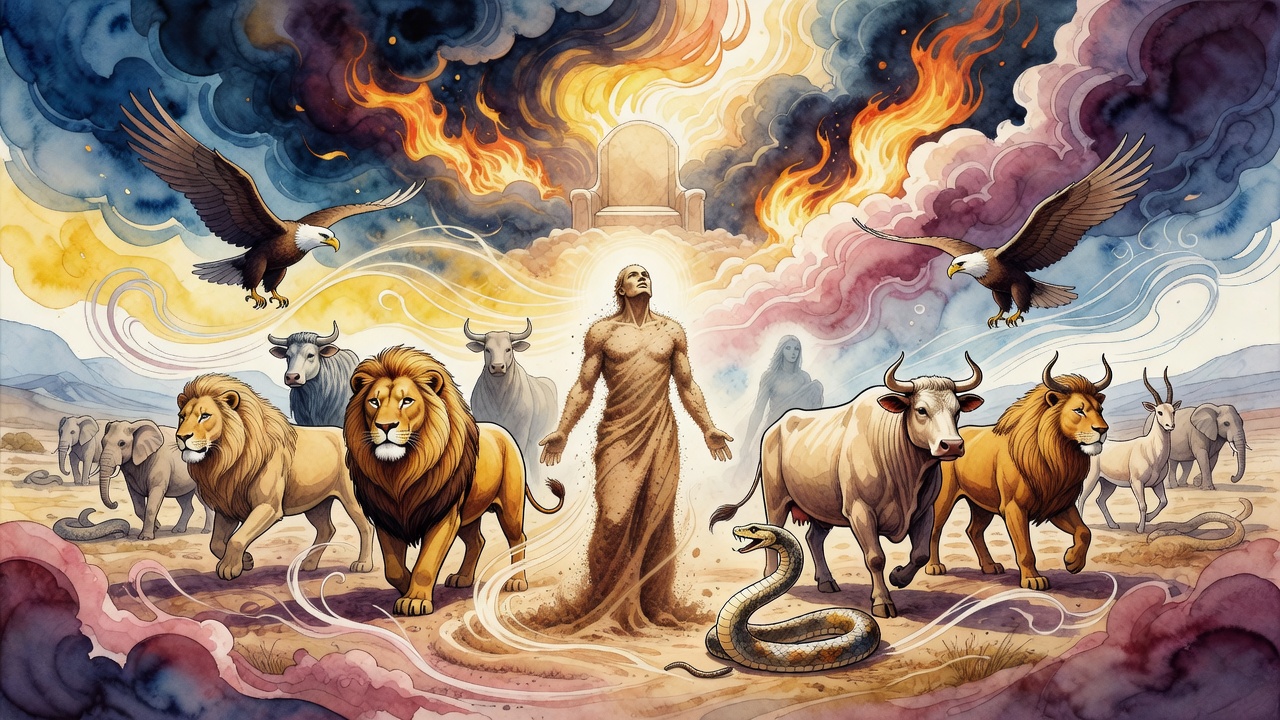
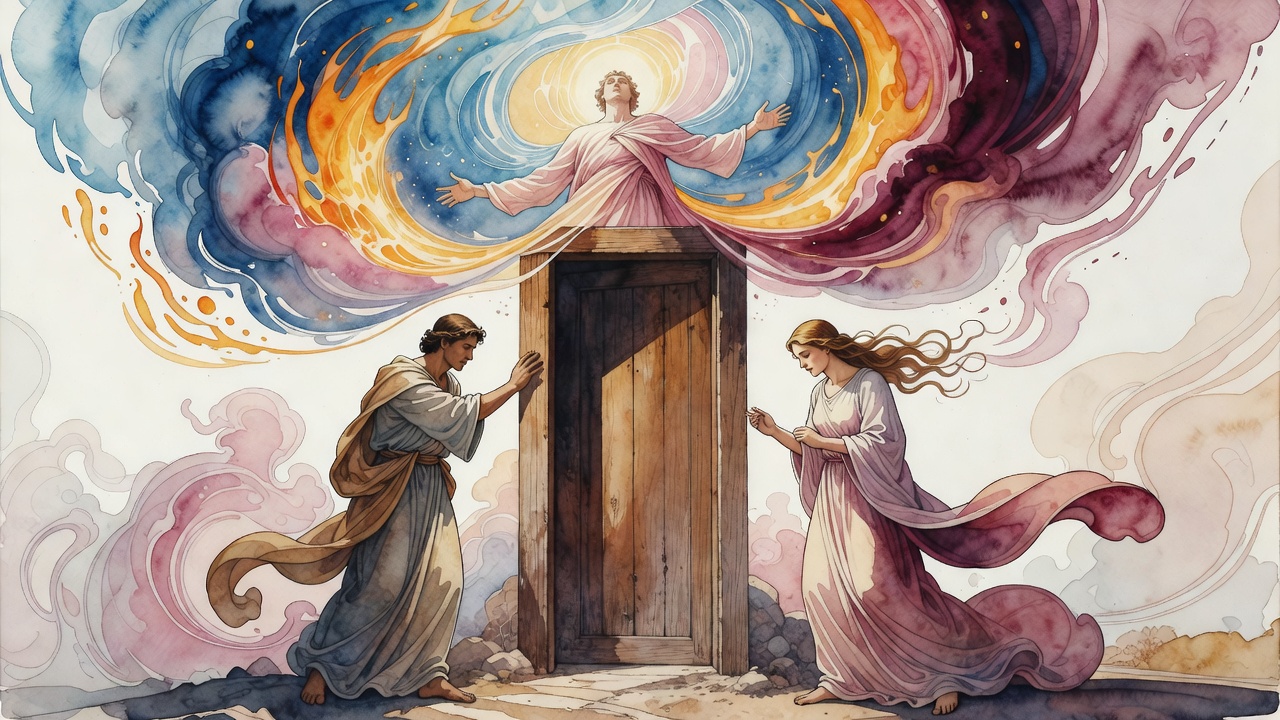
A river rose from Eden to water the garden, then split into four headwaters. Rabbi Simon reads that geography as a biography of Adam. The Holy One granted him tokef, power, that was meant to last forever. While he was still innocent, wisdom and might were with him. With a single spade he could unleash the water of four riverheads. Creation bent under a hand that had not yet obeyed a whisper from the dust.
 Click for full size
Then he went. The verse in Job says he forsook the directive of his Maker and went after the directive of the serpent. God alters his countenance and sends him away. The face that once mirrored authority was rewritten. The rivers still ran, but the man who had ordered them with one tool no longer held that forever.
Four Headwaters, One Fall
Eden's map is not scenery alone. Four rivers mean four directions of human reach that once answered a single will. When Adam stood clean before his Creator, the world was continuous under him. When he chose the serpent's counsel, the continuity cracked. The same God who can halt water and dry it, or release it to overturn the earth, now sends the first man out with a changed face.
Power that was eternal becomes exile that is permanent. The garden keeps its irrigation. The exile keeps the memory of how easy the spade once was. Every later human who digs for water digs in the shadow of that lost ease.
Rabbi Simon's Job reading is merciless in its economy. Forever was the grant. Went was the verb. Altered countenance was the sentence. The four headwaters remain as a monument to a capacity no longer available to the species that left the gate.
Nakedness as New Knowledge
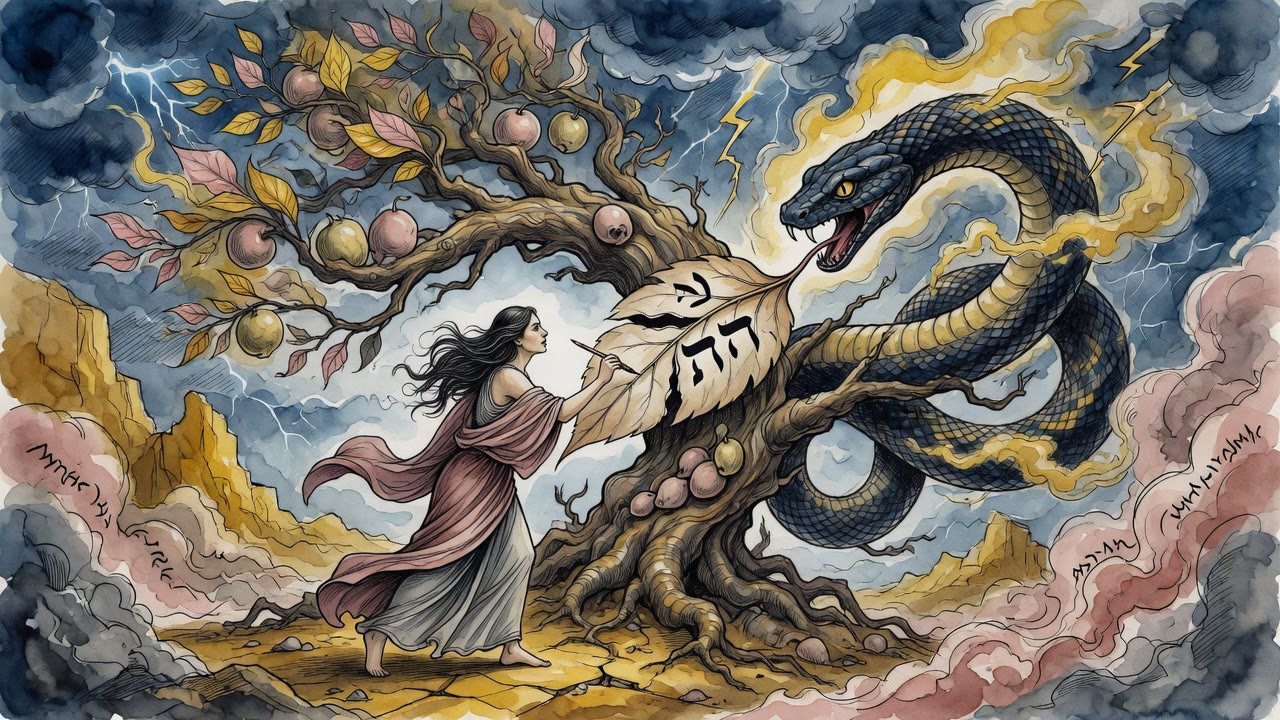
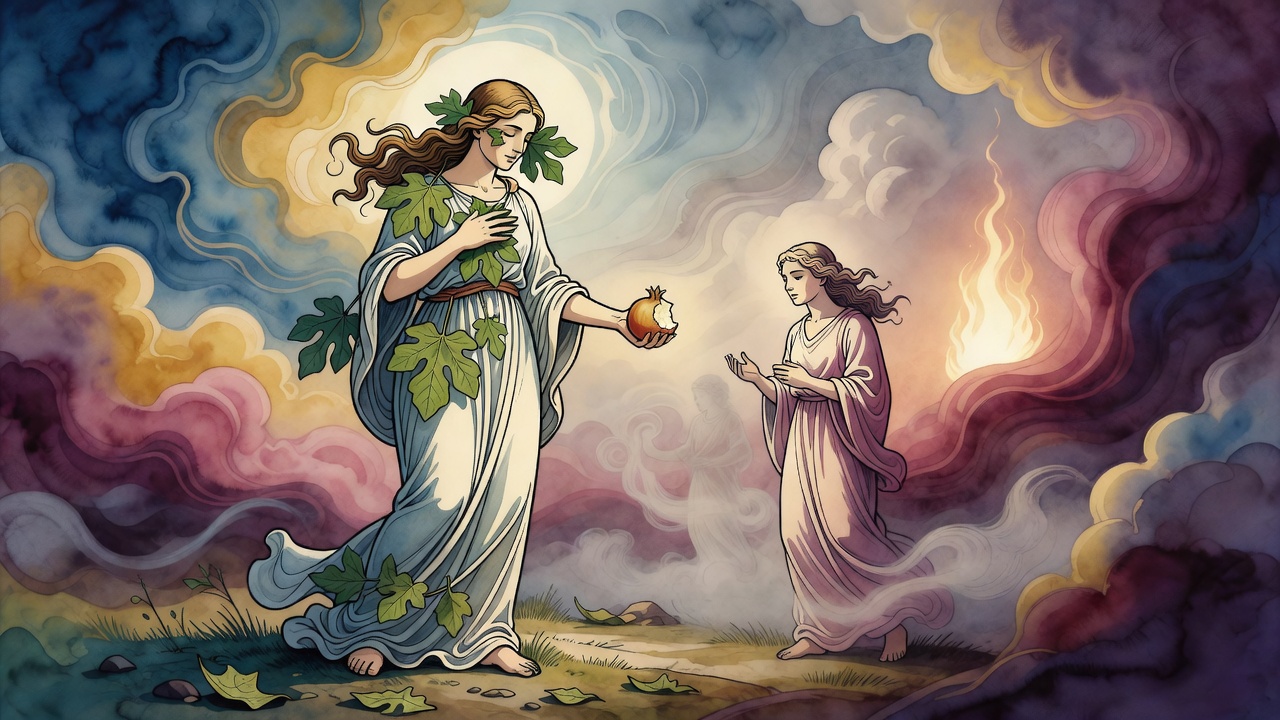
After the fruit, they knew they were naked. Philo's midrash hears more than missing clothes. Opinion became the beginning of wickedness when they perceived they had no covering, while the rest of the universe still seemed immortal and incorruptible. Suddenly they needed corruptible coverings made with hands. The knowledge was not only of skin. It was of a novelty unlike the rest of the world: mortality felt as a costume problem.
The mind conceived a difference. Before the fruit, nakedness was not a crisis. After the fruit, nakedness was the first news of being out of step with creation. They sewed and hid. The rivers still split four ways beyond the trees. Inside the couple, a fifth split opened between innocence and the new craft of shame.
Adam's lost hydraulic power and this new need for fabric are one story told at two scales, cosmic and intimate. The spade fails. The needle begins. Both tools measure distance from the first state.
Until Enosh the Image Held
The Torah names Adam, Seth, Enosh, then falls silent before restarting the line toward Noah. They asked Abba Kohen Bardela why the list stops. Until Enosh, he said, they were in the image and likeness. From here on the generations became corrupted and were created in a deformed state.
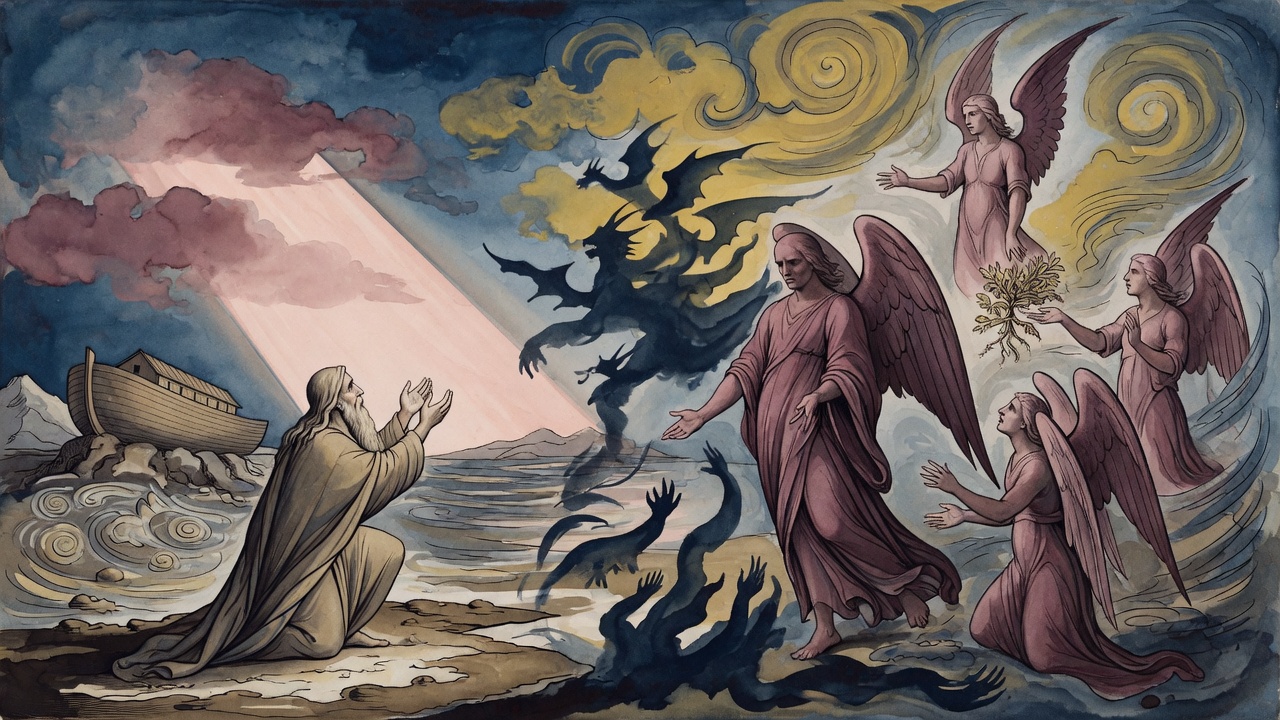
Four changes marked Enosh's days. Mountains became rocky ground. The dead began bringing forth worms. Faces turned ape-like. People became devalued before malevolent spirits. As long as the divine image stood intact, spirits would not antagonize them. When the image thinned, the spirits found purchase.
Rabbi Yitzhak adds that they devalued themselves. What is the difference, they asked, between bowing to an idol and bowing to a person? From that false equality, idols took the bow that once belonged only to living faces that still carried the likeness.
The genealogy's silence is a theological scar. After Enosh the text must begin again, as if the first listing had become unsafe to continue.
From Spade to Spirits
Stand the scenes in order. First man opens four rivers with one tool. First couple discovers nakedness as a wound in knowledge. Generations later, Enosh's age watches the image dim until mountains harden, corpses breed worms, faces lose their human stamp, and spirits treat people as prey.
The forever that was promised as power becomes a forever of consequence. Adam went after the serpent. The line after Enosh went after images of wood and stone. Between those two goings, the face of humanity keeps being rewritten, and the rivers of Eden keep flowing without the hand that once commanded them all at once.
Exile begins with a changed countenance. It ripens into a world where even the dead are busy with worms and the living must negotiate with spirits they once outranked by sheer likeness.
The Job verse that opens Rabbi Simon's reading does not flatter the first man. Power forever, then departure, then a face rewritten for the road outside. The four rivers become a map of what obedience once made simple and what exile makes labor. Children of Adam will name those rivers for ages and never recover the single-spade command that once joined them.
← All myths