4 min read

Eve Covered Her Shame Before She Offered the Fruit

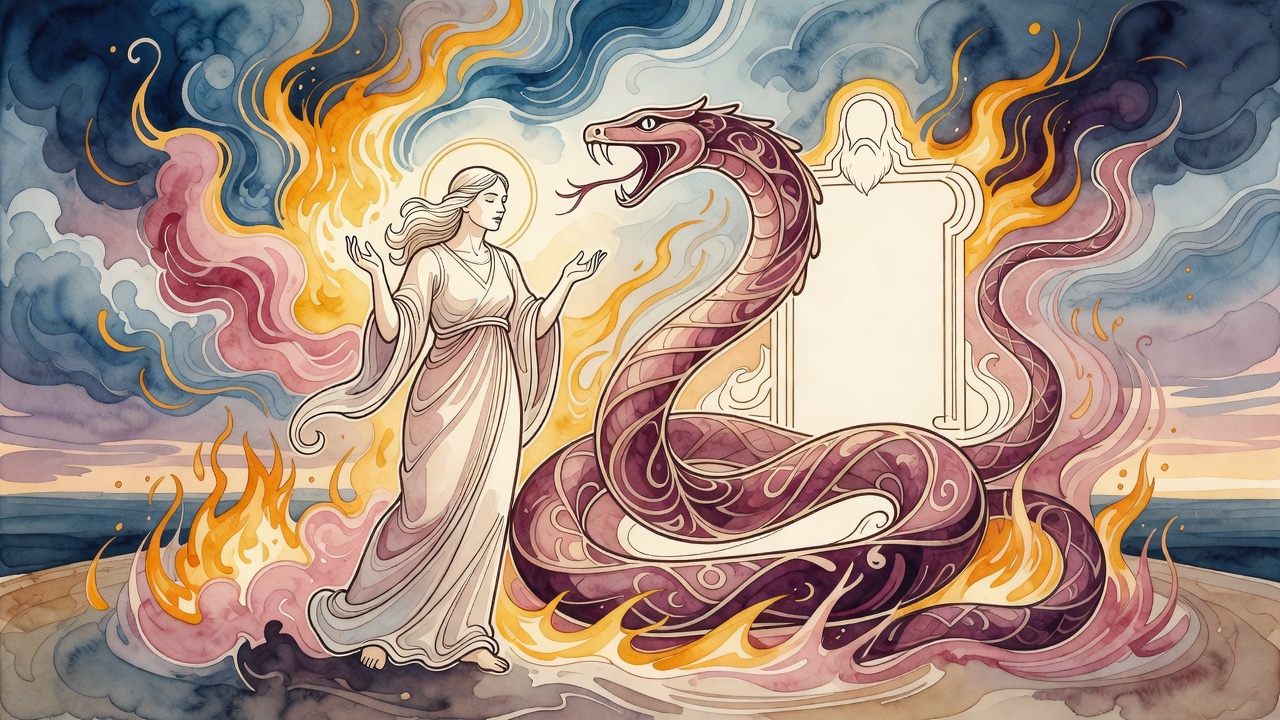
The serpent promised more than knowledge: you will be like gods. Eve ate and covered herself with fig leaves. Only then did she hand the fruit to Adam.

Curated by Arthur · Told by Maggid ·
Table of Contents
  1. What She Did Before She Spoke
  2. The Longest Few Seconds in the Garden
  3. The Man Who Was Late
  4. Weeks Counted, Children Named

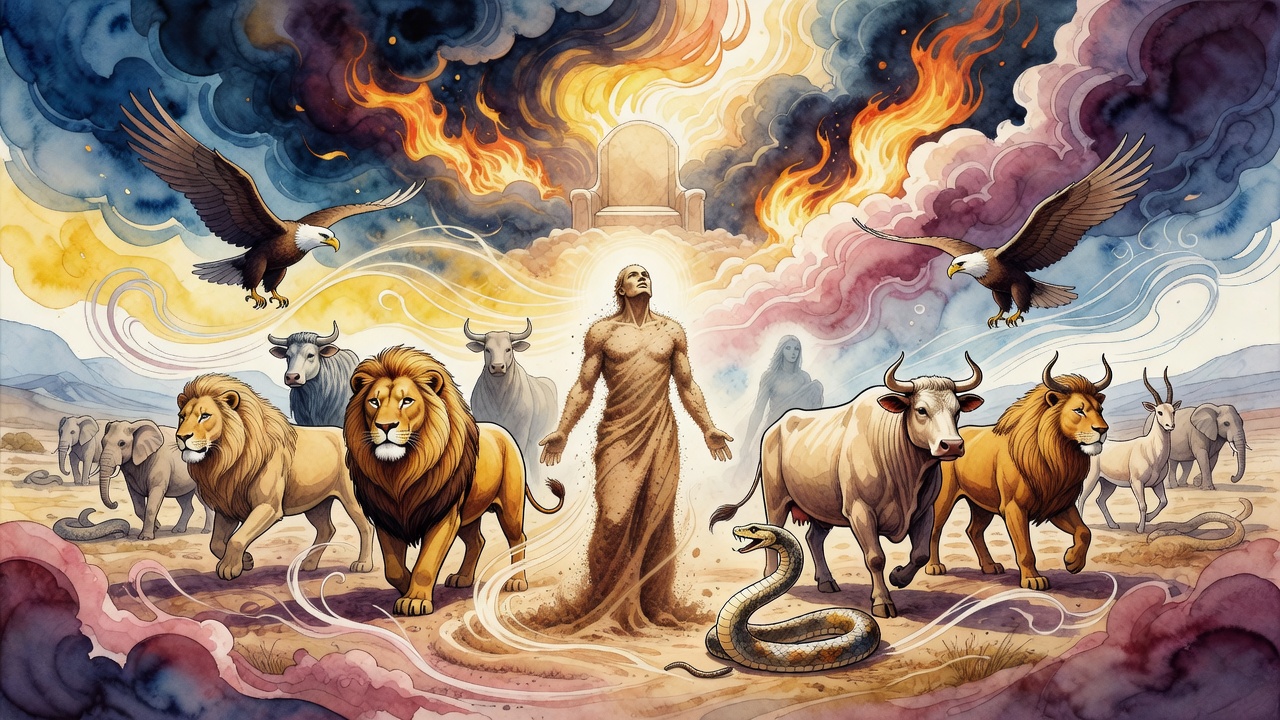
"You shall not surely die," the serpent said, and then it said the part that actually worked. God knows that on the day you eat of it your eyes will be opened, and you will be as gods, knowing good and evil.
Eve Covered Her Shame Before She Offered the Fruit Click for full size

The serpent had not offered Eve information. It had offered her rank.

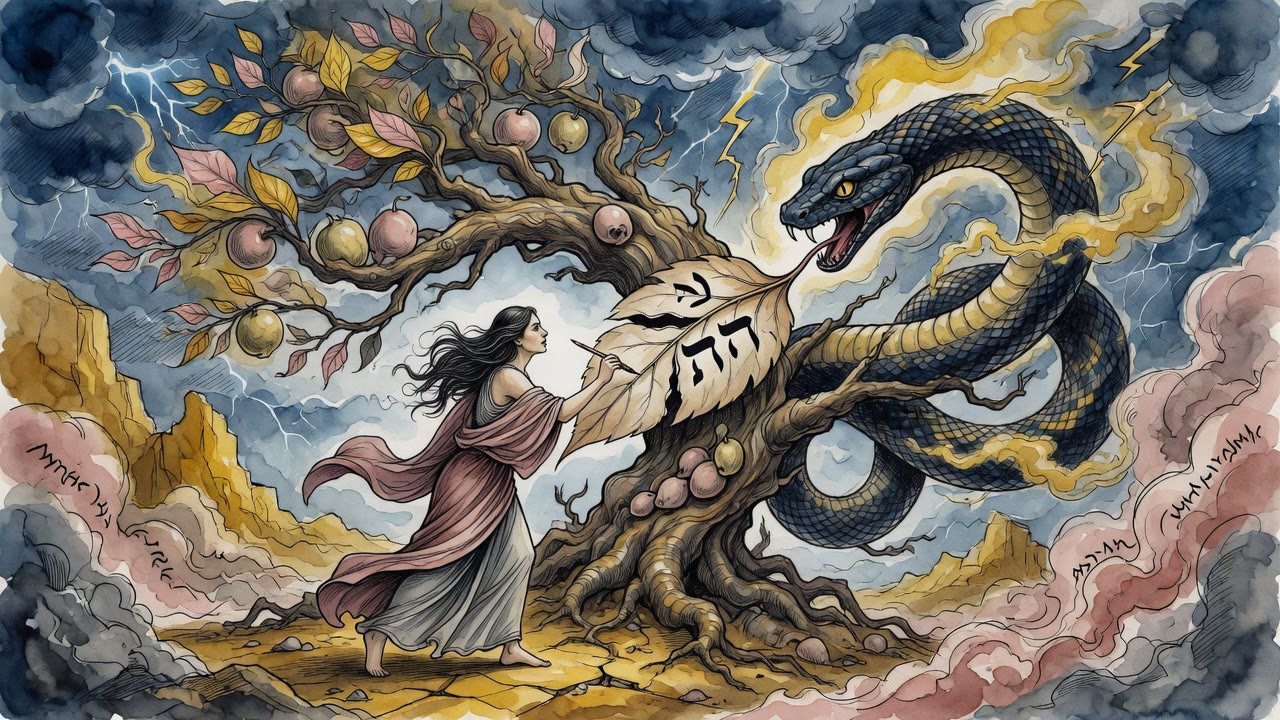
She looked at the tree after that, and everything she saw in it was true. The tree was agreeable and pleasant to the eye, and its fruit was good for food, so she took some of it and she ate.

What She Did Before She Spoke

She did not turn around and call to Adam. Not first.

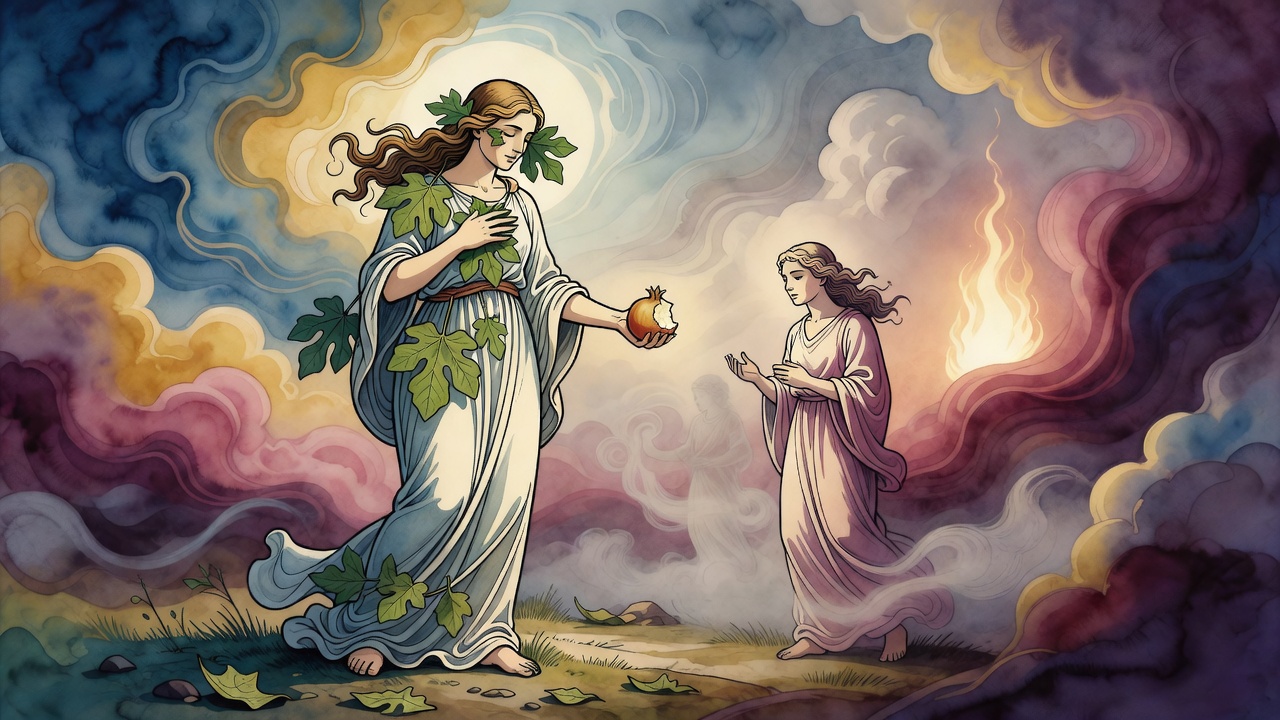
Her eyes had opened the way the serpent promised they would, and the first thing they opened onto was her own body. So she went and got fig leaves and covered her shame with them, and only when that was finished did she pick the fruit back up and go and find her husband.

The Longest Few Seconds in the Garden

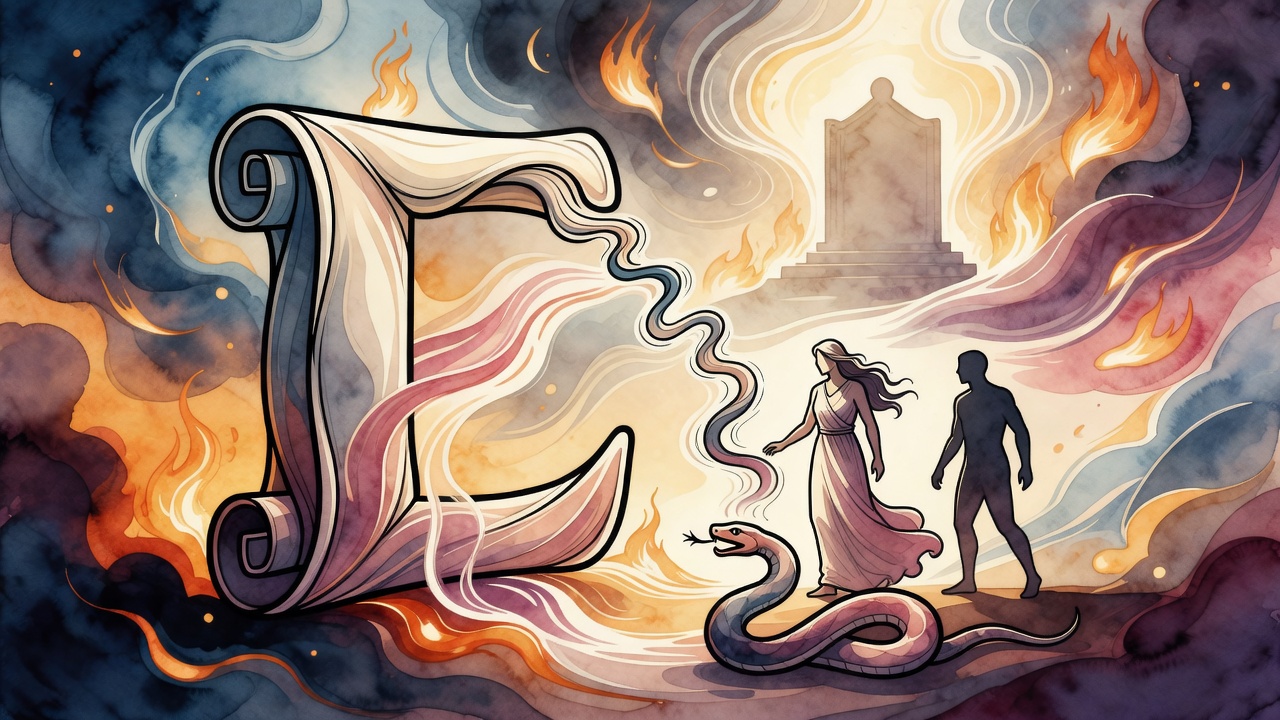
She was covered and he was not. She knew what covering was for and he did not, and she stood in front of him holding the one thing that would close that gap, and she could have let it stay open. Nothing in the promise had required a second eater. The serpent had said your eyes will be opened, not both of you. She had eaten alone and dressed alone, and she could have walked out of the garden alone and clothed, carrying a piece of knowledge nobody else in the world had.

She held out the fruit.

The Man Who Was Late

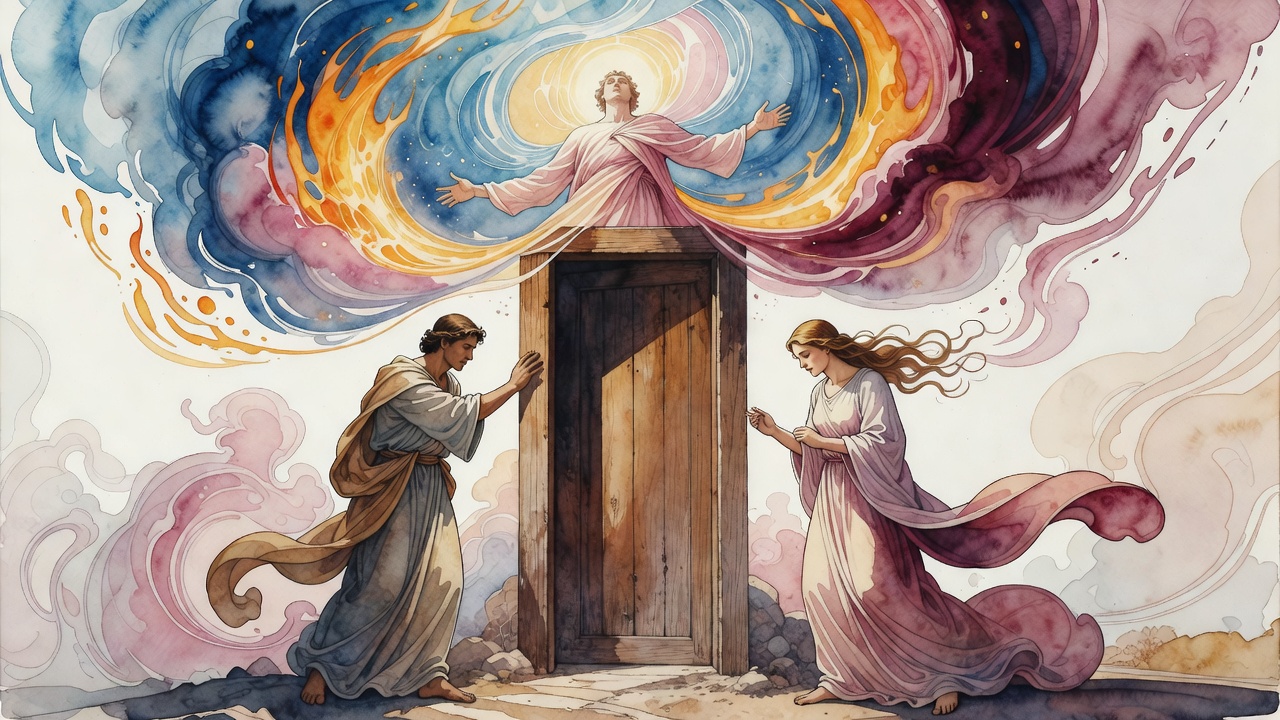
He ate. His eyes opened, and he saw that he was naked, and he took fig-leaves and sewed them together and made an apron for himself and covered his shame.

He did more work than she had. She had covered herself with leaves and stopped there, because there was still a conversation waiting and she was in a hurry to have it. He sat down and sewed, since by the time his eyes came open there was nothing else left in the garden to do. He was working with the same leaves off the same tree, and he had watched her wear them first, and he never once asked her how she had known.

The order of it followed them out through the gate. One of them knew first. The other one spent the rest of the afternoon catching up, and that arrangement did not end with the fruit.

Weeks Counted, Children Named

Outside, time stopped being a blur. The years ran in jubilees of forty-nine, and inside each jubilee they ran in weeks, and the household that had learned about nakedness in the wrong order was set down week by week in a ledger.

In the third week of the second jubilee Eve gave birth to Cain. In the fourth she gave birth to Abel. In the fifth she gave birth to a daughter, and the daughter had a name, which was Awan.

Every one of them went down with a week attached. The girl got a name where the older count had left her a number, and after that nothing in the house was allowed to stay approximate. A family counted that closely cannot lose anybody quietly.


← All myths
From the tradition

Sources

3 sources

The texts behind this telling. Some cards carry a translation of the source; others are our own retelling of it, and each card says which. Every card links out to the original.

Book of Jubilees 3:34Book of Jubilees

Retold in our words. Read the original at the link below.Sefaria Community Translation · CC-BY

Book of Jubilees turns to Eve in Paradise of Adam.

Take the Book of Jubilees, for example. This ancient Jewish text, considered scripture by some, expands on the Genesis narrative, filling in gaps and offering fascinating perspectives. It’s not part of the standard Hebrew Bible canon, but it provides a compelling look into how early Jewish communities understood these foundational stories.

In Jubilees, the serpent's words to Eve echo what we find in Genesis, but they carry a sharper edge: "Ye shall not surely die: for God doth know that on the day ye shall eat thereof, your eyes will be opened, and ye will be as gods, and ye will know good and evil." The serpent isn't just promising knowledge; he’s suggesting divinity. The temptation isn't just about forbidden fruit, but about becoming like God. It's a subtle but powerful distinction.

What of Eve? Jubilees paints her as actively considering the tree, noting its appeal: "And the woman saw the tree that it was agreeable and pleasant to the eye, and that its fruit was good for food, and she took thereof and ate."

It's not just a moment of weakness, but a deliberate choice, based on what she perceives as desirable. The text emphasizes her agency.

Then comes the pivotal moment, the act that changes everything. "And when she had first covered her shame with fig-leaves, she gave thereof to Adam and he ate."

Notice the order. She covers herself before offering the fruit to Adam. This detail, absent in the Genesis account, highlights Eve's initial understanding of her changed state. She feels shame and acts to conceal herself, then shares the fruit with Adam. It's a sequence that suggests awareness and perhaps even a degree of calculation.

And finally: "and his eyes were opened, and he saw that he was naked. And he took fig-leaves and sewed (them) together, and made an apron for himself, and covered his shame." Adam experiences the same awakening, the same sense of vulnerability, and takes the same action: covering his nakedness.

A primal attempt to regain control, to hide from something they now understand as shameful. It's a powerful image of innocence lost, of the dawn of self-consciousness.

So, what does this all mean? The Book of Jubilees, by adding these details, invites us to delve deeper into the familiar narrative. It encourages us to consider the motivations, the choices, and the consequences of that fateful act in the Garden. And maybe, just maybe, understanding those layers can help us better understand ourselves.

Full source
Book of Jubilees 4:1Book of Jubilees

Retold in our words. Read the original at the link below.Sefaria Community Translation · CC-BY

In the third week in the second jubilee she gave birth to Cain, and in the fourth she gave birth to Abel, and in the fifth she gave birth to her daughter Awan.

Jubilees times the births of Cain, Abel, and their sister by jubilee weeks. That chronology is the whole of the original.

Full source
Book of Jubilees 44:8Book of Jubilees

Retold in our words. Read the original at the link below.Sefaria Community Translation · CC-BY

The story It's considered apocryphal by some, meaning it's not included in the standard Hebrew Bible canon, but it offers incredible insight into the beliefs and interpretations of ancient Jewish communities. It fills in so many gaps, and provides a much deeper level of understanding than we could get just from reading the Torah.

Jacob, a man who's already lived a life filled with blessings and struggles, is now facing a daunting decision. Should he leave the familiar land of Canaan and venture down into Egypt? Egypt, at this time, was a powerful, foreign place. A place of immense risk for a family and tribe of his size.

Things were dire. A severe famine had gripped the land, and word had reached Jacob that his long-lost son, Joseph, was not only alive but also a powerful official in Egypt. A lifeline, maybe, but a leap of faith nonetheless.

It's at this pivotal moment, on the sixteenth of the month, that something extraordinary happens. "The Lord appeared unto him," the Book of Jubilees (44:1-3) tells us. God calls out, "Jacob, Jacob," a double calling, a sign of great importance, perhaps even urgency. And Jacob, ever faithful, replies, "Here am I." Hineni in Hebrew. A simple statement but one loaded with meaning. It's an affirmation of presence, of readiness to listen, to serve.

And then, God speaks words that must have resonated deep within Jacob's soul. "I am the God of thy fathers, the God of Abraham and Isaac; fear not to go down into Egypt, for I will there make of thee a great nation." What a promise! What reassurance!

He continues, "I shall go down with thee, and I shall bring thee up (again), and in this land wilt thou be buried, and Joseph will put his hands upon thy eyes. Fear not; go down into Egypt."

These words are so powerful. God isn't just promising protection; He's promising presence. "I shall go down with thee." God will accompany Jacob in this journey. And not just that, He promises a future return, a redemption. And the comforting image of Joseph, his beloved son, being there at the very end.

What a relief this must have been! The fear, the uncertainty...all washed away by the divine promise.

And so, Jacob's sons and grandsons, filled with newfound hope, prepared for the journey. "And his sons rose up, and his sons' sons, and they placed their father and their possessions upon wagons" (Jubilees 44:4). They packed their belongings, helped Jacob onto a wagon, and set off toward Egypt.

This passage, though short, is so rich with meaning. It's a story of faith, of trust in the face of the unknown. It’s a reminder that even when we're facing difficult decisions, when we're feeling scared and uncertain, we are not alone. Just as God promised to be with Jacob, the tradition teaches that He is with us, guiding us, and offering us reassurance, even when we can't see the path ahead.

So, the next time you find yourself at a crossroads, remember Jacob's story. Remember the promise. Remember that even in the darkest of times, there is always hope, and you are never truly alone. What crossroads are you facing right now, and how can this ancient story give you strength?

Full source