Two Powers of God Guard the Gate of Eden
Adam asked for the fruit that would let him live forever. The angels wept and still drove him east, under a sword that would not hold still.
Table of Contents
 Click for full size
The Angels Would Not Drive Them
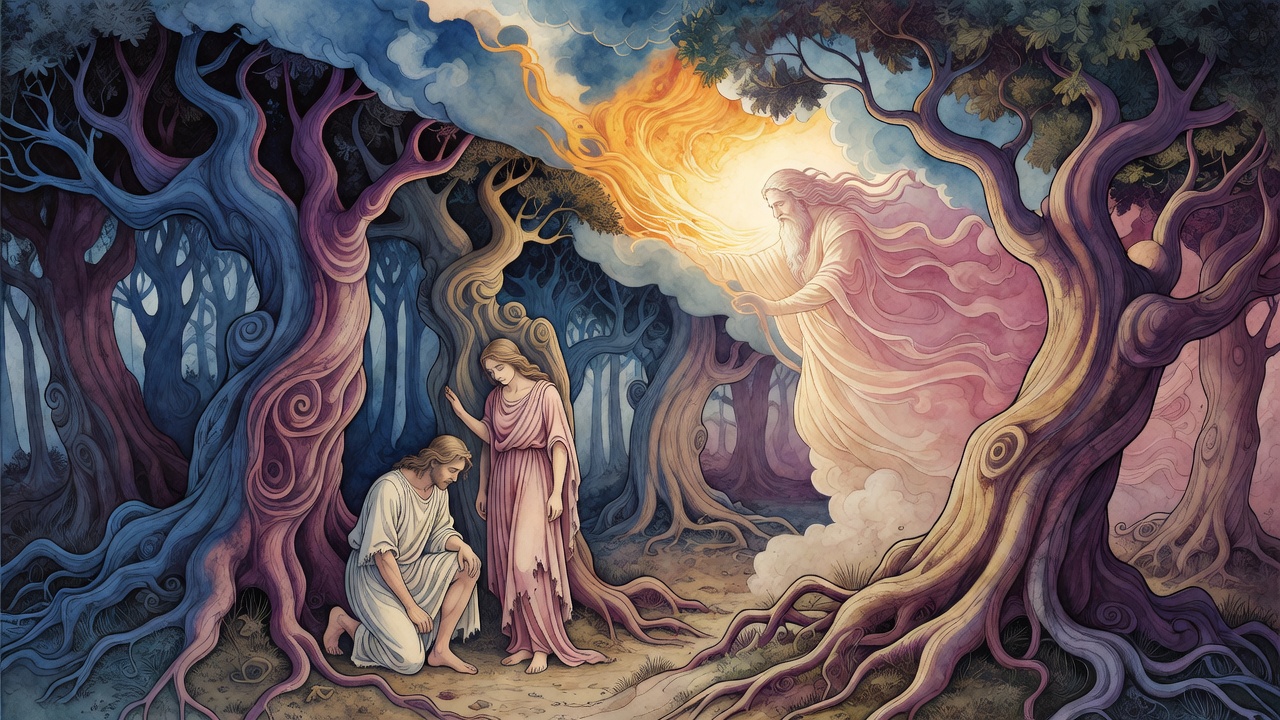
Adam and Eve wept at the edge of the trees. God had already spoken the sentences, on the man, on the woman, on the serpent. Then He ordered the angels to drive the pair out.
The angels did not move. They heard the weeping. They took pity. They left the command unfulfilled and went back to ask if the verdict might be softened.
The Lord did not soften it. "Was it I that committed a trespass," He said, "or did I pronounce a false judgment?"
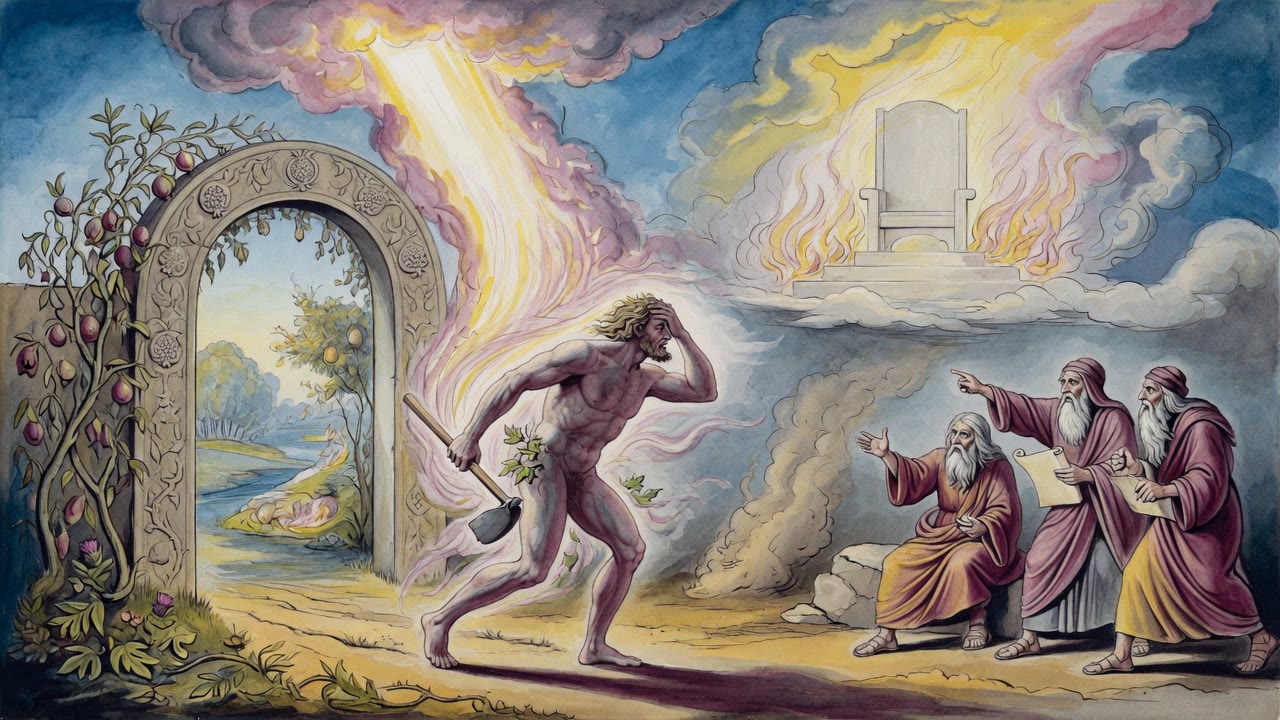
Feet that had walked among trees now walked toward thorns. The gate behind them began to fill.
Two Watchers at the East
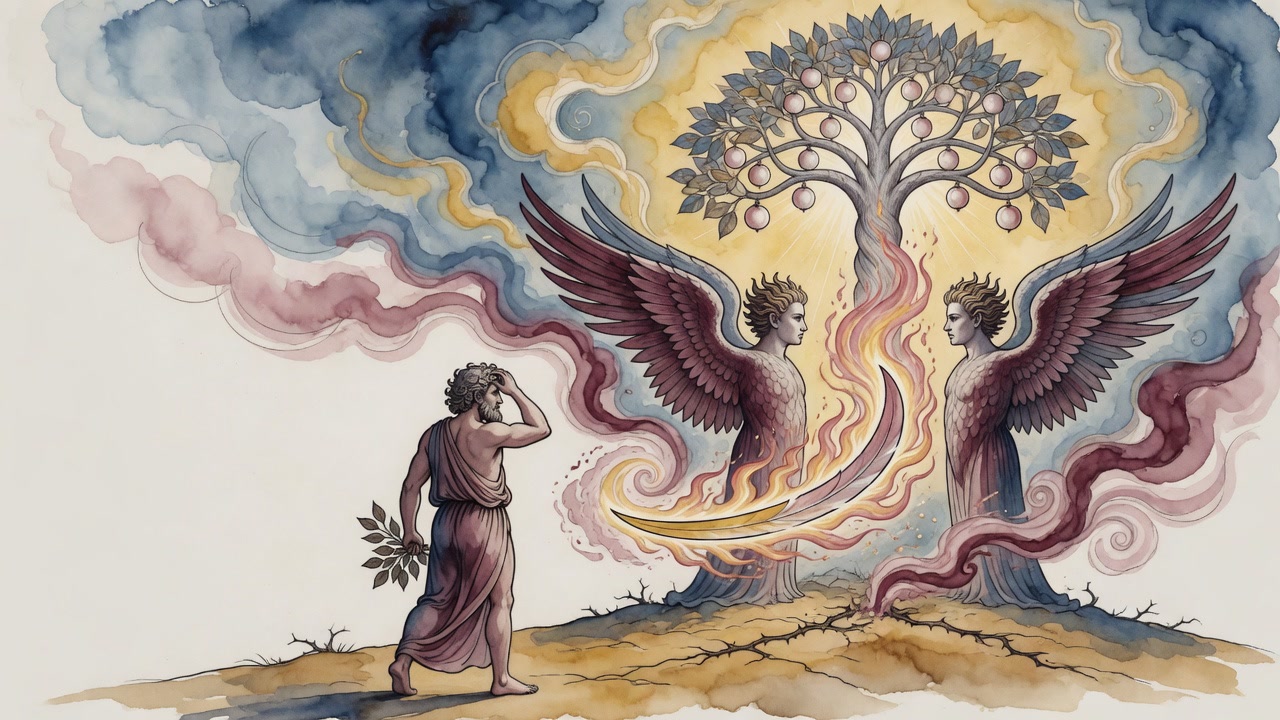
East of Eden the gate did not stay empty. Cherubim took their posts (Genesis 3:24). One stood in the aspect called God, creative, gentle, a maker who still feeds. The other stood in the aspect called Lord, royal, a king who sets a border and keeps it. They were not two gods. They were two ways the One met a world that had already broken a command.
Adam and Eve left under both lights. The Parent who still cared. The King who would not pretend the fruit was never taken.
Adam asked, before the last step, for fruit from the Tree of Life. The request was turned aside. If he led a pious life, he would be given of that fruit on the day of resurrection, and then he would live forever. Not now. Not by reaching.
A Sword That Kept Turning
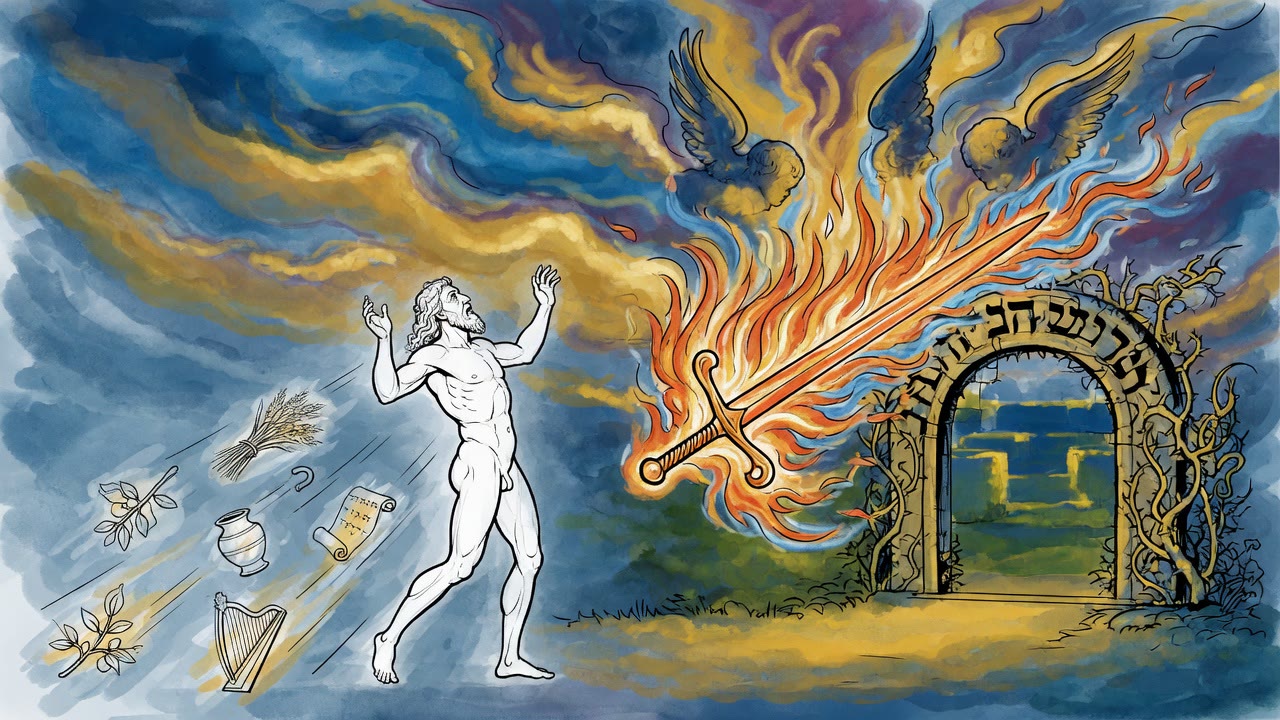
Between the watchers a sword of flame turned without rest. The air itself seemed to revolve, heaven-colored, never holding still long enough for a thief to count the beat and slip through. No lucky pause. The lock moved.
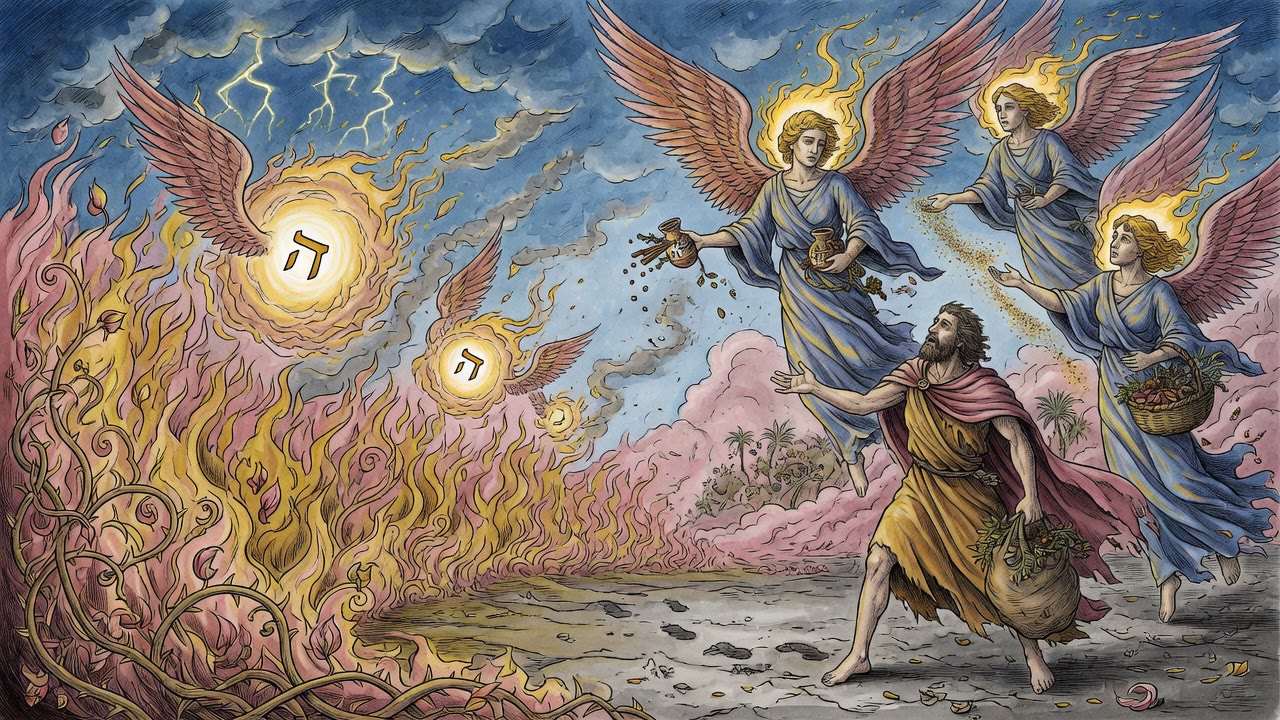
What looked like a blade could be a messenger. What looked like a winged guardian could cut. Angels shift form as needed. The watch was alive, not a statue with a prop in its hand.
Eve heard the sword's roar the way a person hears a river that will not be forded. Adam pressed his palm once toward the outer heat and pulled it back. Nearness without entrance is its own discipline. They were allowed to settle east, close enough to feel the old life the way a person feels heat from a house he can no longer enter.
The Tree They Could Carry
Access to the Tree of Life closed with the gate. God did not leave them without a tree. He gave Adam the Torah, called a tree of life to those who take hold of her. Immortality of body behind a flaming door became a covenant in a scroll that can be carried into exile.
Fruit once hung in a garden that required only reach and refusal. Torah requires study, practice, failure, return. The cherubim still barred the old shortcut. The new path ran through time, people, and law.
Eve walked that path in the same dust. The creative power still fed them. The royal power still judged them. Between those two, they learned garments and work and the long project of naming pain without the garden's open shelves of fruit.
Heat From a House They Could Not Enter
Later a soul came to that same east and found the watch still on duty. The righteous were let through. The rest met the flame and were driven back. The shortcut of the old fruit stayed closed. The long path still ran through a scroll held in the hands.
Adam's tears dried into the first agriculture. Eve's memory of the garden became the first warning that was also a hunger. The cherubim did not wave farewell. They remained, creative and royal, while the sword kept time for a ban that has not been lifted.
When Israel later built cherubim of gold on the Ark, the memory ran both ways. Mercy-seat and exile-gate. Intimacy and ban. The same winged watch that served distance at Eden served nearness in the Mishkan, the portable sanctuary in the wilderness. Boundaries and nearness were carved from one glory.
Adam turned toward thorns. Eve turned with him. The sword turned still. Certain returns cannot be forced by cleverness. They wait on a tree that can be held as scroll and practice when the other tree cannot.
← All myths