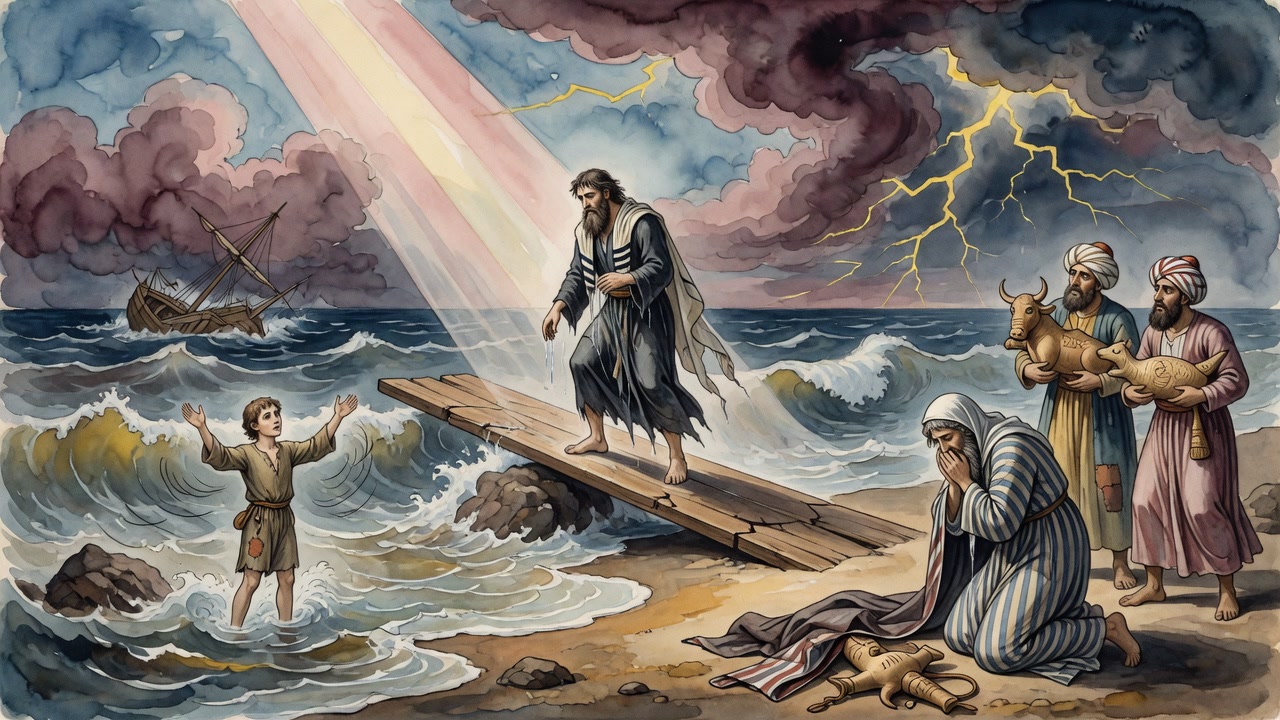
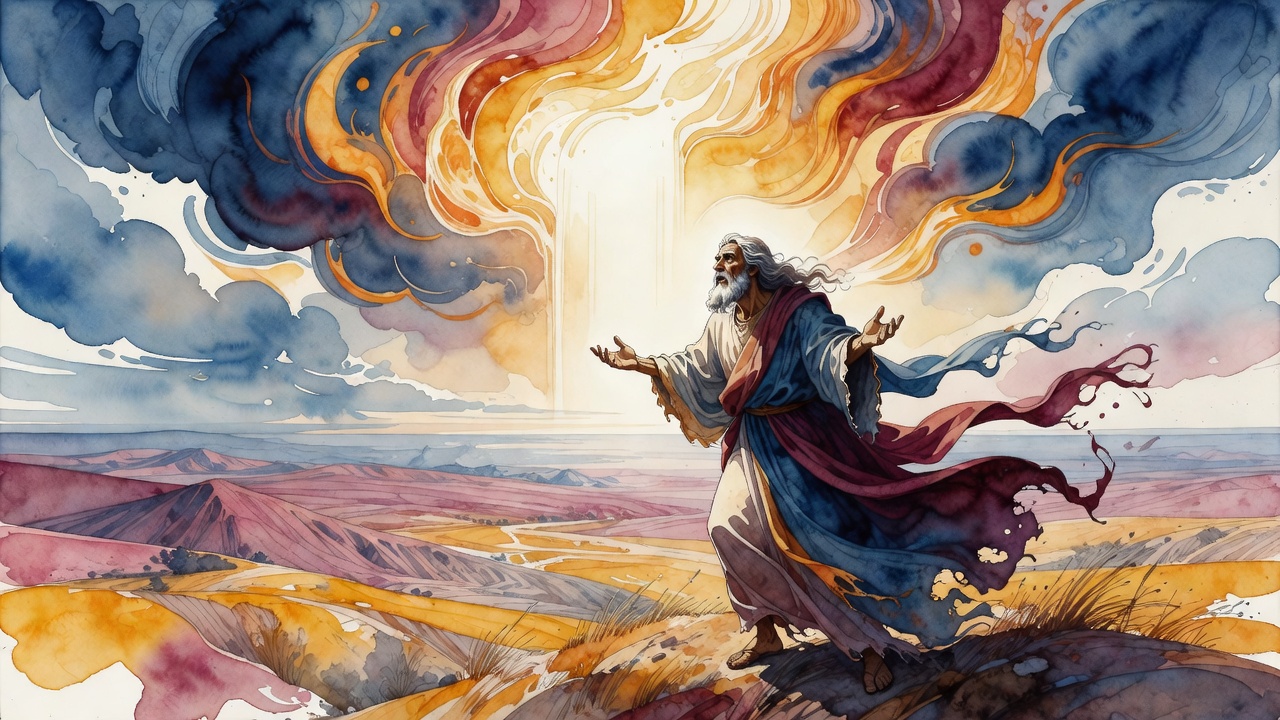
Two Mouths Asked Where Their God Had Gone
The corpse lay between two towns with no killer named. Elders stretched cords across the field. On the ridge, foreign mouths already had a question.
Table of Contents
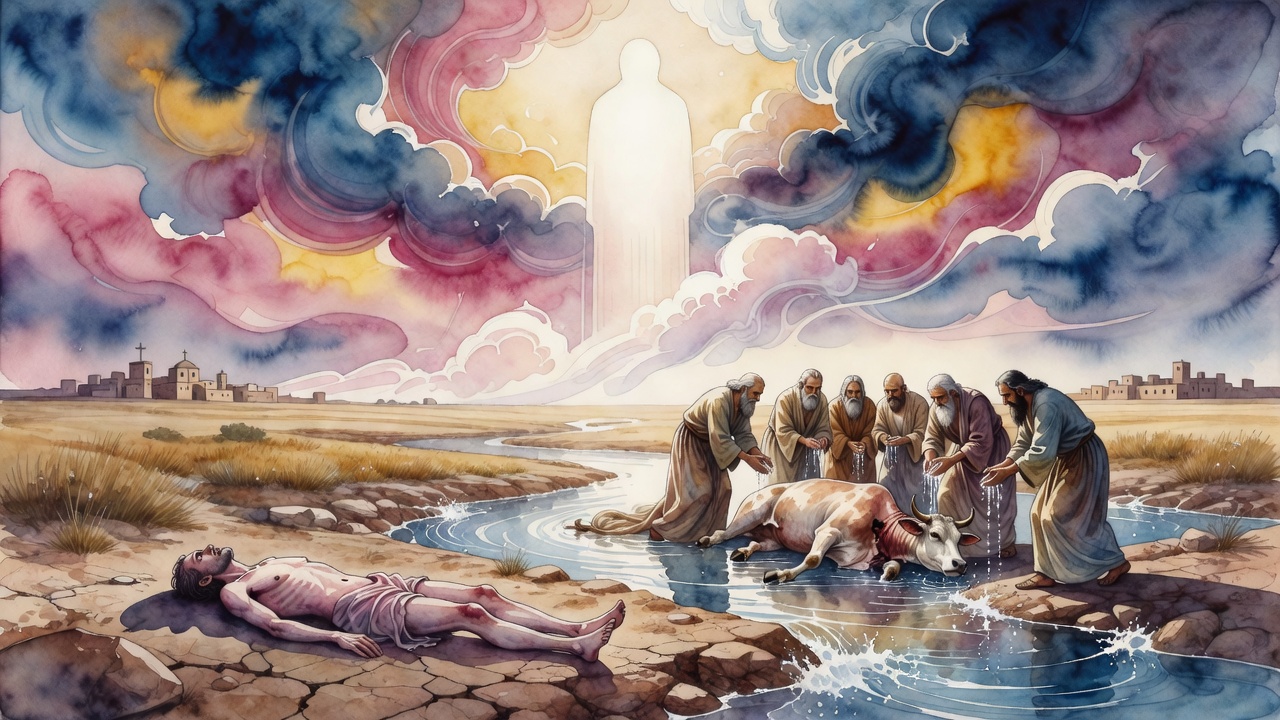
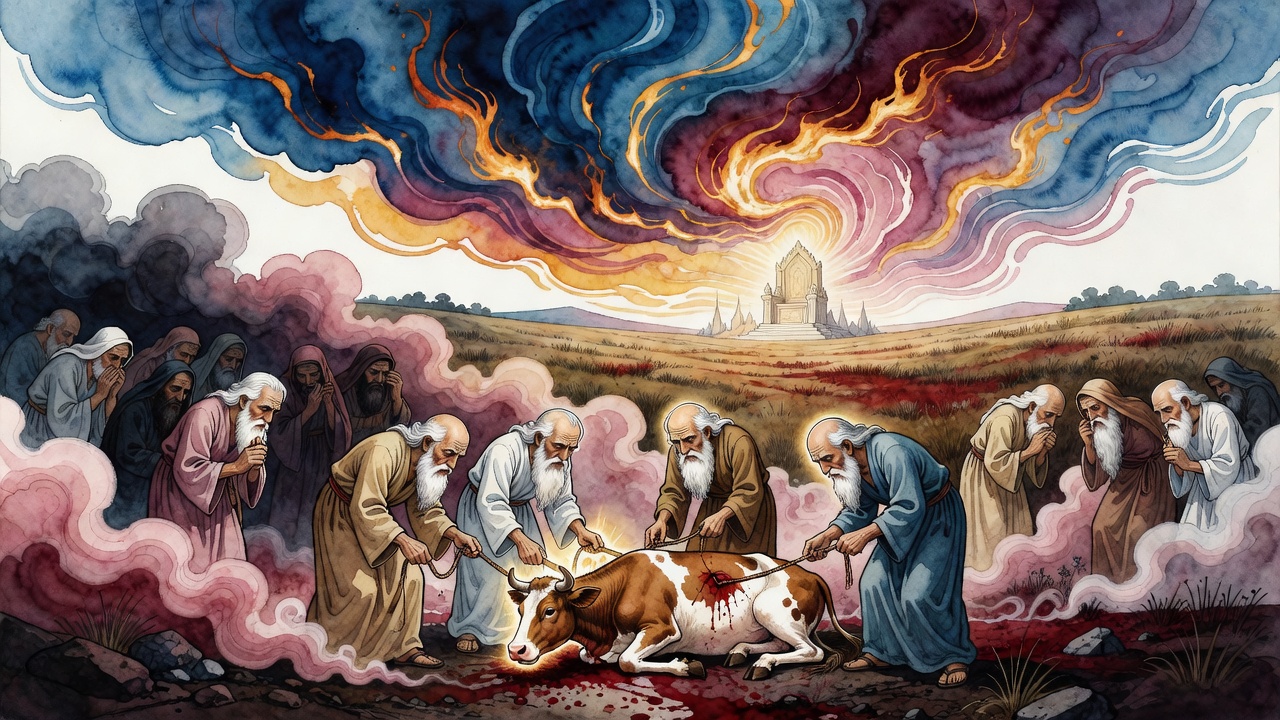
The corpse lay in the open ground between two towns, face to the sky, blood already dark in the dust. No knife owner stepped forward, and no feud claimed the kill. Shepherds found him at first light and ran for the nearest gate with their hands still empty and their mouths full of the dead man's silence. By noon the elders of both towns stood at the body with measuring cords, because distance would decide which town owned the ritual. The man himself owned nothing now but a name someone still had to say over water and a heifer that had never pulled a yoke.
 Click for full size
The Measure Across the Field
They stretched the cords from corpse to wall, wall to corpse, again, until the numbers stopped arguing. One town's elder wiped sweat and dirt from his forehead and did not look at the other town's men. Closer meant work, and closer meant a heifer that had not been worked, a valley with a running stream, a neck broken in public, and words that had to be true. "Our hands did not shed this blood, and our eyes did not see" (Deuteronomy 21:7). The formula waited for them like a blade. If any elder had seen and stayed silent, the washing would be a lie in wet earth.
"This is not Jerusalem's work," one of them said, because Jerusalem does not bring this heifer. The rite belongs to towns further from the concentrated holiness of the place God chose, towns where open ground can still hide a murder and a quiet road can still carry a body. They chose an animal young enough that no plow had taught her the furrow. One elder held her to a year, but another allowed two. They settled on a beast that satisfied both mouths, because the dead man was not going to wait on a dispute about age.
The Neck in the Valley
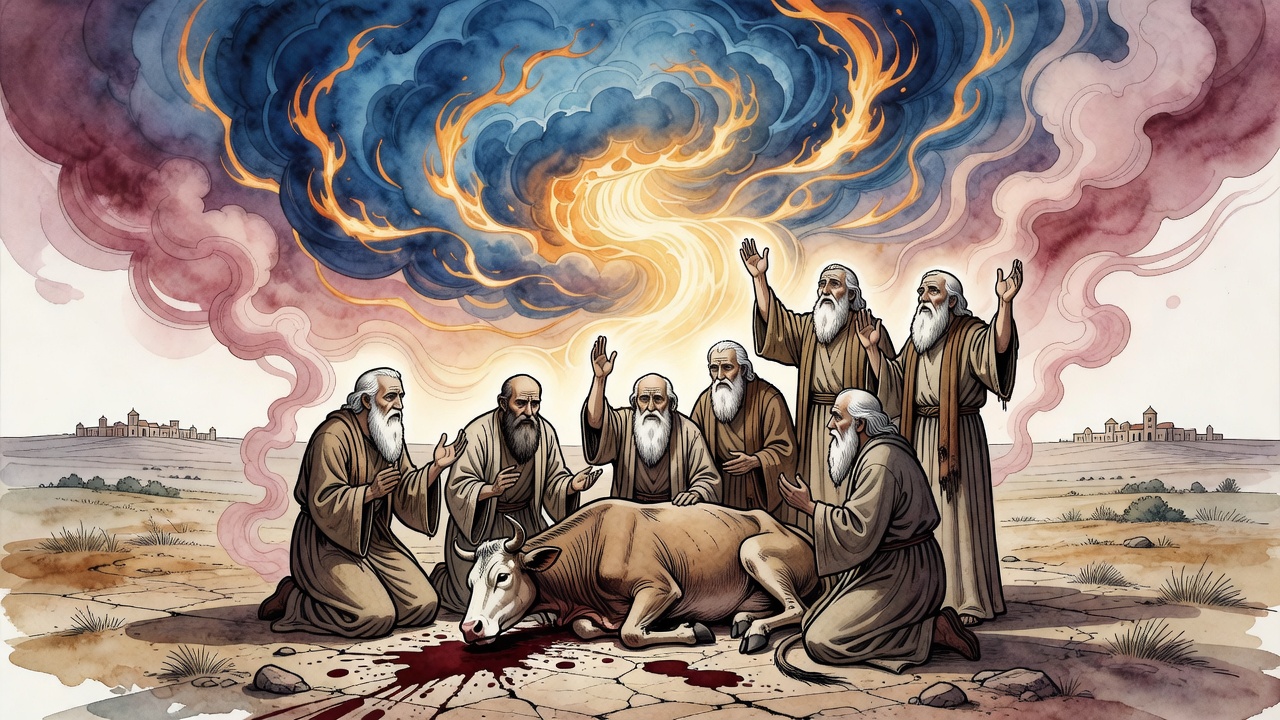
They led her down where the stream cut the low ground and the soil stayed soft. Farmers pulled children indoors. Dogs quit barking as if they understood the air had changed shape. The elders put their hands on the heifer, and the neck broke, so the blood of the animal answered the blood that had no owner. They washed and spoke until the words sat in the wet earth like stones: "Our hands did not shed this blood." The stream kept running past the broken neck either way.
None of that produced a killer's name. It produced a public refusal to shrug. An elder looked at the dark patch the sun could not quite lift and knew the gap was still there. The rite answers blood with blood and speech with speech. It does not drag the killer from a ditch if the killer still breathes free. That gap is exactly where a question was already walking toward them.
The Sneer from the Ridge
On the high ground that same week, men from the nations who watched Israel's borders found the news and used it. A body, no killer, and a cow dead for a crime no court could try. They shaped the taunt carefully so it would travel. "Where is their God?" they called down, tasting words already waiting in Moses's song for a day of distress (Deuteronomy 32:37).
The sneer is a weapon. Innocent blood dries in a field while the nearest elders only measure and wash, and the foreign mouths use that gap as proof. They want an empty sky. They want Israel small enough to mock without fear of answer. Smoke from the heifer's place still thinned in the air when the taunt reached the valley. A boy who had watched the neck break heard the foreign mouths and put his hands over his ears too late. The words were already inside the town.
An elder walking home with water still drying on his wrists heard the line one more time from somewhere above the olive trees. He did not answer aloud. He had already answered with a neck and a formula and a town that refused to treat unknown blood as weather. But the question did not leave because he refused to shout back.
The Same Words in a Quiet House
The same short line can rise from Israel itself when hardship presses the ribs. Not a sneer, but a crack. A household that watched the cords cross the field and still could not name the killer sat after dark with bread uneaten. They asked the same question the nations shout, only lower, only toward the wall. A woman whose cousin was the dead man said it once into her sleeve and then bit the cloth, because she did not want the nations to own the only voice in the room.
Doubt and taunt share vocabulary. They do not share the mouth's heat. One wants God exposed as absent. The other wants God present badly enough to risk the sentence. In a later study house Rabbi Yehudah put the speaking mouth on Israel. Rabbi Nechemiah put it on the nations. Both stood over the same five words and would not yield, because both weathers are real. Israel can ask in vulnerability. The nations can ask as a blow.
At dusk the measured field looked ordinary again: stubble, flies, and a dark patch the sun could not quite lift. The heifer was gone, and the cords were coiled. Inside a shuttered house the cousin said the other version once more, softer, and then lit the lamp. Same words, different hunger. Between the sneer and the crack the line kept working, short as a knife, because it never said which throat it came from.
← All myths