The Son Who Mocked His Father in the Marketplace
Moses had until sundown, and the last thing he gave Israel was a picture of an old man standing among the stalls while his son worked the crowd.
Table of Contents
 Click for full size
The Last Morning in the Plains of Moab
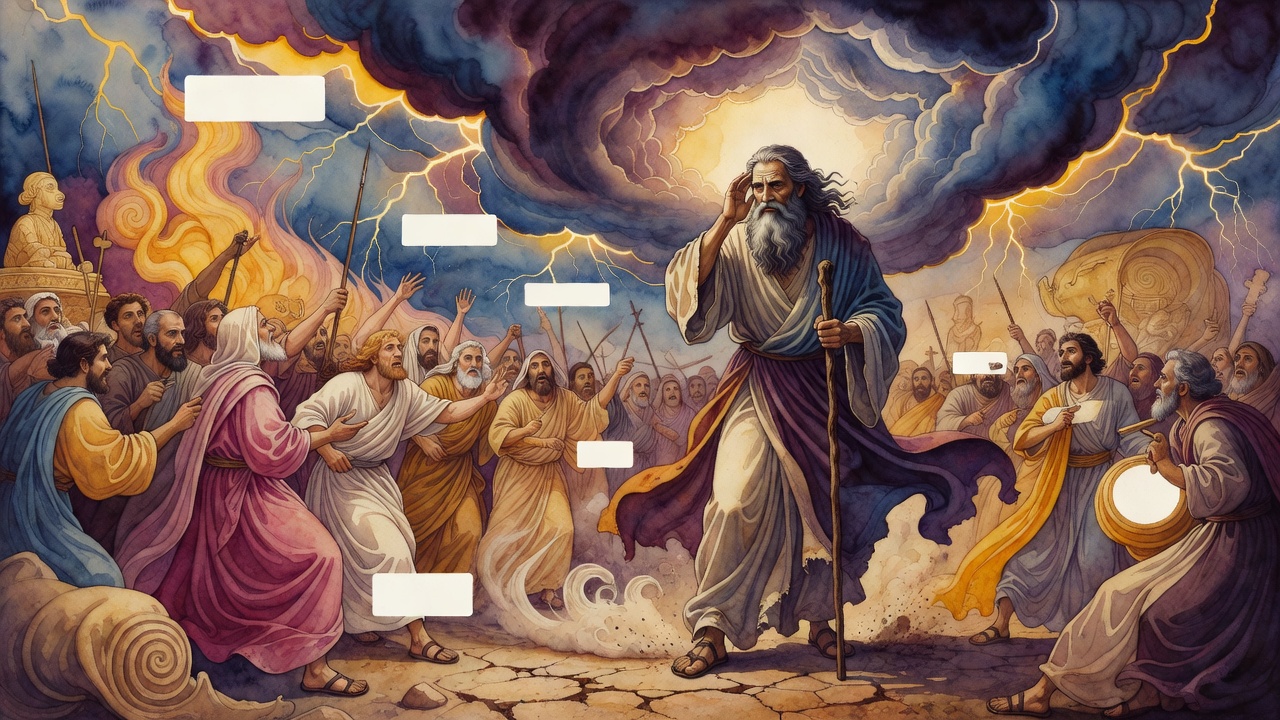
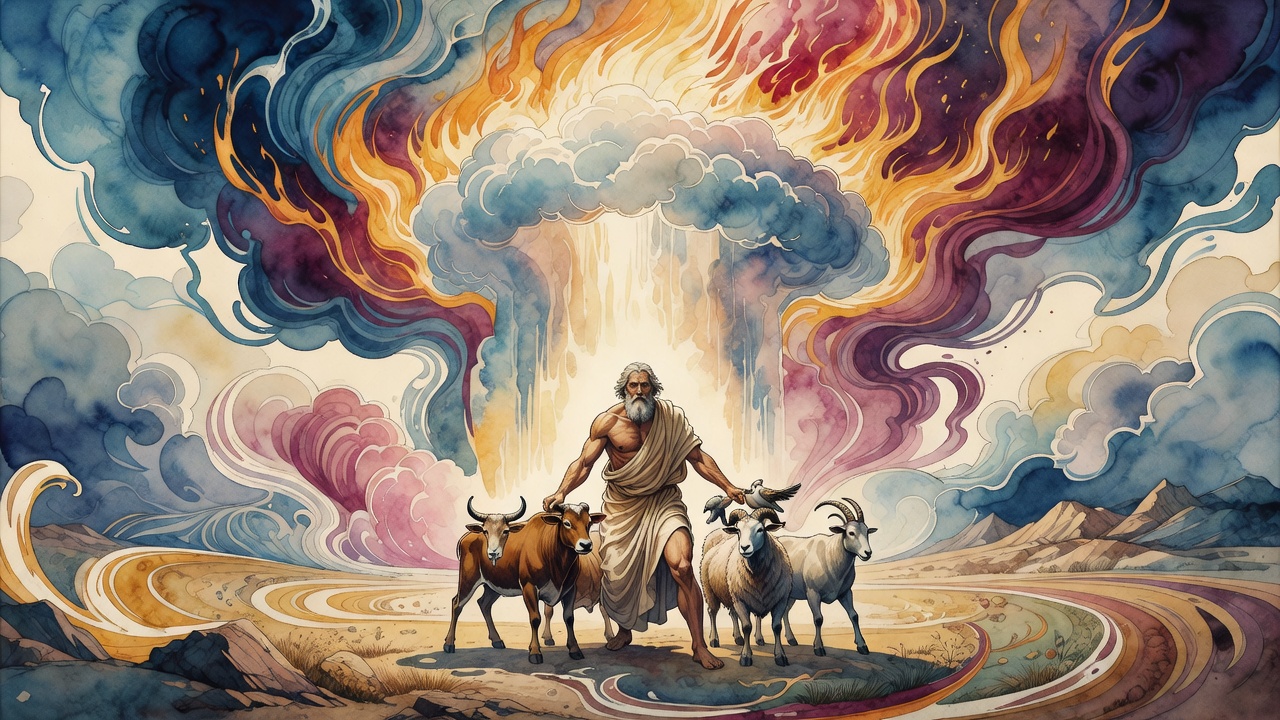
Moses had until sundown and he knew it. He said so out loud, standing where the whole camp could see him, a hundred and twenty years old that day, no longer able to go out and come in, forbidden the river he had walked forty years to reach. Then he called the heavens and the earth to stand and listen, because heaven and earth would still be there long after everyone in front of him was in the ground.
He did not open gently. He looked at the tribes packed together on the flats above the Jordan, men who had been small children on the night the sea stood up, and he called them a crooked generation. Then he asked the question he had carried down from the mountain.
"Do you repay the Lord like this?"
Nobody answered. So he told them about a man in a marketplace.
The Son Who Would Not Lower His Voice
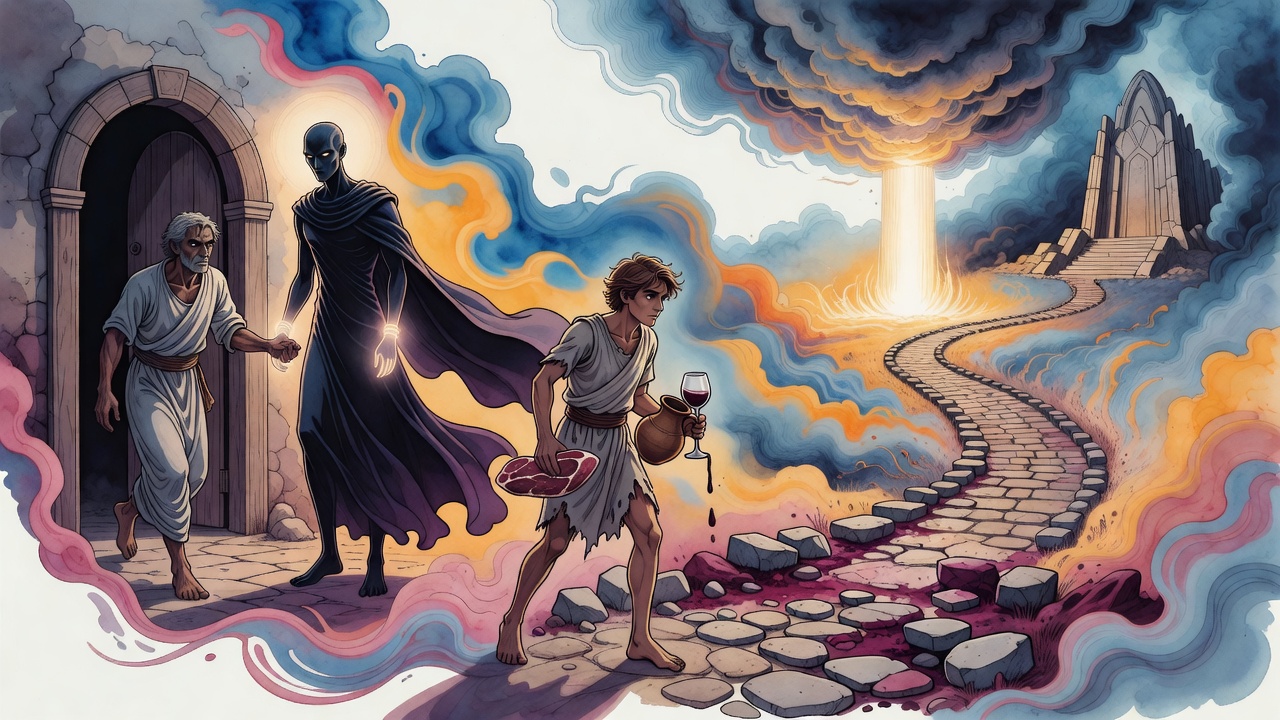
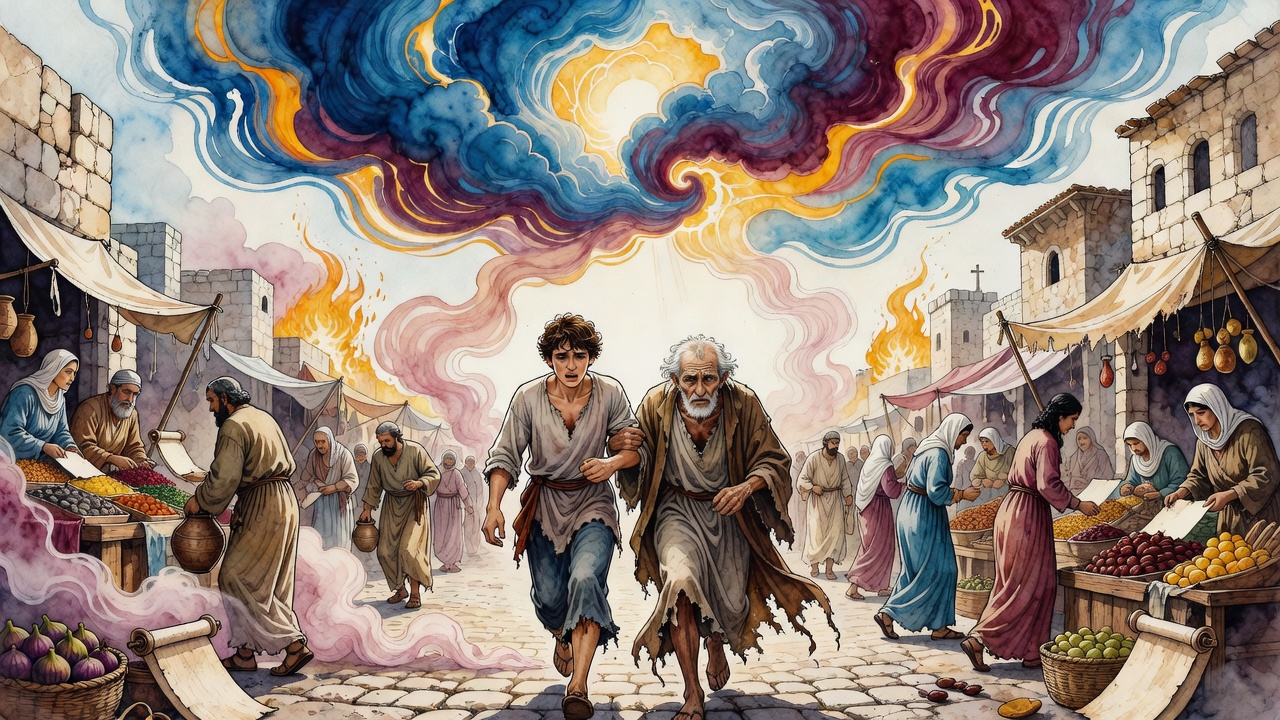
There was a man, Moses said, who stood in the open market taunting his own father. The old man was alive and standing right there. That was the part that stopped people walking. Not a joke told over a grave, where the dead cannot hear it and everyone can call it affection. A living father, on his feet among the stalls, listening to his son turn him into the morning's entertainment.
And the crowd stayed. A son shaming his father costs the watchers nothing, and it flatters them, because every one of them has a father of his own.
Then a man pushed out of the crowd and took hold of the son's arm.
"Who is it you are taunting? Your father?"
What the Stranger Said About the Estate
"Think what he spent on you," the stranger said. "Think how much of his strength went into you. If you would not honor him then, honor him now."
He tightened his grip before the last of it.
"Or he will sign every field he owns over to somebody else."
That was the sentence built for a man who had already spent his shame. Not the labor. Not the strength. Not the years of being carried. The estate.
Moses let the market stand there a moment, then walked the whole scene onto the people in front of him. If you will not remember the plagues, he told them, and the night you went out of Egypt, and the sea that opened and the water that came out of rock, then hold on to what He is still keeping for you. Remember the good stored up and not yet handed over. Honor Him at least for the portion that has not been signed away.
Ten Fields Inherited and One Field Bought
He gave them a second man. This one had land. Ten fields came down to him from his father, good ones, and he took them the way anybody takes what arrives without sweat. Then he went out and bought one field himself, one, with money he had counted twice before he let go of it.
He loved that field more than the ten.
Try it with houses, Moses said. Ten country houses out of his father's estate and one he bought with his own years. It is the bought one he walks out to look at in the evening. It is the bought one he talks about at somebody else's table.
Then he gave them the line as he had received it, and he did not soften it. You are beloved to Me. You are My purchase, not My inheritance. Israel had spent forty years assuming the opposite, that they were an estate God had come into by descent, a holding kept because it had always been in the family. Moses told them they were the one field. Bought, paid for, and chosen over everything that came free.
He Climbed Nebo That Same Day
The song ended. God spoke to him that selfsame day and told him to go up the mountain in the land of Moab, look across the water at the country he would not enter, and die there.
He went up alone. Behind him the camp broke for the evening meal and the words stayed down in their mouths, the whole song, the crooked generation, the father and the son and the market. Whatever else they lost crossing the Jordan, they kept the picture of an old man standing among the stalls, saying nothing, while his son collected the laughter of strangers and called it freedom.
← All myths