5 min read

Yehudah Carries the Lion Blessing Into Battle

After a nephew dies for an idol offering, Matithyah chooses war. Yehudah carries the lion blessing into battle, and heaven hands the captains over.

Curated by Arthur · Told by Maggid ·
Table of Contents
  1. The Priest Who Chose the Field
  2. The Plan and the Five Names
  3. From Ashes to the First Strike
  4. The Lion Word Holds

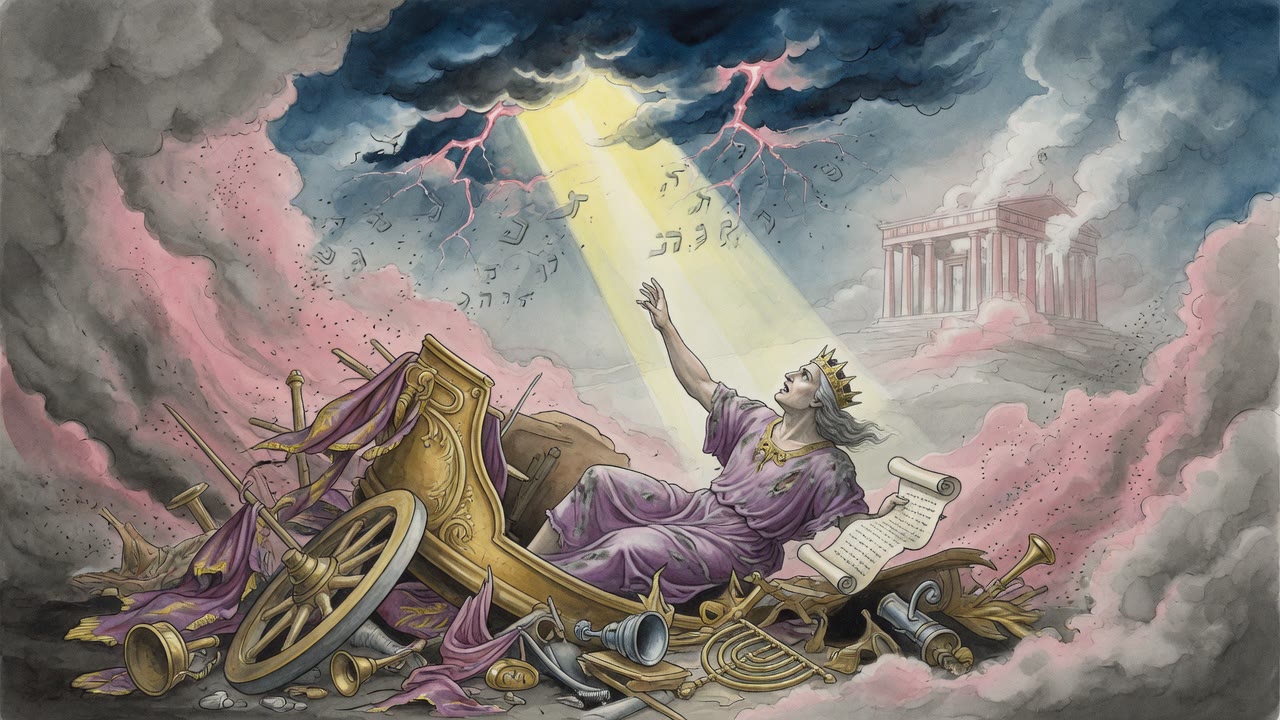
Ashes stuck to the knees of the people while they fasted and begged the God of Heaven for mercy. Decrees had closed the holy practices. Altars to foreign gods smoked where the covenant should have stood. Fear sat in the towns like a second government.
Yehudah Carries the Lion Blessing Into Battle Click for full size

In Modi'in the fear became personal. A Jew agreed, under pressure, to offer sacrifice to an idol. He was killed for it. The dead man was the nephew of Matithyah, a priest of the house that would soon be called the Ḥashmonaim. Grief and rage arrived in the same breath. Blood on the ground taught the lesson the decrees had only threatened.

Matithyah looked at the pit opening under Israel and did not step back from it.

The Priest Who Chose the Field

"I will go with you and I too will fight the enemy, lest the House of Israel perish, seeing that you are so alarmed by reason of your brother's death." He said it to the shaken men around him, not as a boast, but as a refusal to let alarm become the last word.

He strapped what weapons the house held and went out with his sons against the force that had seemed endless. This was not a polished army on a measured field. It was a small band of priests and kinsmen, anger still raw, blades uneven, facing captains who expected submission and another quiet village. Antiochus's power had numbers and pay. Matithyah had a house that would not bend and a nephew already dead for compliance.

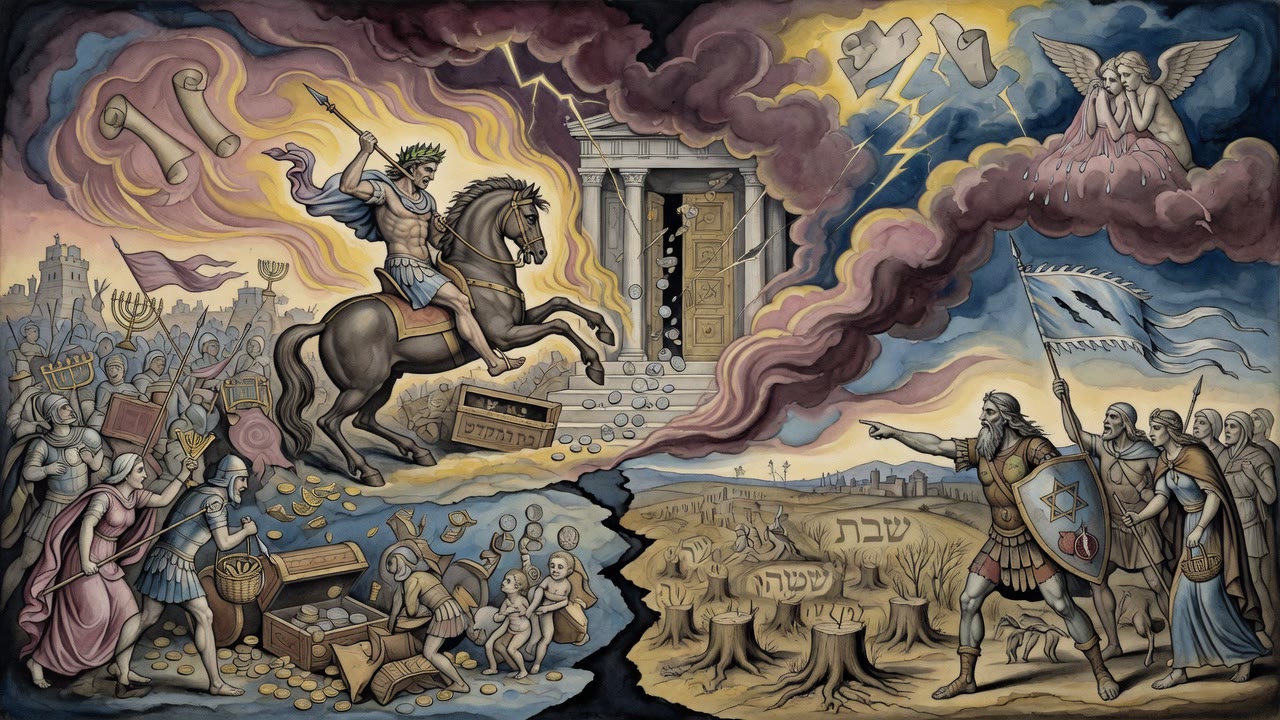
They met the enemy where the road left cover. Shouts broke. Metal rang. The God of Heaven delivered the mighty men of the enemy into their hands. They slew many among them, men armed with swords, men who drew a bow, captains and lesser officers, until none of that armed core remained. The remnant fled to distant provinces with dust in their mouths. The impossible odds broke first on one priest's decision not to stay home.

The Plan and the Five Names

The people had already decreed a fast day and sat on ashes. Prayer had opened the first door. A plan had to walk through it. Yehudah, the eldest of Matithyah's fighting sons, felt a good plan rise in him while the camp still smelled of smoke and fear. The scroll does not spill the scheme in that breath. It holds the suspense and turns to the father.

Before the perilous road began, Matithyah blessed his sons. The blessings were not soft wishes. They chained each boy to an older strength so the field would not invent courage from nothing.

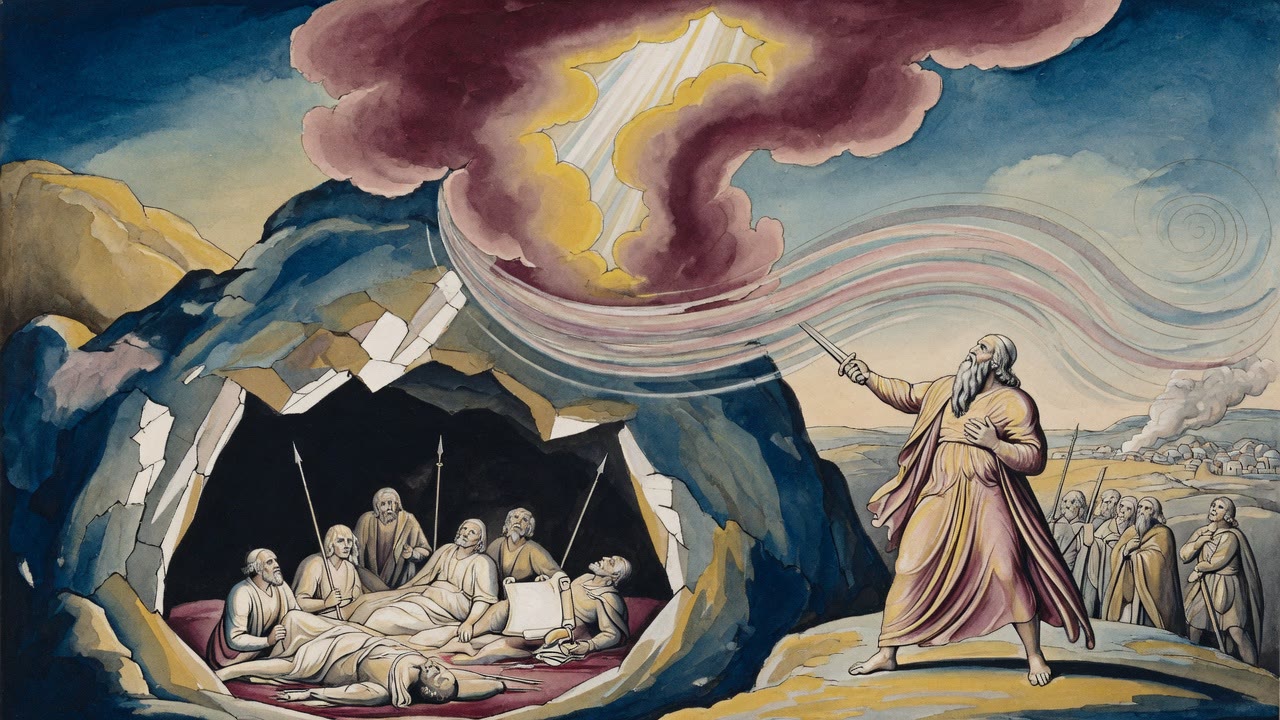
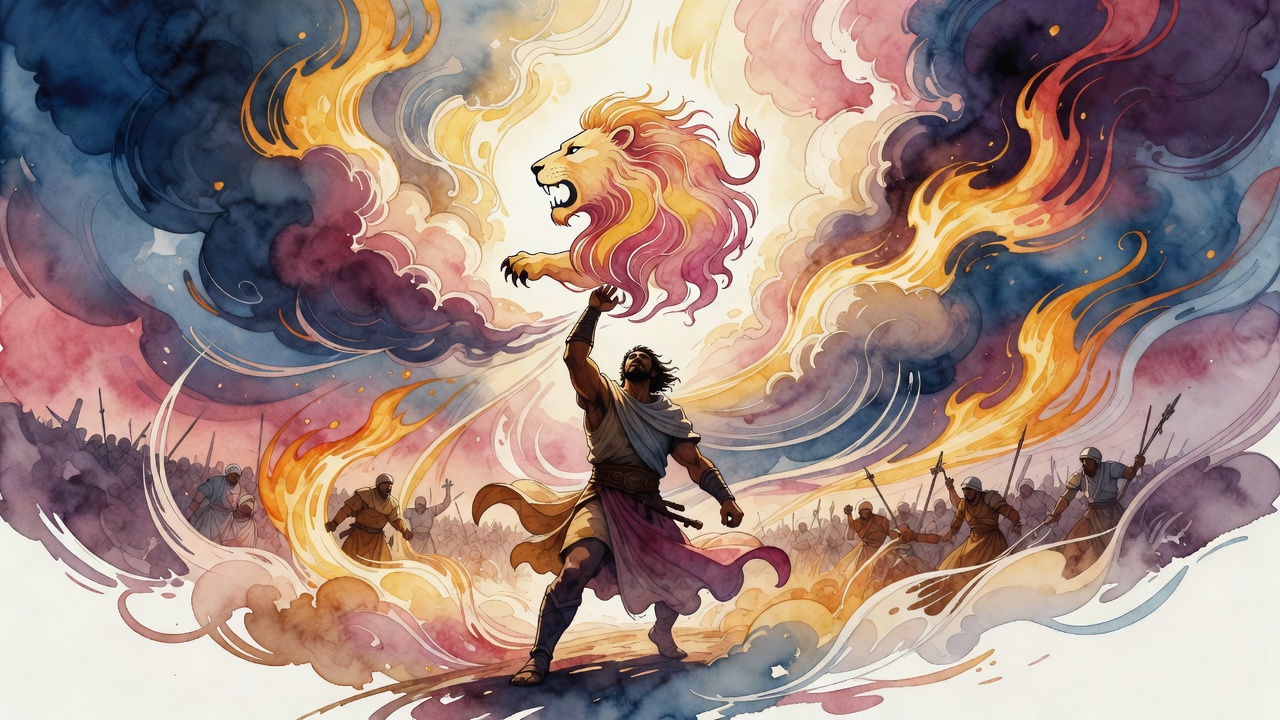
"Yehudah, my son, you are like Yehudah the son of Yaakov, who was like unto a lion." The old tribe-word from (Genesis 49:9) landed on the eldest like armor. Lion meant leader, warrior, the one who does not scatter when the line shakes.

"Shim'on, my son, you are like Shim'on the son of Yaakov who slew the people of Shkḥem." The father named a hard precedent without apology. Shim'on, Yoḥanan, Yonathan, and El'azar the youngest each received a charge in the same register: past bodies under pressure, present bodies about to move. Yehudah took the lion word into the plan he already held and did not put it down.

From Ashes to the First Strike

The nation had sat in ash because the Temple and the law were being scraped off the land. Matithyah's household rose from that ash with more than mourning. The nephew's death had shown what compliance cost when a man agreed to feed an idol fire. The only remaining options were disappearance or war.

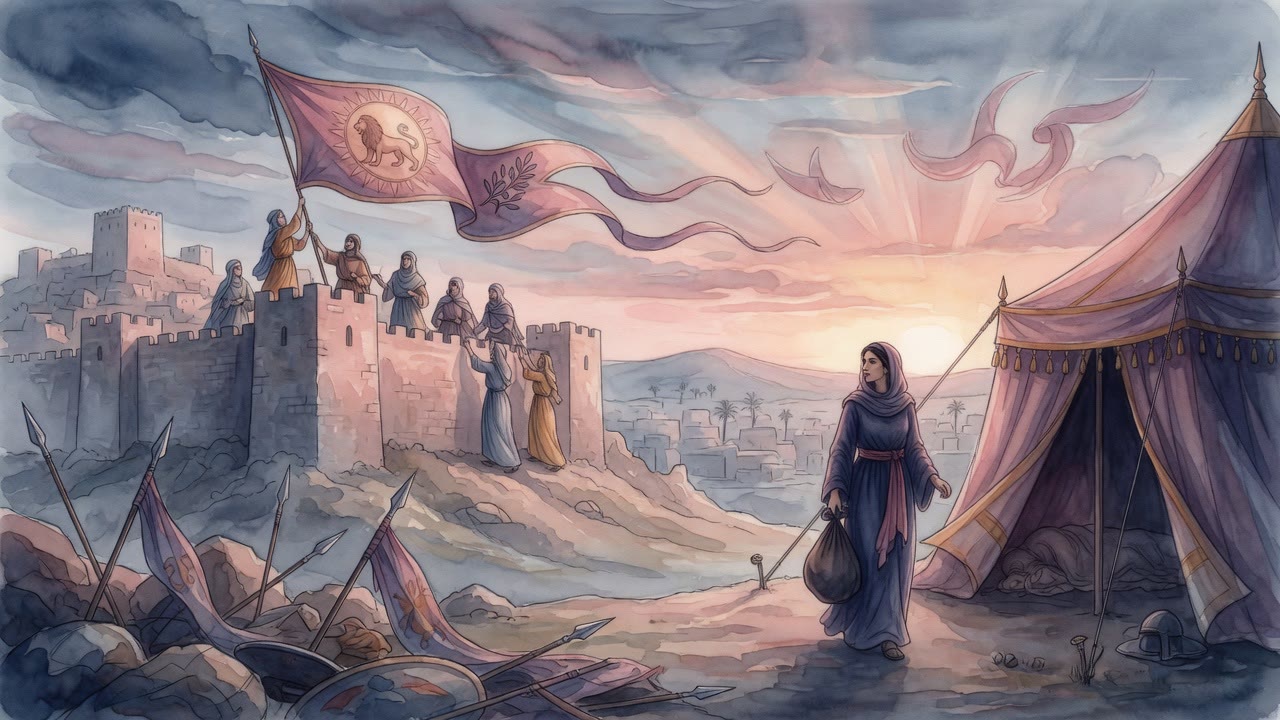
They chose war. Yehudah and his brothers moved as a single edge under the father's blessing. Scouts marked captains. Night paths became approach roads. The officers who had expected another quiet town met men who had already watched kin die for a forced offering. There was no room left in them for polite delay.

When the enemy line broke and the officers fell, the flight to distant provinces was not theater. It was the sound of an empire's local grip slipping on a family that refused the new gods. Helmets rolled. Bows dropped. The remnant ran until the hills swallowed them.

The Lion Word Holds

Yehudah did not invent his courage in the field. He carried a name his father had borrowed from Yaakov's son and pressed into his spine before the first march. The people who had fasted and prayed watched the same house answer heaven with motion. Matithyah had said he would fight lest Israel perish. The field answered that sentence with captains face-down and a remnant running.

Ash still clung to the memory of the fast. Oil and rededication would come later in the longer war. On this stretch the change was simpler and harder: a priest stood up after a nephew's death, blessed his sons with old names, and sent the lion son first into the teeth of the decree. Yehudah kept moving while the blessing still burned in his ears, and the House of Israel, for that hour, did not perish.


← All myths
From the tradition

Sources

2 sources

The texts behind this telling. Some cards carry a translation of the source; others are our own retelling of it, and each card says which. Every card links out to the original.

Megillat Antiochus 1:54Megillat Antiochus

Retold in our words. Read the original at the link below.Sefaria-hosted English translation · CC-BY

That’s kind of how the Jewish people felt during the time of Antiochus. Imagine your holiest places defiled, your traditions outlawed, your very identity under attack. It was a dark time, a time of immense suffering and fear.

Megillat Antiochus, or the Scroll of Antiochus, gives us a glimpse into those turbulent days. It's not considered part of the biblical canon, but it’s a historical narrative, likely written sometime in the Second Temple period, that tells the story of the Maccabean revolt.

In this particular passage, we see the Jewish people at their lowest. "They decreed a fast day, and sat on ashes and prayed to the God of Heaven for mercy.” They turned to the only place they could: to Adonai, begging for deliverance. Fasting, sitting in ashes. these are powerful symbols of mourning and repentance. A raw, desperate plea for help.

Prayer alone isn’t always enough, is it? Sometimes, you need a plan.

Enter Yehudah, the eldest, and his brothers: Shim’on, Yoḥanan, Yonathan, and El’azar, the youngest. These are the Maccabees, the sons of Mattathias, ready to rise. "And a good plan occurred to Yehudah.." The scroll tells us. It doesn't give us the plan just yet. It builds suspense.

Before they begin this perilous journey, their father, Mattathias, blesses them. And his blessings? They’re not just warm wishes; they are powerful pronouncements, connecting each son to figures of strength and courage from the past.

“Yehudah, my son, you are like Yehudah the son of Yaakov, who was like unto a lion.” He invokes the image of Judah, the son of Jacob, a leader, a warrior, a lion, a symbol of strength and kingship (Genesis 49:9). It's a powerful connection, imbuing Yehudah Maccabee with that same fierce spirit.

“Shim’on, my son, you are like Shim’on the son of Yaakov who slew the people of Shkḥem.” Shim’on, associated with righteous anger and decisive action. The reference to the incident in Shechem (Genesis 34) reminds us of his unwavering commitment to justice, even when it demands a heavy price.

“Yoḥanan, my son, you are like Avner the son of Ner, the head of the host of Israel.” Yoḥanan, likened to Avner, the strong and experienced military leader under King Saul (Samuel 14:50). This blessing speaks to Yoḥanan’s strategic mind, his ability to command and lead in battle.

These blessings are more than just words. They're a transmission of power, a connection to the legacy of their ancestors. They are preparing these young men for the immense task ahead. Megillat Antiochus sets the stage for the unfolding drama, highlighting not just the desperation of the time, but also the seeds of hope sown in the courage and resolve of the Maccabees.

The story of the Maccabees, ultimately, is a story of resilience, of faith, and of the enduring strength of the Jewish spirit. It's a reminder that even in the darkest of times, hope can emerge, and that sometimes, all it takes is a few brave souls to ignite a spark of resistance.

Full source
Megillat Antiochus 1:62Megillat Antiochus

Retold in our words. Read the original at the link below.Sefaria-hosted English translation · CC-BY

Megillat Antiochus turns to Matithyah and the Heavenly Realms.

Where were we? Ah yes, the impossible odds. The story focuses on the Ḥashmonaim, the family of Matithyah (also known as Mattathias), a priest who lived in a small town called Modi'in. This was a time when the Seleucid Empire, under the rule of Antiochus, was trying to suppress Jewish religious practice, replacing it with Hellenistic customs.

The situation had reached a boiling point. A fellow Jew, acting under pressure, had just been killed for agreeing to offer a sacrifice to an idol. Matithyah's nephew. Matithyah was heartbroken.

That's when Matithyah steps up. And he says something that echoes down through the ages: “I will go with you and I too will fight the enemy, lest the House of Israel perish, seeing that you are so alarmed by reason of your brother’s death.” It’s a moment of raw courage, a decision born not of arrogance, but of necessity. He sees the abyss, the potential destruction of everything he holds dear, and he chooses to fight.

So, Matithyah, along with his sons, goes out to confront the enemy. This wasn't a polished army facing off on a battlefield. This was a small band of determined people, armed with faith and righteous anger, facing the might of an empire. Talk about a David and Goliath situation!

And what happens? Megillat Antiochus tells us: “And the God of Heaven delivered all the mighty men of the enemy into their hands, and they slew many among them, slaying all who were armed with swords, or who drew a bow; all the captains of the army and their lesser officers, so that none remained; for the remnant fled to distant provinces.”

Now, some might read that and think, "Well, that was easy!" But it wasn't. It was a hard-fought victory, evidence of their unwavering commitment. It was a moment when the seemingly impossible became reality. It was a reminder that even when faced with overwhelming power, courage and faith can prevail.

What does this all mean for us today? Maybe it's a reminder that even when we feel small and insignificant, we have the power to stand up for what we believe in. Maybe it's a call to remember the sacrifices of those who came before us, who fought to preserve their traditions and beliefs. Or maybe, just maybe, it's a spark of hope to ignite our own inner fire.

Full source