Rabbi Yishmael Could Not Name the Hidden Head
The neck still took numbers, myriads stacked on myriads. Then the head rose, and Rabbi Yishmael's mouth found no word.
Table of Contents
Rabbi Yishmael opened his mouth to finish the measure and found no word left in it. The neck had numbers. Myriads stacked on myriads. Then the hidden head rose past the edge of speech, and his tongue went dry against his teeth.
 Click for full size
He had come for a measure. He had been taught to count what heaven allowed to be counted. The neck could still be held in language. The face beyond it could not. It stood like spirit and soul, and no creature under the throne could give it a name that stayed.
Sweat ran into his eyes. He did not wipe it. Movement felt like theft in a room that was not a room.
The Neck Still Took Numbers
First the numbers worked. He set the neck in order the way a craftsman sets stones, each count a step that did not slip. Thirteen thousand myriads, and eight hundred parasangs more. He spoke the count aloud so it would stay. The princes of the Presence stood in ranks he could still describe. Seraphim burned in places he could still point toward with a phrase. Their heat was terrible and still, somehow, nameable.
He wrote the numbers on the inside of his mind as if on a board. Neck. Height. Names sealed into the measure. So far the tool held. So far he was still a man doing a job heaven had assigned, not a man drowning in light.
Cloud thickened at the next edge. He stepped closer anyway. The count in his mouth was the only rope he had.
The Head That Would Not Be Named
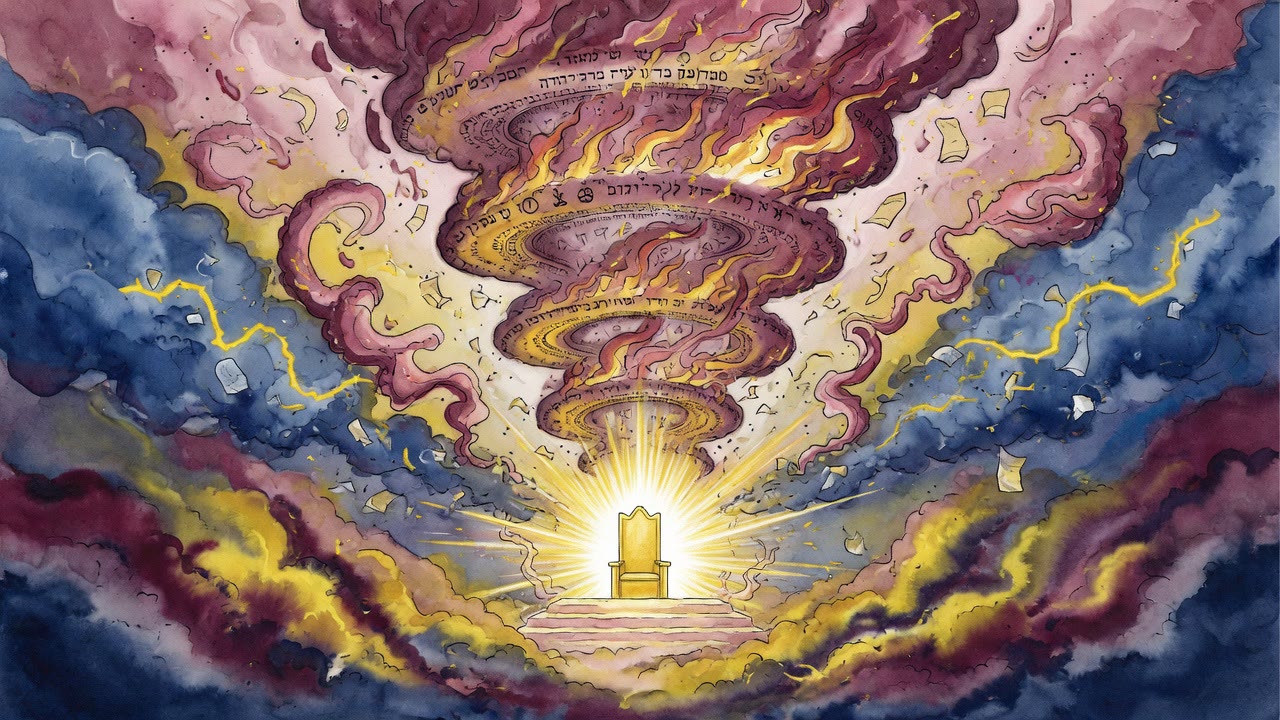
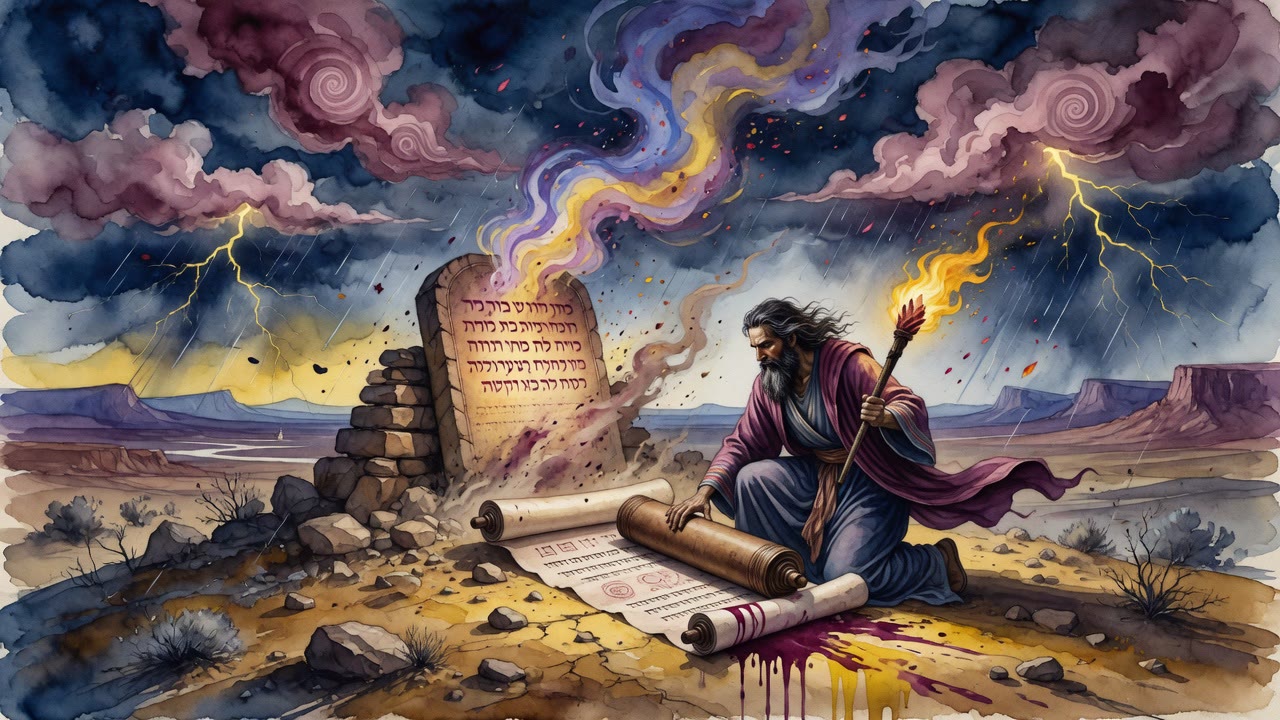
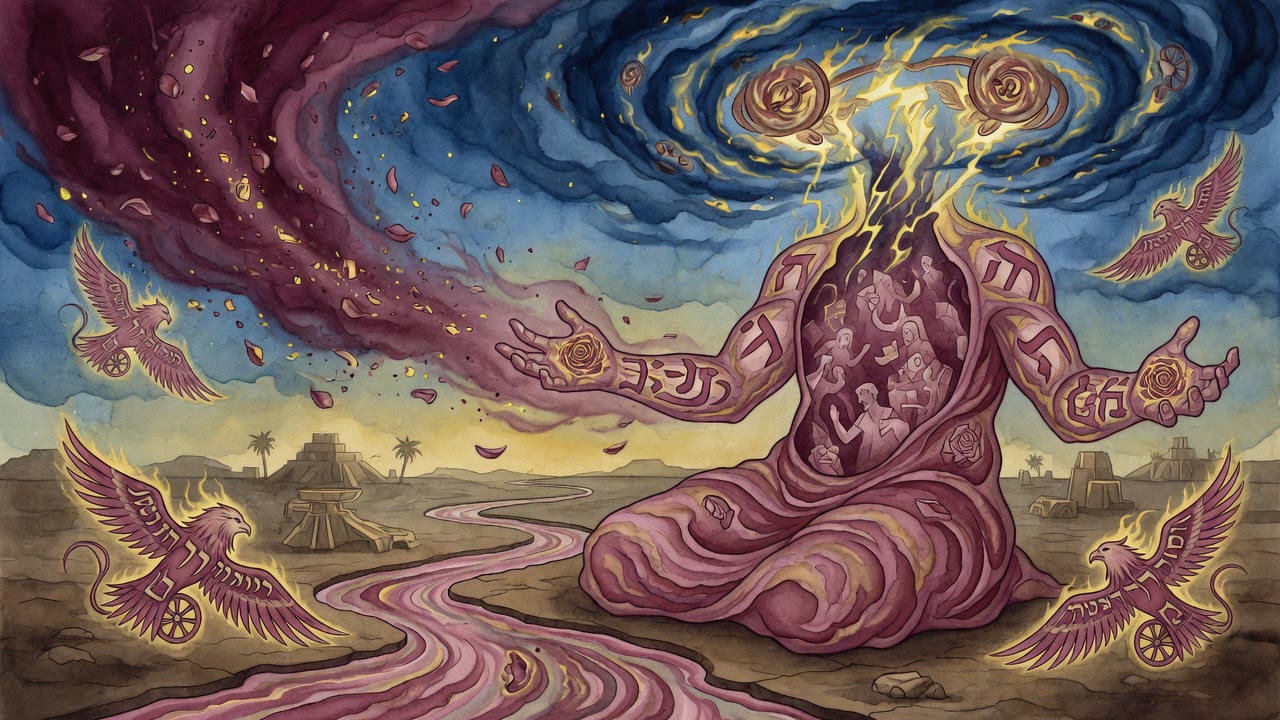
Then the head refused him. Not with a voice. With a silence that pressed on the roof of his mouth. What rose above the neck was not a shape the eye of flesh could own. Circumference: three hundred thousand myriads, and thirty-three and a third parasangs. The mouth cannot speak it. The ear cannot hear it.
He tried the number anyway. It left him as sound and died before it became a name. The face was like the appearance of the jaws, in the likeness of spirit, in the form of a soul. No creature could mention it and keep the mention.
The body of the vision gleamed like tarshish under that weather. Radiance shone out of darkness. Cloud and fog surrounded Him. The court around the throne did not step closer to help him speak. Help would have been a smaller mercy than the refusal. The refusal kept him from lying.
He tried once more, softer, as if courtesy could buy a syllable. Nothing came. The measure of the neck glowed in his mind like a finished tool. The measure of the hidden head was a blank that burned.
Sight That Is Not the Body's Eye
What he saw was not a picture painted on air for flesh to copy. The soul has its own sight. It grasps a form the way understanding grasps a truth that never sat on a table. Rabbi Yishmael felt that second sight open and still fail at the last threshold.
Lower vision can name a hand, a wheel, a fire. Higher vision can name a radiance and a rank. Above that, the form is given for the soul to know and not for the mouth to publish. He stood inside that rule the way a man stands inside a locked gate with the key already melting in his palm.
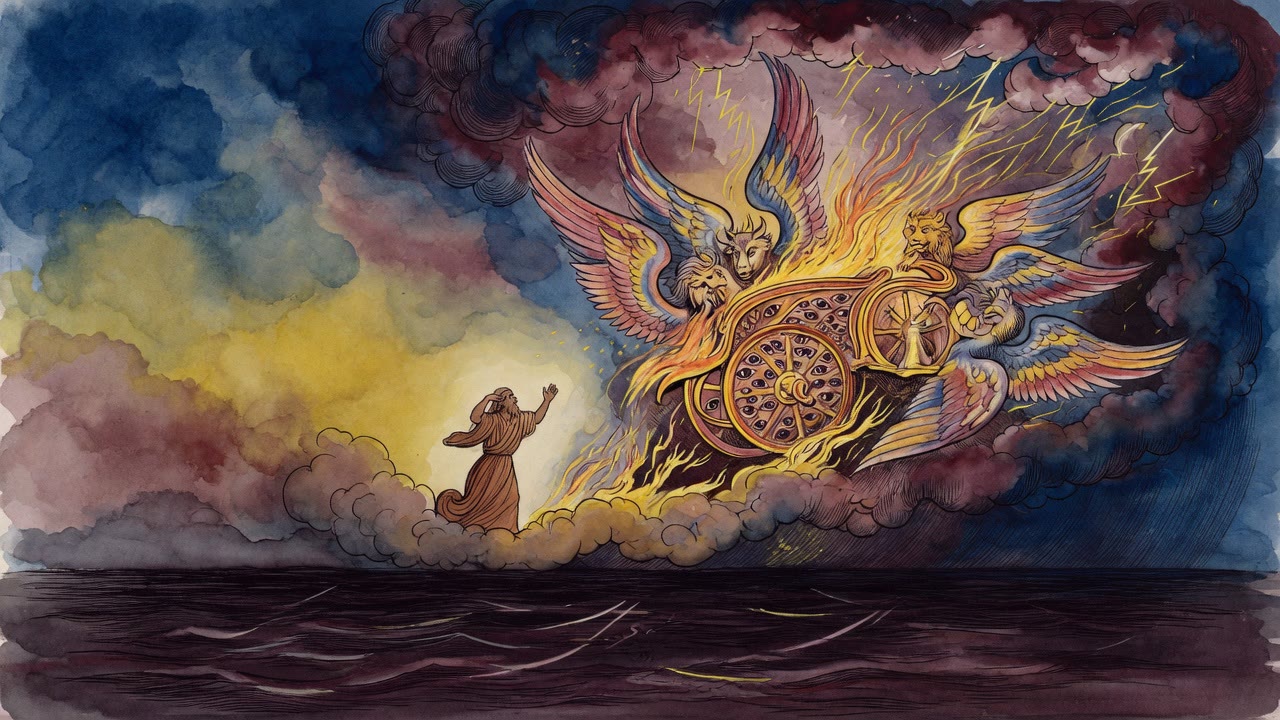
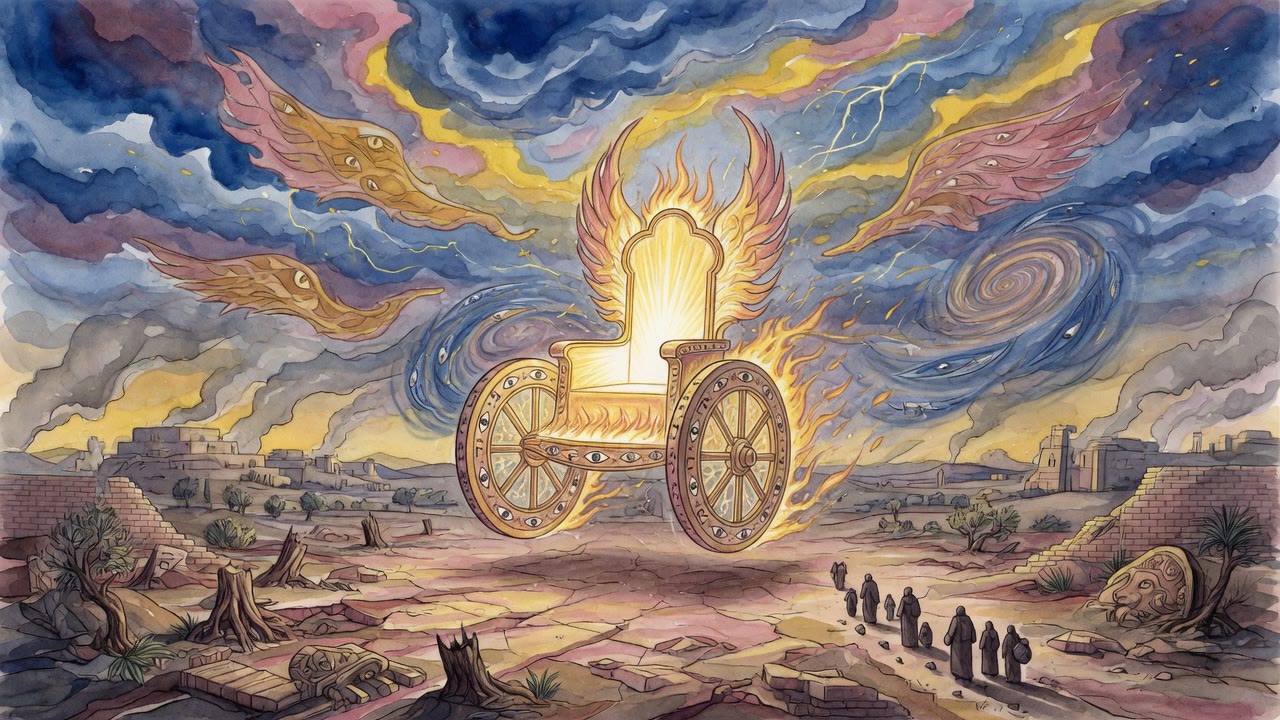
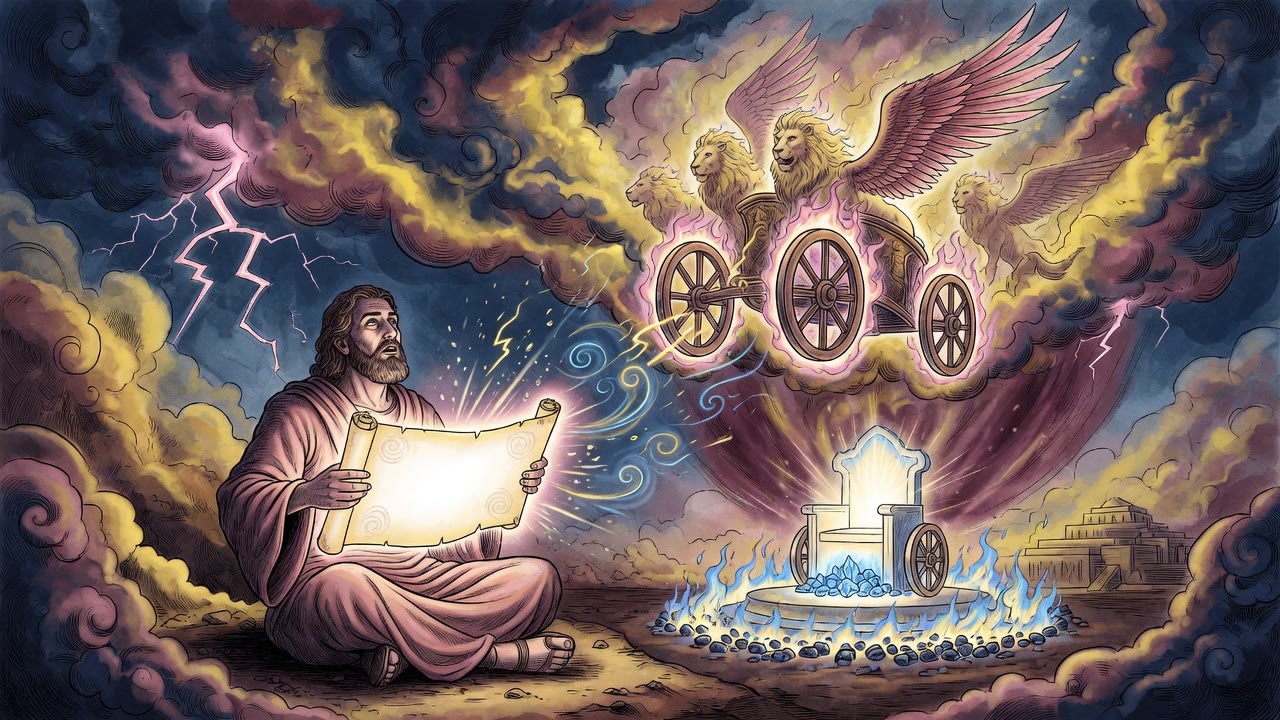
The light of the Merkavah (מרכבה), the Chariot, was not a lamp. It was he'arah (הארה), radiance that thinks, the kind of illumination that arrives early in a life when a mind first opens, and later returns as prophecy when a prophet can bear it. Rabbi Yishmael's vessel was a human skull. It had limits. Those limits were not a flaw in the vision. They were the price of remaining a man while looking.
He remembered how nursing infants take light into a growing mind without vocabulary. Prophecy is that taking, raised to a height where vocabulary returns and then breaks again. He was at the breaking.
Blood on the Cheek
Around him the princes did not whisper the missing name. The seraphim did not loan him a syllable. The throne remained the place where measures stop. Only guarded names had been trusted to the lower worlds, and even those names lived sealed, too hot for casual use. The nose had a name. The tongue stretched from one end of the world to the other. None of that unlocked the head.
Rabbi Yishmael bit his cheek to keep from inventing a word and tasted blood. Invention would have been a second sin. Better a broken mouth than a false measure. Better a man who stops than a man who dresses the Infinite in a costume his fear stitched overnight.
A lesser teacher would have filled the silence for the students waiting below. Rabbi Yishmael loved his students enough to bring them a clean failure. He closed his mouth on purpose. The stop was the last accurate thing he could still do.
What He Carried Back Down
When the brightness loosened, the numbers for the neck returned to him like tools left on a bench. He could teach those. He could say, here the count still holds. He could not teach the head. He could only say that speech ends, and that ending is itself a kind of knowledge.
He walked out into ordinary night. A door. A floor. Air that did not shine. He drank water that tasted like metal and praised the metal for being only metal. In the morning he taught the neck again, slowly, and when he reached the place where language fails, he stopped, and the stop became part of the teaching the way a rest becomes part of a song.
One student asked, years later, whether the hidden head meant God has a head. Rabbi Yishmael struck the table hard enough to sting his own palm. "It means your mouth has a border," he said. "Honor the border. The throne is not a doll."
He left the myriads of the neck on the board and the silence above them. Students wanted a diagram. He gave them a finished count and an unfinished one. He refused to pretend the refusal was a riddle with a clever answer in the back of a book.
← All myths