Zedekiah Swore Loyalty on a Torah Scroll and Broke the Vow
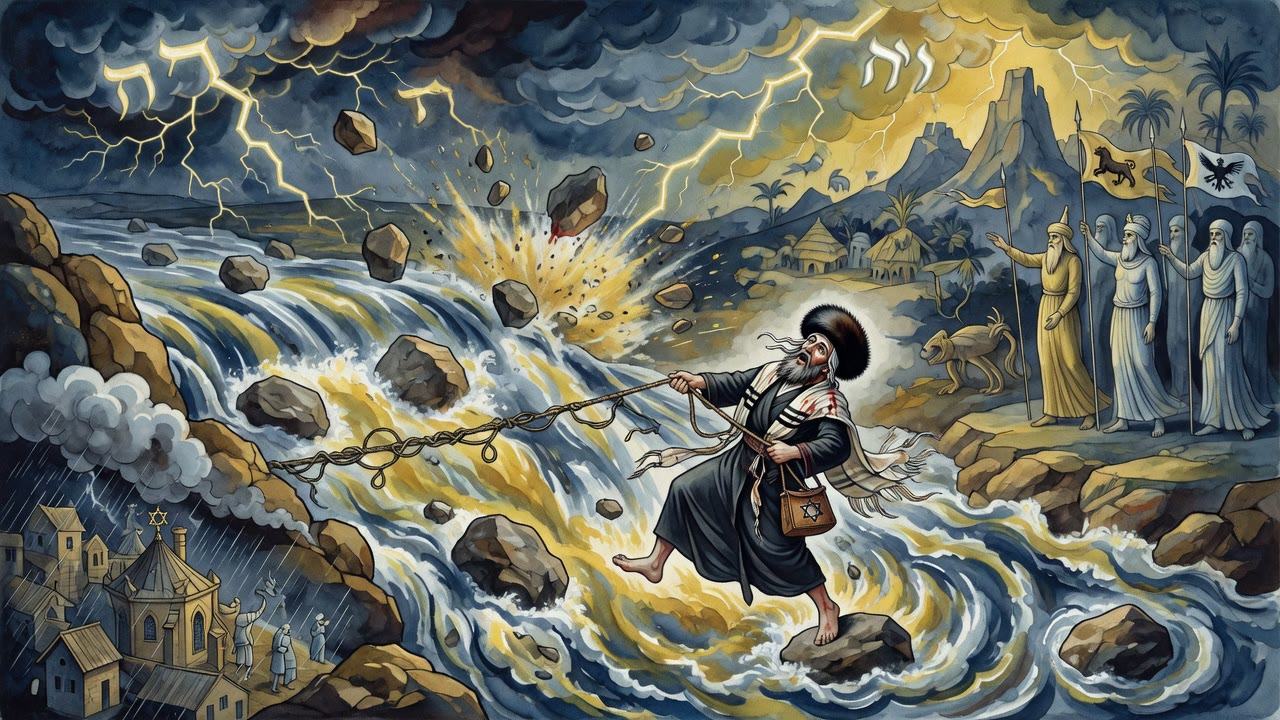
Nebuchadnezzar would not trust a king's soul, so he made Zedekiah swear on a scroll of the Law, and Judah's last king could hold neither vow he took.
Table of Contents
 Click for full size
Two Oaths in the Conqueror's Tent
Nebuchadnezzar set a crown on the head of a young man he did not trust and called it mercy. The Babylonian had already broken into Jerusalem once. Now he wanted a king inside the city who would answer to him, and he chose Zedekiah, the last of the house of Judah to hold that throne.
"Swear to me," the Babylonian said.
Zedekiah lifted his hand. "By my own soul," he began.
Nebuchadnezzar shook his head. A soul was a private thing, and private things could be talked away in the dark. He sent for something heavier. Men carried in a Sefer Torah, a scroll of the Law, and unrolled it on the table between them. "On this," the conqueror said. "Swear your loyalty on this."
So Zedekiah pressed his hand to the letters and swore, on the scroll itself, that he would keep faith with Babylon.
The Secret of the Living Hare
There was a second thing between the two men, and it had nothing to do with crowns.
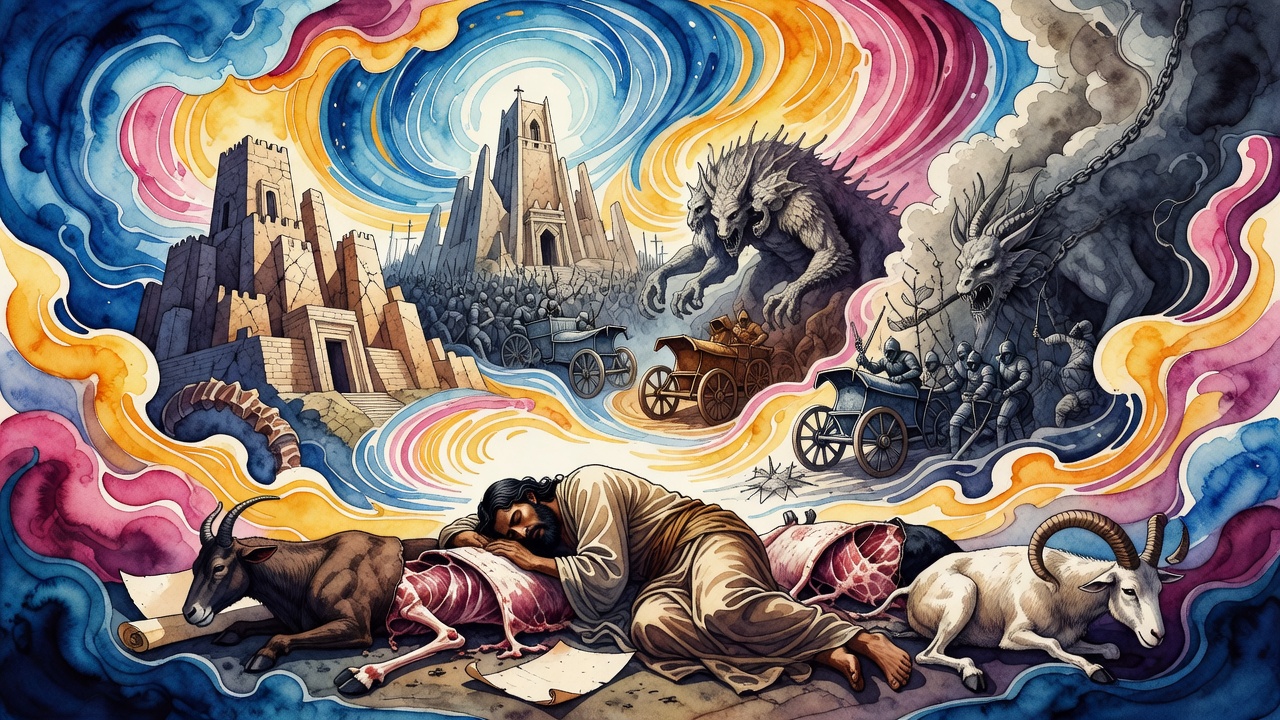
Once, unannounced, Zedekiah had come upon Nebuchadnezzar when the great king believed himself alone. The conqueror of nations sat tearing a strip of flesh from a hare that was still alive, still twitching, and eating it raw, the way a barbarian eats.
Nebuchadnezzar looked up and understood that he had been seen.
Then the most powerful man in the world begged. He asked Zedekiah for a second oath, a vow of silence over this one ugly habit, and to sweeten the asking he raised the younger king high. He made Zedekiah sovereign over five other vassal kings. It looked like generosity. It was a lock on a mouth.
Two oaths bound Zedekiah now. One sworn on the Torah, to stay loyal. One sworn to a man ashamed of himself, to stay quiet.
The Word He Could Not Swallow
The five kings beneath him learned to flatter, the way men do when they sit lower than they believe they deserve. They leaned close to Zedekiah and let the poison drip slow. "A man of your bearing," they told him. "If the world were ordered as it should be, it would be you on Nebuchadnezzar's throne, and not him."
Zedekiah knew what he carried behind his teeth. But flattery loosens the jaw, and the secret had been sitting there too long, and there is a pride that would rather feel large for a single breath than stay safe for a lifetime.
"Nebuchadnezzar?" he said. "I once saw that man eating a live hare."
The words were out. He could not gather them back into his mouth.
The Court That Came to Daphne
Word travels, and the same men who had flattered him carried the rest of it north. The king of Judah had thrown off the yoke. He had broken the vow he swore on the scroll.
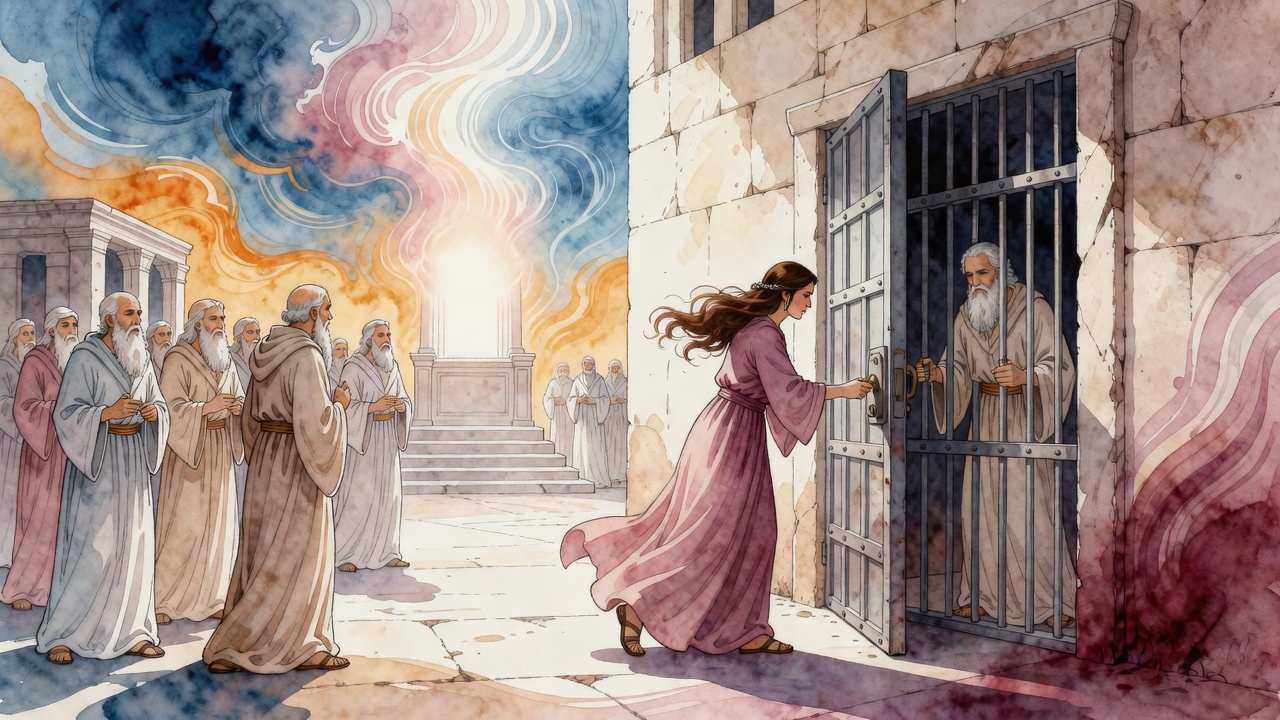
Nebuchadnezzar marched up in a fury and halted at Daphne, near Antioch. There, come to meet him, stood the Sanhedrin, the high court of Israel, the sages who read the Law and ruled on it.
The Babylonian did not draw a sword on them. He did something stranger. He seated the old men in chairs like honored guests and asked them to open the Torah and teach him. They read. He listened. And he steered them, passage by passage, to the place in the Book of Numbers where the Law speaks of vows and how a vow may be loosed.
"Tell me," Nebuchadnezzar said, and his voice was soft. "If a man wishes to be released from a vow he has sworn, what must he do?"
"He must go before a scholar," the sages answered, "and the scholar may absolve him."
The trap shut around them.
"Then it was you," the king said. "You are the ones who released Zedekiah from the oath he swore to me."
They had. Before he rebelled, Zedekiah had come before them wanting out of the vow that tied him to Babylon, and they had annulled it. But a vow sworn to another man cannot be dissolved unless that man stands there to hear it, and no one had asked Nebuchadnezzar. The court had loosed an oath it held no right to touch.
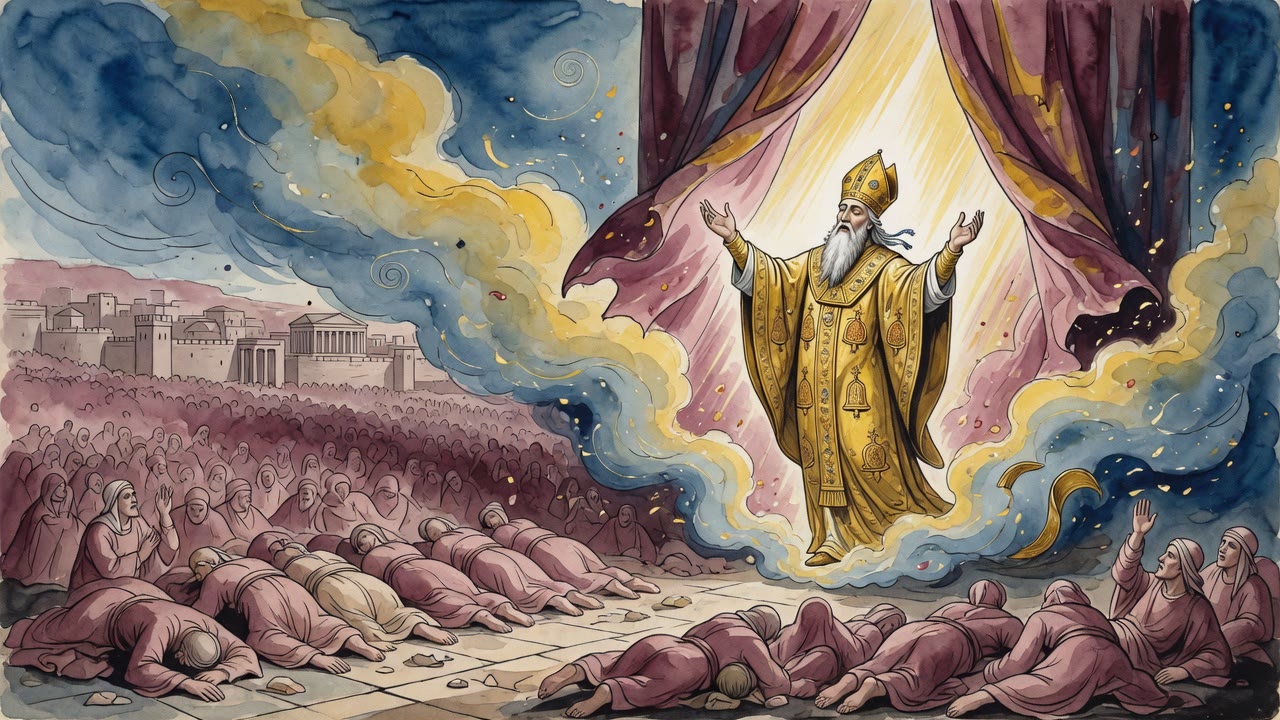
He made the seventy rise from their chairs and sit on the bare ground. The highest court in Israel, down in the dust, before a foreign king who had just beaten them with a reading of their own Law.
The Dregs of Every Generation
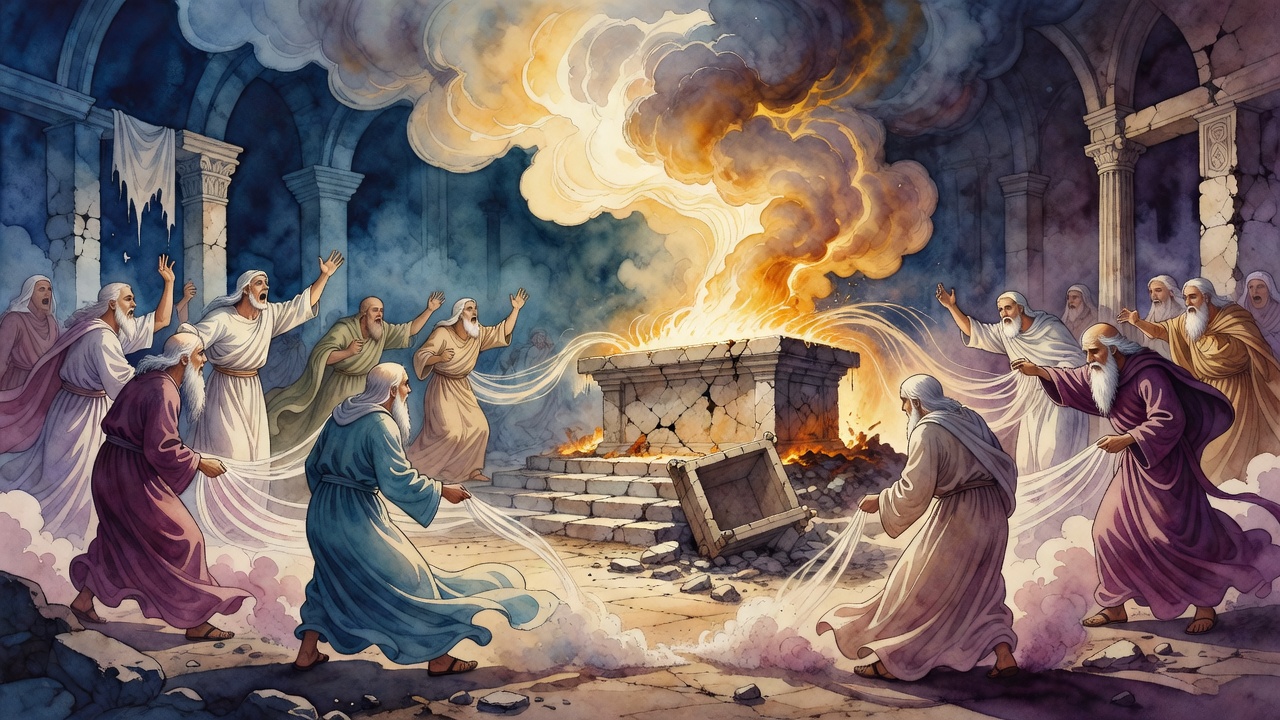
After that, the ending arrives the way the histories carry it. The walls came down. The Temple burned. Zedekiah was the king on the throne when Judah fell, and a smaller man would be remembered with a curse.
He is not.
When the sages told of his death, they mourned him. They said he lived to a great age and died grieved and lamented, and over him they raised a strange elegy. "Alas that King Zedekiah had to die," they cried, "he who drank the lees that all the generations before him had left in the cup."
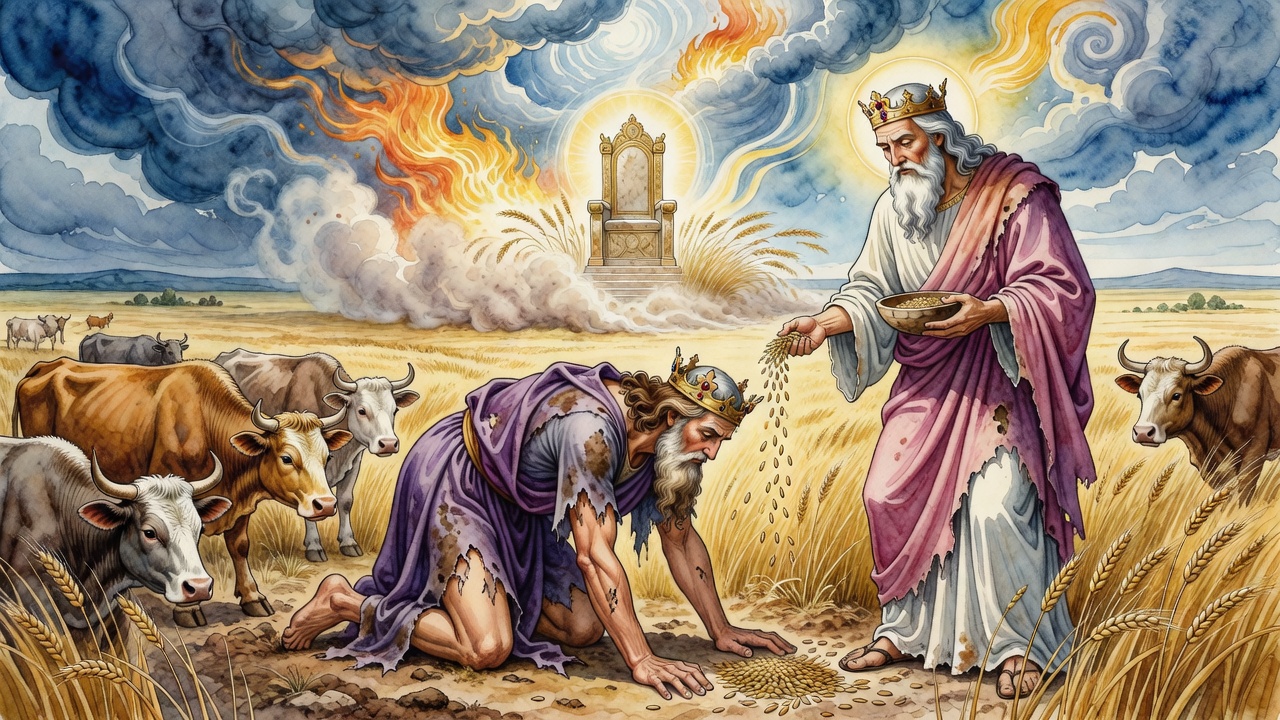
The dregs. The bitter sediment left by fathers and grandfathers and the fathers before them, every sin of every reign settling to the bottom until the last king lifted the cup and found the drinking of it was his. Jerusalem did not fall because one soft-hearted man could not hold his tongue. It fell because a kingdom had been filling that cup for four centuries, and Zedekiah was only the one holding it when it came due.
So they wept for him. The man who swore on the scroll and broke it, and was mourned all the same.
← All myths