Sanhedrin Saved David's Line Through a Hairdresser
Jehoiachin sat in a Babylonian cell without his wife. If he died childless, David's house died with him. The sages had no army, only a path through the palace.
Table of Contents
 Click for full size
A King Locked Away From His Wife
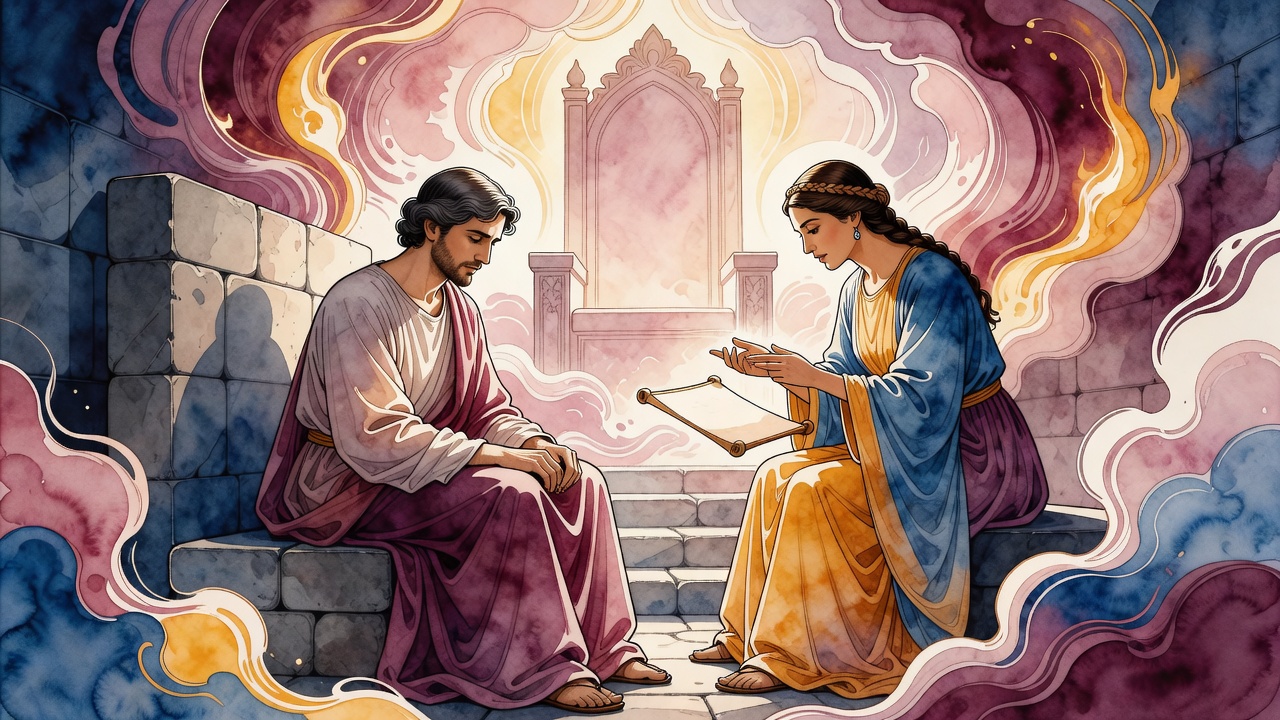
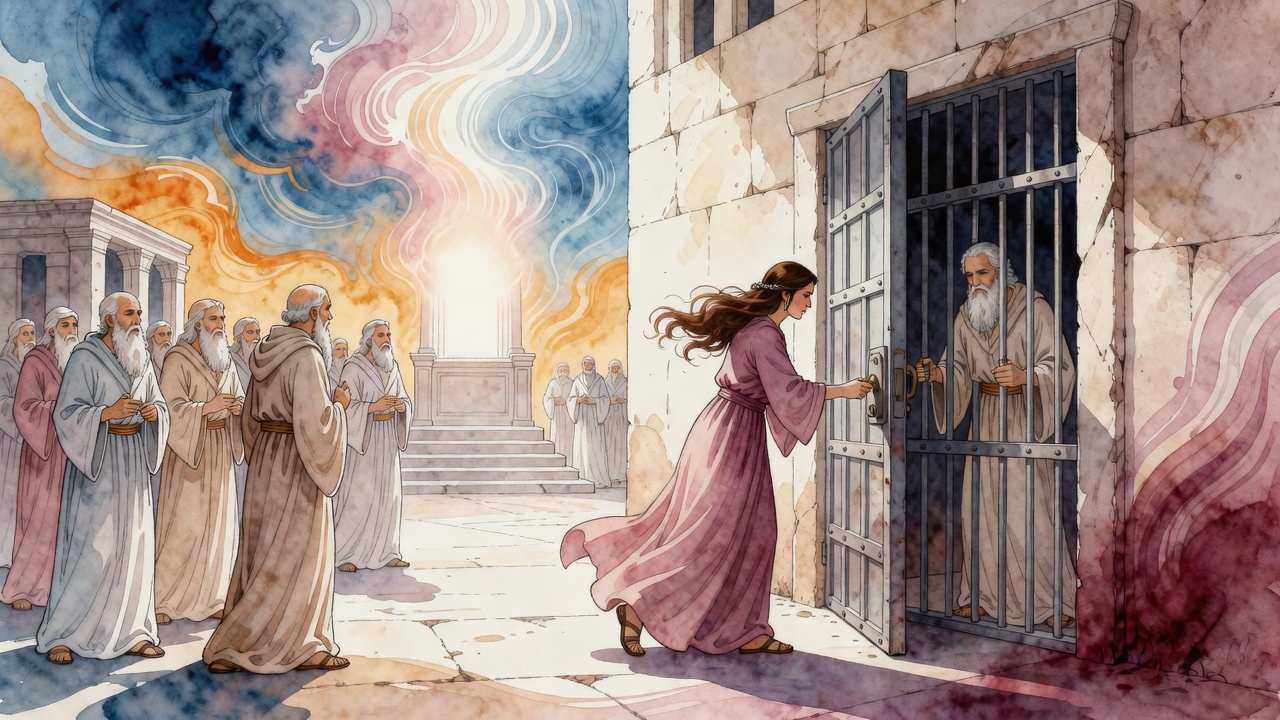
Nebuchadnezzar dragged Jehoiachin to Babylon and locked him in a room without his wife. Members of the Sanhedrin (סנהדרין), Israel's high court of sages, came in the same train. They looked at the locked door and felt a colder fear than hunger.
If the captive king died without sons under law, the house of David might end in a cell. Empire can kill a city in a month. Ending a covenant line is a quieter murder. The sages did not have armies. They had nerve, and a chain of persuasion that ran through combs before it reached a throne.
Jehoiachin sat. The dynasty promised an enduring house sat with him, one body, no heir in reach. The sages refused to let that be the last sentence.
From Comb to Queen to a Royal Yes
They won over the queen's hairdresser. The hairdresser won over Queen Semiramis. Semiramis moved Nebuchadnezzar to grant Jehoiachin access to his wife.
Prisoners begged a tyrant for the chance to keep a promise older than his empire. The path ran through court gossip and a woman's hands in a queen's hair before it reached a royal yes. A hairdresser is not a general. On that day she was a hinge.
The door opened. A wife entered a room that had been built to end a line. Jehoiachin was not the same man who had left Jerusalem. Suffering had cut him into a sharper obedience.
He Kept the Law in the Cell
Even reunited, he would not break the commandments for pleasure. Joy was in the room. He still stood ready to abstain rather than violate the word of God. He took the reunion as a test he might still fail.
Heaven noticed. The heavenly Sanhedrin released God from the oath to crush Jehoiachin's line and strip it of future rule. Repentance reopened a decree that had looked final on earth. Human law kept under pressure can reopen a judgment that seemed sealed.
From that faithfulness came posterity. Zerubbabel, first governor of the land after the Temple's fall, was his grandson. The same stream dares more: the Messiah himself will descend from Jehoiachin. A king who once seemed a dead end becomes a hinge for return, and for a hope still unnamed in the streets of Babylon.
The locked room that was supposed to end David's house held a wife again. The king kept the law in it. Heaven tore up an oath.
Naked on the Road, Clothed in Bari
The road into exile itself was cruelty designed to strip more than cloth. Captives marched along the Euphrates naked. In the city of Bari, onlookers refused to treat the spectacle as normal.
They stripped their own slaves and offered the naked bodies to Nebuchadnezzar with a barbed courtesy. When the king stared, they said, "We thought thou wert particularly pleased with naked men." The sarcasm stung. He ordered the Jewish captives reclothed.
God rewarded Bari with lasting beauty and grace for that defiance dressed as hospitality. One city shamed a conqueror into mercy of fabric. One hairdresser opened a door for a dynasty. Small hands kept large promises alive while thrones were busy with maps.
A Hero Fell and the Wall Gave Way
Another hour of the same fall warns that human strength alone does not hold Jerusalem. In the Babylonian assault a warrior named Akiba caught catapult stones with his feet and hurled them back. He fell into the gap between the walls, laughed off the bruise, and promised to return after a feast of roasted ox.
A wind rose. It threw him from the wall. He did not rise. With his fall the Chaldeans poured in. Courage without heaven's holding can end in a single gust. He had caught stones. He could not catch air.
Hold Jehoiachin's cell beside that wall. One scene saves a line through penance and a hairdresser's path. Another scene loses a city when a hero's body fails. Exile memory needs both: the miracle of a continued house of David, and the honesty that even the bravest catcher of stones is still dust when the wind decides.
Empire loves finality. A locked king looks like a closed book. The Sanhedrin refused the binding. They trafficked in favors that looked undignified next to the extinction of a promise. Morning, when it comes, will speak the names Zerubbabel and, farther still, the anointed hope that captivity tried to strangle in a locked room.
The cell had two people in it instead of one. That was enough to keep David's house breathing in Babylon while a wall in Jerusalem went down in a gust, and while a city on the Euphrates put clothes back on a naked march.
← All myths