Zophnat Claimed Her Beauty on the Auction Block
Sold and stripped, a high priest's daughter seized the last garment herself and named her own glory before the crowd.
Table of Contents
They put Zophnat, daughter of the high priest, on the auction block in a foreign square and began to peel her life away garment by garment. The crowd jeered as if holiness were a joke that had finally been told out loud. A lineage that once walked near the sanctuary was being priced like livestock under a noon sun.
 Click for full size
When the seller reached for the last cloth, she tore it off herself before his hand could finish the humiliation.
Behold, There Is No More Beautiful
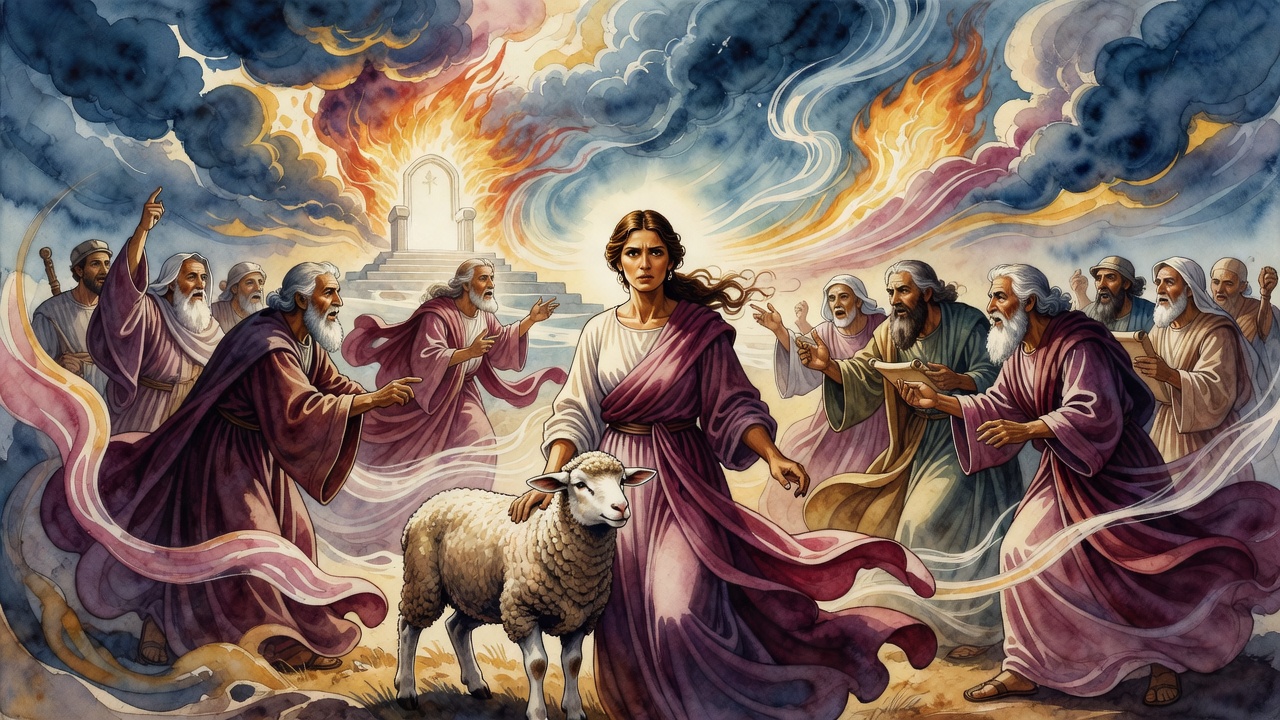
She stood bare and lifted her chin so the whole market had to meet her eyes. "Behold, there is no more beautiful woman in the world than I am." It was not vanity preening for buyers. It was defiance seizing the only throne left on a platform built for shame. They could sell her body. They could not sell the voice that named her own glory while the rope of price still hung in the air.
The crowd had come for a victim who would weep on cue. They met a queen without a court, a priest's daughter who refused the script of brokenness. The rabbis kept the tale as proof that a spark of nobility can survive when every outer mark of status and holiness is stripped. Humiliation tried to write the last line. She wrote over it in a single sentence that made the jeering falter.
Beauty, in her mouth, was not merchandise. It was testimony: you have not unmade me.
The Hidden Room and the Roaming Eyes
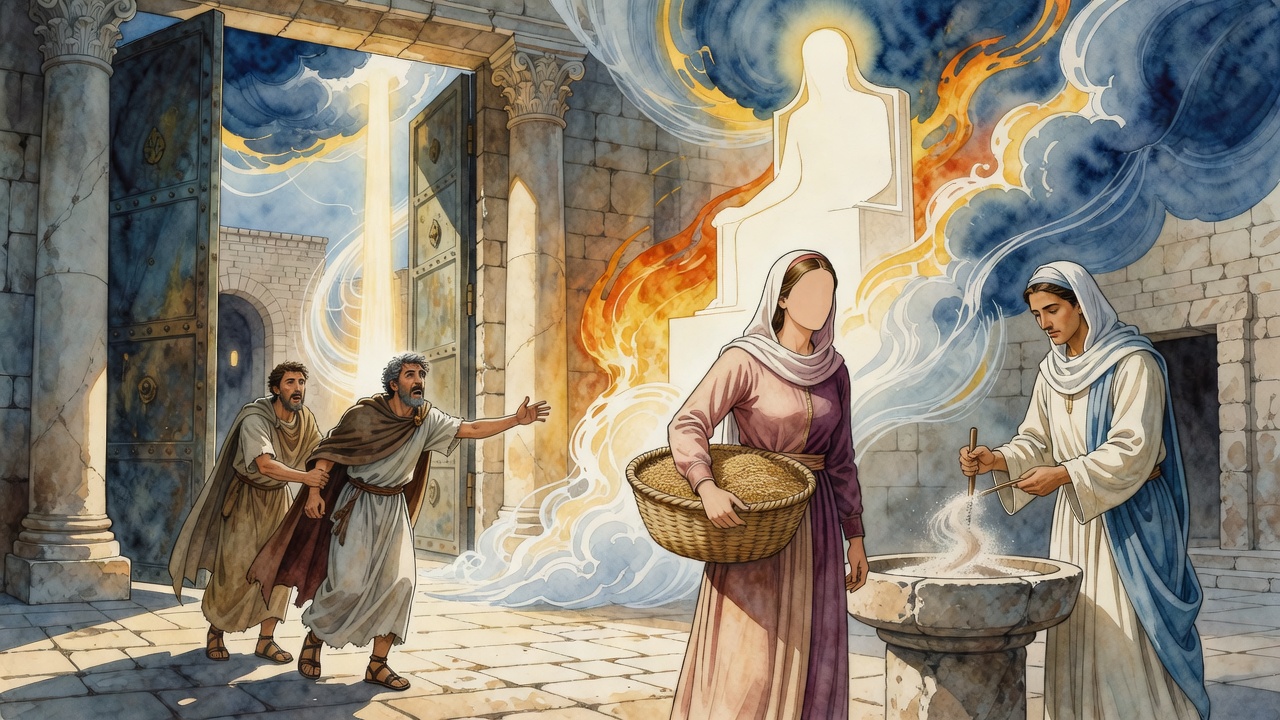
Elsewhere a different woman closes a door, and a different man counts on darkness. The Torah portion of the sotah opens with a wife who goes astray, and the Maggid refuses to let secrecy become a theology of safety. "Can a man hide himself in secret places, and I will not see him? says the Lord" (Jeremiah 23:24). Rabbi Benjamin son of Rabbi Levi hears the Holy One answer: if a person performs a deed, shall I not see it? The eyes of the Lord range through all the earth (Zechariah 4:10). Curtains are furniture. They are not walls against Heaven.
Still, seeing is not always immediate exposure. "I will not see him" can mean: I see, yet I do not at once display the sinner to the world and broadcast every deed in the marketplace. Space is left for return, because the same God fills heavens and earth. No chamber is empty of presence. The auction block was public shame forced on the innocent. The closed room is private crime chosen in hope of invisibility. Both stand under the same gaze, and neither gaze is casual.
Zophnat was displayed against her will. The straying pair display themselves to no one and still fail to hide. The difference matters for justice. The shared fact matters for theology: there is no empty room.
One Sin That Shatters Sinai
The man who lies with another man's wife does not break one word of the Ten Commandments. Midrash counts the wreckage across the whole of Sinai. He denies the Lord who said "I am," as if the covenant partner were absent from the act. He awakens the jealousy named over the wandering wife, as if divine jealousy and a husband's burn as one fire. He swears falsely that he never touched her. The child she bears may call the wrong man father, mocking in the marketplace the one who begot him. The adulterer enters ready to kill or be killed if discovered. He steals his neighbor's spring. He coaches false witness. He covets all his neighbor owns, until a deceived husband writes a testament leaving fields and coins to a son who is not his.
In one hidden hour the whole of Sinai can be undone. Zophnat's public stripping and the adulterer's private theft are not the same story. One is violence against the innocent. One is violence dressed as pleasure. Both turn on whether a body is treated as property or as a soul under covenant, and whether anyone believes darkness is thick enough to edit the record.
What the Block Could Not Buy
Zophnat's last act refused the script of ownership. She named herself before the price was set. The law of hidden sin insists that curtains are thin to Heaven even when markets and bedrooms invent privacy. Between them stands a hard Jewish insistence: dignity can be claimed under violence, and crime cannot rent darkness forever.
The seller thought he controlled the scene with his hands and his rope and his crowd. The daughter of the high priest took the last garment into her own hands and made the marketplace hear a sentence it did not come to buy. Long after the coins changed hands, the sentence remained: the block could strip cloth. It could not strip the voice that still knew who she was.
← All myths