Parshat Naso5 min read

She Took the Nazirite Vow After the Sotah

She watched a suspected wife drink the bitter water. That night she swore off wine for thirty days. Her husband said nothing, so the vow held.

Curated by Arthur · Told by Maggid ·
Table of Contents
  1. Bitter Water in the Courtyard
  2. Thirty Days at Minimum
  3. Who Can Untie a Word
  4. One Woman at a Time
  5. Hair, Wine, and the Door of the Dead
She Took the Nazirite Vow After the Sotah Click for full size

Bitter Water in the Courtyard

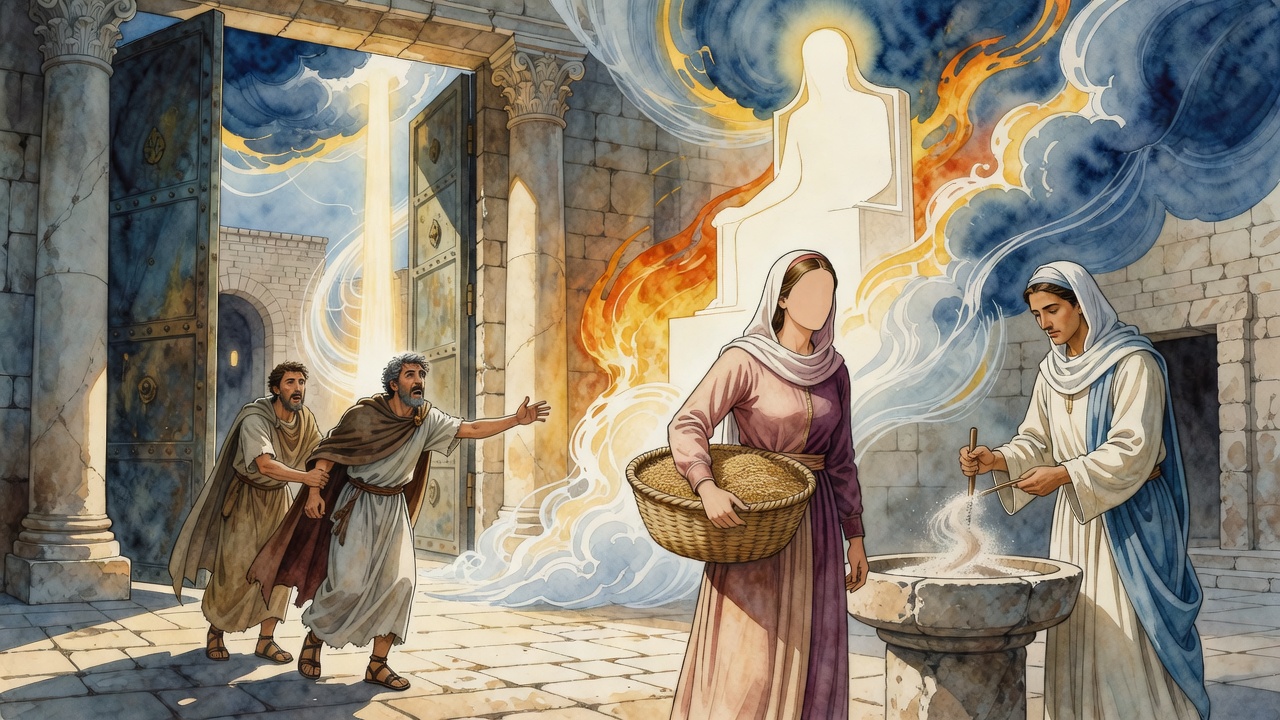
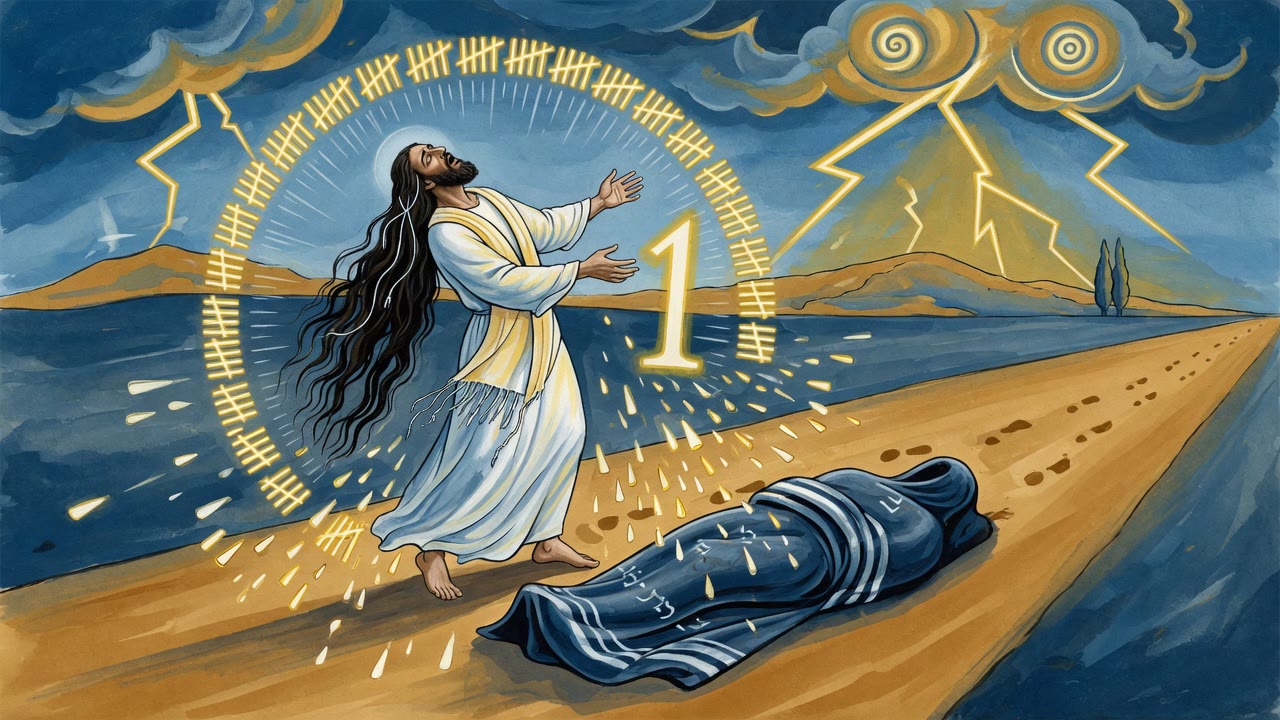
She watched the priest draw the woman near. The sotah's hair was loosened. The crowd's whisper had a wet sound. Dust from the Tabernacle floor went into the water, and the suspected wife drank while the courtyard held its breath. When it was over, the watching woman walked out tasting metal that was not in her mouth. That night she stood in her own doorway and said, "I am a nazirite to the Lord," and the words left her lips before fear could edit them.

Thirty Days at Minimum

The Torah places the nazirite law near the sotah for a reason the sages refuse to call accident. One midrashic current hears a warning: wine leads to the courtyard's shame, so some will swear wine away after seeing it. Another current fixes the mechanics. A casual vow for a day is not this vow. Even a momentary declaration of naziriteship binds for thirty days: no wine, no corpse, no razor on the head.

"A man or a woman," the verse says, and the inclusion is deliberate. Women are not shut out of this intensity. Minors are. She was no minor. Her hair would grow wild for a month. Her cup at the table would hold water while others held the vine.

Who Can Untie a Word

Her father heard by morning. A father's power over a daughter's vow, a husband's power over a wife's, runs on a clock of hearing and silence. If he annuls on the day he hears, the bond loosens. If he is silent through that day, the vow stands and heaven treats his silence as consent. She waited to see which man would try the knot.

Her husband came home angry and afraid in equal parts. He did not want a house without wine-joy for a month. He also did not want to stand before heaven as the one who crushed a vow born from shock in the courtyard. He asked what she had seen. She told him the loosened hair, the dust, the drink. He closed his mouth and let the day pass without annulment. The vow hardened into obligation.

One Woman at a Time

In the sotah rite the priest draws her near, and the sages press the singular: not a row of women processed like livestock, but one soul at a time under the Name. The watching woman had felt that singular weight even as a bystander. Now her own vow made her singular in another way. Neighbors counted her days. Children asked why her cup was plain. She answered that some words are fences you build after you see a cliff.

Hair, Wine, and the Door of the Dead

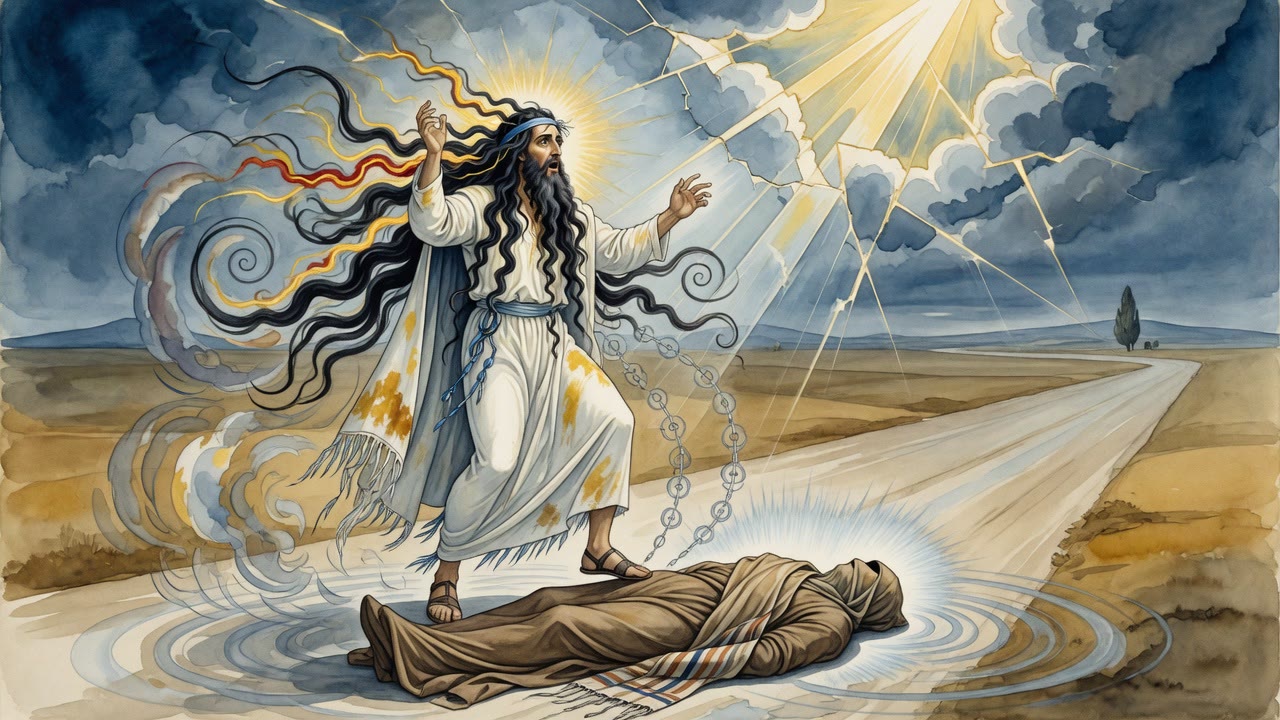
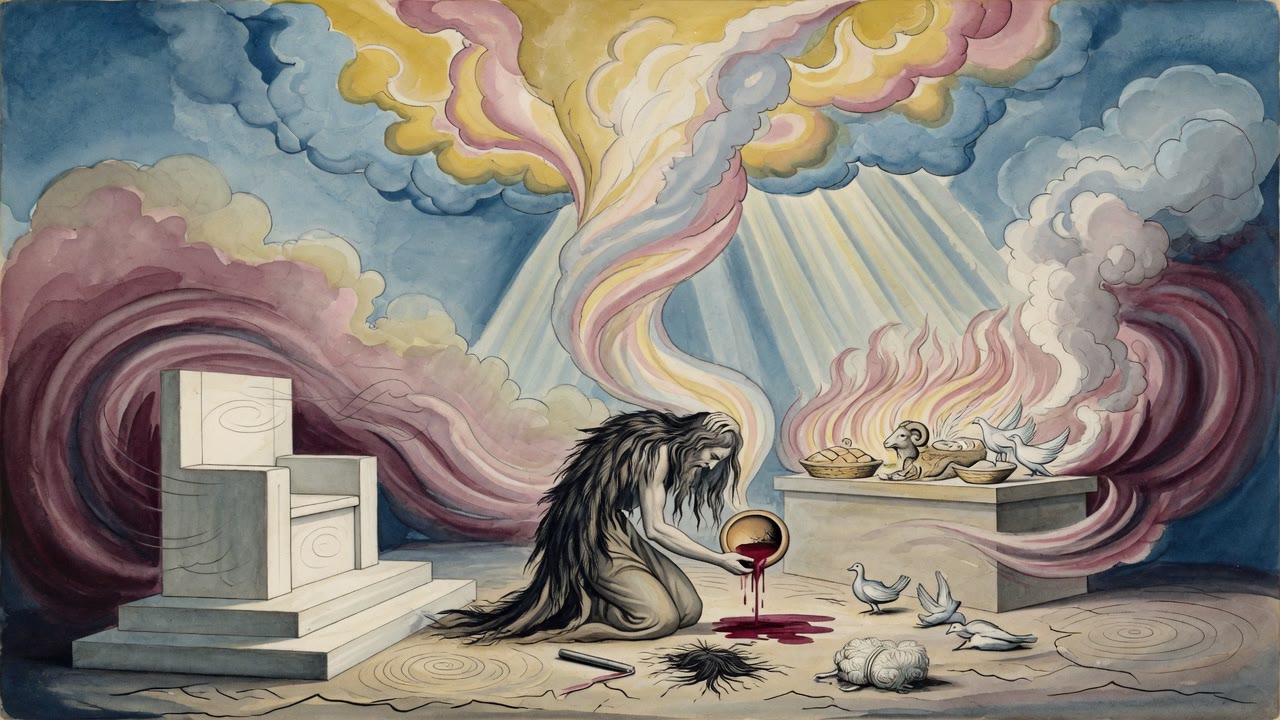
On the thirtieth day she would bring the offerings and shave the dedicated hair. Until then she crossed the street to avoid a funeral procession, because corpse-impurity breaks a nazirite's count and forces a restart. Wine fragrance from a wedding made her turn her head. The razor stayed cold in its cloth.

She never claimed the courtyard scene had made her pure. She claimed only that her mouth had chosen a temporary wilderness inside ordinary life. The law that seats nazir beside sotah, that counts women in, that hands fathers and husbands a narrow window to annul, and that insists the priest face one suspected wife at a time, all of it became the frame around her month. When the month ended, she drank wine again, but slower, as if the cup itself remembered dust.

On the seventh day a wedding invitation arrived and she sent jam instead of her presence near the wine. On the twelfth day a burial forced her into a long detour that left dust on her ankles and gratitude in her mouth for the detour. On the twentieth day her husband asked if she regretted the vow. She said she regretted the courtyard more, and the vow was only the shape her regret had been willing to wear in public.

Neighbors debated whether naziriteship after a sotah was piety or panic. The tradition that seats the two passages together allows both readings without making either cheap. Panic can still bind if the mouth used the right words. Piety can still need a haircut and a sacrifice at the end to close the circle cleanly. She refused to perform either label. She counted days.

When the offerings were done and the hair fell, she felt lighter and oddly unprotected, as if the vow had been a cloak. Wine at the first meal afterward tasted louder than before. She sipped once and set the cup down, not from a new vow, from respect for the month that had just finished teaching her how thin a fence can be and still hold.


← All myths
From the tradition

Sources

3 sources

The texts behind this telling. Some cards carry a translation of the source; others are our own retelling of it, and each card says which. Every card links out to the original.

Sifrei Bamidbar 22:1Sifrei Bamidbar

Retold in our words. Read the original at the link below.Sifrei by Rabbi Shraga Silverstein · CC-BY

It's not a glitch in the matrix, I promise! Sometimes, these repetitions are actually invitations to dig deeper, to uncover hidden layers of meaning. Take the case of the Nazir, or Nazirite vow, as we find discussed in Sifrei Bamidbar.

The Torah tells us, in (Numbers 6:1-2), "And the L-rd spoke to Moses, saying: Speak to the children of Israel and say to them: A man or a woman, if he shall declare to vow the vow of a Nazirite, to be a Nazirite to the L-rd." Now, the text already discusses vows earlier in Numbers 30. So, why this seemingly redundant introduction to the laws of the Nazir?

The text explains that without this specific passage, we might assume that the rules for a Nazirite vow are the same as for any other vow. If someone vowed to abstain from something for a day, it would be forbidden for a day; if for two days, two days. But the Torah emphasizes here that even a momentary declaration of the Nazirite vow binds a person to the restrictions of Naziritism for a minimum of thirty days. During this time, they are forbidden to drink wine, come into contact with the dead, or cut their hair. It's a whole different ballgame!

Then there's the phrase "a man or a woman." Seems straightforward. But the Sages, in their brilliance, see it as a deliberate inclusion. Why? Because elsewhere in the Torah, where minors are equated with adults, women aren't necessarily equated with men. So, without this specific phrase, we might have assumed that women couldn't take the Nazirite vow. But no, the Torah explicitly equates them in this regard.

Similarly, the text specifies "a man," excluding minors. Again, a seemingly small detail, but crucial. If women are equated with men in this instance, and minors are equated with adults in other areas of Jewish law, one might think minors could undertake the Nazirite vow. But the Torah clarifies: it must be "a man," someone of age.

The phrase "if he shall declare" is also significant. It implies that the vow must be made willingly, not under duress. How do we know? Because the same word, "declare," is used in connection with other vows and offerings, where willingness is clearly required. The text draws a parallel, teaching us that the Nazirite vow, too, must be a voluntary act.

And what about the phrase "to vow a vow"? Couldn't that refer to any vow, even one to bring an offering? No, the Torah specifies "to make a Nazirite," meaning the vow must be specifically related to the conditions of Naziritism. But then, if it says "to make a Nazirite," does that mean you can make someone else a Nazirite? The text clarifies: the word "nazir" implies that you are making yourself a Nazirite, not someone else.

However, the Torah repeats, "nazir, to make a nazir." What's up with that? This repetition teaches us that any epithets or "signals" related to Naziritism are treated the same as the vow itself. This concept extends to vows in general. Just as breaking a Nazirite vow carries consequences, so does breaking any vow. And just as a father or husband can annul certain vows made by a daughter or wife, so too can they annul a Nazirite vow.

Now, Rabbi Yehoshua offers a dissenting opinion: He believes "to make a Nazirite" could mean making others Nazirites, such as a father doing so for his son.

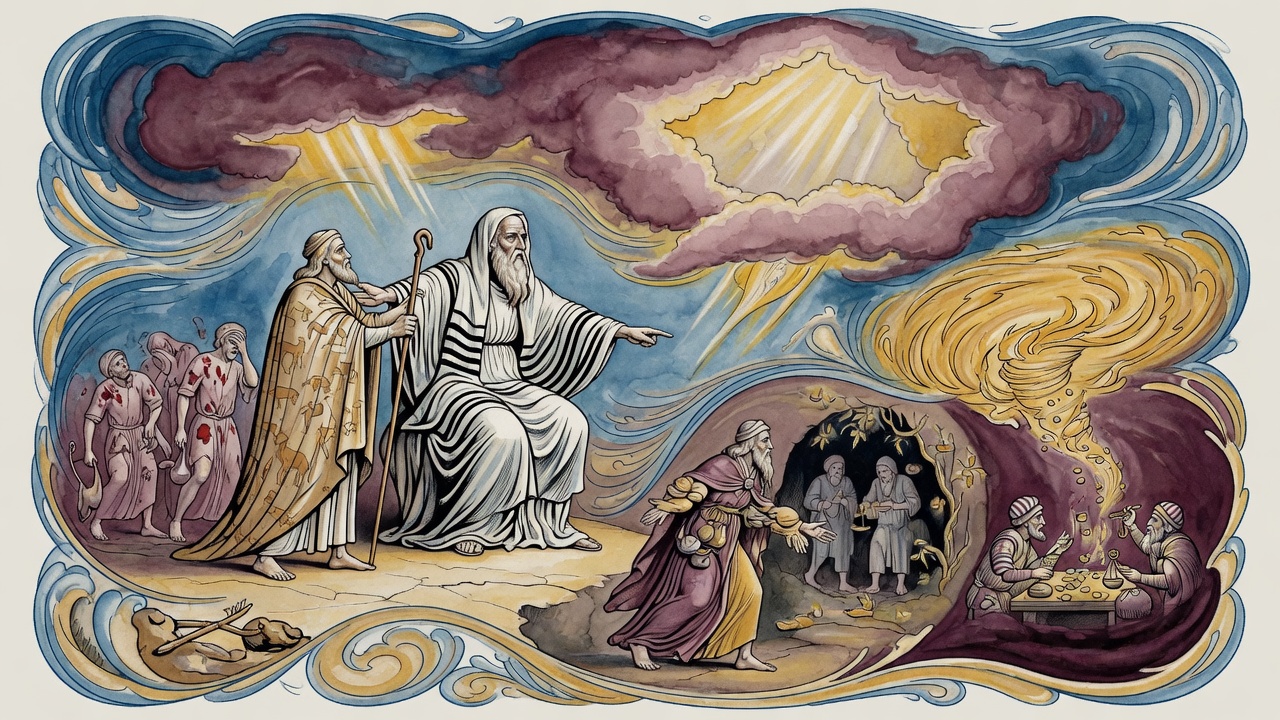
And the text concludes with a powerful story involving Shimon HaTzaddik, a High Priest during the Second Temple period. Shimon recounts that he only once accepted the offering of a Nazirite who had become ritually impure. This Nazirite, a handsome young shepherd with beautiful eyes and wavy hair, had taken the vow because he was tempted by his own reflection while drawing water from a well. He realized the vanity of worldly beauty and, in a moment of profound self-awareness, vowed to dedicate his hair to Heaven. Shimon HaTzaddik, deeply moved by the young man's sincerity and commitment, blessed him, saying, "May Nazirites like you multiply in Israel, doing the will of the L-rd! Of such as you it is written 'A man … if he shall declare to vow the vow of the Nazirite to be a Nazirite to the L-rd.'"

Isn't that incredible? The story transforms the technical details of the Nazirite vow into a powerful evidence of the human capacity for self-reflection and spiritual dedication. And that sometimes, the most profound transformations come from the most unexpected places – even a shepherd gazing at his own reflection in a well.

Full source
Sifrei Bamidbar 156:3Sifrei Bamidbar

Retold in our words. Read the original at the link below.Sifrei by Rabbi Shraga Silverstein · CC-BY

It leads us right into a somewhat delicate area: the laws surrounding vows made by women, and who had the power to uphold or annul them.

Specifically, It's in section 156, dealing with Bamidbar (Numbers) 30:17, which reads: "These are the statutes which the L-rd commanded Moses, between a man and his wife, between a father and his daughter."

Okay, so what's the big deal? Well, this verse sets up an interesting comparison. Sifrei Bamidbar tells us that a father is likened to a husband, and a husband to a father, in many of the ways we've already discussed regarding a woman's vows. Specifically, the text highlights the phrase "in her maidenhood in the house of her father." phrase for a moment: "in her maidenhood in the house of her father." It signifies a specific period of a young woman's life, a time when her father held considerable authority. The text emphasizes that the father's authority over her vows is tied to this period of maidenhood.

Here's the crucial distinction: this authority doesn't automatically transfer to the husband in the same way. The text pointedly says, "but not 'in her maidenhood' in the house of her husband." In other words, a husband's authority over his wife's vows isn't simply an extension of the father's previous authority. He has his own prerogatives, his own set of rules, that come into play after her maidenhood.

So, what kind of prerogatives are we talking about?

Then we get Rabbi Yishmael's interpretation. He takes us a step further, focusing on the specific phrase "in her maidenhood in the house of her father." He suggests that Scripture is actually referring to a betrothed maiden – a young woman who is engaged but not yet married. In this case, both her father and her future husband have the power to jointly annul her vows.

Think about the implications of that! It's a shared responsibility, a delicate balancing act between the father's ongoing role and the husband's impending one. It highlights the liminal space a betrothed woman occupies, caught between two worlds, two authorities.

What does this all mean? It reveals a nuanced understanding of family dynamics and the evolving roles of women within those structures. It's not a simple, black-and-white picture of male dominance. Instead, it shows a system of shared responsibilities, evolving authorities, and careful consideration of a woman's status within her family and community. It’s a system that, while reflecting its historical context, still prompts us to consider the complexities of power, consent, and the evolving roles within families today.

Full source
Sifrei Bamidbar 9:1Sifrei Bamidbar

Retold in our words. Read the original at the link below.Sifrei by Rabbi Shraga Silverstein · CC-BY

It involves a sotah (סוטה), a woman suspected of adultery. The Torah details a procedure involving a priest, a special concoction, and a whole lot of public humiliation. Now, the passage It's a glimpse into how the Rabbis understood and expanded upon the biblical text.

The verse in question is (Numbers 5:16): "And the Cohein (כהן), the priest, shall draw her near…" Sifrei Bamidbar uses this seemingly simple phrase to derive a fascinating legal point: the ritual of the sotah isn’t performed on multiple women simultaneously. Why? Because each woman deserves the full, undivided attention of the ritual. Each case is unique, its own tragedy unfolding, and must be treated with individual gravity. It’s a small detail, perhaps, but it speaks volumes about the importance of individualized justice and the prevention of further public shaming.

Then the verse continues, "…and he shall stand her." Sifrei Bamidbar takes this as an instruction about who should not be standing with her. The text specifies that the woman's manservants and maidservants shouldn't be present. Why this exclusion? The explanation offered is that she might become callous or indifferent in their presence. Perhaps the Rabbis feared that the power dynamic between the woman and her servants would create a false sense of bravado, preventing true repentance or a genuine emotional response to the ordeal. The ritual was designed to elicit truth, and the presence of servants might cloud that. It suggests a deep understanding of human psychology, even in ancient times.

Finally, we have “…before the L-rd." The text interprets this to mean specifically “at the gates of Nikanor.” The gates of Nikanor led to the inner sanctuary of the Temple in Jerusalem. According to Sifrei Bamidbar, this was the designated spot. This detail connects the ritual to a specific physical location, adding to its solemnity and highlighting the divine presence invoked in the process.

The Sifrei then adds a fascinating tidbit, almost as an aside: "The head of the watch would stand those who were tamei (טמא, ritually impure) at the gates of Nikanor." This might seem disconnected, but it further emphasizes the gate’s role as a liminal space, a boundary between the sacred and the profane, the pure and the impure. It was a place of transition, of judgment, and of potential purification.

So, what do we take away from this brief exploration? It’s more than just ancient legal trivia. It’s a window into a world where ritual was deeply intertwined with social order, where every detail was scrutinized for its ethical and psychological implications. Even in a ritual as fraught as the sotah ordeal, there was a concern for fairness, for individual dignity, and for the pursuit of truth.

Full source