When the Suspected Wife Held the Bitter Cup
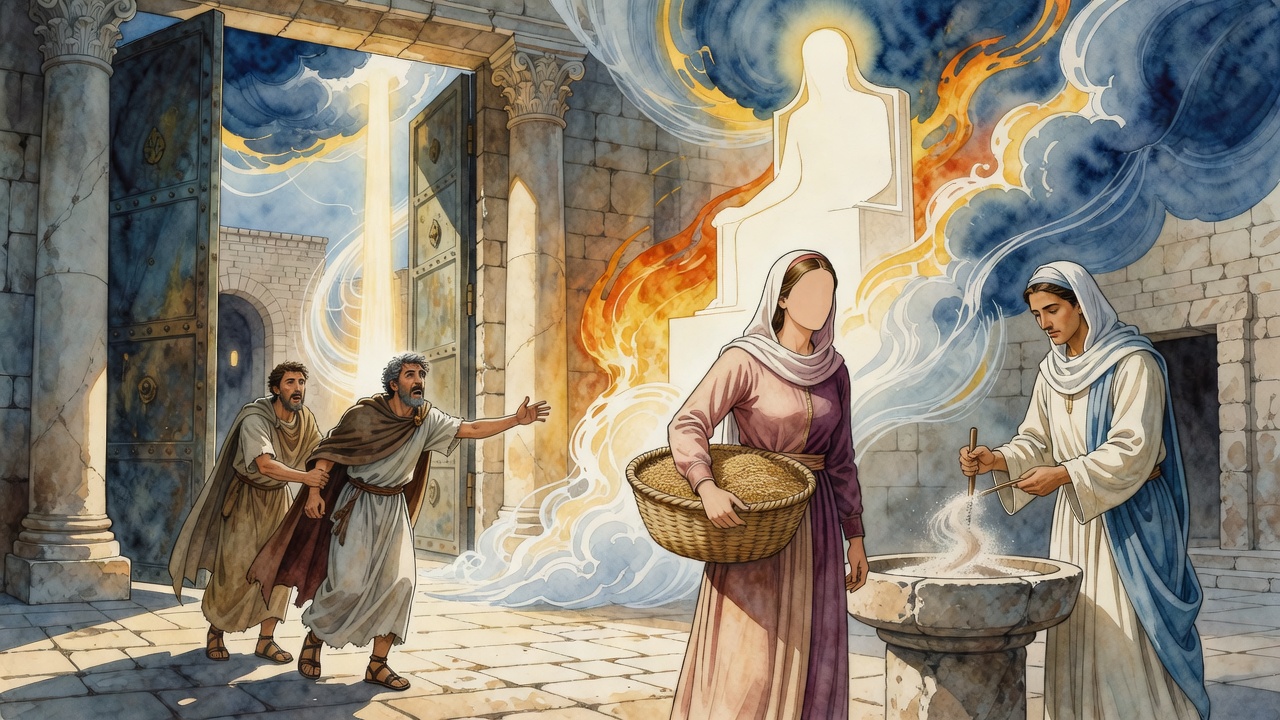
Dust from the sanctuary floor mixed with water and erased curses. A woman stood before the priest with a cup that could clear her name or write her as a curse.
Table of Contents
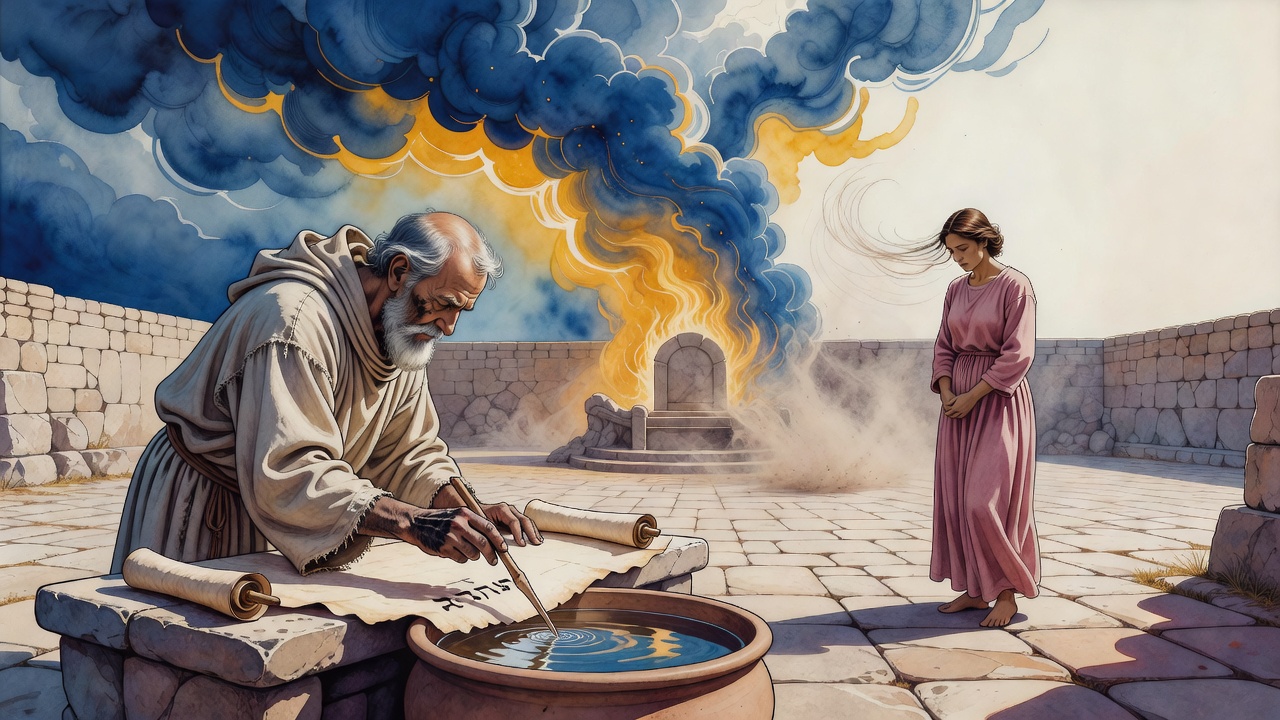
She held the cup with both hands so it would not shake. The priest had already scraped dust from the sanctuary floor into the water. The ink of the curses had left the scroll and gone into the liquid. Nothing about the mixture looked like judgment until she raised it to her mouth.
 Click for full size
Water and Dust From One Floor
Why water? Why dust? The masters of aggadah (the storytelling side of rabbinic teaching) answered with a farmer. He casts seed into dust and cannot say what will rise. Is the crop truly his, or has another hand worked the field while he slept? Suspicion is a seedbed. The Torah answers it with the same elements that grow bread: water and earth from the place where God is served.
The dust is not any dust. It comes from the floor of the sanctuary, where feet of priests have walked and blood of offerings has dried. The water is holy water. Together they become a field the woman must drink. If the field is clean, nothing grows against her. If not, her body becomes the place where the crop shows.
Her husband had brought her under the law of jealousy. Words had already been spoken that could not be taken back. The cup was the last speech left in the room, and it would speak inside her flesh.
Fear Is Not Confession
Rabbi Akiva stood later over a case where the scroll was already erased and the woman was told to drink. She refused. Fear is not the same as confession. If she refuses out of terror, they compel her. If she refuses because she knows she is guilty, the process has already done its work. She is defiled by her own admission. The cup does not need to finish what her mouth has finished.
That line kept the rite from becoming pure force. A woman who can still say the truth with her lips is not forced to swallow a lie. A woman who shakes because the sanctuary is large and the Name is in the water may still be clean. The law watches the reason for the refusal as closely as the liquid itself.
Outside the circle, neighbors waited for a story. Inside, only the priest, the dust scar on the floor, and a throat that had not yet chosen.
The Cup That Enters Every Limb
The verse says the curse will enter her. From "her belly will distend" one might think only belly and thigh. "Will enter her" opens the path to all her limbs. The water is not a local medicine. It is a traveler through the whole body.
And she will become a curse. People will say, May what happened to so-and-so happen to you. Her name turns into a tool other mouths use when they want someone to suffer. Isaiah had already spoken of leaving a name as a curse for the chosen. The sotah rite makes that speech concrete in one woman's story.
The wicked become a warning. The righteous, the midrash adds, become a blessing even for the wicked, the other side of the same mirror. One life can teach fear. Another can teach mercy. Both leave a name that outlives the day of trial.
Before the Priest Speaks
In the chamber she could still turn back. The Torah's procedure is slow on purpose. Offerings, unbinding of hair, the writing of curses, the scraping of dust. Each step is a door she might walk through with the truth before the cup.
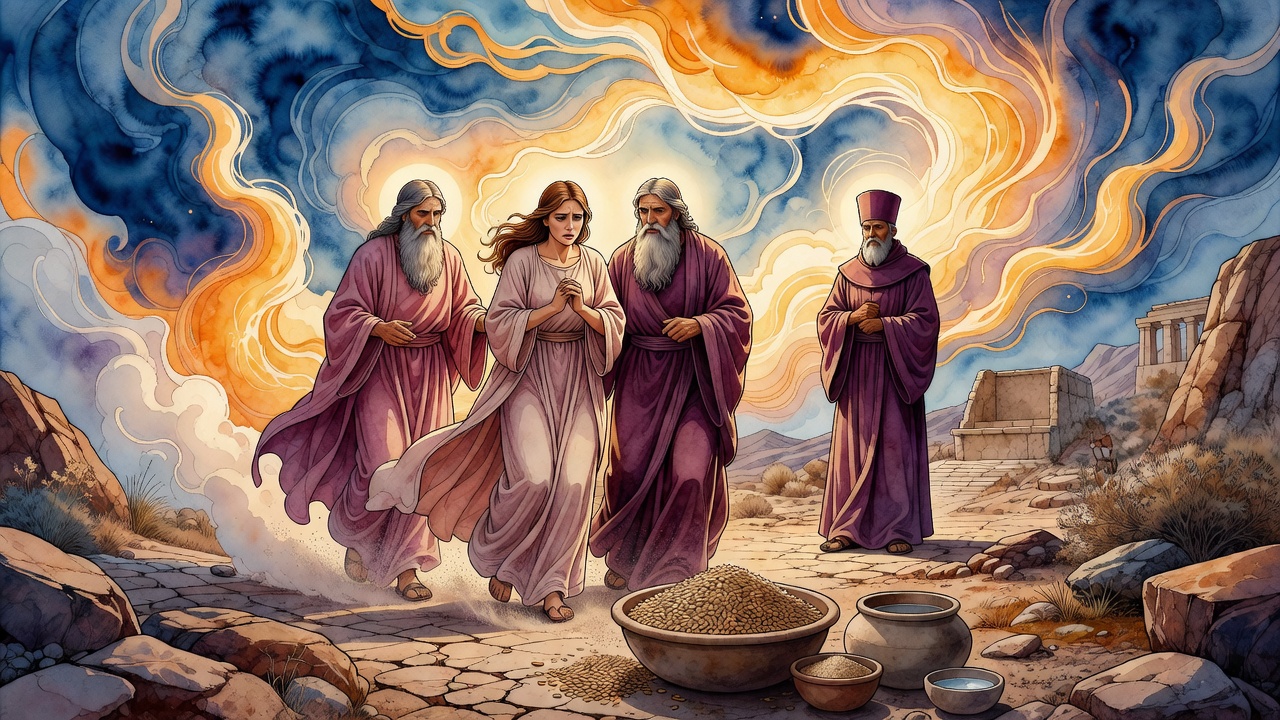
The priest did not ask soft questions once the bitter water was mixed. The law is not interested in soft questions at that hour. It is interested in a body under oath and a Name dissolved in water. Hair loose. Hands around clay. Dust still pale where the knife had scraped the floor.
She thought of the field again. Seed hidden. Rain coming. No one knows the crop until the stalk breaks the soil. Her life for months had been that dark earth. Now the rain was in a cup, and the sanctuary wind moved the surface like a small sea.
What Clear Water Would Mean
If she is innocent, the water will not harm her. The tradition even speaks of reward for the woman cleared: conception, restoration, a public name repaired. The cup that can curse can also free. That is why the rite is not only terror. It is a path out of a closed room of rumor.
If she is guilty and still drinks, the body tells what the mouth would not. Distension. Collapse. A sentence written in flesh. The community learns without a court of many witnesses, because the sanctuary itself has testified.
She lifted the cup. The priest watched her throat. Outside, someone laughed too loudly and was hushed. Inside the water, the Name and the curses had already become one liquid. She drank. The world waited to see whether a field would rise against her or open into bread.
← All myths