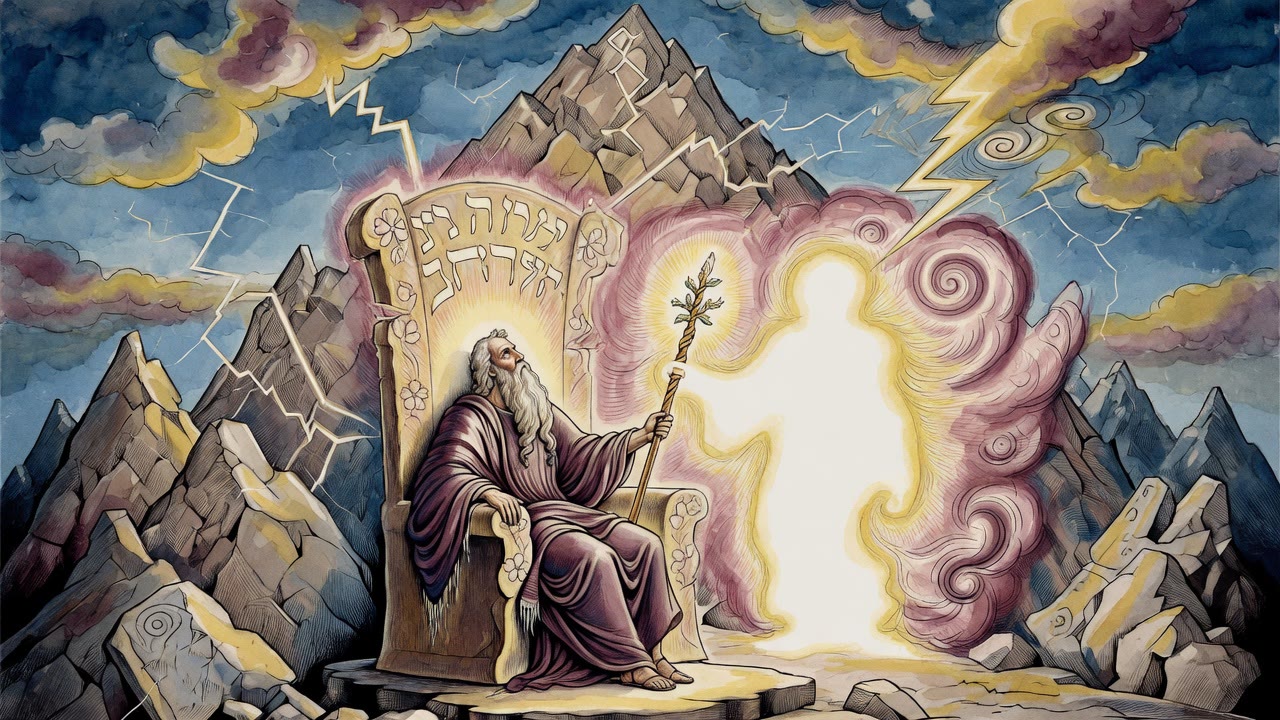
The Sacred Name Dissolved Into Bitter Water
A priest writes curses, scrapes God's Name into bitter water, and a woman alone in a cleared courtyard must drink while her body waits for the answer.
Table of Contents
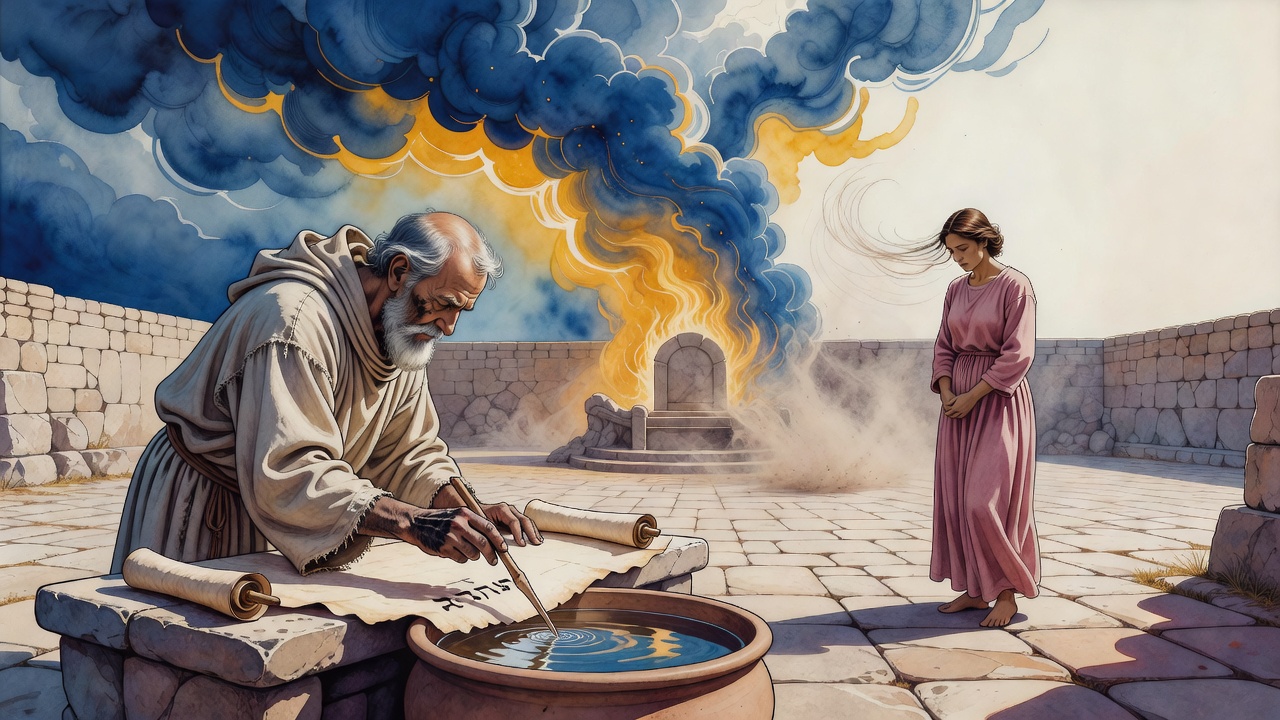
The courtyard empties until dust and silence share the stones. Priests step back. Levites step back. Idle watchers are pushed to the gates. Only then does the woman stand where nothing interposes between her body and the Sanctuary.
 Click for full size
She is still called wife. The man who brought her still owes her that name. Suspicion has not yet rewritten the bond. If she stops the ordeal now, the house can still be repaired. If she drinks, the bond changes under heaven's hand.
The Road That Required Witnesses
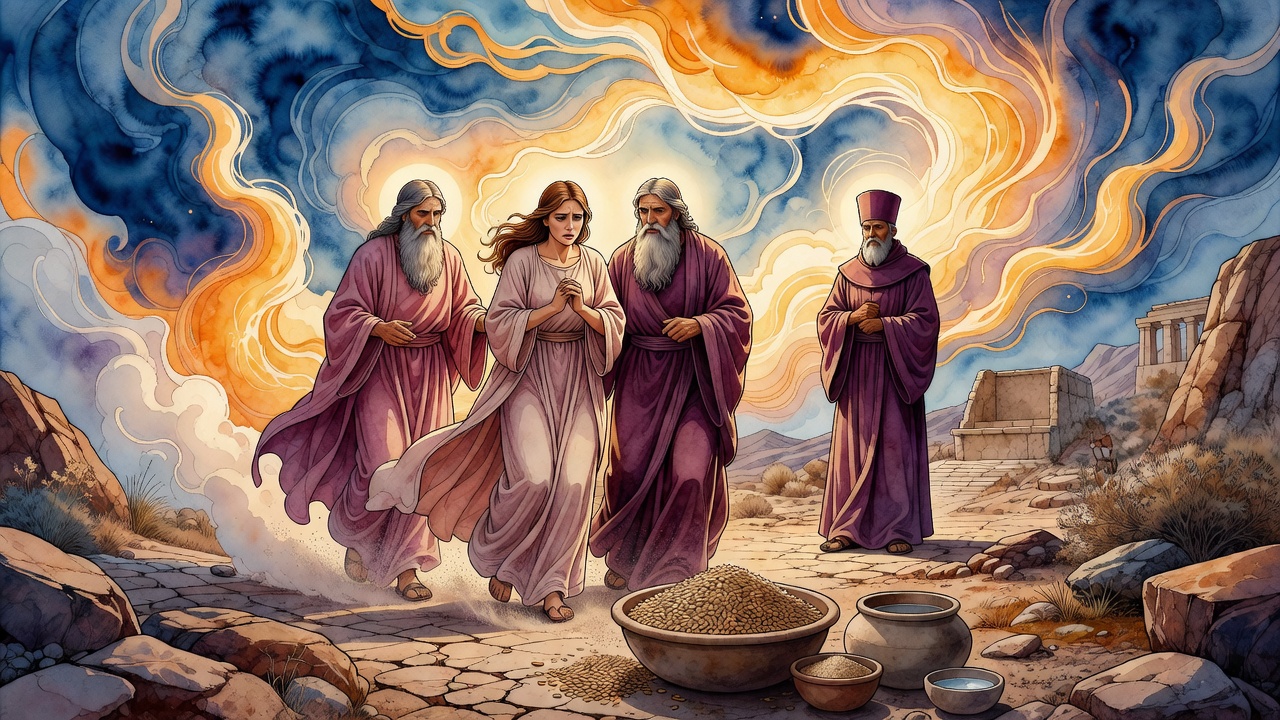
Before the water, there was a road. Her husband did not walk her alone. Two Torah scholars walked with them, not as friends and not as judges, but as living walls against a second crime. Suspicion already filled the house. The journey to the priest was not allowed to become another hidden room.
Rabbi Yossi argued that a husband trusted in days of niddah could be trusted here. The other sages refused the comparison. A private path after a public accusation is a furnace. They put learned men on the road so the story would not grow a new secret before it reached the altar.
At the priest's threshold the tone hardens. The warning that began this path cannot have been a joke, a casual snarl, or dinner-table meanness. Gravity first. Then seclusion. Then the claim that no witness saw the act itself. Only then does the bitter cup become law.
One Woman, One Judgment
Two suspected wives are never given to drink at once. The midrash will not turn the courtyard into a queue. Each woman stands alone so that no other face, no other fear, no other husband's glare can stand between her and the place called before the Lord (Numbers 5:16).
Sacred water from the basin is poured into an earthenware vessel. Dirt from the Tabernacle floor is scraped into it. The mixture looks like nothing a person would choose. That is the point. The drink is not hospitality. It is a test that enters every limb, not only the gut.
Her head is uncovered. The meal offering of jealousy is taken from her own hand, not from a messenger. Ownership of the accusation must pass through her fingers. The priest waves what she has carried, then draws the moment toward the altar where words become water.
She Does Not Swear Herself
The priest administers the oath. She does not invent the words. He speaks them into a language she understands, because an oath she cannot parse is theater, not judgment. First the oath is accepted. Only after her amen does he write the curses on a scroll.
The order is not a clerk's preference. Consent before ink. Acknowledgment before erasure. The scroll carries the hard sentences of (Numbers 5:19-22), the if-you-strayed and the water-that-causes-curse. According to Rabbi Yosei, her own "Amen, amen" is not written on the parchment. Her mouth will supply that answer live.
Two oaths shadow the rite in the midrashic reading: one before the Name enters the cup, one after. Chronology in Torah is not always clock-time. The double oath marks a threshold. Before the Name dissolves, she can still step back. After it dissolves, the water carries heaven's writing in her throat.
When the Name Leaves the Page
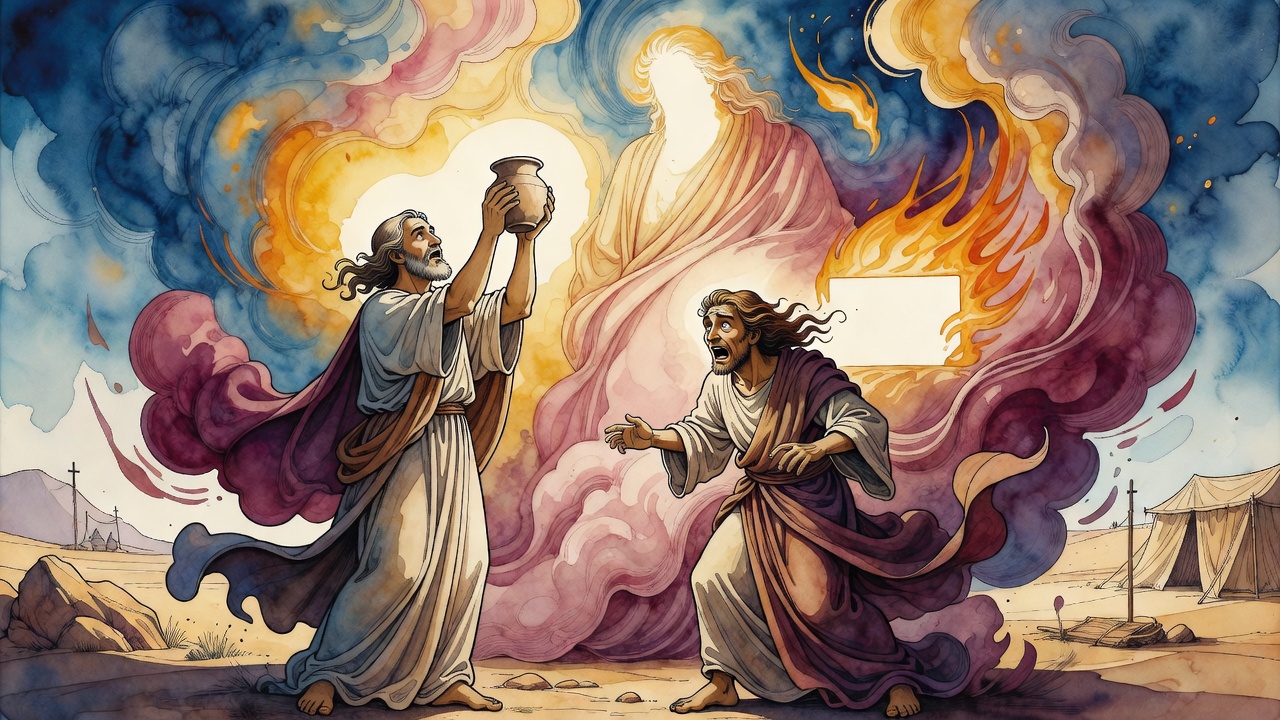
The priest writes the curses as they are written, in the order they must keep. Then he erases them into the water of bitterness (Numbers 5:23). Ink leaves parchment. The Divine Name leaves the written surface and enters the cup.
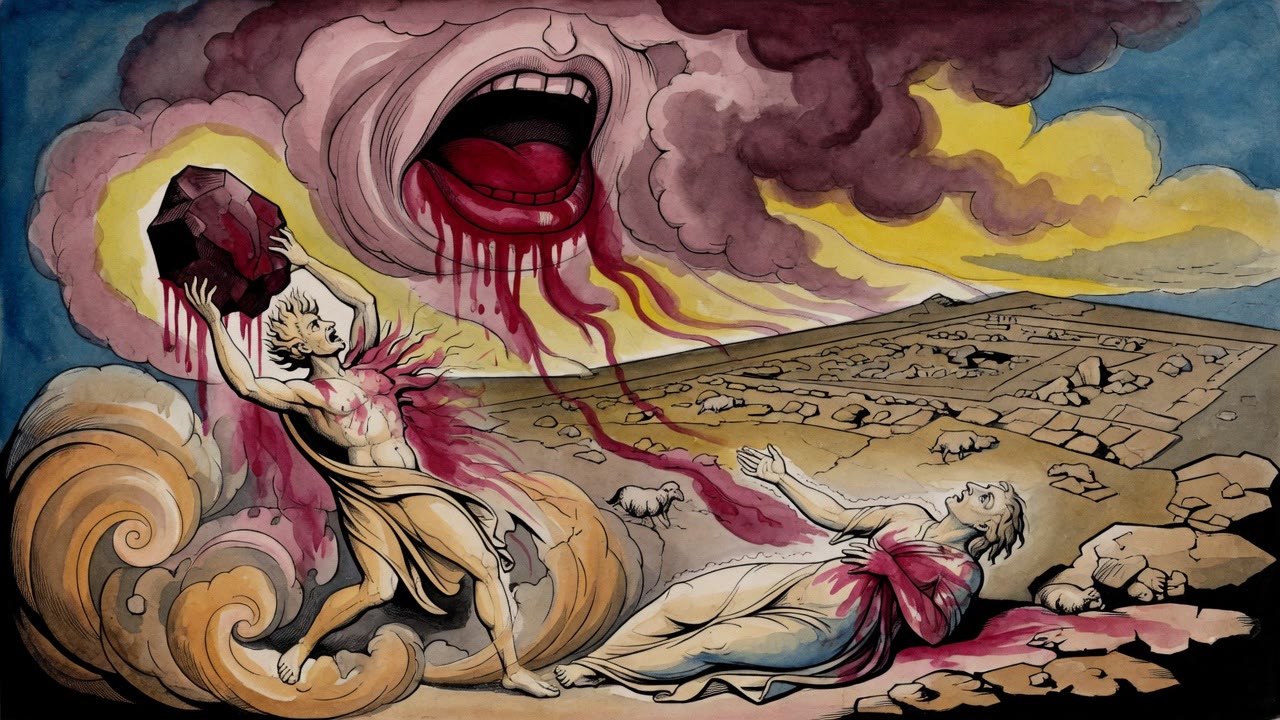
That is the most violent quiet of the ritual. Not the uncovering. Not the dirt. The Name itself is sacrificed into liquid so that truth can be swallowed. The woman drinks what used to be scripture. If she is clean, the water becomes nothing more than water. If she is guilty, the same drink searches her thigh, her belly, her hair, every place the midrash says "will enter" can reach.
Rabban Gamliel presses the verse until it looks sideways. The water that examines her also examines the man who shared the hidden bed. The curse does not end at her body. The paramour's body is bound into the same sentence, even if he never stands in the courtyard. While she drinks under open sky, he may still be walking a market somewhere, unaware that the cup has his name in it too.
Amen, and the Waiting
She says, "Amen, amen." One amen for the curse, one for the oath. One for what is said about her, one for what is said about him. The cup is empty. The Name is inside her. The courtyard remains cleared because no crowd is allowed to dilute what happens next.
For a clean woman the ordeal ends in vindication and a return to ordinary speech. For a guilty one the Torah's threat stands: thigh collapsing, belly distending, a body turned into a public proverb among the people (Numbers 5:21). Either way the marriage that entered the courtyard does not leave unchanged. She drank as wife under suspicion. She leaves as a woman heaven has answered.
Outside the gates the two scholars wait with the husband. Dust settles back onto stones. A bird lands on the wall and leaves again. The Sanctuary does not explain itself. It only keeps the rule that nothing, no chatter, no second case, no borrowed messenger, may stand between one human body and the water that once held the Name.
Somewhere beyond the camp the other man pours wine and does not know whether his own limbs have already been entered by a sentence written for someone else's throat. The midrash lets that uncertainty hang. Justice here is not a stage play with both actors present. It is a Name in water and a body that must carry the result home.
← All myths