Parshat Tetzaveh5 min read

Aaron Trembles Under the Holy Anointing Oil

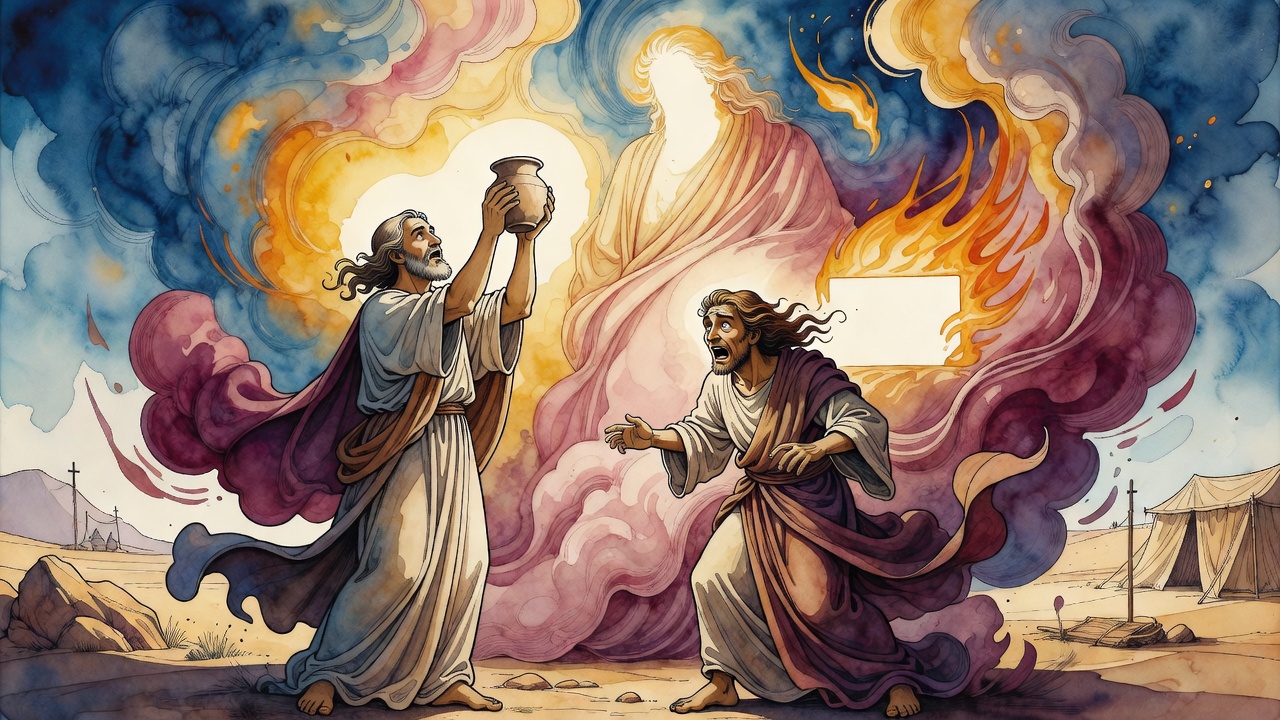
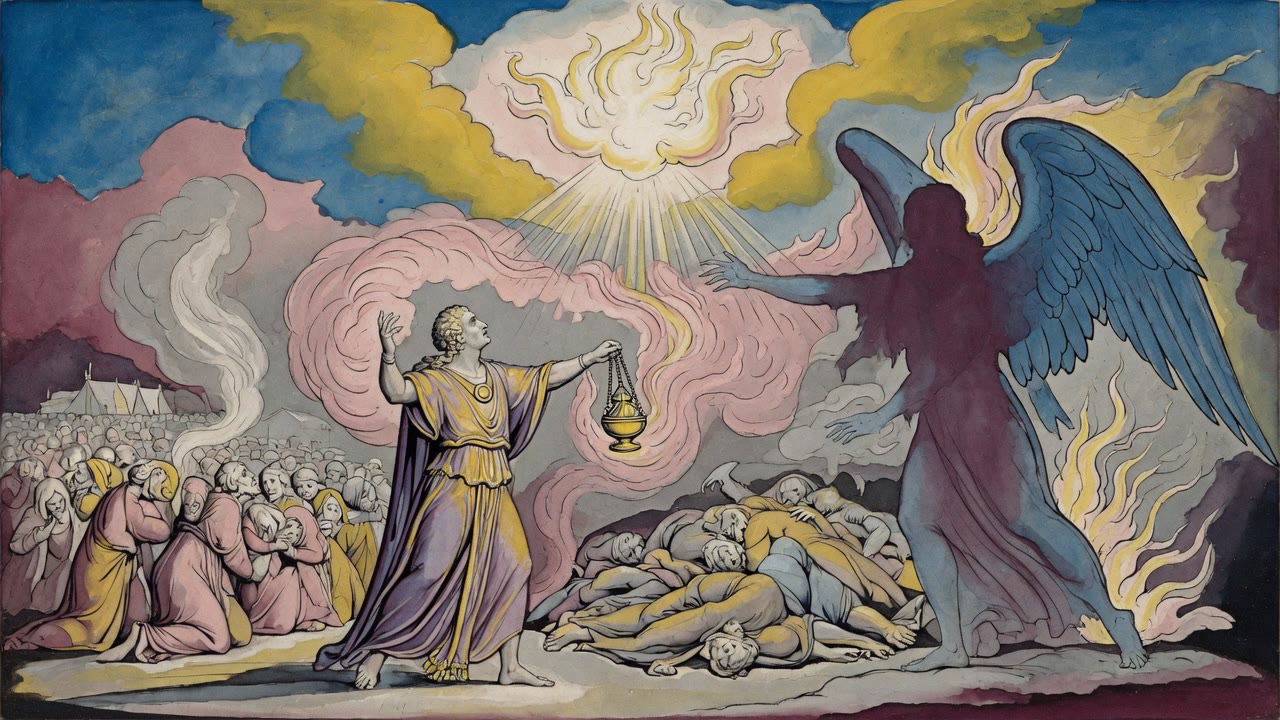
Moses lifts the oil and Aaron shakes, afraid the holy liquid will count him as stolen flesh if he is not worthy.

Curated by Arthur · Told by Maggid ·
Table of Contents
  1. Oil on a Head That Does Not Want to Steal
  2. Dew That Has No Fraud
  3. Bearing the Sin of the Sanctuary
  4. Not Every Shoulder Carries This
  5. The Beard Still Shines in Memory
Aaron Trembles Under the Holy Anointing Oil Click for full size

Oil on a Head That Does Not Want to Steal

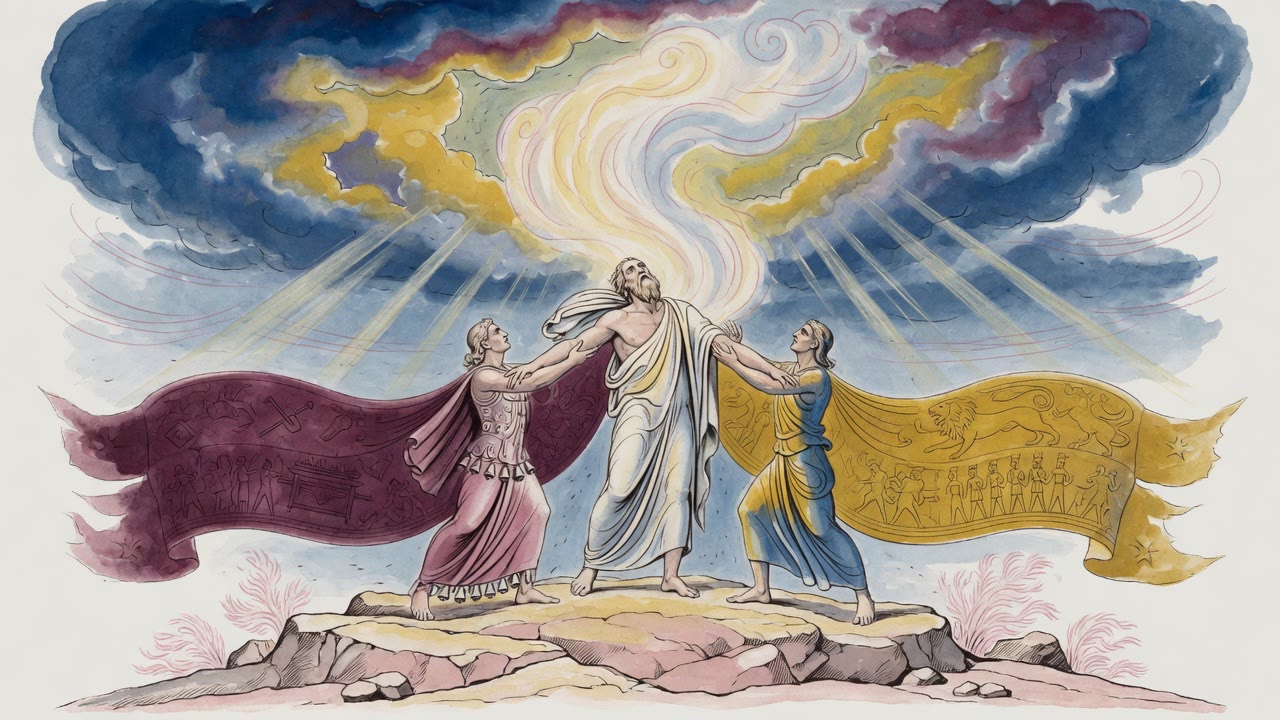
Moses stood his brother up in the sight of Israel and lifted the anointing oil. The liquid caught light. The camp held its breath for a coronation of cloth and scent.

Aaron trembled.

"Moses my brother," he said, "perhaps I was not worthy to be anointed with this oil. Perhaps I have acted fraudulently and become liable to excision, since it is stated, 'Upon human flesh it shall not be poured'" (Exodus 30:32).

The oil that would make him high priest felt, in that second, like a judgment about to run down his beard. He had watched fire take sons. He knew holy things do not always arrive as comfort.

Moses did not stop the pouring. The stream found hair, skin, cloth. Aaron stood and shook and received.

Dew That Has No Fraud

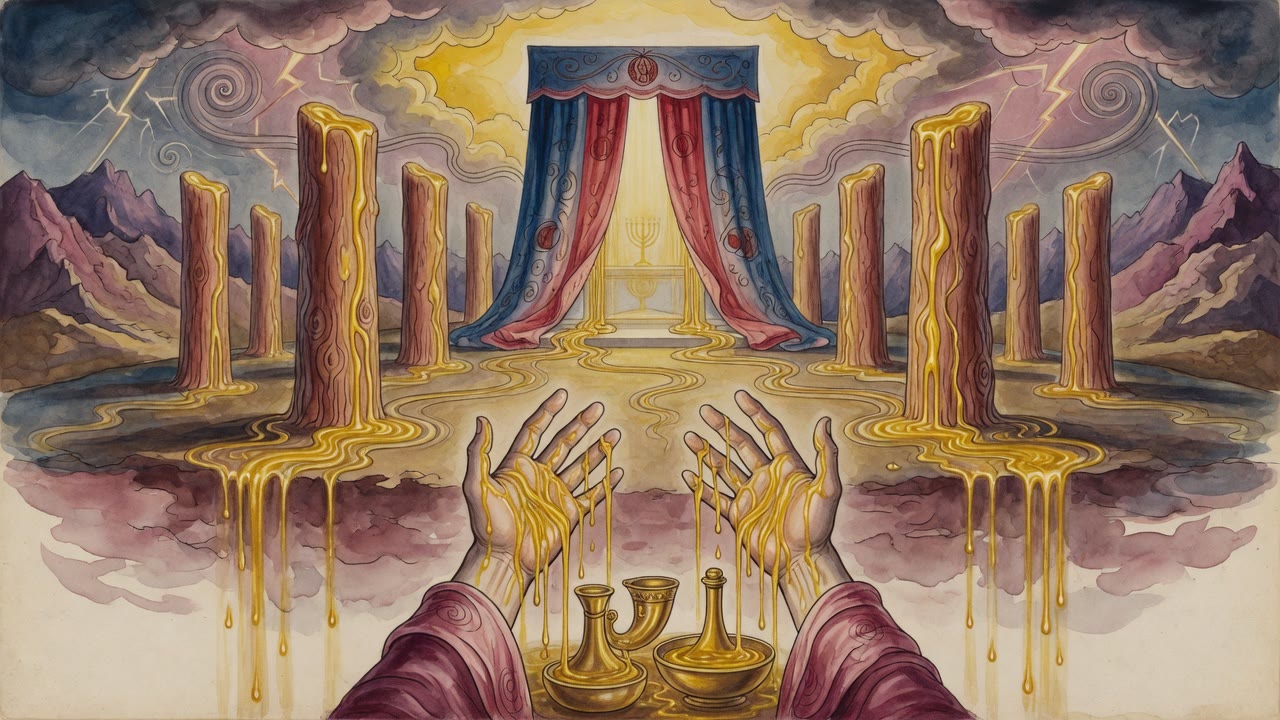
The Holy One answered the fear without a lecture in the moment. Scripture later set the scene beside the dew of Hermon: precious oil on the head, running down onto the beard of Aaron, like dew that no one can steal or misuse in the same way ordinary oil can be misused (Psalms 133:1-3).

What falls as dew is gift. What ran on Aaron that day was gift. Heaven treated the pouring as clean, so the man under it could stand. The comparison unhooked the oil from the laws of fraudulent use that haunted Aaron's mind mid-pour.

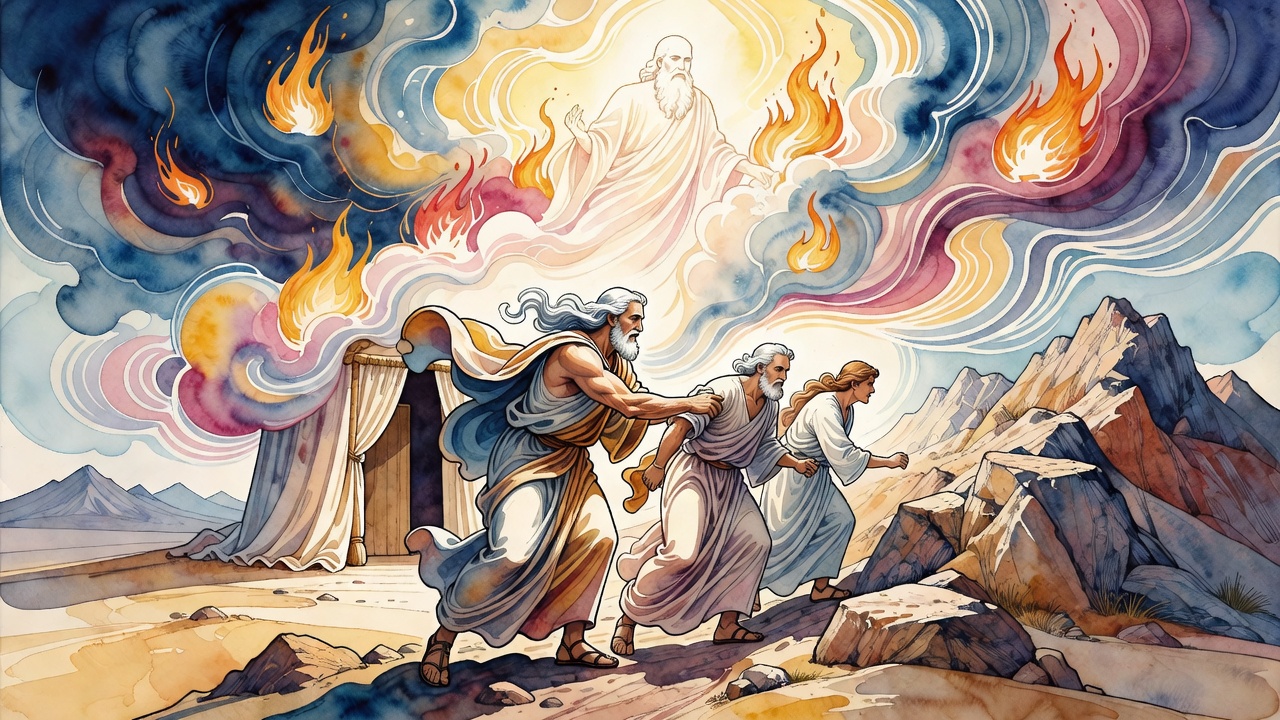
Aaron still felt the weight. Honor that arrives as oil can still smell like fire to a man who remembers what fire did to Nadab and Abihu. Worthiness was not a mood. It was a lifelong risk assessment worn on the skin.

Bearing the Sin of the Sanctuary

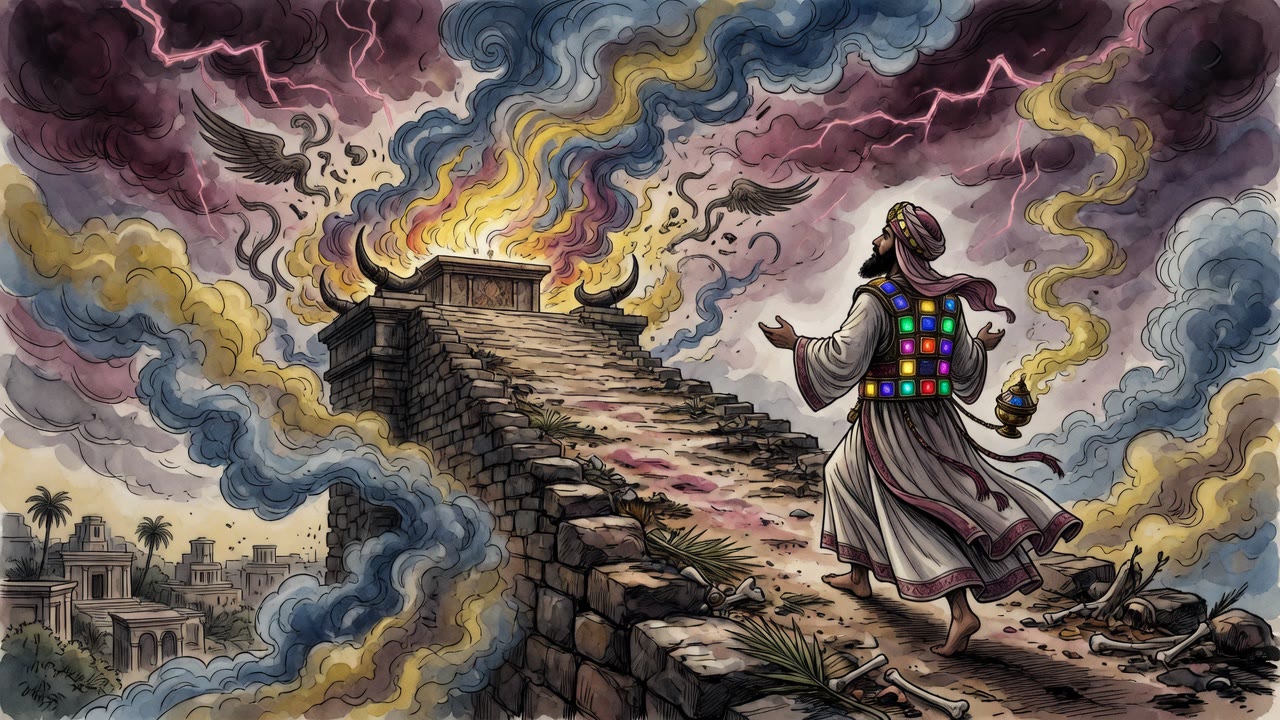
Later the Lord spoke to Aaron again, not in soft dew language. "You and your sons and the house of your father shall bear the sin of the sanctuary" (Numbers 18:1).

A priest who sprinkles blood or burns fat without intention does not walk away clean. Meat taken before blood is thrown, breast and shoulder taken before fats rise: the priesthood wears those errors like a cloak that will not come off. The sons of Eli had already shown what abuse of offerings looks like when it hardens into a house custom (I Samuel 2:15-17).

Aaron's trembling on anointing day was not stage fright. It was a body learning the job description before the job began: keep the unauthorized out, keep the sequence holy, carry what goes wrong at the altar when hands rush.

Gehenna (the realm of judgment after death) is not named in every line of the Sifrei, but the heat of failed service sits under the warnings. A sanctuary is not a shop. Mistakes there write themselves in fire-language.

Not Every Shoulder Carries This

Israelites do not bear the sin of the priests. Levites do not trade places with Aaron's line for that load. The verse pins the weight to the ones who stand nearest the fire and the veil.

Aaron had wanted, once, only to live through the golden calf and the desert. Now he lived as a boundary. Every stranger who pressed too close to the holy, every hurried hand on sacred meat, would write itself on his house. The court could exhort. It could not take the priest's share of the fault.

Moses had poured. Aaron had shaken. The oil dried into ordinary hair oil by nightfall. The burden did not dry. It renewed with every animal, every blood, every fat piece that required attention sharp as a blade.

The Beard Still Shines in Memory

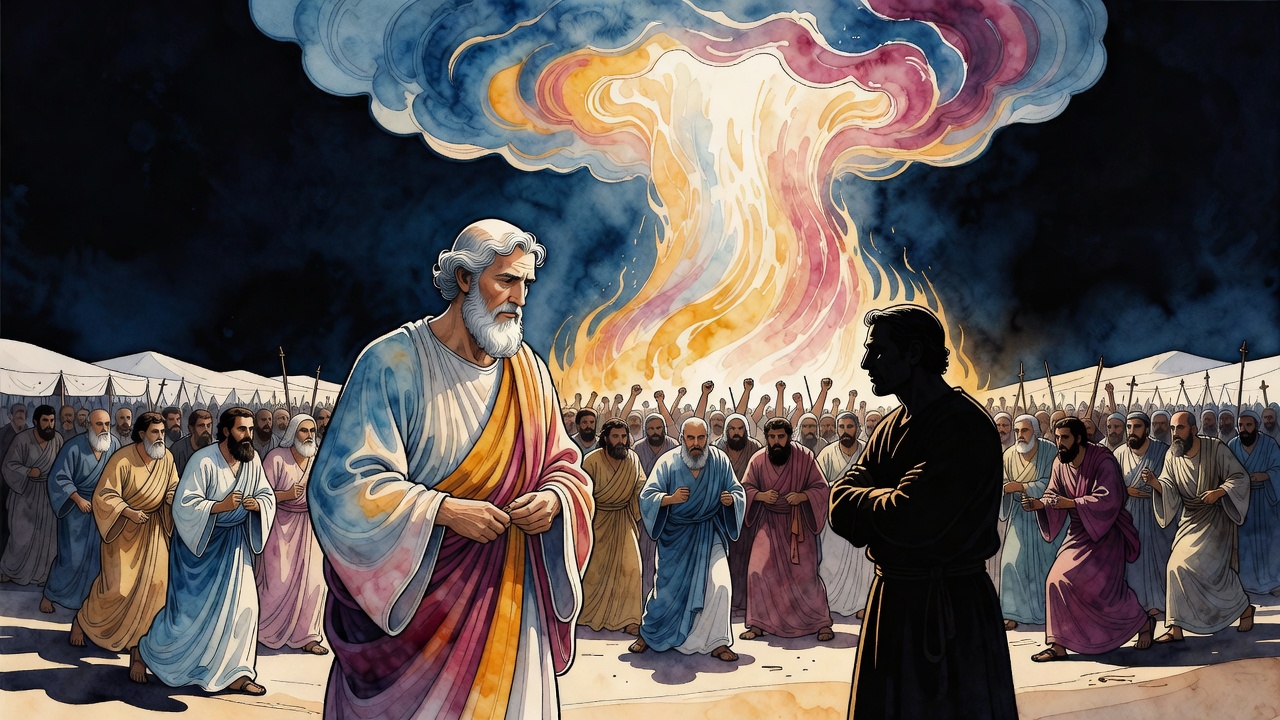
When rebels later called the priesthood a theft, Moses pointed back to that day. Aaron had not grabbed the oil. He had feared it. The master had seated him. A rising against the seated servant was a rising against the master.

The camp remembered the tremble more honestly than the rebels did. A man who worries the oil might kill him for unworthiness is not a man inventing a crown in the night. He is a man who knows the sanctuary can consume its servants.

Somewhere between dew and the furnace-risk of failed service, Aaron stood with oil in his beard and the sanctuary's risk on his name. The oil said chosen. The shake said awake. Both were true at once, and Israel needed both if the altar was to stay a place of life rather than a machine of pride.

On ordinary mornings after that day, Aaron lifted his hands and felt the ghost of oil. The camp saw gold thread and heard bells on the hem. He felt the ledger. Every stranger edged back from the boundary he had become. Every correct sequence at the altar was a small repayment of the fear that once made him shake while the liquid still ran.

Moses, who had poured, never mocked the tremble. He used it later as evidence when pride called the priesthood stolen goods. The oil had chosen a man who flinched toward worthiness, not a man who lunged toward rank.


← All myths

From the tradition

Sources

2 sources

The texts behind this telling. Some cards carry a translation of the source; others are our own retelling of it, and each card says which. Every card links out to the original.

Midrash Tanchuma, Korach 6Midrash Tanchuma

Retold in our words. Read the original at the link below.Townsend 1989 translation of Midrash Tanhuma, S. Buber Recension · CC-BY

(Numb. 16:7-8:) “You Levites have gone too far! So Moses said unto Korah, ‘Please listen, you Children of Levi.” Do you have someone speaking with Joseph, who tells Simon to listen? Some say that he wished him to reconsider. So he said gentle words to him. When he saw that he did not listen to him, he said (to himself), “Before others join with him, they should reconsider.” He began to urge them (in Numb. 16:8), “’Please listen, you Children of Levi,’ is the honor that you have too little.” It is so stated (in vs. 9) “Is it too small a thing for you […]?” He turned again to Korah (in vs. 10), “That he has had you approach Him and all your brother Levites along with you?” [It was] because he was the head person in the tribe, that his brothers had become an extension of himself. (Numb. 16:11:) “Therefore you and all your company have come together against the Lord.” Is this dissension which you are creating against us? Is it not rather against the Holy One, blessed be He? It is comparable to a king who had a lot of slaves. He wanted to make one of them a freedman and give him a dominion. He reconsidered and [even] made him [one of the] senators. His companions rose up against him. If he had made himself a freedman and taken this dignity for himself, it would have been well for them to rise up against him. Now that his master has acted for him, when anyone rises against him, is not such a one rising up against his master? So also did Moses say to them, “If my brother Aaron had taken the priesthood for himself, it would have been well for you to murmur against him. [But since] the one who gave it to him was the Holy One, blessed be He, to whom belong royalty, high office and power, whenever someone rises against my brother Aaron, is he not taking sides against the Holy One, blessed be He?” It is therefore written (in Numb. 16:11), “and as for Aaron, what is he that you murmur against him?” Come and see the piety of Aaron the righteous! When Moses stood Aaron up and poured the anointing oil upon his head, Aaron trembled with fear. He said to him, “Moses my brother, perhaps I was not worthy to be anointed with the anointing oil; for I may have acted fraudulently and become liable to excision, since it is stated (in Exod. 30:32), ‘Upon human flesh it shall not be poured.’” Therefore, the Holy One, blessed be He, has testified over him (in Ps. 133:1-3), “See how good and pleasant it is […]! It is like the precious oil upon the head running down onto the beard, the beard of Aaron […]; Like the dew of Hermon….” [Scripture] has compared the anointing oil with the dew of Hermon. As the dew of Hermon has no [rules concerning] fraudulent use, neither does the anointing oil that was on the head of Aaron have [rules concerning] fraudulent use. It is therefore written (in Numb. 16:1), “[Therefore you and all your company] have come together against the Lord.” With all these words Moses [tried to] appease Korah, but you do not find that he gave him any answer. Because he was clever in his wickedness, he said [to himself], “If I answer him, I know that, since he has great wisdom, he will now overwhelm me with his words and seduce me into being reconciled with him against my will. It is [hence] better that I not respond to him.” When Moses saw that there was nothing to be gained with him, he withdrew from him. (Numb. 16:12:) Then Moses sent to summon Dathan and Abiram. They also persisted in their wickedness and did not care to answer him (ibid., cont.), “and they said, ‘We will not come up.’” Their [very] mouths tripped up [these] wicked men, for a covenant is made with the lips. So they went down to Sheol, as stated (in Numb. 16:33), “So they and all that belonged to them went down alive to Sheol.” After they had gone down alive to Sheol, they died. (Numb. 16:13:) “Is it so small a matter that you have brought us up from a land flowing with milk and honey to kill us in the desert, [that you must also lord it over us]?” They said to him, “On what basis do you assume superiority over us? What good have you done with us? You brought us out of the land of Egypt, which was (according to Gen. 13:10) “like the garden of the Lord”; but you have not brought us into the land of Canaan. Rather here we are dying in the desert, where the plague is sent among us every day; (according to Numb. 16:14) ‘would you put out the eyes of these people….’” (Numb. 16:15:) “Now Moses was very angry.” He was very anguished. To what is this comparable? To a man who argues with his companion and reasons with him. When he answers him, he has peace of mind; but if he does not answer him, then this involves great anguish.

Full source
Sifrei Bamidbar 116:1Sifrei Bamidbar

Retold in our words. Read the original at the link below.Sifrei by Rabbi Shraga Silverstein · CC-BY

The book of Bamidbar (Numbers), specifically chapter 18 in Sifrei Bamidbar, to examine the intense responsibilities placed on the Kohanim and Levi'im (Levites) and the consequences of failing to uphold their sacred duties. It's a fascinating glimpse into a hierarchical system designed to maintain order and holiness within the sanctuary.

The verse that kicks it all off is Bamidbar 18:1: "And the L-rd said to Aaron: You and your sons and the house of your father shall bear the sin of the sanctuary." Right away, we see that Aaron, the High Priest, and his descendants are being held accountable. But what does it mean to "bear the sin of the sanctuary"?

Well, according to R. Yishmael, the verse is directed at Aaron because the following instructions are specifically for him. Seems straightforward. But the Rabbis weren't about to let it rest there. R. Yoshiyah asks a crucial question: what happens if a Kohen (a priest) makes a mistake? What if he sprinkles blood or burns fat without the proper intention? The answer, derived from the same verse, is that the Kohanim bear the sin. It's a heavy burden!

It gets even more specific. R. Yonathan brings up the scenario of taking meat from an offering before the blood has been sprinkled or taking the breast and shoulder before the fats are burned. Again, the Kohanim are held responsible, bearing the "sin of your priesthood." for a second. It wasn’t just about following the rules; it was about the intent, the focus, the very essence of the sacred act. And the consequences of neglecting this? Catastrophic. The text even references the story of Eli and his sons in I (Samuel 2:15-17), whose abuse of offerings led to a terrible decree. As it says in (Ezekiel 22:8) regarding the men of Jerusalem, "You abused My offerings." So, this wasn't just some abstract theological point; it had real-world consequences.

But what exactly were the Kohanim responsible for? Was it everything? The text clarifies that they were specifically responsible for what was "relegated to the Kohanim", mainly keeping unauthorized individuals (zarim, non-priests) out of the sanctuary. The passage then explores who else might be responsible. Could the Beth Din, the court, be responsible for exhorting the Kohanim? The text argues no, because another verse already addresses their role.

Then, the text asks, could Israelites or even Levites bear the sin of the Kohanim? The answer, through careful interpretation of verses like Bamidbar 18:23, is no. The Levites bear their own sins, but not those of the Kohanim. And the responsibilities are for the men, not the women. It's a layered, nuanced understanding of responsibility and accountability.

Now, let's talk about the Levites. They were also crucial to the Temple service, but their role was different. They were to "join" the Kohanim and "serve" them (Bamidbar 18:2). But what kind of service? Were they just glorified servants? The text clarifies that their service involved being treasurers and trustees. They weren't meant to perform the priestly duties themselves, as Bamidbar 18:6 states, "And I, behold, I have taken your brothers, the Levites. for you as a gift, given to the L-rd." They were given to God, not to the Kohanim for priestly service.

The Kohanim were inside the court of the sanctuary, while the Levites were outside. This division of labor was crucial, and crossing those boundaries could be deadly. The text quotes Bamidbar 4:20, "And they (the Levites) shall not come to see (the vessels) when the kodesh (the holy) is being covered and they (the Levites) die." This wasn't just a suggestion; it was a matter of life and death.

The text even recounts an incident where R. Yehoshua b. Chanania tried to help R. Yochanan b. Gogada, but was told to back off because he was a gatekeeper and not a singer! Rabbi Yehoshua was told, "Get back, for you are close to forfeiting your life!" Can you imagine the intensity of that moment?

Rebbi, however, offers a different interpretation, citing Bamidbar 4:18-19, which implies the death penalty for violating these boundaries. The passage goes on to clarify that this applies not only to the sons of Kehath but also to the sons of Gershon and Merari.

So, what’s the takeaway from all of this? It’s not just about ancient Temple rituals; it's about the importance of responsibility, accountability, and understanding our roles within a larger system. It's about recognizing that our actions have consequences and that neglecting our duties can have far-reaching effects. And ultimately, it’s about striving to perform our roles with the utmost care, focus, and intention, lest we, too, "bear the sin" of our own neglect.

Full source