The Nazir Stumbled on a Corpse in the Road
A nazir walked pure until his foot found a body no one owned. Consecrated hair became shame, and impurity traveled link by careful link.
Table of Contents
 Click for full size
Hair Like a Banner
He had not cut his hair in months. The wind combed it. Children in the village pointed and whispered nazir as if the word itself were a soft crown. He ate no grape, drank no wine, and kept his feet from courtyards where the dead were washed. The vow sat on him the way a cloak sits on a man who chose it in public and now must live inside the choice when no one is clapping.
That morning he took the long road around the tombs. He watched the dust. He thought he was careful. Pride in carefulness is still a kind of blindness, but he did not know that yet.
The Body No One Claimed
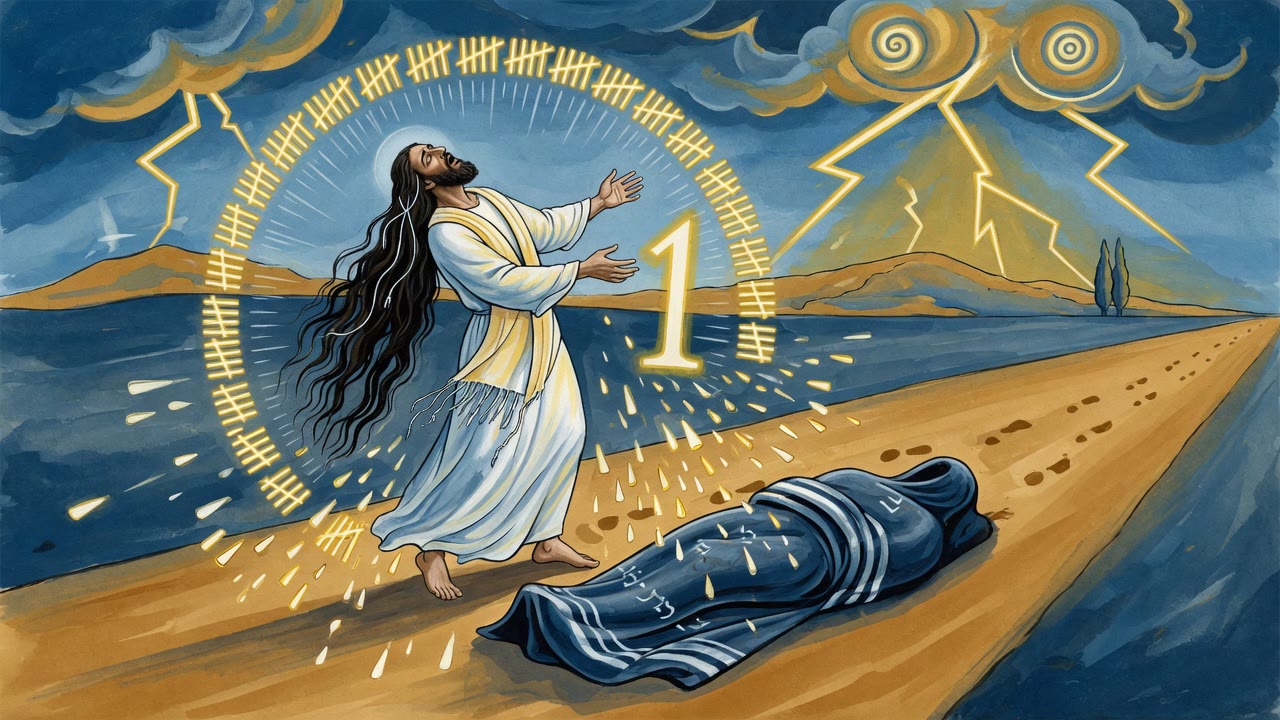
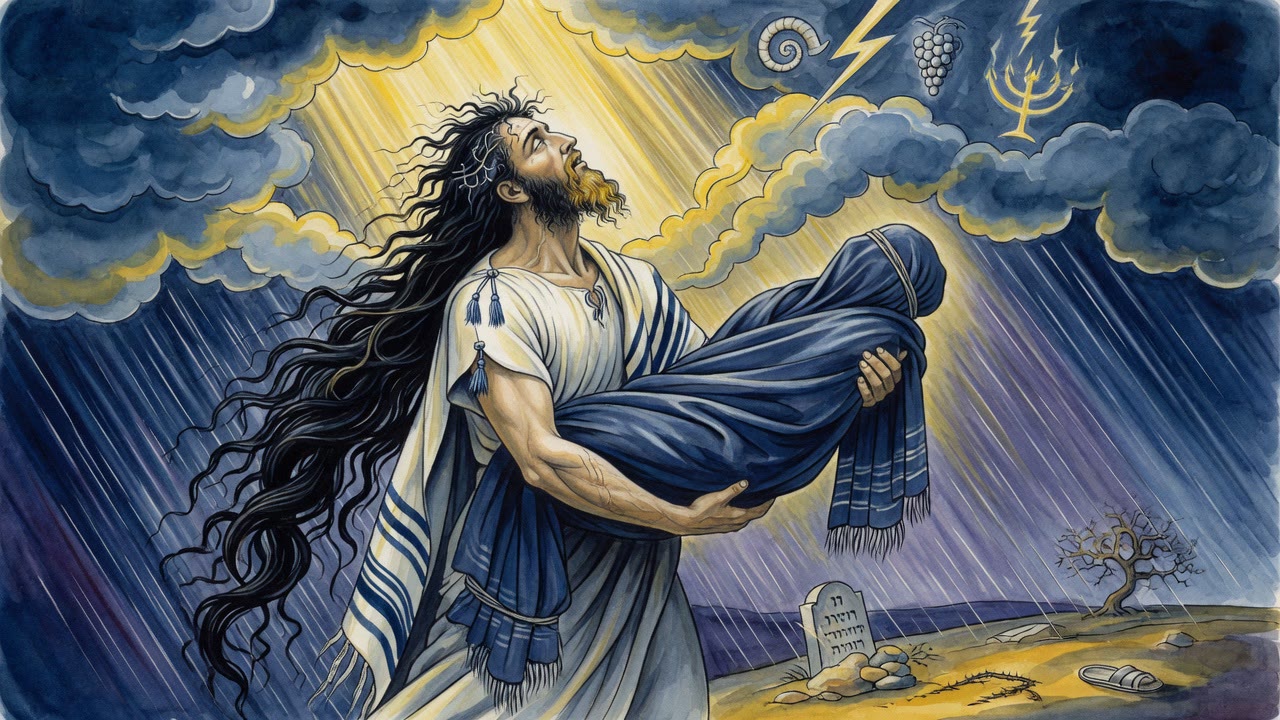
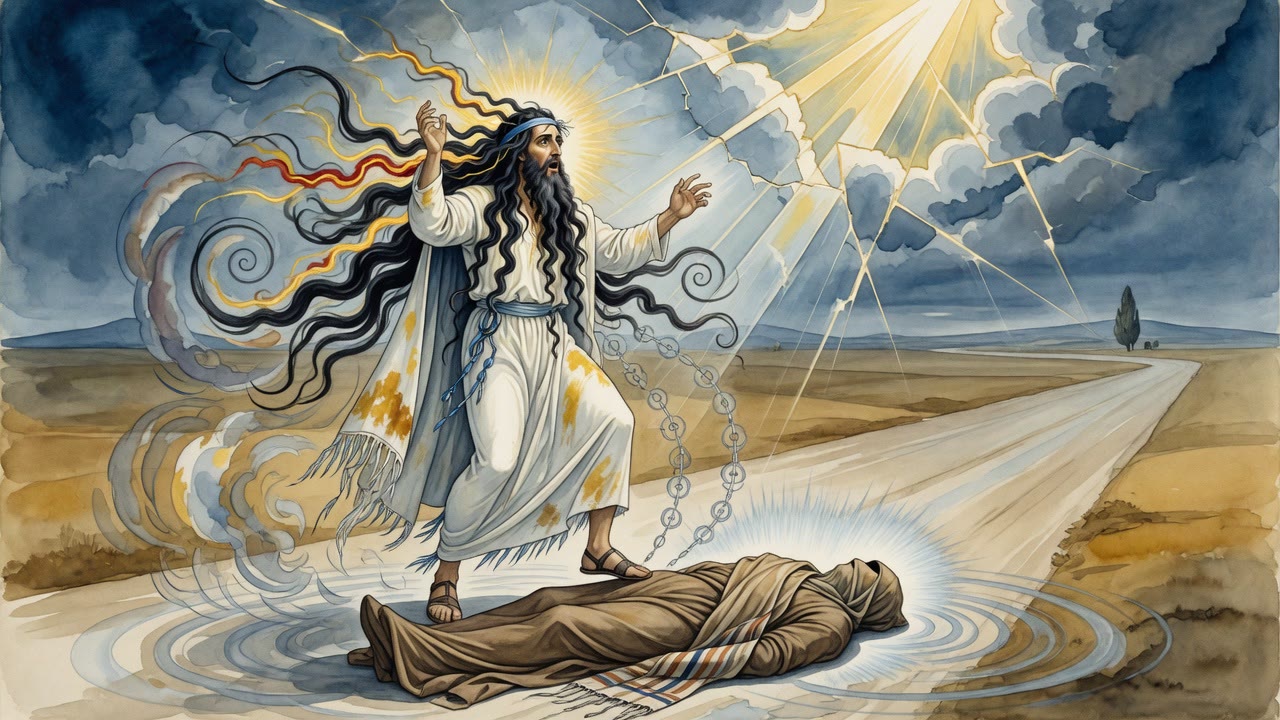
Near a bend where the path dips, his sandal struck something harder than root. He looked down. A man lay half covered by blown earth, face turned as if sleeping off wine, mouth already past sleep. No traveler's pack. No name spoken by a companion. The nazir's stomach clenched. He stepped back, but the step was too late. Contact had already happened. The vow's clean world cracked with a sound only he could hear.
Was this the impurity of the depths, the kind no one on earth can identify? If somewhere a relative still lived who could name the dead, the law would not call it that. The nazir did not know. He only knew his consecrated head had been made to touch what his mouth had sworn to flee.
He sat in the dust and shook. A fly landed on the corpse's wrist and he hated the fly for its ease.
Sudden, Forced, or Blind
Later the sages would parse the Torah's words for a case like his. Befeta, unwitting, like a shove without enmity. Pitom, by force of circumstance, like a summons that arrives without warning. Some would even hear intention hiding in related roots. The All-Merciful, they would say, made sure that accident and circumstance still require an offering, so that a man cannot shrug and walk on as if holiness were only for planned days.
The nazir on the road did not have their vocabulary. He had hair that now felt like a lie and a body that would not stop being dead because he was pure in intention. He whispered the vow again under his breath and heard how thin it sounded against the fact of skin on skin with death.
He rose and walked toward the place where water and ashes and time could begin their slow work. On the seventh day, after sprinkling, the hair would come off. On the eighth, offerings. Rabbi Akiva's terse map would one day fit his feet. That afternoon he only knew he had to move before despair made a second corpse of him.
How Uncleanness Travels
The same law that named his disaster also mapped the chain reaction around any corpse. A sword that kills becomes unclean for seven days. The hand that touches the sword takes seven days. Vessels that touch the man, vessels that touch vessels, arguments that run from the stronger case until the system draws a line. A man made unclean by the dead does not automatically make his neighbor unclean for a full week by a casual touch. Moving without contact is not enough. The verse narrows the plague of impurity even as it spreads it. Touch matters. Intention matters. Dominoes fall only where the text allows the push.
The nazir thought of his staff, his water skin, the cloak that had brushed the body. Which of them now carried the stain? He held his hands away from his own face as if his fingers had become strangers. At a well he almost accepted a cup from a kind woman and then pulled back, afraid of what he might give her without meaning to.
Shaving the Crown
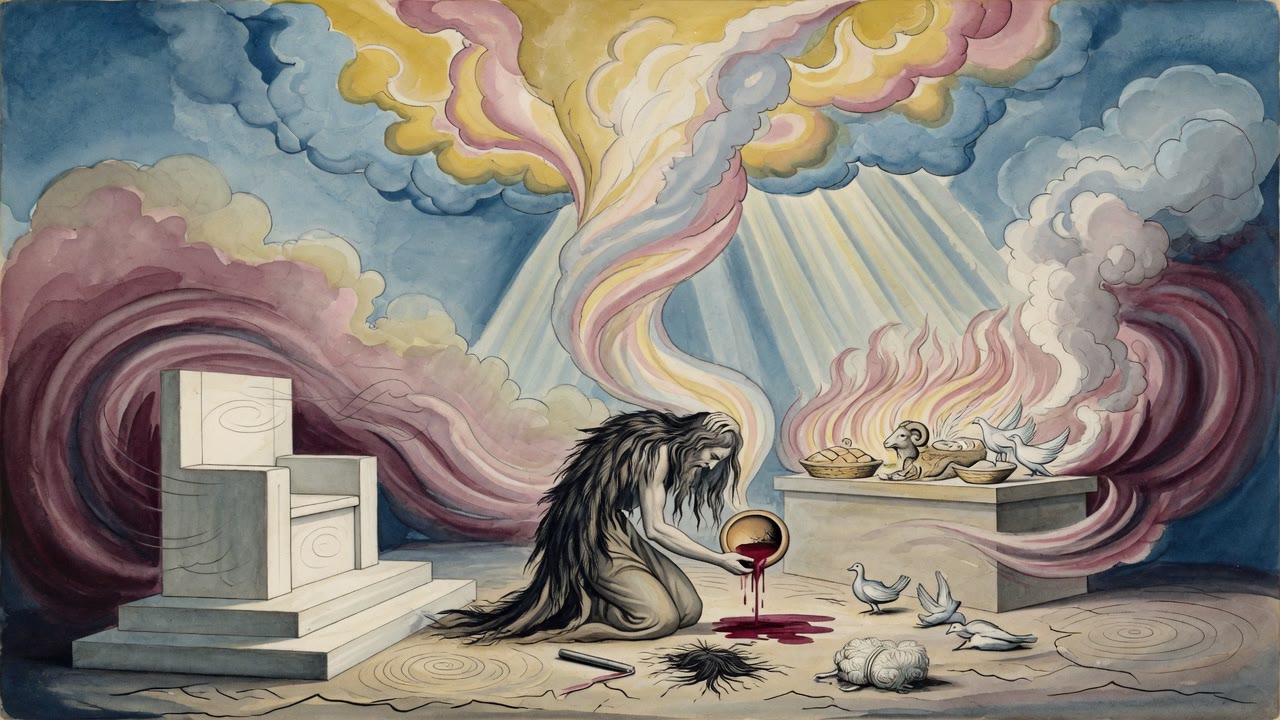
On the day of purification he sat while a blade approached the hair that had been his public vow. Not every hair of the body, the teaching would insist, but the head that had been consecrated. Night shaving would have been permitted. He chose daylight so the village could see that holiness includes the courage to start again after ruin.
When the locks fell, a child gasped. An old man nodded as if he had been waiting for this honesty. The nazir did not smile. He watched the hair hit the ground the way a man watches a banner taken down after defeat, knowing the war is not over, only the first campaign.
He brought what the day required. He did not explain the corpse to every curious mouth. Some stories stay between a man, a road, and the Name that still wanted his days after his vow had been broken by a stranger's death. When he walked home lighter-headed and heavier-hearted, the long road around the tombs looked shorter, and he took it anyway.
← All myths