The Nazirite Lifts the Body No One Claimed
A Nazirite under vow finds a corpse with no kin. He may not touch the dead for father or mother, yet he must become impure for the unburied stranger.
Table of Contents
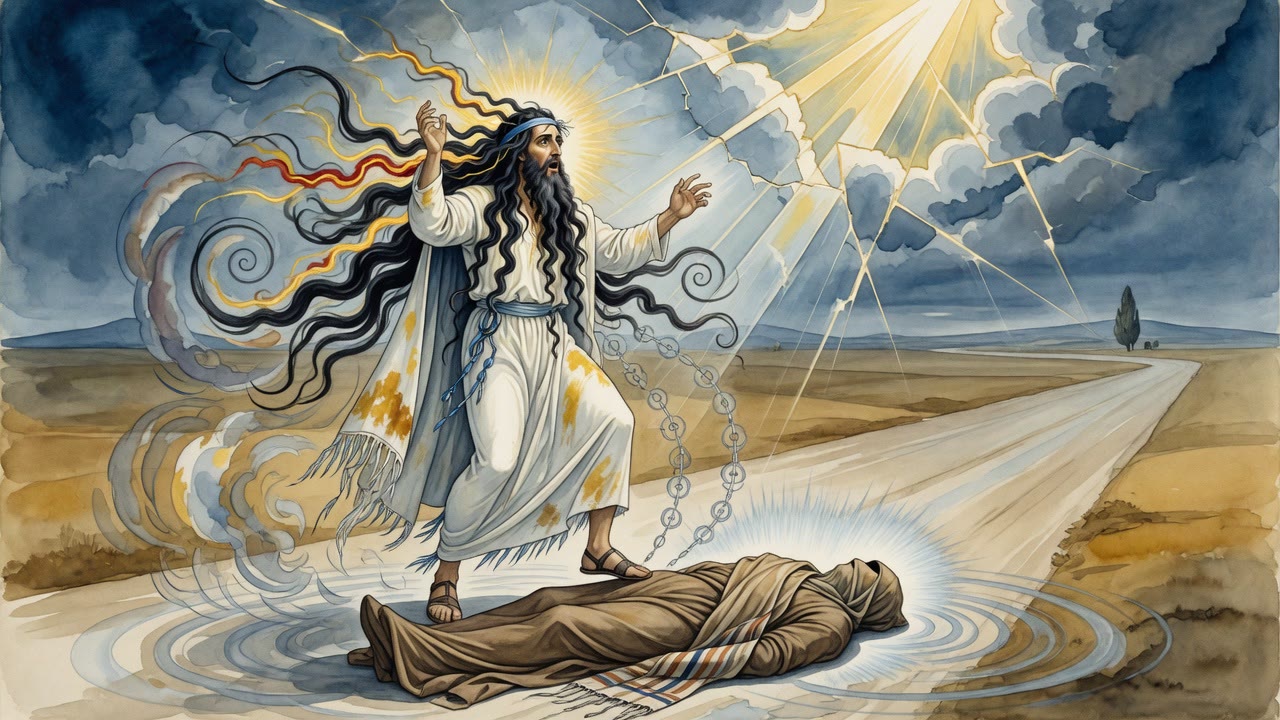
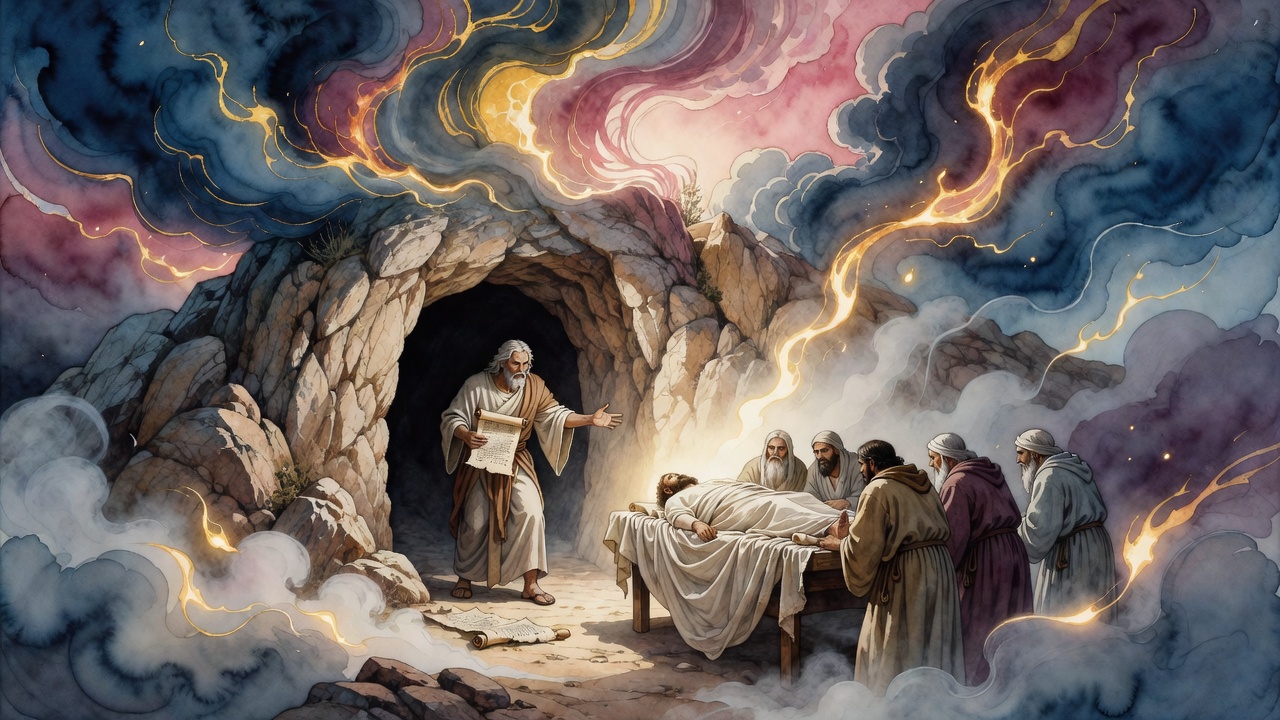
The Nazirite saw the body before he saw the road around it. A man lay where the path narrowed between two low ridges, face turned toward dust, no staff, no bag, no kin calling a name into the heat. Flies had already found the mouth. The wind moved the dead man's sleeve and nothing else answered.
 Click for full size
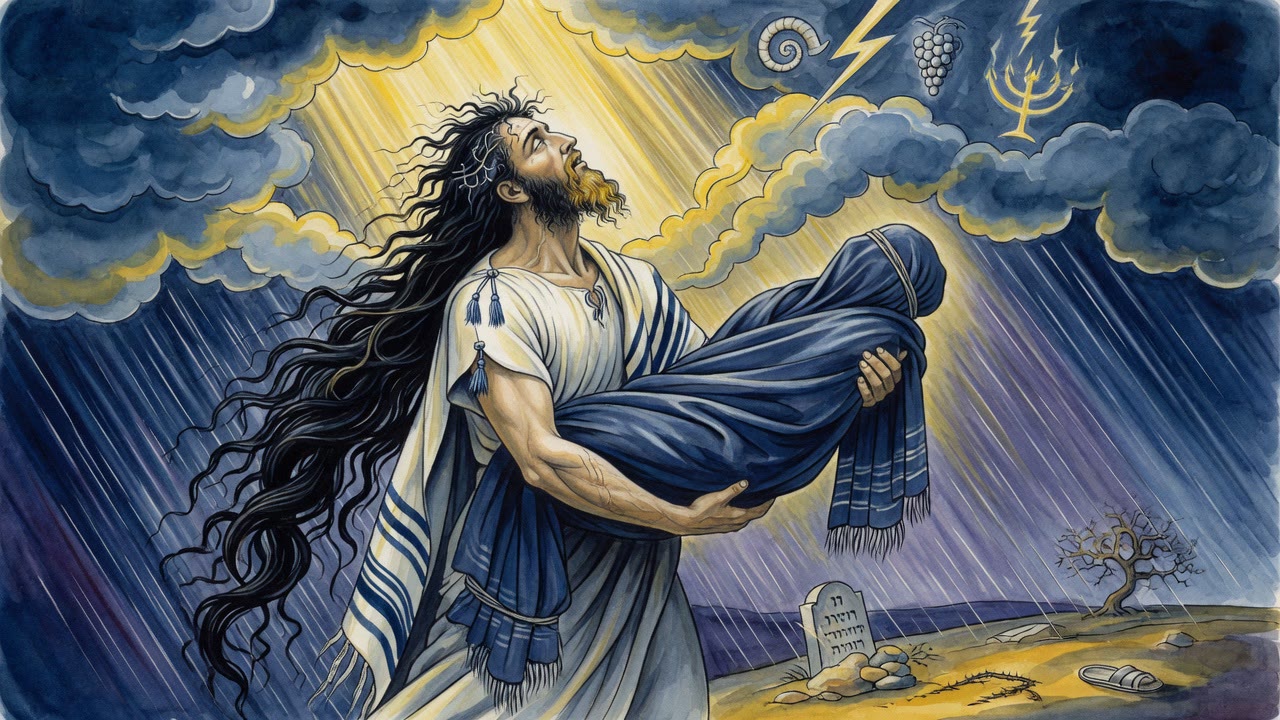
The Nazirite's hair hung heavy on his shoulders, uncut by vow. Wine had not touched his tongue for months. He had built a fence of holiness around his days: no grape, no razor, no corpse. Numbers had said it plain. All the days of his Naziritism to the Lord, he shall not come upon the soul of a dead one (Numbers 6:6). Soul here meant a human soul, not a beast in a ditch. Only a person spreads the impurity that climbs into a tent and claims everyone under the cloth.
His father had died last season. He had not gone in. His mother had died the season before that. He had stood outside while others washed and wrapped and lowered. The vow named even those losses. For his father and his mother he shall not become tamei, ritually impure (Numbers 6:7). He had kept that word until his teeth ached with it.
This body had no father left to claim it. No mother. No brother within a day's walk. A meth mitzvah: the dead who become a commandment because no one else will move them.
The Vow and the Unburied
He stopped three paces short. Heat shimmered off the stones. If he stepped in, the chain would start. Contact with the dead stains the living. What the unclean one touches becomes unclean (Numbers 19:22). A sword that kills can carry seven days of stain. A man who touches that sword carries it too. Vessels touch men. Men touch vessels. Impurity travels like a careful animal from hand to tool to wall.
He could walk wide and keep his hair clean for the day he would shave it in peace at the door of the Tent. He could tell himself the vow was the higher holiness, temporary but fierce, and that strangers' bones were someone else's mitzvah (a commandment).
No one else was on the ridge.
He knelt. Dust rose into his nostrils. He put his hands under the dead man's shoulders and felt the weight answer, absolute and unhelpful. The body was already stiffening. He dragged, then lifted, then dragged again until the path could take a grave that was not a scandal left for dogs.
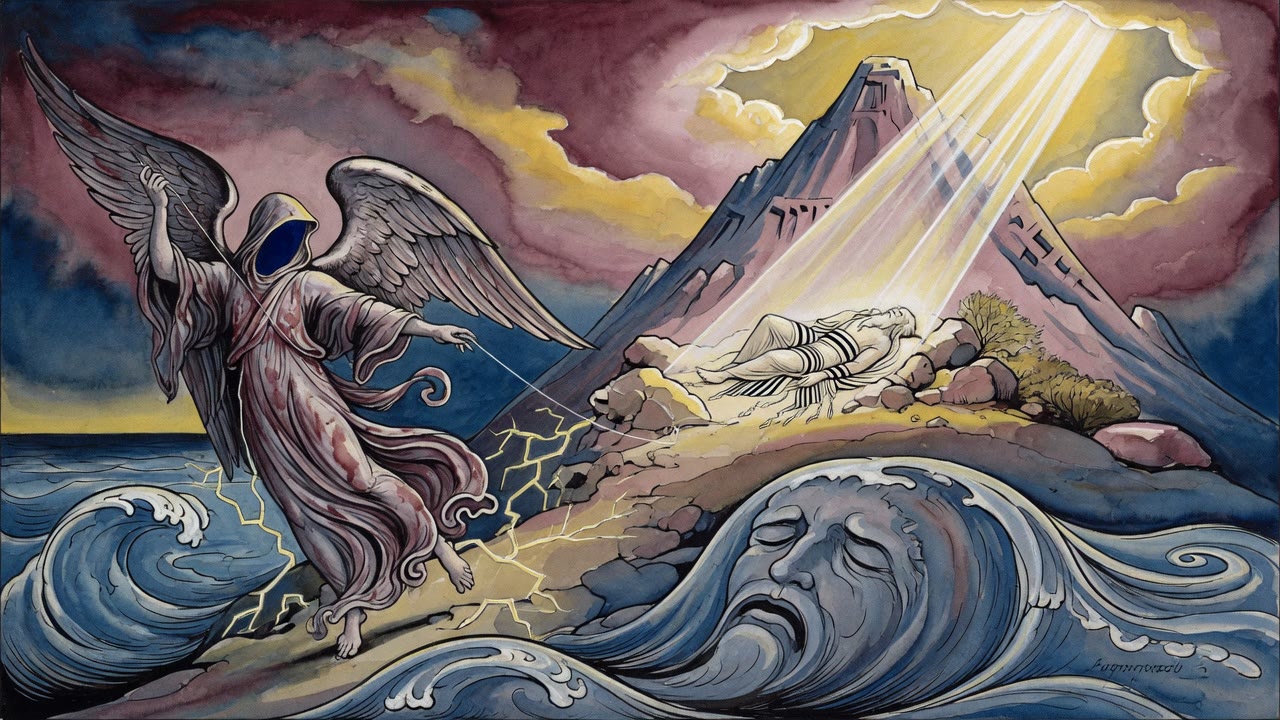
Impurity entered him the way shade enters a man who steps out of sun. No trumpet. No visible mark. Only the knowledge that his vow's clean clock had cracked on purpose. His hair brushed the dead man's cheek when he bent, and he flinched at the contact more than at the law. The body was cooler than the stones. He kept lifting.
Halfway to a usable hollow he had to rest. He set the shoulders down, wiped his palms on his robe, and picked the man up again. A jackal watched from the ridge and then lost interest when the body left the open path. Even the scavengers understood the claim had changed hands.
What Even a High Priest Must Do
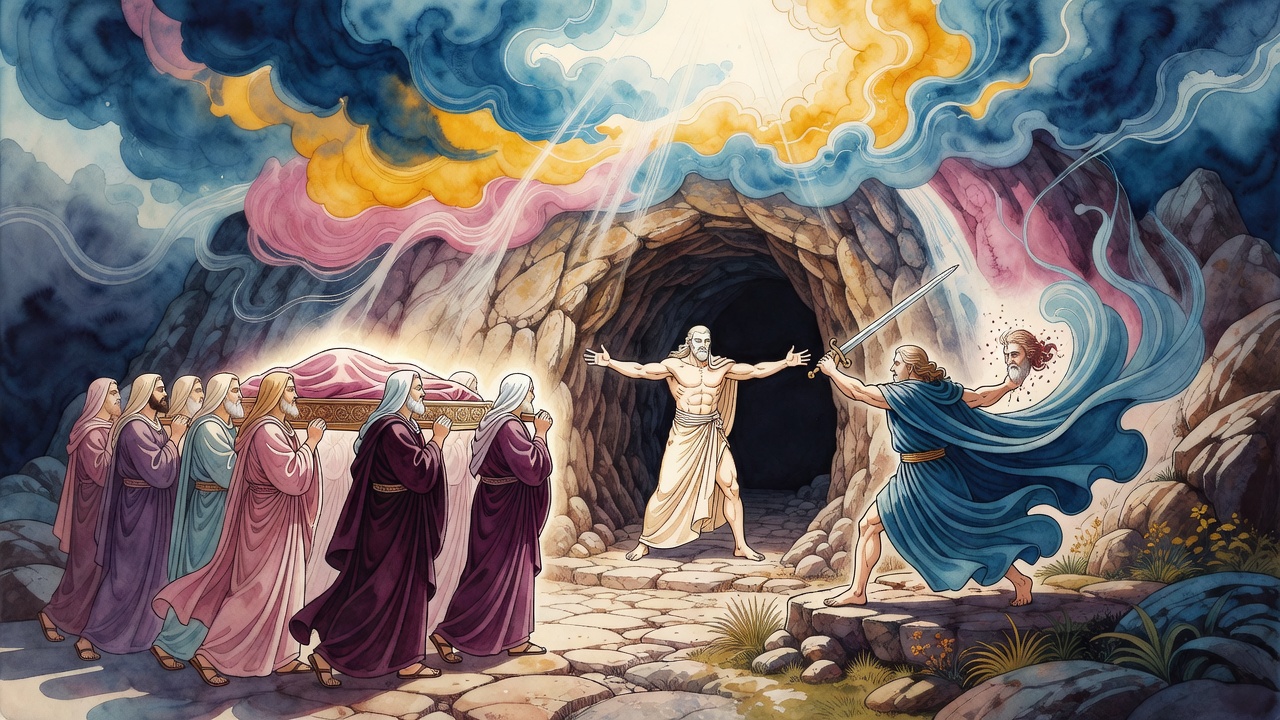
He worked with the stubbornness of a man arguing with his own earlier self. A High Priest lives in permanent nearness to the holy and still becomes impure for a meth mitzvah. The Nazirite's holiness is borrowed time, days counted and ended with sacrifice. If the permanent holy man must bend for an unburied stranger, the temporary holy man cannot stand taller than that mercy and call it piety.
Some mouths would reverse the logic. The Nazirite brings a sacrifice when impurity breaks his term. The High Priest does not. Maybe the man who must pay should be stricter. Maybe the vow that costs an animal later should refuse the corpse now.
The Torah does not leave that door open. The Nazirite becomes tamei for the meth mitzvah. The verse that forbade him his own parents still sends him toward the stranger no one owns. He is forbidden the private grief that would soothe his name, and commanded the public grief that saves a body from shame.
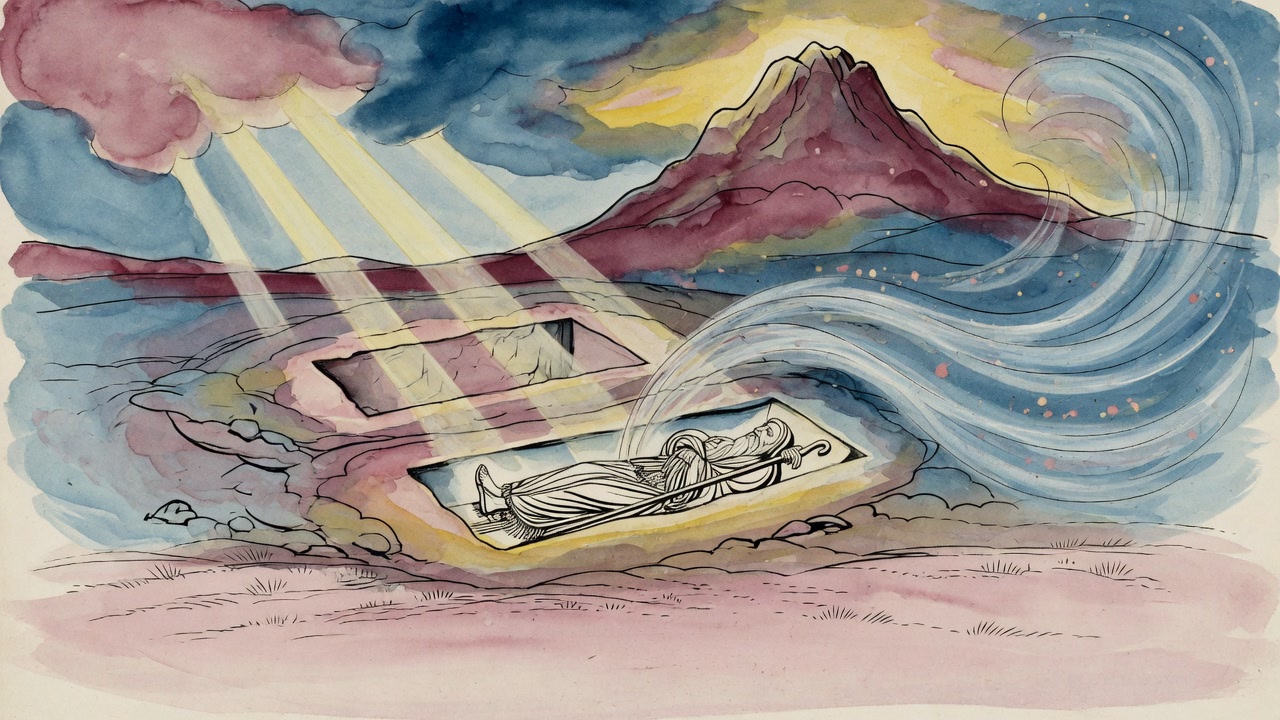
He scraped a hollow with a flat stone until his palms split. Sweat ran into the cuts. He rolled the stranger in and covered him, rock on rock, until the face was gone and the flies had to hunt elsewhere. He said no long prayer. He said the dead man's dignity needed dirt more than eloquence.
The Chain He Had Chosen
On the walk back toward camp he felt the new status as a second skin. Anyone who touched him now would have to reckon with what he carried. Garments would need washing. Time would need counting. The seven-day mathematics of death-impurity had replaced the clean arithmetic of his Nazirite calendar.
He did not resent the corpse. He resented, for a mile, the loneliness of a law that asks a man to break his own best intention for a person who can never thank him. Then even that resentment thinned. The dead man had been someone's son once. The vow had never been permission to step over a human shape because holiness preferred empty roads.
At the edge of the tents a child pointed at his dusty hands and asked if he had fallen. "I lifted what had fallen," he said, and did not explain further. Explanation would have sounded like a bid for praise. The mitzvah wanted the body under stone, not a story polished for neighbors.
Hair Still Long, Clock Already Broken
That night he sat outside his tent because he would not track the stain across every mat inside. His hair still hung long. The razor still waited for a different ending, the peaceful one with offerings and a shared meal. This ending would cost him restart, sacrifice, days rebuilt from zero after purification.
He accepted the cost the way a man accepts a tax he cannot renegotiate. Father and mother had gone into the ground without his hands. A stranger had gone into the ground because of them. The vow that blocked family had opened for the abandoned. That reverse still sat strangely in his chest, like a door hinged on the wrong side that nevertheless was the only door that opened onto decency.
Wind moved across the ridge where the new stones sat. No kin would find the grave easily. No name marked it. The Nazirite's impurity was the only signature left, invisible and heavy, a receipt written on his body that someone had refused to let a human being become landscape.
He slept sitting up, back to the tent pole, hands open on his knees, unclean by law and finished with the only work the road had offered him that day.
← All myths