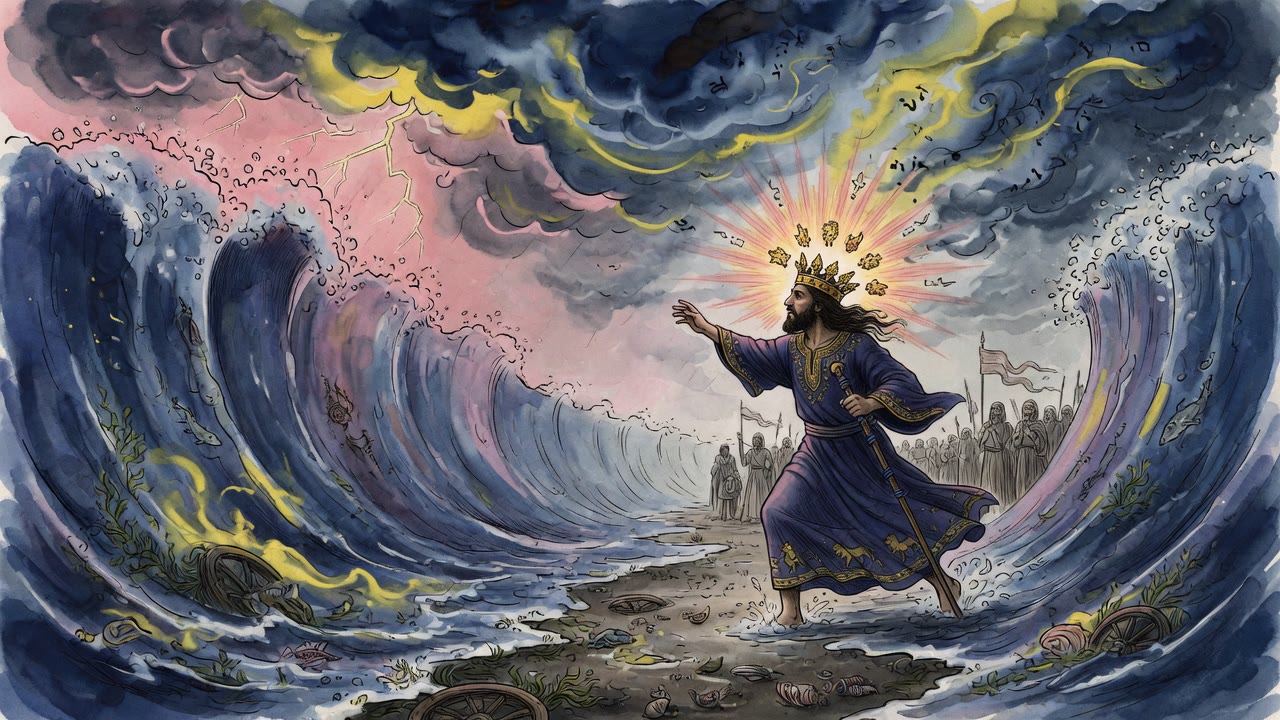
The Woman Who Claimed Her Own Passover Lamb
A woman waits for her lamb on Passover night. Sages argue whether she may stand alone for the sacrifice or only ride as a name on another household list.
Table of Contents
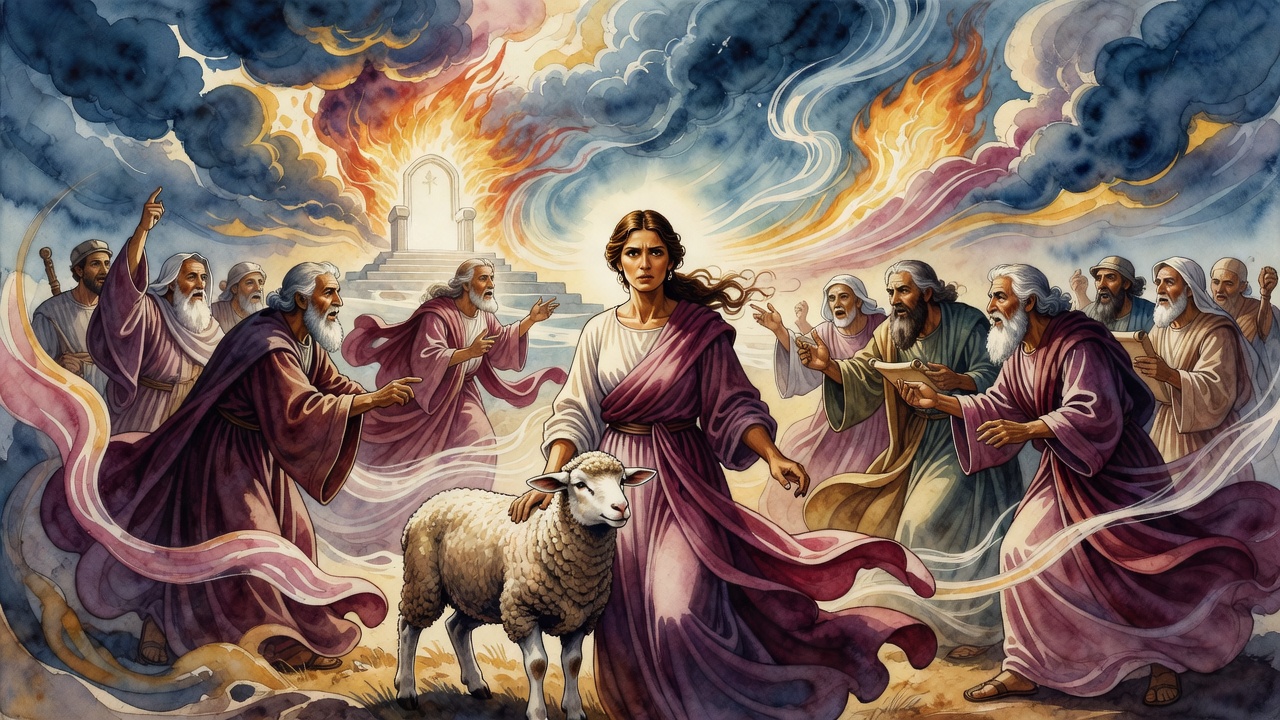
Blood dried dark on the doorposts of her neighbors' houses. In her own courtyard the lamb still lived, tied short, eyes wide, breath hot against the evening. She had counted the days from the first month and would not be folded into a man's list as if her soul did not fill a number of its own.
 Click for full size
Night pressed in. Children asked if the angel would know their door. She answered that the blood would speak for the house, and that her place at the table was not a favor granted by someone else's name. When the slaughterers came with knives and basins, she stepped forward and said, Count me. Slaughter for me. Let the meat rest under my roof.
Number of Souls
The men who kept the tallies muttered. Some said a woman rides inside a household the way a child does, never as the head who claims the offering. Others heard a wider phrase in the old command that the lamb be taken "according to the number of souls" (Exodus 12:4). A soul is a soul. If she can be cut off for neglect of the meal, she can stand for its claim.
Rabbi Yehudah drew a line between nights. On the first Passover, in the spring when the nation left Egypt, a woman may have the lamb slaughtered for her in her own right. On the second Passover, the make-up month later for those who were far or impure, she may only join as secondary. Rabbi Yose refused the half-measure and granted her full standing on both nights. Rabbi Shimon narrowed further, making her secondary on the first and shutting her out of the second altogether.
She did not care for their ranks in the schoolhouse. She cared that the knife would fall for a person who could be "cut off" if she failed, and that the word "man" in the warning about the second Passover should not erase her from the table where freedom is chewed and swallowed.
The Household at the Gate
Across the lane a master sat with uncircumcised slaves still in his yard. He wanted the roasted meat. The law would not let him feast while the people under his roof stood outside the covenant. "Every man's slave you shall circumcise," and only then may he eat. The master who postpones their bodies postpones his own mouth.
Consent cut two ways. A bought slave could be brought under the knife of the covenant by a master's hand even against the slave's will, for the household must not keep a free man's privilege while holding another body outside. A free son's body was different. Fathers do not compel free children the way owners compel purchased servants. The night of redemption is severe, but it is not a license to erase every will.
She watched that argument play out in real flesh and understood her own fight better. The meal was not a private snack. It was a gate. Who stands inside. Who stands outside. Who may speak their name when the lamb is assigned.
Not Every Circumcision Opens the Door
Rabbi Yitzchak once pressed a verse that looked redundant. The Torah already barred the stranger from the Passover. Why add that a resident alien and a hired worker may not eat of it? Because a circumcised Arab or a circumcised Gibeonite might claim the mark on the body was enough. They lived in the land. They bled like Abraham's sons. They might say, We are no strangers.
The extra categories slam that loophole shut. Physical likeness is not covenant. A cut performed for another people's custom does not buy a seat at Israel's midnight table. Intention and belonging decide what the blood means. The woman at her courtyard gate felt the same edge from the other side. If false belonging can be refused, true belonging cannot be diluted into a courtesy title on a man's roster.
Second Month, Same Hunger
Some years impurity or distance would keep a household from the first night. The Torah opens a second door in the second month. She imagined that door and refused to treat it as a servants' entrance. If the cut-off warning can fall on a woman who neglects the duty, then the duty must be able to carry her name.
Matzah without the lamb is not nothing, and the lamb without matzah still holds weight, but the sages of the Mekhilta would not let every food stand in for every other. Symmetry looks fair until it erases rank. The offering is not a garnish. The woman who claims her lamb is not asking for garnish either. She is asking for the center of the night.
What the Blood Remembers
When the meat finally hung, roasted whole, and the bitter herbs bit the tongue, she ate with the haste the night demands. No bone broken. Nothing left for morning. The children slept against her side. Outside, Egypt's firstborn died in houses that had treated people as inventory.
She had been inventory in other mouths, listed under fathers and husbands and masters. On this night the tradition kept arguing over her, and that argument itself was a kind of honor. Yalkut Shimoni would one day preserve the dispute without flattening it. Generous rulings and strict rulings remain on the same page. The nation that left Egypt learned to count souls carefully, and careful counting includes the woman who will not vanish into someone else's total.
← All myths