Abraham Sat While the Presence Stood Ready
God told Abraham to sit as a model for the Shema (Hear O Israel). Later Rabbi Yishmael stood at evening prayer so one school's posture would not bind all.
Table of Contents
Abraham stood up when the heat pressed the tent mouth, then sat because a Voice told him to sit. The letter that should have held him upright was missing from the word, and the missing stroke became a command for every generation after him.
 Click for full size
He wanted to rise in respect. The Holy One said, "Sit. You are a model for your children."
The Tent Mouth at Midday
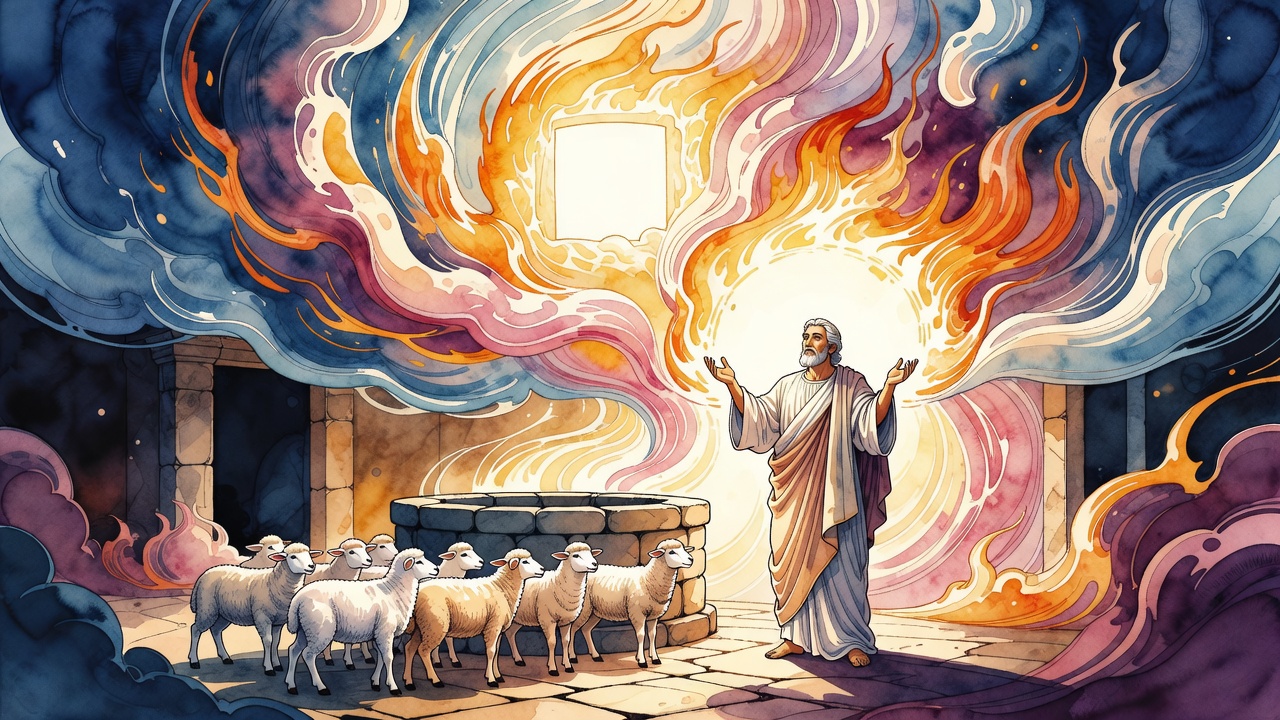
He was sitting at the entrance in the heat of the day (Genesis 18:1). The word is written so it can be read as a future: he shall sit. Abraham's body leaned toward standing. Heaven fixed him in the chair of the host and turned the posture into law for the soul.
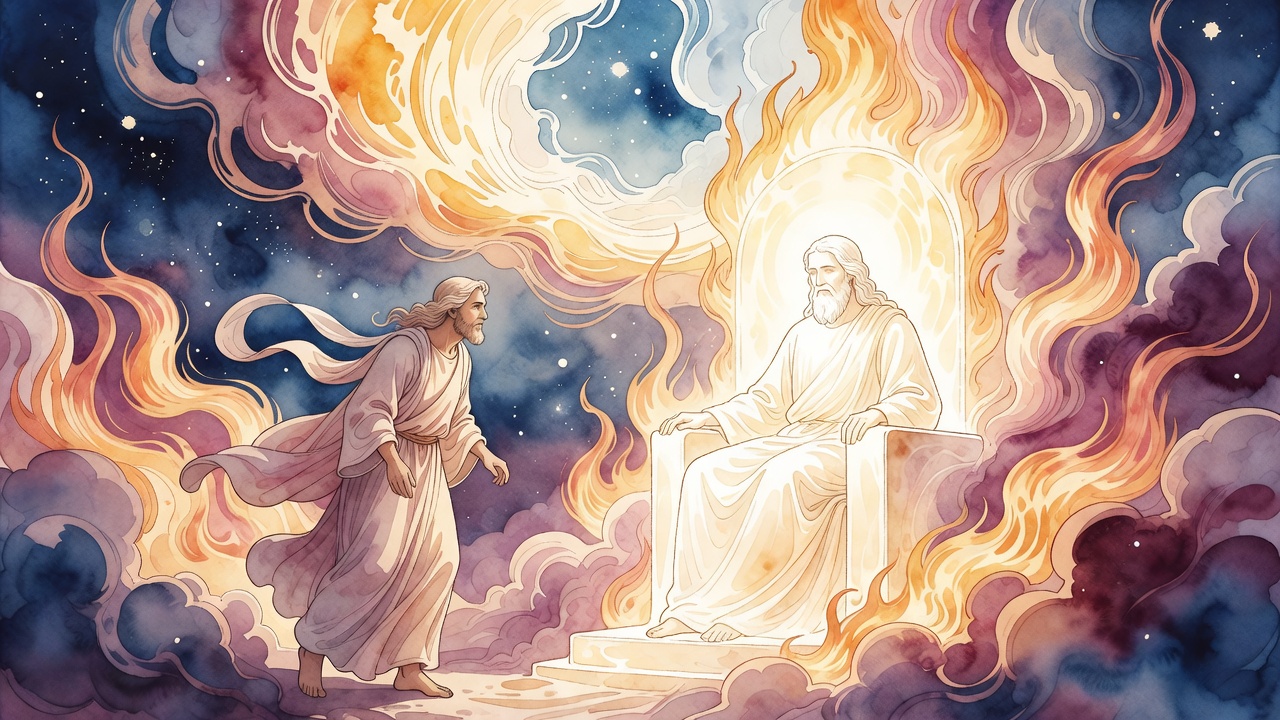
"Just as you sit and the Divine Presence stands," the teaching runs, "so your descendants will sit while the Presence stands over them when they enter synagogues and study halls and recite the Shema." The old man in the dust becomes the pattern for every room that says, "Hear, O Israel."
Hospitality and revelation share the same doorway. Guests will soon appear as men, and Abraham will run. First, though, he must accept the scandal of sitting while God remains at attention. Honor is not always the standing body. Sometimes honor is obedience to a strange instruction in full sun.
God Stands Ready, Not Idle
The psalm does not say God merely stands. It says God is nitzav, posted and ready in the divine assembly (Psalms 82:1). Readiness, not loitering. The rock where Moses was told to station himself carries the same verb (Exodus 33:21). A posted guard does not nap. A posted Presence does not need to be summoned twice.
Before they call, He answers (Isaiah 65:24). Each praise Israel offers draws the Presence down to rest on the speakers. The sitting human and the standing God are not distance. They are a working arrangement at the edge of the tent and the edge of the day.
Abraham's chair becomes a classroom. Generations will lower themselves onto benches, wrap themselves in words of oneness, and trust that Someone is already on His feet before the first syllable leaves the mouth.
Two Rabbis and the Evening Shema
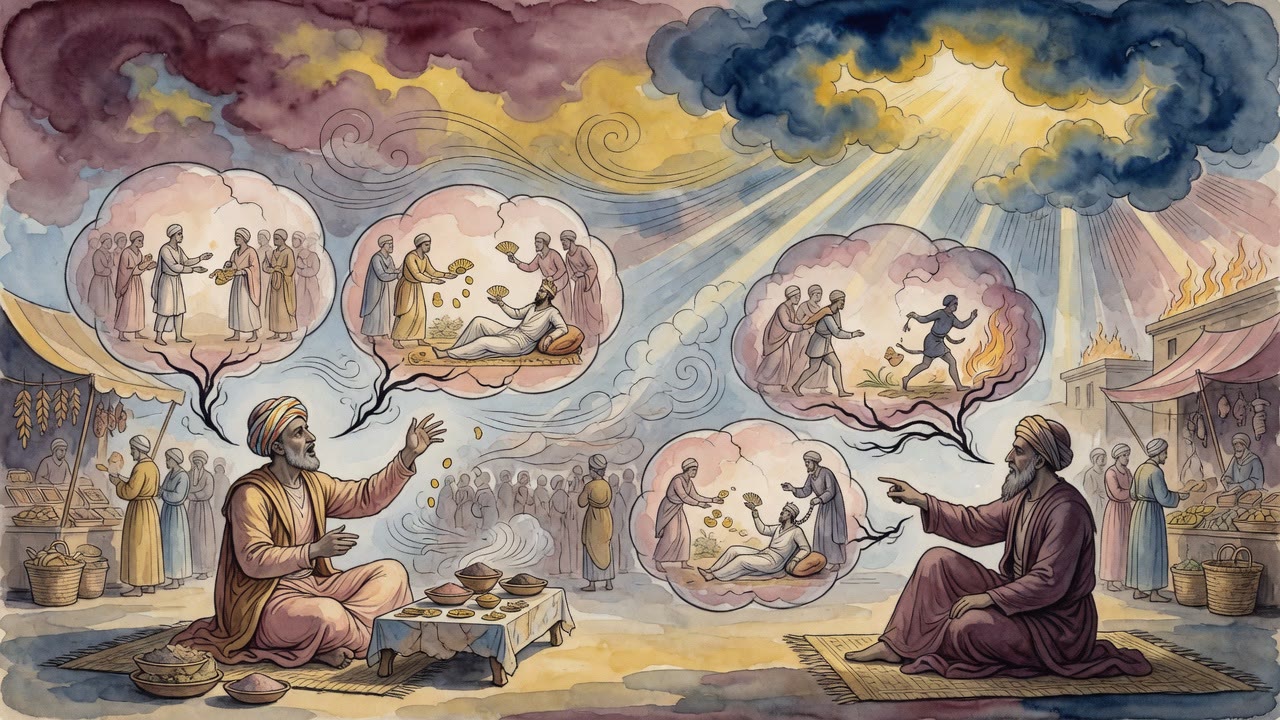
Centuries later Rabbi Elazar ben Azaryah reclined when the evening Shema (Hear O Israel) arrived, and Rabbi Yishmael stood up. Elazar stung him with a proverb: you are like a man told his beard is beautiful who answers by shaving it off.
Yishmael was not spoiling beauty for spite. Elazar's reclining followed Beit Shammai, who tied night Shema to a posture of rest. Yishmael rose with Beit Hillel, who let the words be said in any posture, and he rose so that reclining would not harden into a burden for every student after him. One room, two bodies, one prayer, two schools.
What looked like contradiction was care for the future. A colleague's comfort can become a chain if no one risks looking rude. Yishmael accepted the sting of the proverb to keep the practice wide enough for ordinary spines and tired workers.
When Night Truly Begins
The quarrel needs a clock. Day is not merely whatever still glows. Night is not merely whatever darkens. The law waits for stars. Twilight, dim and starless, is not yet night. God assigned light the work of day and darkness the work of night when He named them at the beginning, so the boundary is a duty, not a mood.
Abraham sat under hard sun. The Shema of evening waits for assigned dark. Posture and hour both answer a charge laid on creation and on the body that prays inside it. You cannot invent night because you are tired. You cannot invent a posture rule because one teacher liked a couch.
Stars come out, and only then does the legal night take its post, the way the Presence takes its post above the sitters. Creation keeps appointments. Prayer learns to keep them too.
The Model That Keeps Working
A missing letter in a verb. A rebuke between colleagues. Three stars that finally count as night. The pressure is not abstract theology. It is a man forced to sit while Heaven stands, then students arguing with their bones about how to say the same sentence after dark.
The Presence does not need Israel standing to prove respect. Sometimes respect is the chair, the waiting stars, and the refusal to let one school's comfort become everyone's chain. Abraham's heat-stunned tent still teaches the room where someone whispers the Shema and trusts the standing answer.
Sit. Stand. Wait for the stars. The body keeps the covenant as much as the mouth does, and the missing letter still has work to do.
A hand opened and closed once, then stayed still. The moment stretched until the next detail could land without being rushed.
← All myths