5 min read

Abraham Stands Left of the Throne of Light

God clothes the Messiah in light at His right hand, Abraham falters at the left, and the heavens open so Israel can see there is no other.

Curated by Arthur · Told by Maggid ·
Table of Contents
  1. Garments of Light
  2. Who Else Has Been Lifted
  3. The Heavens Peel Open
  4. Each Day the Same Oath
  5. No Other in Any Chamber
  6. Right Hand, Left Hand, Open Sky
Abraham Stands Left of the Throne of Light Click for full size

Garments of Light

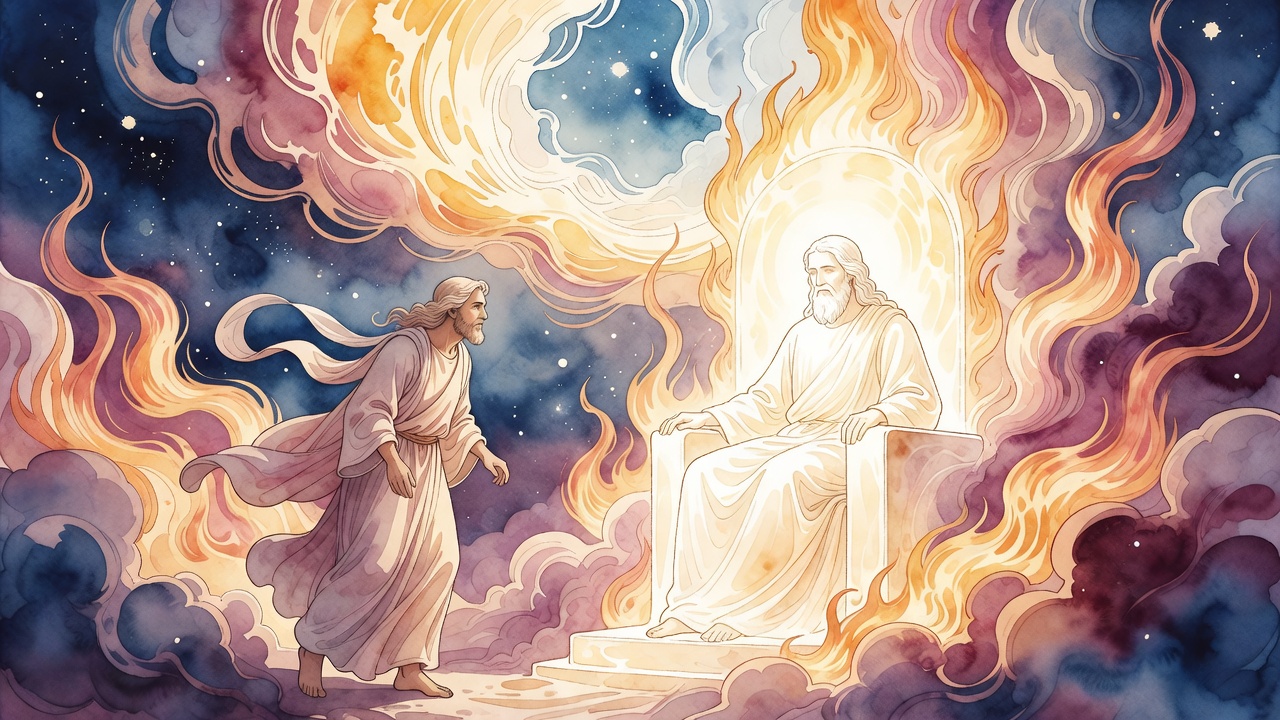
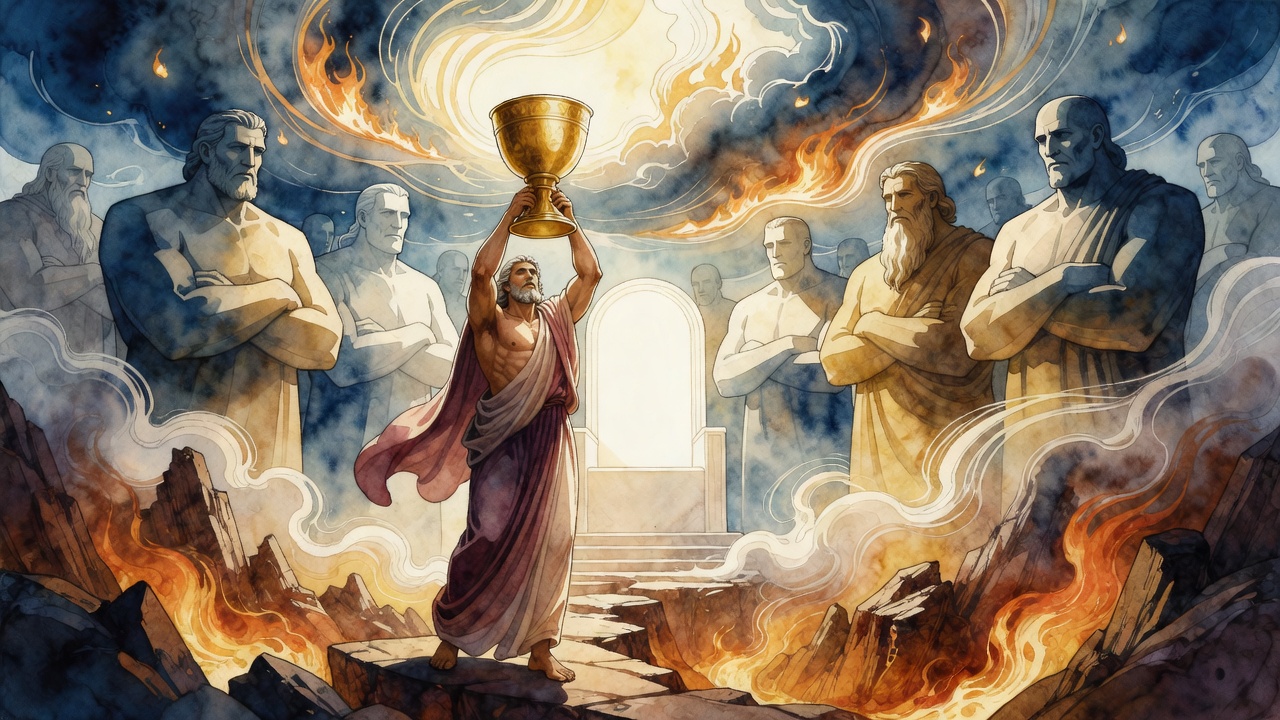
The future arrives without asking permission from any empire. God prepares the Messiah, not with iron or purple dye, but with garments of pure light so bright they throw radiance across the world. Then He seats him at His right hand.

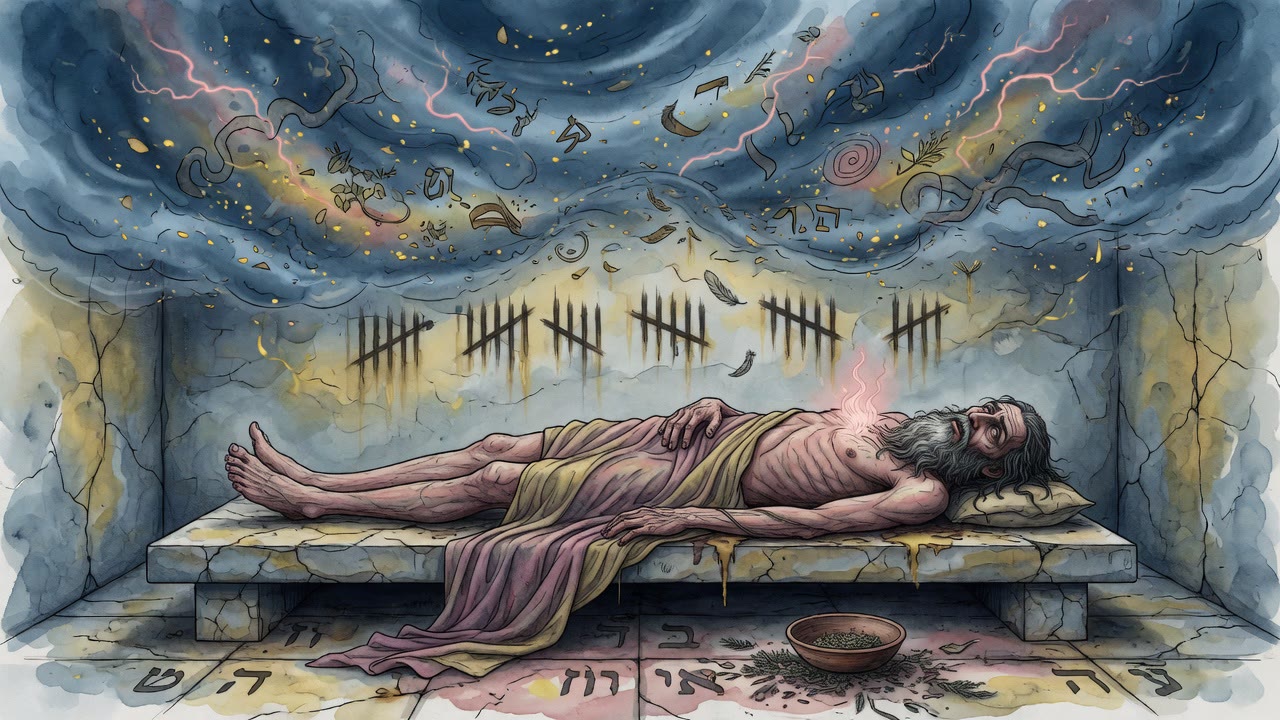
Abraham stands at the left. The patriarch who smashed idols and walked into unknown land looks at the arrangement and pales. "Is my son's son to sit at Your right, and I at Your left?" The question is not rebellion. It is the shock of a man who has always stood nearest now learning a new map of nearness.

God answers with a comfort that rearranges the geometry. Your son's son is on your right, and I am on your right, as it is said, "The Lord at your right hand" (Psalm 110:5). The trio holds. God, Messiah, Abraham. Not a rivalry. A seating chart of promise kept across generations.

Who Else Has Been Lifted

Adam, Enoch, Jacob, Moses, David each knew moments of elevation and recognition. The Messiah's enthronement joins that line and changes the count. Usually the scene is two, the Holy One and the chosen. Here the left hand is occupied. The ancestor remains in the picture while the descendant takes the brighter seat.

Light does not erase Abraham. It includes him at an angle that still honors the first journey from Ur.

The Heavens Peel Open

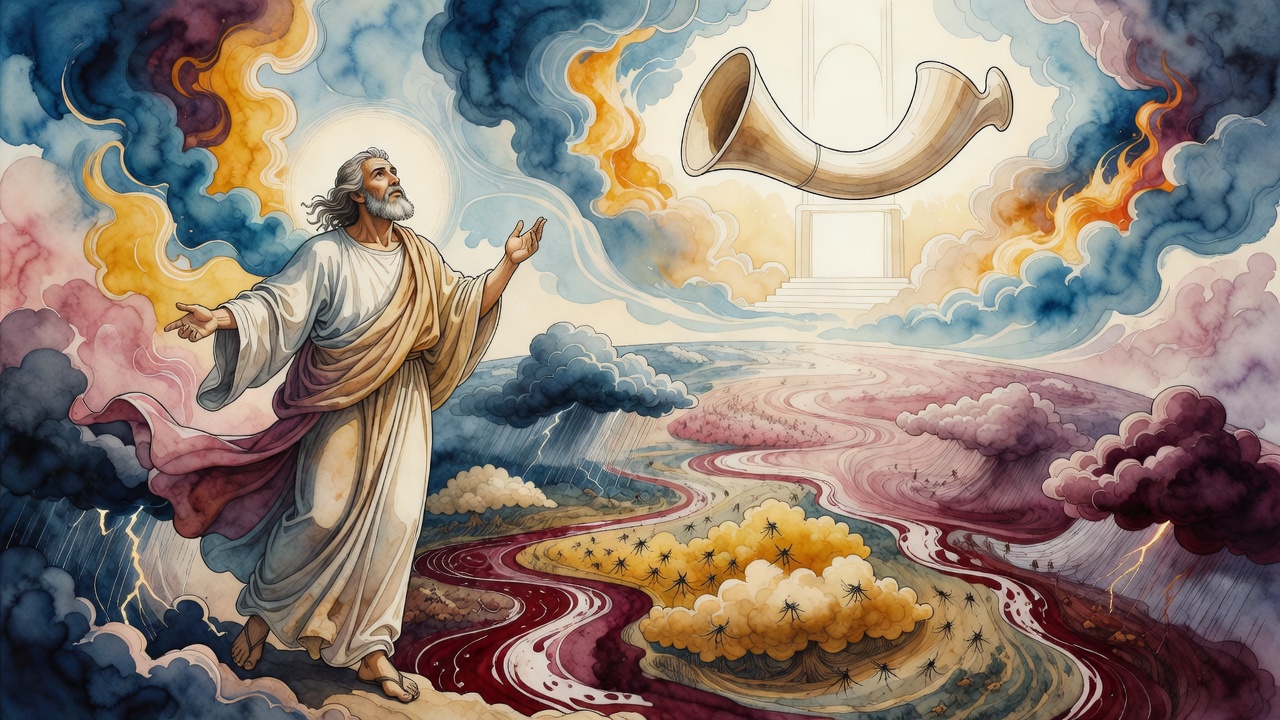
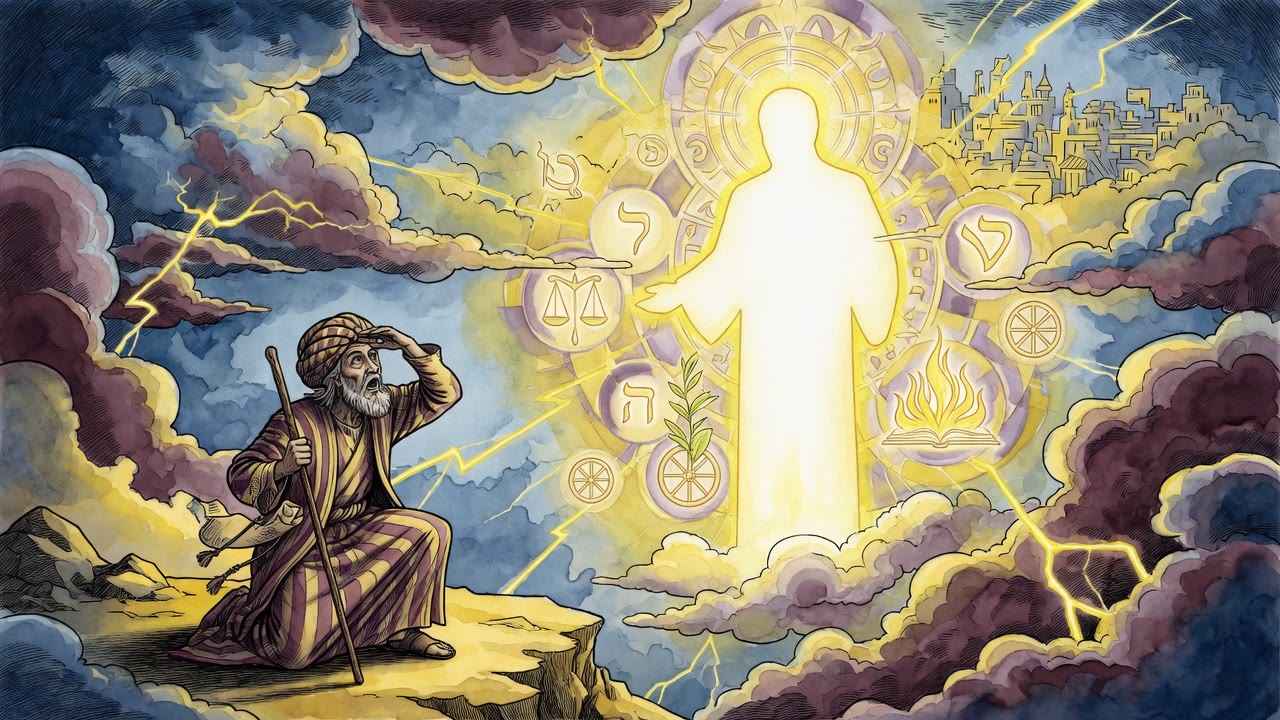
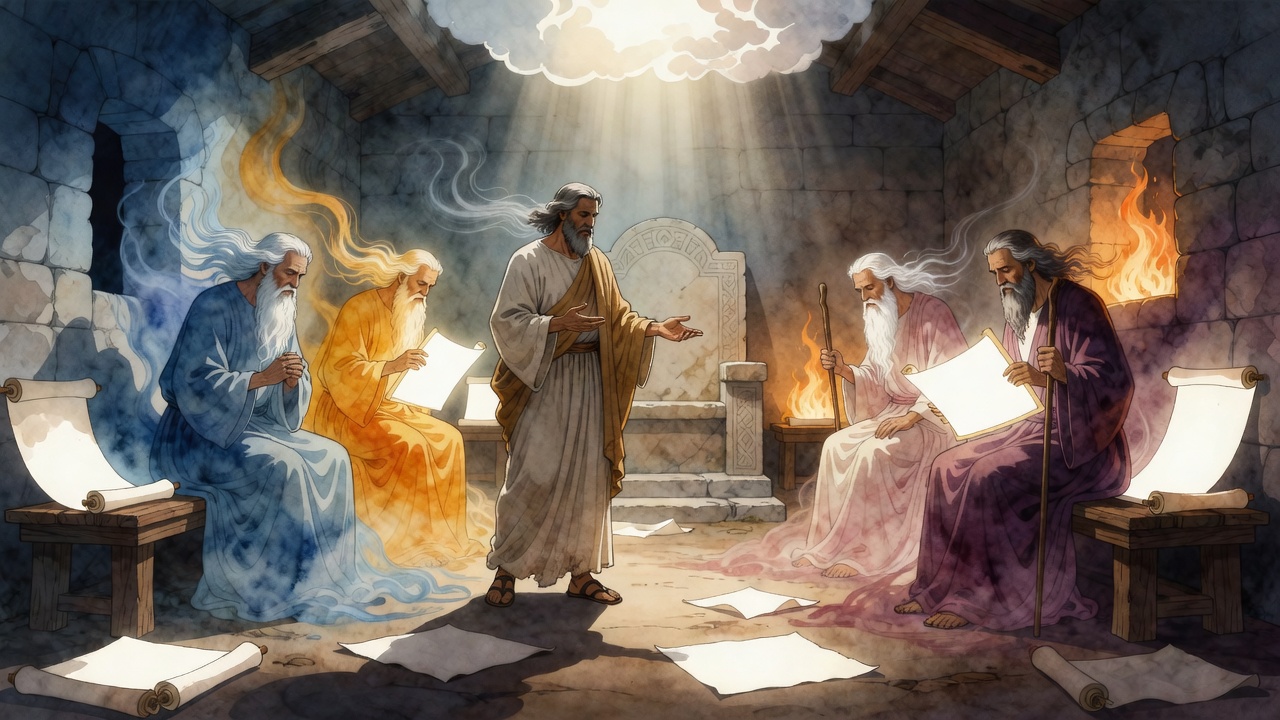
Another vision answers a different fear, the fear that other powers hide above the clouds. Rav spoke of two firmaments. Rabbi Elazar spoke of seven: Heavens, Heavens of Heavens, Rakia, Shechakim, Maon, Zevul, and Arafel. The midrash says God opened them all to Israel so the people could see there is no other god in any chamber of the sky.

The Assembly of Israel answers, "Master of the universe, who do I have in heaven other than You?" And as I have no one in heaven but You, so I have not desired another on earth. The declaration is total. No partner above. No substitute below.

Each Day the Same Oath

That vision does not stay in the past. Each day Israel enters synagogues and says, "Hear, O Israel: the Lord is our God, the Lord is one" (Deuteronomy 6:4). The Shema is not a museum label under a vision of open heavens. It is the daily reenactment of the choice those open heavens demanded.

A child learning the words does not see seven firmaments. She still joins the refusal of other gods. The throne scene with Messiah and Abraham waits further down the road of time. The daily hearing trains the ear for it.

No Other in Any Chamber

Seven firmaments could have meant seven chances for rival powers. The opening of them all is a demolition of that fear. Israel looks up through layer after layer and finds the same sole sovereignty. The Assembly's answer tightens further. As in heaven, so on earth. Desire itself is conscripted. "Besides You, I desire nothing on earth" becomes the interior version of the open sky.

The Messiah's light does not refill those chambers with a second worship. It is borrowed brilliance, garment not godhood. Abraham's left-hand place guards that reading. The first monotheist remains in the frame so no one mistakes the future king for a replacement of the Holy One.

Daily Shema (Hear O Israel) and final enthronement shake hands across time. One trains the mouth. One completes the hope.

Right Hand, Left Hand, Open Sky

Put the scenes together and the pressure sharpens. History ends, in this hope, with light on a human king-messiah at God's right and the first father still present at the left. Daily life continues with mouths that will not share worship. The open heavens and the future throne argue the same loyalty. There is no other. There will be no other. The light that clothes the Messiah does not create a second god. It clothes a servant of the One.

Abraham's pale face relaxes. The map makes sense again. His journey was never wasted. It was the left-hand pillar of a future he could not yet see.

In a small synagogue at dusk, someone leans into the Shema with the tired voice of a workday. No garments of light appear. No patriarch stands visible at anyone's left. Still the same loyalty is rehearsed. The future throne, if the sources are trusted, will not invent monotheism. It will wear it in public at last.

Abraham's old question still teaches. Even the greatest ancestor must make room for a promise that outgrows his seat without canceling his journey.


← All myths

From the tradition

Sources

2 sources

The texts behind this telling. Some cards carry a translation of the source; others are our own retelling of it, and each card says which. Every card links out to the original.

Yallcut Shemuel 162Yalkut Shimoni

Translation of the source text.Yalkut Shimoni on Nach · Public Domain

Lulyani bar Tavri in the name of Rabbi Yitzhak: See the humility that is in the hand of the Holy One, blessed be He. See what is written there (61): "Moses speaks, and God answers him with a voice." It needed only to say, "God speaks, and Moses answers him with a voice." Thus, "and Your humility makes me great." Rabbi Abba bar Kahana said in the name of Rabbi Shmuel: See the humility that is in the hand of the Holy One, blessed be He. What is written? "And the LORD said to me: This gate shall remain shut, it shall not be opened." A king of flesh and blood, his honor is to enter by the great gate, surely not by a small gate; but the Holy One, blessed be He, enters in His glory by the small gate. Thus, "and Your humility makes me great."

Rabbi Yudan said in the name of Chama bar Chanina: In the time to come the Holy One, blessed be He, seats the King Messiah at His right and Abraham at His left, and Abraham's face turns pale, and he says, "The son of my son sits at the right, and I sit at the left!" And the Holy One, blessed be He, appeases him: "The son of your son is at My right, and I am at your right." Thus, "and Your humility makes me great."

"You widen my stride beneath me": they widen, and they are not pushed, and they do not totter. "Beneath me," as when he fought with Yishbi in Nov. "I pursue my enemies" against the troop of Amalek. "Shall I go down after this troop? Shall I overtake it?" "And I shall not turn back until I have destroyed them." "And David smote them from the twilight." "And I devour them and crush them with a crushing blow."

Full source
Devarim Rabbah 2:32Devarim Rabbah

Retold in our words. Read the original at the link below.The Sefaria Midrash Rabbah, 2022 · CC-BY

That feeling, that singular connection, is at the heart of Devarim Rabbah, a collection of rabbinic teachings on the Book of Deuteronomy. Specifically, the second section, where it dives deep into the meaning of the central declaration of Jewish faith: "Shema Yisrael, Adonai Eloheinu, Adonai Echad" – "Hear, O Israel: The Lord is our God, the Lord is one" (Deuteronomy 6:4).

What does it truly mean to declare God's oneness?

Besides You, I desire nothing on earth.” It’s an intensely personal statement of devotion. And that sets the stage for everything else.

The Rabbis then explore the very structure of the heavens to illustrate this point. Rav, a prominent Babylonian Amora (sage), suggests there are two firmaments: simply "the heavens" and "the heavens of heavens." But Rabbi Elazar, another respected voice, expands the vision, positing seven distinct firmaments: The Heavens, the Heavens of Heavens, Rakia (the firmament), Shechakim (the skies), Maon (dwelling), Zevul (habitation), and Arafel (thick cloud). (We see similar ideas about multiple heavens in other Jewish texts, like the Babylonian Talmud, Chagigah 12b.)

Why all these heavens?

Well, the Midrash (rabbinic commentary) tells us that God opened them all to Israel. Unveiling the cosmic architecture to show them unequivocally that there is no other God. No other power, no other force, nothing else to cling to.

It's a powerful image. The Assembly of Israel, standing before the Holy One, responds with profound humility and unwavering commitment. They declare: “Master of the universe, who do I have in Heaven other than [You, in] Your glory?” In other words, "There's no one else up there for me, just You."

But it doesn't stop there. The Assembly continues, acknowledging not only God's singular presence in heaven but also their exclusive devotion on earth. “Just as I have no one in heaven other than You, so I have not desired another [god] on earth; just as I have not associated any other god with You in Heaven, so I did not associate any other god with You on earth." It's a total and complete rejection of idolatry, a conscious choice to focus solely on the Divine.

And how is this commitment expressed? Through daily affirmation. "Rather, each day I enter synagogues and attest that there is no god other than You, and I say: 'Hear, Israel: The Lord is our God, the Lord is one.'" The Shema isn't just a prayer; it's a daily rededication, a constant reminder of that singular, powerful connection.

So, what does this ancient text offer us today? Perhaps it's a reminder to examine our own hearts. What do we truly desire? What do we place before the Divine? The Shema isn’t just about reciting words; it’s about cultivating a relationship with the One, both in the heavens and here on earth. A relationship that fills us so completely that there's no room for anything else.

Full source